The Weapons and Military Units on Display in China’s Major Parade https://english.aawsat.com/features/5182155-weapons-and-military-units-display-china%E2%80%99s-major-parade%C2%A0
The Weapons and Military Units on Display in China’s Major Parade
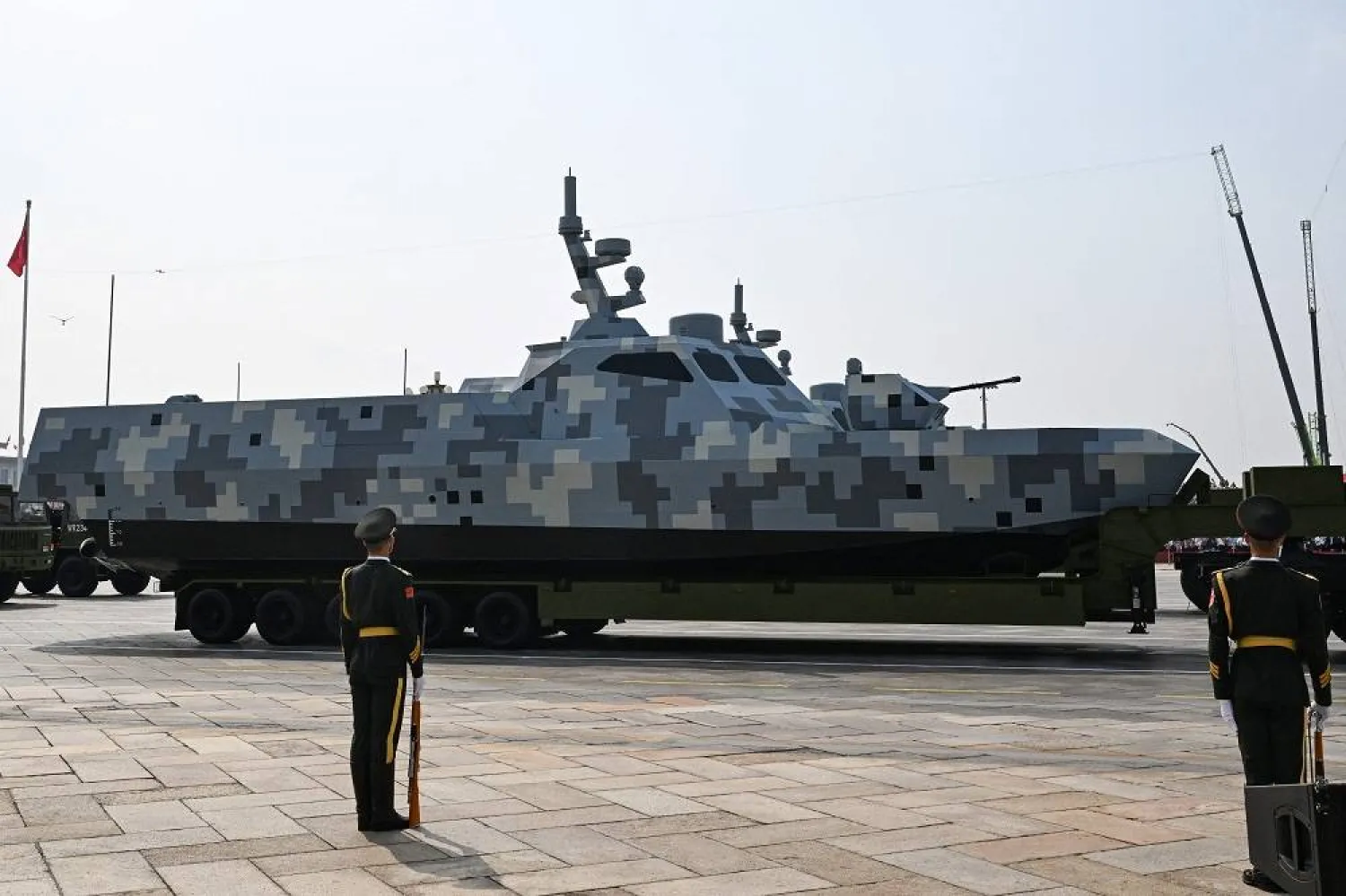
A drone boat is seen during a military parade marking the 80th anniversary of victory over Japan and the end of World War II, in Beijing's Tiananmen Square on September 3, 2025. (AFP)
TT
TT
The Weapons and Military Units on Display in China’s Major Parade
A drone boat is seen during a military parade marking the 80th anniversary of victory over Japan and the end of World War II, in Beijing's Tiananmen Square on September 3, 2025. (AFP)
Some of the weapons and military units in China's major parade were being displayed for the first time.
The parade on a central Beijing avenue Wednesday marked the 80th anniversary of the end of World War II. Troops marched by President Xi Jinping, who heads the military as the chairman of the Central Military Commission.
New units and equipment
Marching in the parade were traditional People's Liberation Army units from the navy and army, but also new ones like the cyberspace unit. The new unit is in charge of cybersecurity defense measures, according to the official Xinhua news agency, and also participated in live-fire drills.
Another debut was the information support force, created in 2024 to build network information systems to support military combat readiness.
Much of the weaponry and equipment in the parade was being shown to the public for the first time, according to Chinese military officials. This included hypersonic missiles designed to take out ships at sea. These weapons are of particular concern to the US Navy, which patrols the western Pacific from its 7th Fleet headquarters in Japan.
Also shown were underwater drones including the AJX002, a long, black tube-shaped craft that looks like a narrow submarine with a rear propeller, and a new intercontinental ballistic missile, the DF-61, which could carry nuclear warheads to distant targets.
Others included land, sea and air-based strategic weapons, advanced precision warfare equipment and drones. Warplanes and helicopters flew in formation in the skies overhead.
It's the first major military parade in China since 2019 on the 70th anniversary of the founding of communist China.
The parade aimed to instill pride in China's populace and assure them that the country is strong enough to ward off any attack. But China's growing military strength also concerns its Asian neighbors and the United States.
Russia and North Korea headline guest list
US and Western European heads of state are staying away, as are the leaders of Japan, India and South Korea.
North Korean leader Kim Jong Un made a rare foreign trip to attend. He was joined by Russian President Vladimir Putin and the president of Iran, among others.
In all, about two dozen foreign leaders attended, including several from Southeast Asia and a few from Africa and South Asia. Indonesia President Prabowo Subianto arrived early Wednesday after being delayed by protests in his country over lawmakers' perks.
The event was highly choreographed and tightly controlled. It wasn't the kind of parade where crowds line the streets to watch.
Barriers were set up to keep the public one block away and commercial buildings along the parade route were emptied and closed until the parade ended. The subway system running along Chang'An Avenue was shut Tuesday night into Wednesday morning.
For most people, the only way to watch was on television or a livestream.
Syrian FM’s Visit Lays Groundwork for Strategic Partnership with Lebanonhttps://english.aawsat.com/features/5292295-syrian-fm%E2%80%99s-visit-lays-groundwork-strategic-partnership-lebanon
This handout photograph released by the Lebanese Government Press Office shows Lebanon's Prime Minister Nawaf Salam (R) meeting with Syria's Foreign Minister Asaad al-Shaibani at the governmental palace in Beirut on July 2, 2026. (Lebanese Government Press Office / AFP)
Syrian FM’s Visit Lays Groundwork for Strategic Partnership with Lebanon
This handout photograph released by the Lebanese Government Press Office shows Lebanon's Prime Minister Nawaf Salam (R) meeting with Syria's Foreign Minister Asaad al-Shaibani at the governmental palace in Beirut on July 2, 2026. (Lebanese Government Press Office / AFP)
Syrian Foreign Minister Asaad al-Shaibani‘s visit to Beirut was more than a diplomatic stop. Coming amid sweeping regional changes, particularly in Lebanon, it signaled that Syria’s new leadership is seeking to rebuild relations with its neighbor on fundamentally different terms from those that defined more than four decades of Syrian tutelage.
Al-Shaibani’s meetings extended beyond Lebanon’s three top officials — President Joseph Aoun, Parliament Speaker Nabih Berri, and Prime Minister Nawaf Salam — to include religious leaders, politicians and party chiefs.
Head of the Saydet El Jabal Gathering former MP Fares Souaid said the timing of the visit was closely tied to regional and international developments.
Speaking to Asharq Al-Awsat, he noted that it followed repeated remarks by US President Donald Trump, who said Syrian President Ahmed al-Sharaa would “deal with Hezbollah in Beirut.”
This has prompted Damascus to engage directly with developments in Lebanon, he added.
He further stressed that the visit conveyed reassuring messages to Lebanon’s various communities, particularly Christians and Shiites, that “the new Syria is completely different from Bashar al-Assad’s Syria” and has no intention of reviving the Assad-era policy of hegemony over Lebanon.
Souaid described the announcement of a Lebanese-Syrian Higher Committee as the true starting point for a new phase in bilateral relations.
The committee would establish the framework for future political, security and economic cooperation, turning the page on the past and building a partnership between two sovereign states bound by geography and shared interests rather than domination, he explained.
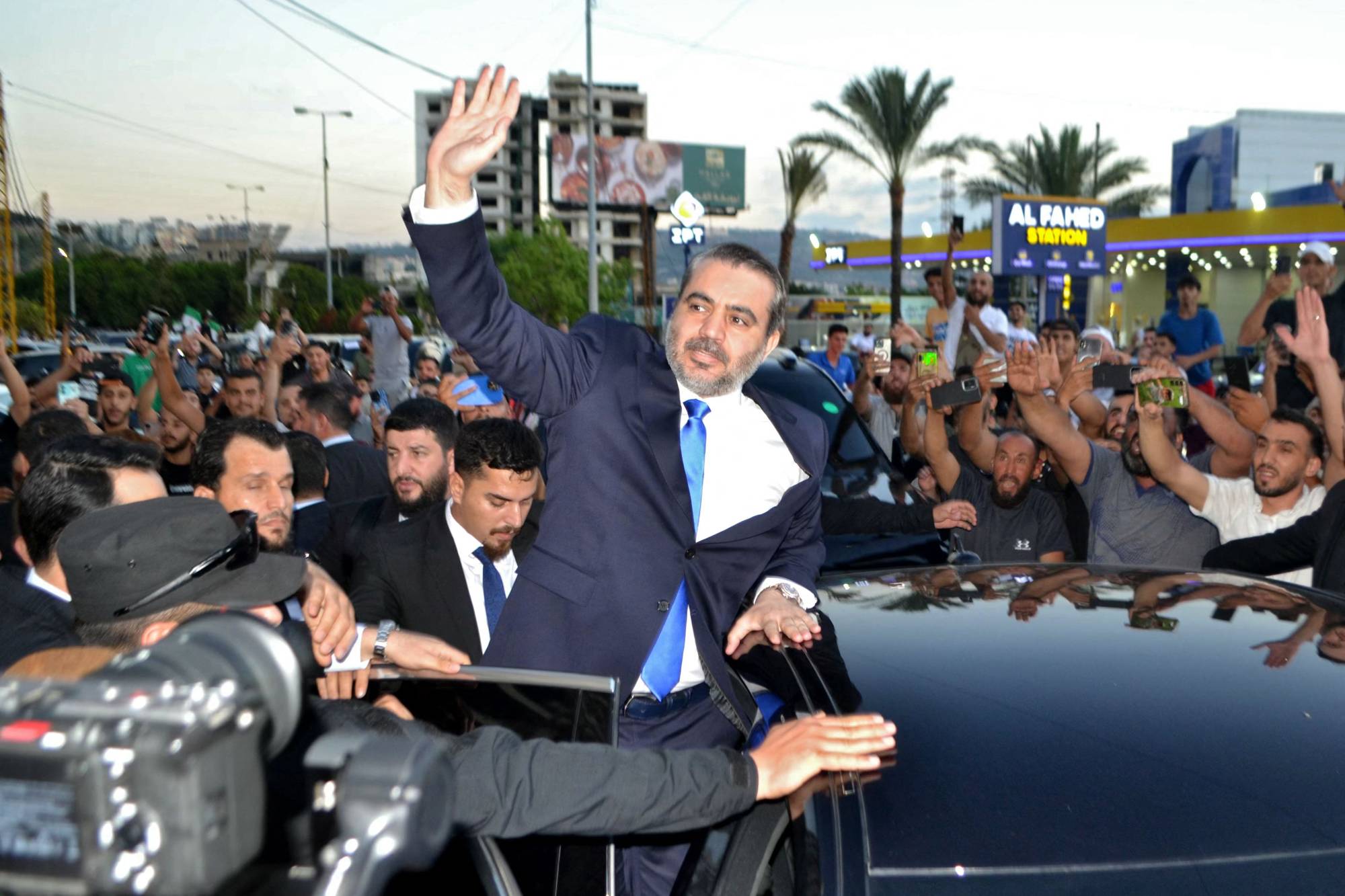
Syria's Foreign Minister Asaad al-Shaibani waves as he is cheered by by the crowds upon his arrival to the northern Lebanese city of Tripoli on July 2, 2026. (AFP)
Toward balanced relations
The visit coincided with renewed US diplomatic activity and discussions about Lebanon’s future and regional influence, including Trump’s remarks suggesting a possible Syrian role in resolving Hezbollah’s weapons issue.
According to Lebanese sources familiar with the visit, Damascus sought to reassure all Lebanese powers that a new chapter had begun, one based on mutual respect for sovereignty, balanced relations and non-interference in each other’s internal affairs.
Al-Shaibani also drew attention after meeting Berri by saying he had no objection to speaking with Hezbollah “if necessary.”
Souaid said the remark reflected the new Syrian government’s openness toward all Lebanese factions, including the “Shiite duo” of Hezbollah and its ally the Amal movement, led by Berri.
The FM’s statement demonstrated that Damascus was not pursuing a policy of revenge against Hezbollah over its actions in Syria during the past decade, added Souaid.
Many Lebanese political forces believe the new Syrian approach reflects not only the outlook of Damascus’ new leadership, but also the aspirations of a broad segment of Lebanese across the political and sectarian spectrum for a normal relationship based on sovereignty and mutual respect.
MP Bilal al-Hashimi said al-Shaibani’s visit marked an important political milestone, reflecting a genuine desire among many Lebanese to close the chapter on the past and build relations founded on mutual respect, good neighborliness and the sovereignty of both states.
Al-Shaibani’s visit to Tripoli in northern Lebanon also drew considerable attention.
Souaid said the city had paid “a heavy price for supporting the Syrian uprising” against Assad and had also borne “significant political and economic costs during the influx of Syrian refugees”.
‘Long marginalized because of its Arab Sunni majority and its political opposition to the Assad family’s rule, Tripoli, viewed al-Shaibani’s visit as carrying important symbolic and political significance for the city and its residents,” he remarked.
NATO Chief May Have to Match His Made-for-Trump Sales Pitch to Keep a Summit on the Railshttps://english.aawsat.com/features/5292257-nato-chief-may-have-match-his-made-trump-sales-pitch-keep-summit-rails
FILE PHOTO: US President Donald Trump participates in a meeting with NATO Secretary General Mark Rutte in the Oval Office at the White House in Washington, D.C., US, June 24, 2026. REUTERS/Evan Vucci/File Photo
NATO Chief May Have to Match His Made-for-Trump Sales Pitch to Keep a Summit on the Rails
FILE PHOTO: US President Donald Trump participates in a meeting with NATO Secretary General Mark Rutte in the Oval Office at the White House in Washington, D.C., US, June 24, 2026. REUTERS/Evan Vucci/File Photo
Since he started work as NATO secretary-general almost two years ago, Mark Rutte has spent much of his time trying to keep the United States anchored to the world’s biggest military alliance, employing outright flattery to dissuade US President Donald Trump from acting on threats to abandon it.
But the goalposts keep shifting, raising the stakes ahead of this week’s summit in Türkiye, The Associated Press said.
Initially, it was about money. Trump has long railed against NATO allies for spending too small a fraction of their national budgets on defense. But those problems were addressed at their summit last year, when US allies committed to invest as much as America, in gross domestic product terms.
NATO's real problem now is turning that money into military capabilities, particularly as European countries worry about a possible attack from Russia.
Still, Rutte tried to put to bed any lingering concerns at a White House meeting last month, with a new pitch using a chart labeled the “The Trump Trillion” in gold letters — showing $1.2 trillion in spending by European allies and Canada since 2017.
But Trump appeared unmoved, saying he was still disappointed at some NATO allies’ refusal to join the Iran war, which he had launched alongside Israel without consulting them.
“We don’t need their money — we don’t need anything,” Trump said. “I just want loyalty.”
Trump suggested he might have skipped the upcoming summit entirely were it not being hosted by Turkish President Recep Tayyip Erdogan. It’s a sign that even Erdogan and Rutte — foreign leaders Trump seems to hold in rare esteem — will have their work cut out for them in keeping the summit on track.
Rutte set a new marker for flattery at the White House Historically, the prime tasks of NATO’s top civilian official — always a European, never an American — have been to encourage consensus in an organization that makes its decisions unanimously, and to speak on behalf of all 32 member countries.
But during both of Trump’s terms, Rutte and his predecessor at the helm of NATO, Jens Stoltenberg, have dedicated a huge amount of energy just to keep the United States inside their alliance.
Trump has threatened to leave NATO, dallied with pulling US troops out of Europe and vowed to take over the island of Greenland — a semiautonomous part of ally Denmark. He has cast doubt over whether he would defend another member not spending enough on their military, eroding trust.
Rutte’s approach has been heavy on flattery. Last month’s carefully choreographed pitch in the Oval Office — with props redolent of an American flag — laid down a new marker, even for a man heavily criticized for likening Trump to a “daddy.”
The charts showed tens of thousands of US jobs were being created and a backlog of $300 billion in European orders for military equipment — all thanks to the “leader of the free world,” Rutte said.
He pushed back, gently, on Trump’s complaints that NATO did not support the US against Iran, noting that up to 5,000 US planes took off from bases in Europe before an April ceasefire.
Trump has threatened to pull forces from Europe at a moment of peril NATO cannot function without its biggest and most powerful ally. Europe is being pushed to fend for itself even as Russia, the historical reason for the alliance, poses a greater threat.
Last month, the Pentagon surprised its NATO allies by announcing that it was scaling back the number of troops, warships, aircraft and drones it would provide if one of them came under attack. Trump has also sent conflicting messages about whether US troop numbers would be lowered or increased.
The cutbacks and mixed messaging has undermined unity at the alliance, just as Russia has been probing Europe's defenses with drone flights near military bases across multiple countries, according to a study released on Thursday.
Flattery worked last year, but now there are new challenges
Each summit is meant to showcase the commitment to collective security — the all-for-one, one-for-all pledge enshrined in Article 5 of NATO’s treaty. It’s only been invoked once, when allies came to America’s aid after the Sept. 11 attacks.
The last NATO summit was held in The Hague, the hometown of Rutte, a former Dutch prime minister. The Dutch royal family hosted dinner, and Trump stayed overnight at the king’s palace.
Rutte got the allies behind a major defense spending pledge, and Trump left a happy man, calling his NATO partners a “nice group of people.”
This year, the summit will be hosted by Erdogan, another key NATO member with an independent streak. His close ties to Trump may keep the American president at the table, but it’s unlikely to mend the rifts.
Rutte has tried to convince Trump that his European partners are spending so much more that America can safely turn its attention to security challenges posed by China while they handle the war in Ukraine.
But Trump wants more now, and his demand for “loyalty” is hard to capture on any chart.
Rutte’s predecessor, Stoltenberg, has written in his memoir about chairing a 2018 summit that Trump nearly upended.
“If an American president says he no longer wishes to defend the other allies and leaves a NATO summit in protest, then the NATO treaty and its security guarantee aren’t worth very much,” Stoltenberg wrote.
Lebanon Enters Conflict Management Phase as End Remains Elusivehttps://english.aawsat.com/features/5291974-lebanon-enters-conflict-management-phase-end-remains-elusive
Lebanon Enters Conflict Management Phase as End Remains Elusive
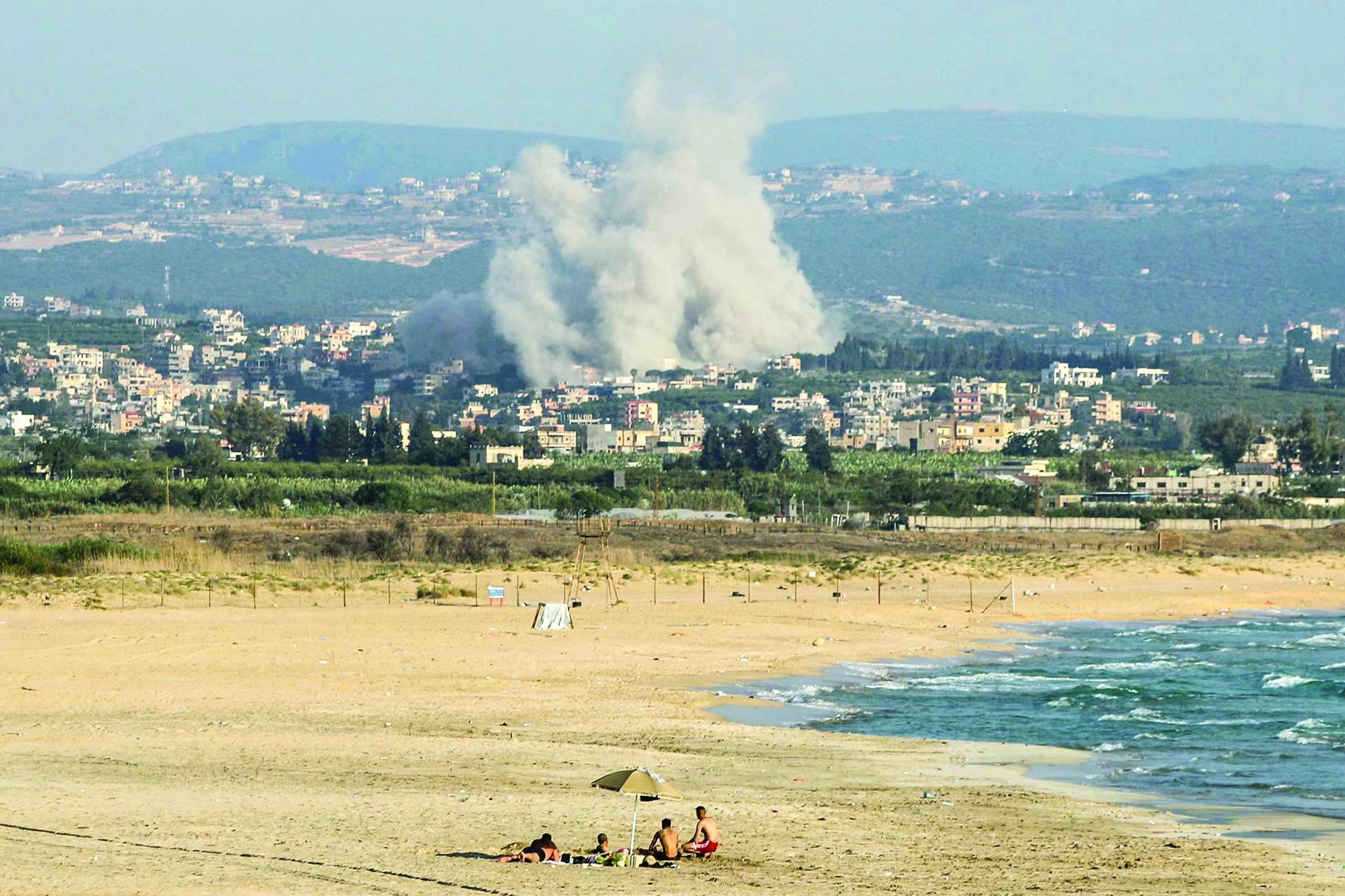
The aftermath of a bombing in the Eastern sector of south Lebanon Fronts (AP)
Negotiations to cement the ceasefire in southern Lebanon, alongside talks on the future of the south, the role of the Lebanese army and international guarantees, are raising a central question: Is Lebanon heading toward a repeat of the model that followed the July 2006 war, or has the latest conflict pushed it into a wholly different phase?
Nearly two decades after the 2006 war led to UN Resolution 1701, the deployment of the Lebanese army south of the Litani River and a long effort to regulate the confrontation between Israel and Hezbollah, today’s conditions look starkly different. The scale of destruction in the south is deeper, and the international approach to what comes next appears more forceful.
Speaking to Asharq Al-Awsat, university professor and lawyer Ali Mourad said the reality on the ground, away from “point-scoring speeches and declarations of victory,” demands a new reading of the war and the future of the south.
The south, he said, remains occupied, devastated on an unprecedented scale, and trapped in a displacement crisis likely to drag on.
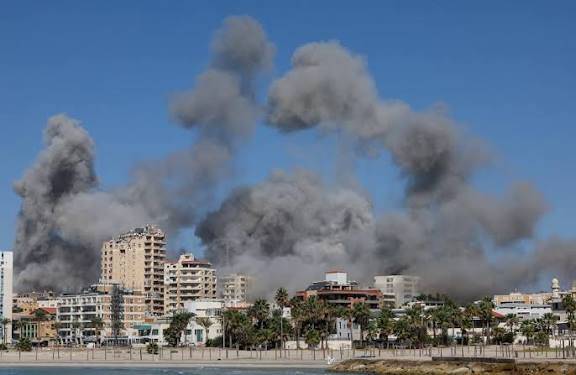
Israel targets Tyre (Reuters)
“Talk of ending the conflict in Lebanon can only be achieved through a set of basic goals: ending the war definitively, withdrawing Israeli forces from occupied Lebanese territory, returning prisoners, launching reconstruction and securing the safe and sustainable return of displaced people to their areas,” Mourad said.
Mourad, who comes from the southern border town of Aitaroun, said the main fear was “Iran’s attempt to take hold of the Lebanese file.” Such a move, he said, could prolong the management of the conflict rather than end it, keeping the roots of tension alive and blocking a final, stable settlement.
Hezbollah’s weapons at the heart of the deadlock
Mourad said there would be “no real end to this conflict without a clear and decisive handling of Hezbollah’s weapons.”
Leaving the issue unresolved, he said, would place Lebanon before a model entirely unlike the one that followed the 2006 war. Comparing the two phases is no longer realistic, he added, given the changes now in place.
“The south today is destroyed on an unprecedented scale, while the battlefield and military realities clearly show that the existing equations are difficult to overturn in the foreseeable future,” he said.
That reality, Mourad said, requires sustainable political solutions that address the roots of the crisis, rather than simply managing it. Ending the conflict, he added, depends on resolving the core unresolved issues, not merely halting military operations or containing current tensions.
“Any approach that does not address the causes of the crisis will lead to its reproduction in one form or another,” he said.
Israel targets Tyre (AFP)
The post-2006 phase is over
Retired Maj. Gen. Hisham Jaber, head of the Middle East Center for Studies, said the situation in southern Lebanon “differs radically from the phase that followed the July 2006 war.”
Talk of returning to the formulas of Resolution 1701 as applied then is no longer realistic, he said, given the military and political changes produced by the latest war.
“What happened after 2006 is completely different from what is happening today,” Jaber told Asharq Al-Awsat. “At that time, Israel quickly withdrew from the Lebanese territory it had occupied, and political and diplomatic tracks were launched with broad Arab and international support. Today, Israel is holding on to the areas it occupies and does not seem ready to give them up easily.”
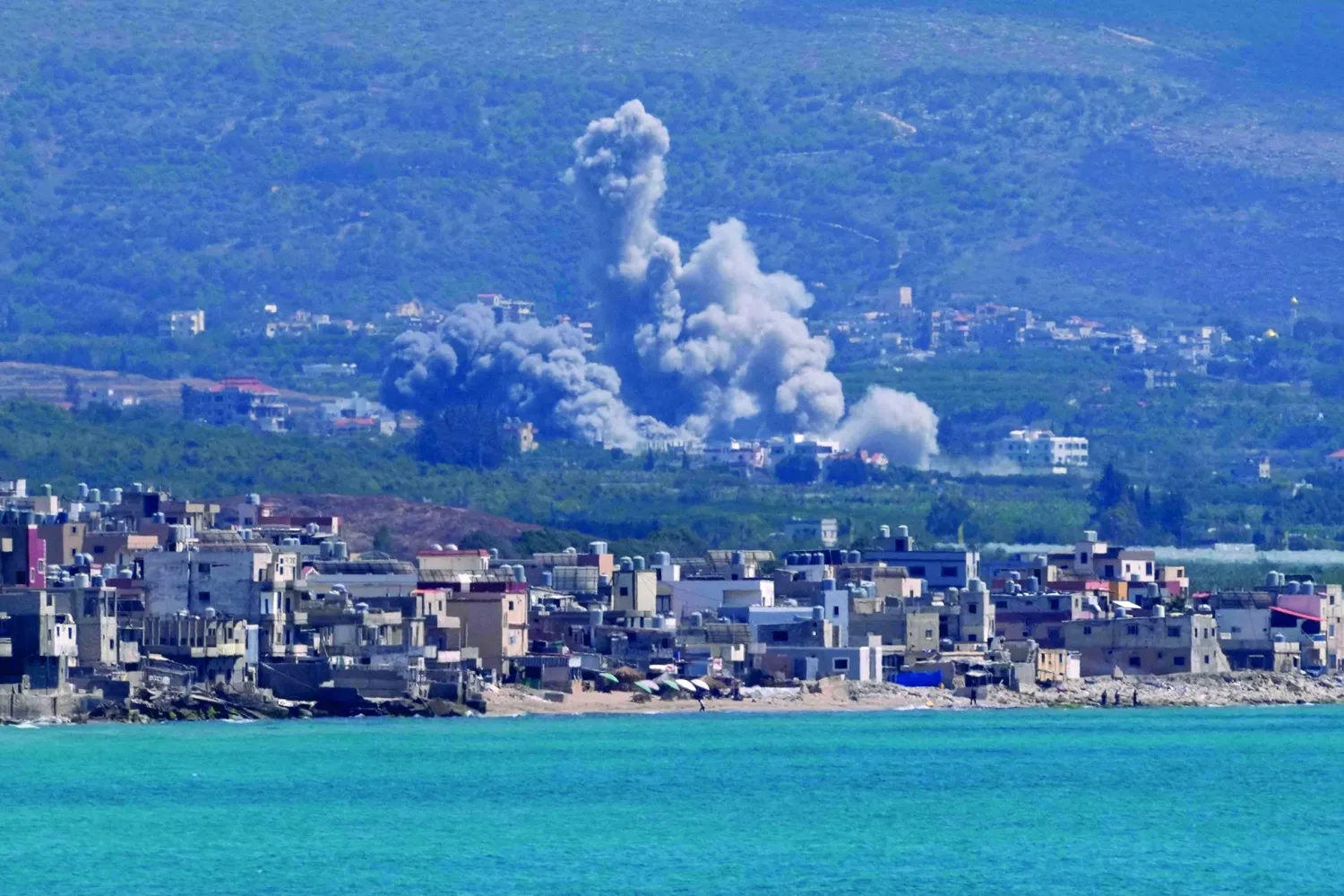
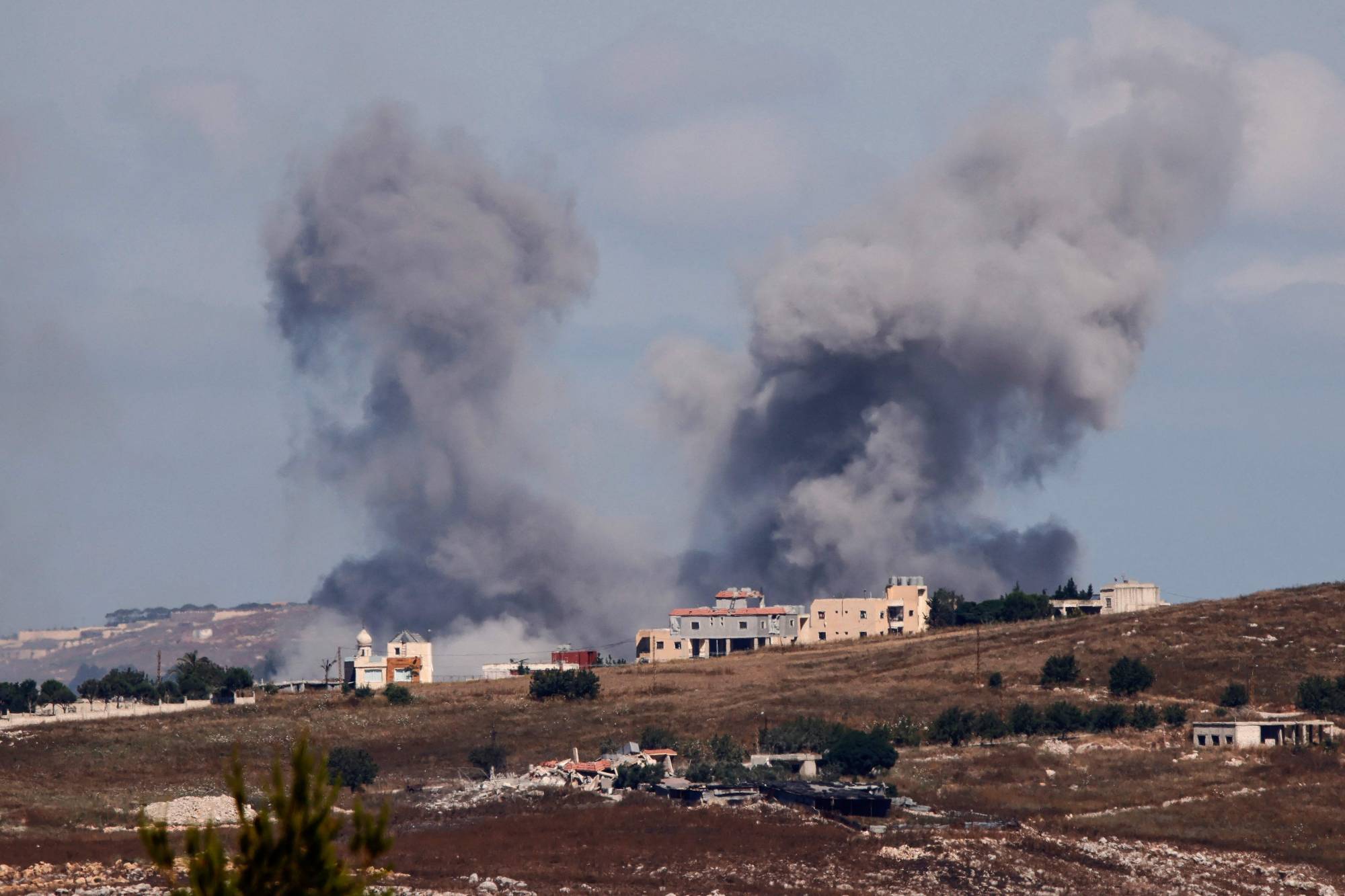
A photograph taken from the southern Lebanese region of Marjayoun shows smoke rising following an Israeli airstrike on the village of Choukine on June 19, 2026. (Photo by AFP)
Jaber said Israeli Prime Minister Benjamin Netanyahu faces domestic pressure that pushes him to keep the war going and avoid concessions.
“Netanyahu cannot appear as someone who fought a long war that ended without clear gains,” he said. “Continuing military pressure is therefore a way for him to improve negotiating terms and force the Lebanese position into submission.”
A pause, not an end to war
Jaber, who is from Nabatieh, said the current situation does not amount to a comprehensive end to the war. Rather, he called it “a temporary halt to some military operations.”
Israel, he said, still claims the right to strike whenever and wherever it chooses against targets it considers linked to Hezbollah.
“The Israelis say clearly that they retain freedom of military action in Lebanon,” he said. “So we cannot speak of an end to the war as much as we can speak of managing the conflict and controlling the level of confrontation.”
Jaber said the comparison with 2006 no longer stands.
“The post-2006 phase is over,” he said. “We are facing a completely different new reality, and Israel will not accept a return to the previous equations or to the situation that existed before the latest war.”
Washington manages the conflict
Jaber said the United States is managing the conflict more than trying to end it.
“If it wanted to end it completely, it would have applied sufficient pressure to stop the war definitively,” he said. “What we are seeing today is conflict management and an attempt to prevent it from exploding, nothing more.”
Israel, he said, is treating the border strip and destroyed villages as “a buffer security zone.”
“There are dozens of villages that are almost completely destroyed, and their residents cannot return because of the scale of destruction and the absence of reconstruction capacity, making the crisis likely to continue for a long time,” he said.
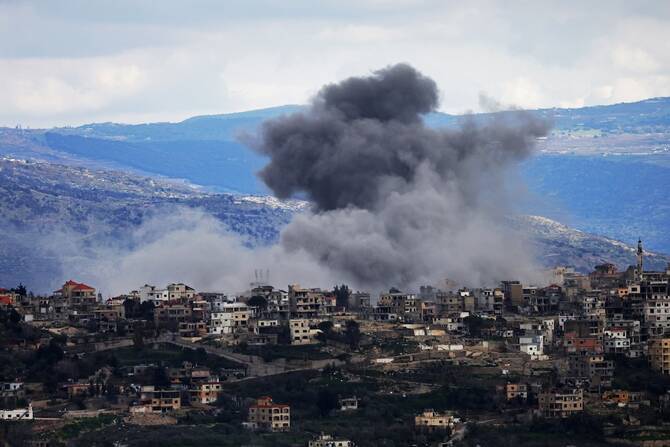
The aftermath of a bombing in the Eastern sector of South Lebanon Fronts (AFP)
A difficult test for Lebanon’s army
On the Lebanese army’s role, Jaber said the military faces challenges that exceed its current capabilities.
Some proposals under discussion, especially those related to moving Hezbollah fighters away from areas south of the Litani, cannot be carried out without a full Israeli withdrawal and clear security guarantees, he said.
“The army cannot be asked to carry out unilateral measures while Israeli occupation continues and attacks persist,” he said. “This is unrealistic, and the army cannot resolve the problem alone in this way.”
Jaber said the next phase would remain governed by mutual attrition.
“We are facing a phase of managing the conflict, not ending it,” he said. “I do not expect a major breakthrough in the foreseeable future. The war has effectively turned into a low-intensity war of attrition between Israel and Hezbollah, but the real price is being paid by the Lebanese people, especially the people of the south, who have been drained by war, displacement and destruction.”
Talks unlike any earlier phase
While Jaber’s view starts from the military and field realities created by the latest war, Brig. Gen. Khaled Hamadeh, a researcher in security and political affairs, links the future of this phase to the negotiations themselves.
He said the talks differ radically from all previous rounds, and that their success remains tied to US-Iranian understandings.
Hamadeh told Asharq Al-Awsat that the current negotiations between Lebanon and Israel are unlike the 2000, 2006 or 2024 arrangements linked to Resolution 1701.
“The military, political and regional circumstances have completely changed, while the outcome remains tied to the path of US-Iranian dialogue,” he said.
“In 2000, indirect negotiations took place between Hezbollah and Israel with German mediation to implement Resolution 425. Israel withdrew without conditions, and the border was demarcated. Today, the scene is completely different because the Lebanese state is conducting the negotiations, not the party.”
After the 2006 war, he said, Resolution 1701 called for UNIFIL to deploy alongside the Lebanese army south of the Litani, with a mechanism to monitor implementation and prevent any armed presence outside the state in that area.
“But this mechanism later proved ineffective, and war returned and fighting resumed,” he said.
Hamadeh said the current process is not a new international resolution, but understandings based on Resolution 1701. The difference, he said, is that they are being built through negotiations led by the Lebanese state, with security responsibility gradually shifting to the state after earlier monitoring mechanisms failed.
“The main difference today is that the negotiations are moving toward ending the conflict,” he said.
The latest US memorandum, he added, speaks for the first time of ending the state of war between Lebanon and Israel and addressing border issues between the two states — points not included in Resolution 1701.
From Resolution 1701 to the armistice agreement
“If we compare the current texts with the 1949 armistice agreement, we find a great similarity,” Hamadeh said.
The armistice agreement, he said, was based on a commitment by Lebanon and Israel not to use regular or irregular forces in military action against the other side. Today, he added, the principle being established is that the Lebanese state alone should assume responsibility for security, and that no weapons should remain outside its framework.
Hamadeh also pointed to a major difference on the ground.
“In the 2006 war, Israeli military achievements were limited, and Israeli forces did not penetrate deep into Lebanese territory in the way that has happened today,” he said. “In the latest confrontation, Israeli forces went beyond southern Litani and reached deeper areas, while Hezbollah suffered major field losses, making the balance of power completely different from what it was in 2006.”
US-Iranian understanding remains decisive
Hamadeh said the current agreement is also unfolding “under a US-Iranian understanding,” a factor that was absent in earlier phases. Iran’s role in the Lebanese file, he said, has become deeper and more influential than before.
On the chances of success, Hamadeh said it was “far too early” to speak of definitively ending the conflict, because the Lebanese negotiations cannot be separated from the US-Iranian track.
“We must wait to see where those talks lead, and only then can we judge their repercussions for Lebanon,” he said. “If the US-Iranian negotiations fail, Iran may return to using the Lebanese arena again. Therefore, the most influential element in the scene has not yet stabilized, and no final results can be built before the picture becomes clear.”
Hamadeh said any disruption in implementing the proposed understandings — whether on cementing the ceasefire, full withdrawal, or Hezbollah’s weapons — would lead to another round of fighting.
“Any agreement that is not completed through the implementation of all its stages will not be viable,” he said.
لم تشترك بعد
انشئ حساباً خاصاً بك لتحصل على أخبار مخصصة لك ولتتمتع بخاصية حفظ المقالات وتتلقى نشراتنا البريدية المتنوعة