




Residents of Gaza City say they are enduring the harshest phase of displacement since the war began, as Israeli forces launched a new operation that has flattened what remained of partly damaged neighborhoods and blown up the last of its high-rises. Entire districts such as Shujaia, Zeitoun and Tuffah had already been reduced to rubble in earlier assaults.
For more than two weeks, southern districts of the city – particularly Zeitoun and Sabra – have seen a mass flight of residents. In recent days, the exodus has spread to the north, including Jabalia and Nazla, as well as parts of Sheikh Radwan after a wave of Israeli air strikes.
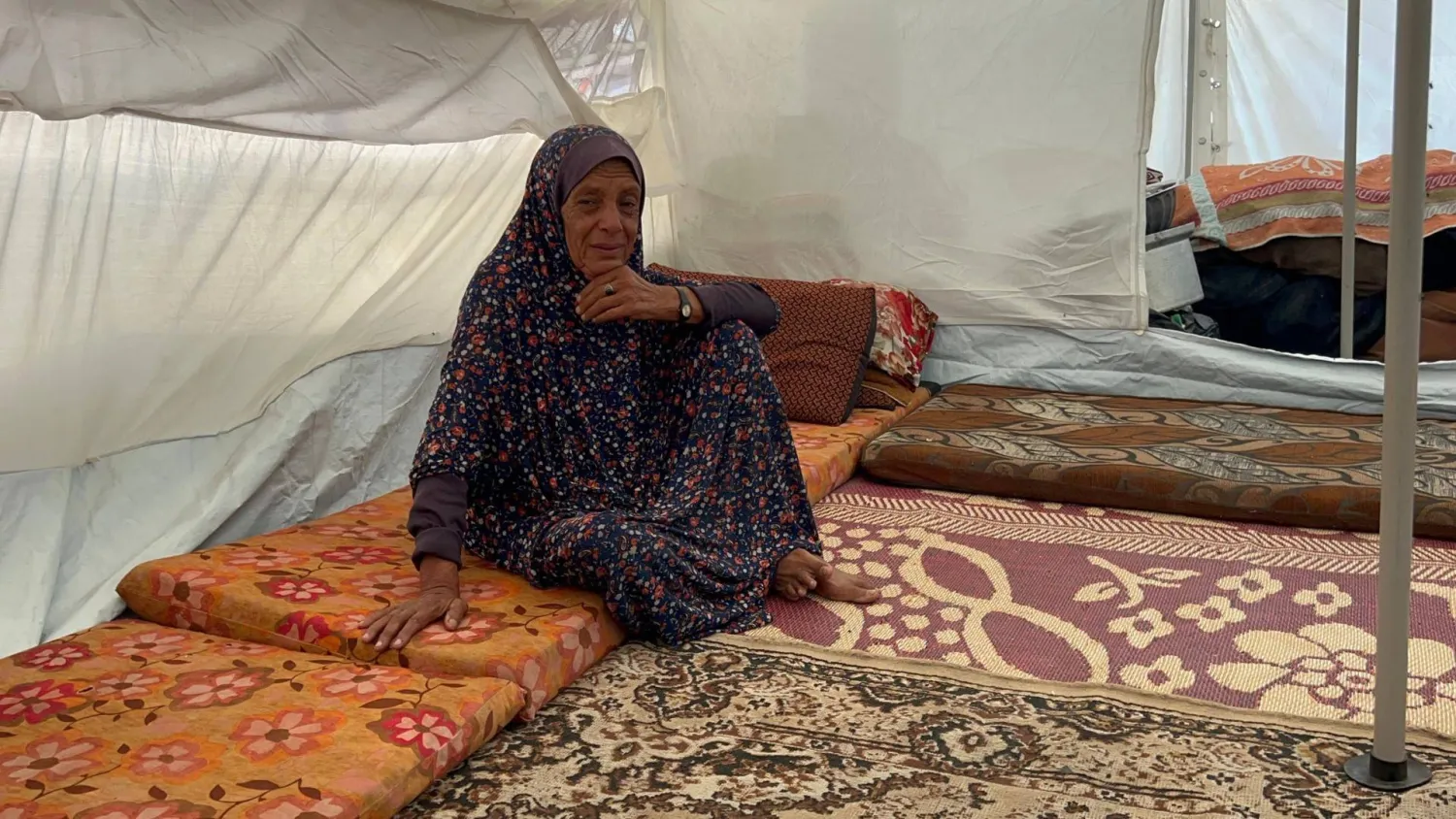
Watfa Abu Armanah, an elderly woman from Zeitoun, has been uprooted repeatedly since the start of the conflict in 2023. “This time is the hardest,” she told Asharq Al-Awsat.
Her home was destroyed in the early days of the war, forcing her to a school-turned-shelter in central Gaza’s Nuseirat camp, where she was injured in an air strike. She later fled to Rafah, then to Zawaida in Deir al-Balah, before returning to Zeitoun after a January ceasefire, only to be displaced again weeks later.
Under that truce with Hamas, Israel allowed more than a million Palestinians to return to Gaza City and the north after more than a year in displacement. Hamas had made their return a condition for releasing Israeli hostages.
Abu Armanah said her latest departure from Zeitoun was under artillery and air bombardment. She sheltered briefly in her brother’s house and a tent near her ruined home before Israeli troops again ordered civilians to leave. She moved with her children to Asqoula, between Zeitoun and Sabra, but was forced out once more when bombardment spread there.
With shelters full and landowners demanding rent from the displaced, she and her son set up a tent on an open patch facing the Rashad al-Shawa cultural center in Gaza City, destroyed in earlier raids. She lost one son in the war and said she is struggling to support the rest of her children, now orphans after their father’s death years ago.
“If people leave again, I will leave with them. We have no options,” she said.
Israeli operations are now focused on southern Gaza City districts, including Zeitoun and Sabra, and on the northern areas of Jabalia and Sheikh Radwan, with the stated aim of pushing residents westward toward the coast and eventually into the southern strip.
Nearby, Nawal al-Tawil has been living in a tent beside Abu Armanah. She recalled her family’s escape from Zeitoun under heavy shelling, drones overhead and leaflets warning residents to evacuate. They first moved to Asqoula, then to Zawaida, but returned to Gaza City after being told to pay rent for staying on farmland.
“This displacement is the worst,” Tawil said. “We are in the middle of the street, under the burning sun, with insects, no water and no life.” Still, she rejected leaving Gaza altogether. “Other countries may offer better conditions, but our homeland is our homeland.”
Israel says it wants to push Gaza’s population south again and is in talks with foreign states to accept Palestinians abroad, according to officials briefed on the plan.
The spiraling crisis is also felt by men like Hussein Karsou, who fled with his children and elderly mother from heavy bombardment near UNRWA’s al-Falah schools in southern Gaza City. “I preferred death in my house to displacement,” he said, but left with nothing as shells rained down.
Transport has become another burden. A ride from Gaza City to central areas can cost as much as 1,000 shekels ($294), far beyond most families’ reach.
“Civilians in Gaza are enduring appalling conditions,” said Julien Lerisson, head of delegation for the International Committee of the Red Cross in Israel and the Occupied Territories. “Forcing them into ever-smaller areas is unacceptable. Any large-scale evacuation risks further harm given the circumstances on the ground.”
After months of bombardment and repeated uprooting, he added, “the people of Gaza are utterly exhausted. What they need is relief, not more pressure – a chance to breathe, not more fear.”


