Egypt Complains to UN After Ethiopia Inaugurates Nile Dam

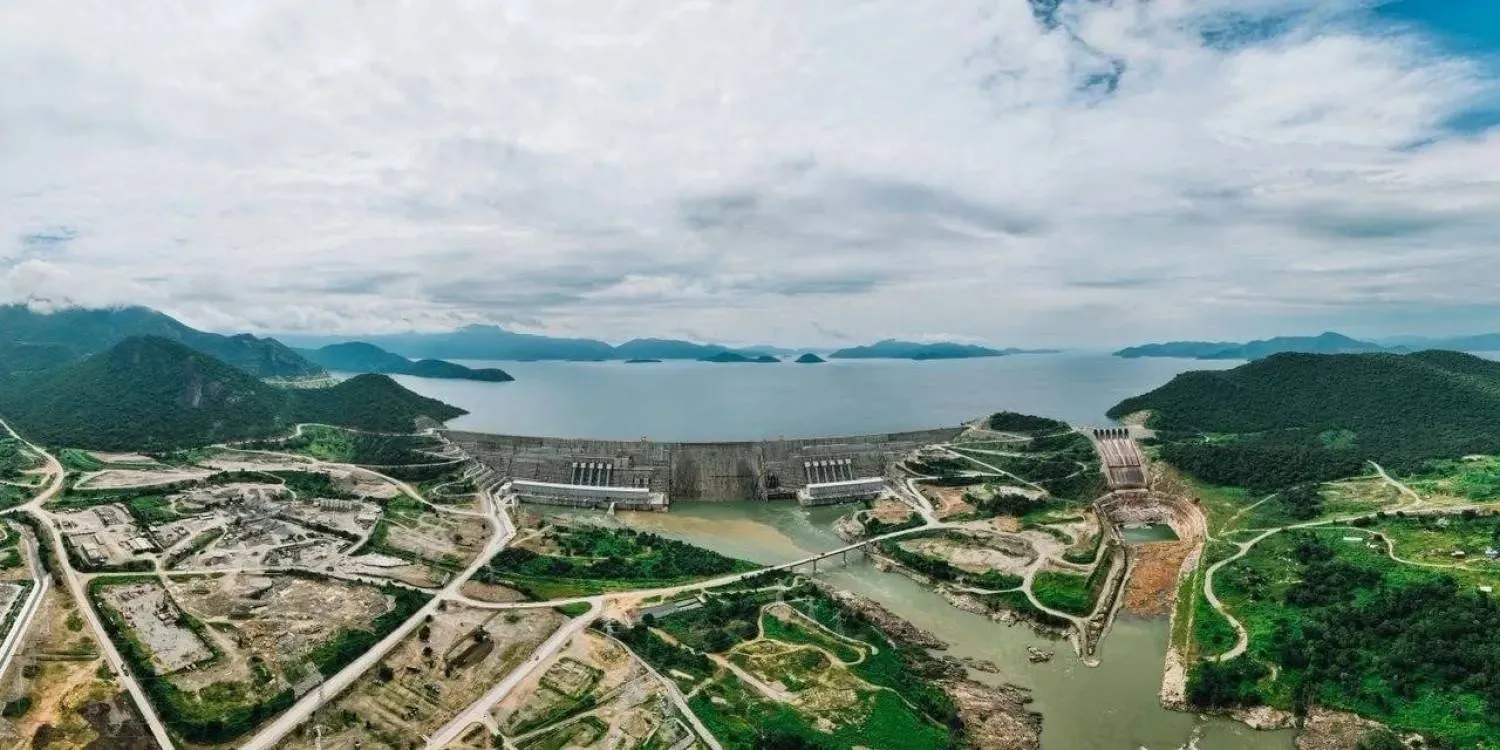
Ethiopia says dam aims at development (Ethiopian Prime Minister Abiy Ahmed Facebook account)
TT

Egypt Complains to UN After Ethiopia Inaugurates Nile Dam

Ethiopia says dam aims at development (Ethiopian Prime Minister Abiy Ahmed Facebook account)

Egypt told the UN Security Council on Tuesday it would not compromise on its “existential interests” in the River Nile, escalating a long-running dispute after Ethiopia formally inaugurated its massive Grand Ethiopian Renaissance Dam (GERD).

Ethiopian Prime Minister Abiy Ahmed presided over the opening ceremony, hailing the multi-billion-dollar project as a “source of inspiration” and declaring that Addis Ababa had “prevailed against those who threatened it in disregard of international law.”

The government said Ethiopians “do not use the river to harm others,” rejecting accusations from Cairo and Khartoum that the dam could endanger their historic shares of Nile waters.

Egypt’s Foreign Ministry dismissed the inauguration as an attempt to give the project “a false cover of legitimacy,” calling it a unilateral move that violates international law and a 2021 Security Council statement urging the three countries to reach a binding deal on filling and operating the dam.

“Egypt will not allow Ethiopian attempts to dominate management of the river unilaterally,” the ministry said, adding it reserved the right to take “all measures guaranteed under international law and the UN Charter to defend the existential interests of its people.”

Ethiopia began building GERD in 2011 on the Blue Nile, the main tributary of the Nile, despite objections from downstream Egypt and Sudan.

Cairo, which relies on the river for almost all its fresh water, says the dam threatens its vital share, while Addis Ababa argues it is essential for development and power generation.

Talks sponsored by the African Union collapsed in 2021 without agreement, prompting Egypt to appeal to the Security Council.

Egypt told the Council it had exercised “maximum restraint” for years by choosing diplomacy over confrontation. But it accused Ethiopia of obstruction and of using the project as a political tool “to rally its domestic audience against a fictitious enemy.”

Former Egyptian assistant foreign minister Mohamed Hegazy said the inauguration amounted to “an unprecedented hostile unilateral act,” warning that Cairo could again seek UN intervention or pressure Ethiopia through international partners.

Water expert Diaa El-Din El-Qousi told Asharq Al-Awsat that the inauguration was “a political ploy” since construction was not fully complete, but cautioned that Egypt’s water security could be at risk if future floods are low. “Egypt will not allow the dam to operate at its expense,” he said.

Ethiopia last March invited Egypt and Sudan to resume negotiations, but the offer was ignored after years of failed talks.

Egyptian President Abdel Fattah el-Sisi has repeatedly said that “Nile waters are a red line.”


Lebanon’s Judiciary Becomes New Battleground Between State and Hezbollah

The Justice Palace in Beirut (circulating photo)
TT

Lebanon’s Judiciary Becomes New Battleground Between State and Hezbollah

The Justice Palace in Beirut (circulating photo)

Lebanon’s judiciary has emerged as a key battleground between the state and Hezbollah as prosecutions widen to target the group’s officials and members in the Dahr al-Baidar explosives case and the suspected cell in northern Lebanon.

The proceedings come amid mounting calls to refer the explosives case to the Judicial Council and demands by Hezbollah that the state release the detainees.

Judge Claude Ghanem, the government commissioner to the Military Court, issued three search notices on Wednesday for Hezbollah officials, including Bilal al-Asaad, after they failed to appear for questioning in the case involving the Bcharre and Batroun highlands.

Meanwhile, First Military Investigating Judge Ghada Abu Alwan issued in-person arrest warrants for the five suspects detained in northern Lebanon.

The five were arrested on Nov. 10 and charged with forming an armed group and recruiting, equipping and arming its members. Defense lawyers denied that they had carried out a security reconnaissance mission.

The prosecutions follow the government’s March 2 decision to ban Hezbollah’s military and security activities and restrict its role to politics. The charges have yet to be proven.

On Oct. 22, the cabinet deferred a decision on Justice Minister Adel Nassar’s request to refer the Dahr al-Baidar and Qasr explosives case to the Judicial Council pending further progress in the investigation, prompting Lebanese Forces ministers to walk out.

Under Article 355 of the Code of Criminal Procedure, cases are referred to the Judicial Council by a cabinet decree. A judicial investigator appointed by the justice minister with the approval of the Higher Judicial Council conducts the investigation. The council’s rulings cannot be challenged except through objections or retrials.

The embassies of the United States, Britain, Australia, Canada and Japan have called for swift and independent judicial proceedings in the Dahr al-Baidar case.

Hezbollah Secretary-General Naim Qassem, meanwhile, demanded the release of those detained in the Bcharre and Batroun case and defended the legality of the activities of those held in the Dahr al-Baidar case, warning that “patience in the face of injustice has its limits.”

Ending Hezbollah’s Exceptional Status

Lebanese MP Ibrahim Mneimneh described the judicial action against Hezbollah as a crucial step toward ending the exceptional status the group has enjoyed for years and ensuring equality before the law.

He said the state may have found in the judiciary a way to enforce its decisions on establishing a state monopoly on arms.

“This is the turning point we have been calling for: ensuring that all Lebanese are equal before the law,” Mneimneh told Asharq Al-Awsat.

“The exceptional status Hezbollah enjoyed under the ‘army, people and resistance’ formula is now history. The party must realize that it is subject to the law.”

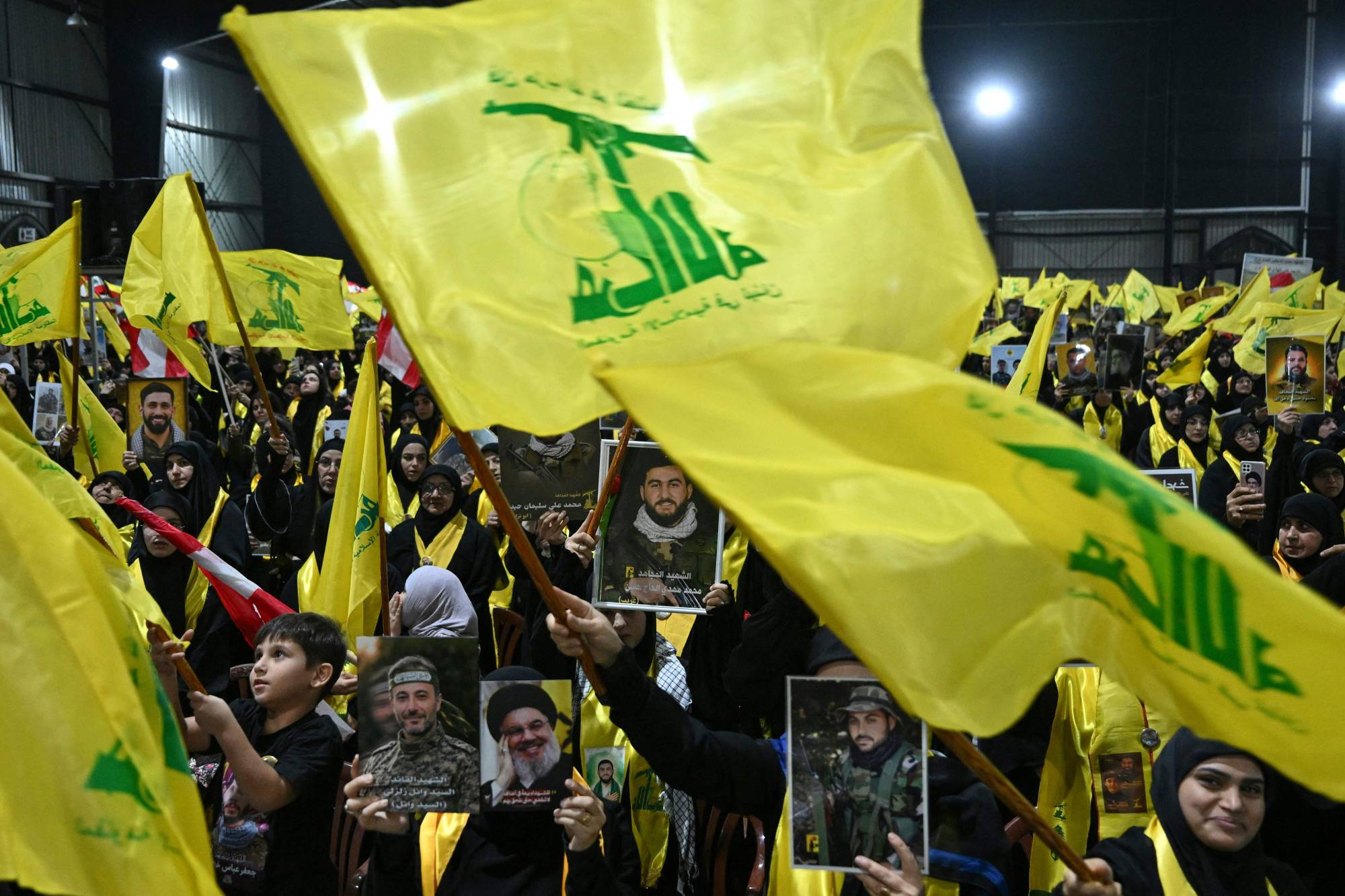
Hezbollah supporters wave flags of the group as they attend a ceremony commemorating the Iran-backed group's annual Martyrs' Day in Beirut's southern suburbs on November 11, 2026. (Photo by Joseph EID / AFP)

He said turning to the law, legal authorities and the Lebanese judiciary to deliver justice and reinforce the state’s monopoly on arms was “the right starting point.”

“Once the law and the judiciary become the ultimate authority, this will go beyond the weapons issue to encompass other matters that, in recent years, became exceptions to the law and undermined the very concept of the state,” he added.

Mneimneh stressed that the judiciary must be the authority to which both the Lebanese people and the state turn in dealing with Hezbollah.

“The Lebanese state is finally showing seriousness in addressing this issue and may have found the right way forward,” he said.

“Until recently, despite the government’s bold decisions, we sensed an inability to implement them. But the state appears to have found its way forward through the judiciary. This is a positive development that must be built upon and extended to all cases.”

Asked whether the Dahr al-Baidar truck case could be referred to the Judicial Council, Mneimneh said: “I don’t know whether that is possible, but it could be useful. Judicial action and the issuance of an arrest warrant are, in themselves, an achievement.”

“What matters is sustaining this process, not only in the Dahr al-Baidar truck case, important as it is, but also in upholding the rule of law against all violations across the country, foremost among them Hezbollah’s weapons, as well as anyone else bearing arms or breaking the law in other cases.”

He stressed that the supremacy of the law was fundamental to the very concept of the state and to building it.

Dual Authority

Constitutional expert Antoine Messarra said Lebanon’s judicial, administrative and security challenges were inseparable from its incomplete sovereignty and dual authority.

He stressed that the current judicial action, made possible by the positions taken by the president and prime minister, needed broad public support to gain traction.

“There are two types of occupation in Lebanon: a hostile Israeli occupation and a ‘brotherly occupation,’” Messarra told Asharq Al-Awsat, using the latter term to describe weapons held outside state control.

“All problems facing the administration, security institutions and judiciary must be understood in the context of occupation. No constitution or system of governance can function effectively under such conditions, even in Switzerland, France or Denmark,” he said.

Messarra said the country’s leadership and several judges were making tremendous efforts, but public support for the process remained sorely lacking.

He criticized a broad segment of Lebanese society for what he described as “political posturing, mutual deception, feigned cleverness and maintaining equal distance from all sides,” even on matters of national sovereignty.

Messarra noted that steps and positions once deemed impossible were now within reach. Lebanon, he said, was undergoing a “slow process” that still lacked broad-based public backing.


Syrian President Appoints Ilham Ahmad to People's Assembly

Syrian President Ahmad al-Sharaa meets with Mazloum Abdi and Ilham Ahmad on Tuesday evening (Syrian Presidency)
TT

Syrian President Appoints Ilham Ahmad to People's Assembly

Syrian President Ahmad al-Sharaa meets with Mazloum Abdi and Ilham Ahmad on Tuesday evening (Syrian Presidency)

Syrian President Ahmad al-Sharaa has issued Decree No. 200 of 2026 appointing Ilham Hanan Ahmad to the People's Assembly to fill a vacant seat designated for an independent member, bringing the assembly's membership from 205 to 206, the legislative body announced Thursday.

The decree is based on provisions of the Constitutional Declaration, particularly Article 24, as well as Article 45 of Decree No. 143.

According to the assembly, Article 45 authorizes the president to appoint a replacement for any member who dies, resigns or loses their membership.

People's Assembly member Mudar Wafiq Hamdan was removed from his position several weeks ago over his previous ties to the former regime, which had sparked public and media criticism.

Ahmad's appointment brings the number of Syrian Kurdish lawmakers in the assembly to nine.

The appointment comes months after the Syrian Democratic Forces (SDF) announced their dissolution as part of an agreement to integrate their structures into central state institutions.

On March 10, 2025, President al-Sharaa and SDF commander Mazloum Abdi signed an agreement providing for a ceasefire and the integration of the Kurdish-led forces into Syrian state institutions.

The agreement initiated a process to integrate Kurdish forces in the region, including the formation of a military division comprising three SDF brigades and a separate brigade for the forces of Ain al-Arab (Kobani), within a division affiliated with Aleppo province.

In August, following a military escalation with Damascus, Abdi announced the dissolution of the SDF, whose backbone consisted of Kurdish fighters who had played a major role in combating ISIS. President al-Sharaa subsequently appointed him as an adviser.

Since the agreement, several former SDF officials have been appointed to positions in the Syrian government.

These include Abdi's appointment as presidential adviser on Kurdish affairs, Sipan Hamo (Samir Aso) as deputy defense minister for the eastern region, and Nour al-Din Issa Ahmad, also known as Abu Omar Khanika, as governor of Hasakah, alongside other appointments.

The dissolution of the SDF marked the end of a significant chapter in the history of Syria's Kurds, who had hoped to consolidate self-rule and preserve the gains achieved during years of conflict. Ilham Ahmad was among the most prominent advocates of those aspirations.

Born in 1972 in Afrin, northern Syria, Ilham Hanan Ahmad has spent decades playing a prominent role in advocating for Kurdish rights and women's political participation, both domestically and internationally.

She began her political activism as one of the early advocates of women's rights at the University of Aleppo, where she studied Arabic literature.

Ahmad later became one of the founders of the autonomous administration established by Kurdish groups after the outbreak of the Syrian conflict, which developed organized civilian and military institutions.

She strongly advocated a decentralized, pluralistic system of government in Syria, a proposal firmly opposed by Damascus.

Alongside Abdi, Ahmad became one of the principal negotiators with the central government, participating in talks that culminated in the signing and implementation of the integration agreement.

The start of the agreement's implementation, which included provisions for the return of displaced Kurds to areas they had fled following Turkish military operations, enabled Ahmad to visit her hometown of Afrin in May 2026 for the first time in nine years.


National Dialogue Aims to Defuse Baghdad-Erbil Crisis Amid Dispute Over Federalism

Iraq's four highest state authorities agreed to hold an inclusive national dialogue in early December (Iraqi Presidency)
TT

National Dialogue Aims to Defuse Baghdad-Erbil Crisis Amid Dispute Over Federalism

Iraq's four highest state authorities agreed to hold an inclusive national dialogue in early December (Iraqi Presidency)

Iraq's four highest state authorities have moved to contain escalating tensions between the federal government and the Kurdistan Region, agreeing to hold a national dialogue in early December under the auspices of Supreme Judicial Council President Faiq Zidan.

The talks will bring together the relevant parties to seek constitutional solutions to a crisis triggered by Prime Minister Ali al-Zaidi's measures targeting oil smuggling and border crossings.

The initiative follows a Federal Supreme Court ruling upholding the constitutionality of those measures, amid Kurdish objections that have gone beyond disputes over powers and resources to question the foundations of the partnership between Baghdad and Erbil.

Kurdish leaders have also raised the possibility of deploying Peshmerga forces to defend what they describe as the region's constitutional status.

According to politicians who spoke to Asharq Al-Awsat, the escalating rhetoric exposes a deeper crisis within Iraq's political system. Since the adoption of the permanent constitution in 2005, the system has relied more heavily on political understandings and temporary alliances than on stable institutional rules governing relations between the federal government and the Kurdistan Region.

The Kurdistan Regional Government (KRG) and Kurdish party leaders have intensified their opposition, going so far as to suggest a return to the use of Peshmerga forces.

Politicians and observers described the severity of these positions as unprecedented, saying they reflect the fragility of a consensus-based political system largely shaped by election results, government formation negotiations and agreements over the distribution of political posts.

A Crisis Deeper Than Oil Smuggling

Statements from both sides suggest that the dispute extends beyond the government's latest measures to a more fundamental disagreement over the interpretation and implementation of Iraq's constitution.

While al-Zaidi's decisions have received support from Iraqi political forces, including factions within the Coordination Framework, Kurdish leaders have insisted on adhering to the constitution while questioning the speed with which the Federal Supreme Court issued its ruling.

In televised remarks on Wednesday evening, senior Kurdistan Democratic Party (KDP) official and former Foreign Minister Hoshyar Zebari said the court's decision had come as a surprise.

"The Federal Court's decision was surprising. The government submitted its request for clarification, and within just a few hours the court ruled that the government measures were constitutional, without proper scrutiny or a review of the relevant records," Zebari said.

The Federal Supreme Court announced Wednesday evening that it had ruled the measures taken by Prime Minister Ali al-Zaidi toward the Kurdistan Region constitutional.

A Constitutional Overturn or a Necessary Correction?

Kurdish objections have not been limited to the details of the government measures. Kurdish leaders have gone further, describing the developments as an assault on the constitution and the principle of partnership between the federal government and the region.

This position marks a departure from previous disputes, which largely concerned the budget, financial and oil resources, and the division of powers, without reaching the same level of doubt over the constitutional foundations of the relationship.

Al-Zaidi's government, by contrast, views its measures as an attempt to correct the course of state administration and assert the authority of federal institutions over matters it considers to fall within their constitutional jurisdiction.

Observers believe the dialogue initiative proposed by the Supreme Judicial Council president could help restore a consensus-based approach after al-Zaidi's decisions challenged some of the arrangements that have governed relations between Baghdad and Erbil in recent years.

The greatest challenge, however, is likely to emerge when the government begins implementing its measures on the ground, particularly the deployment of Iraqi border guards to assume responsibility for the country's international borders.

A Shiite politician told Asharq Al-Awsat that the forces' responsibilities would extend beyond border crossings, customs and smuggling.

Their duties, he said, would encompass all border-related matters that should fall under federal authority, including oversight of the withdrawal of Turkish forces from northern Iraq.

Satellite Surveillance

Fahd al-Jubouri, a senior figure in the National Wisdom Movement, told Asharq Al-Awsat that the Iraqi government recently contracted an Australian satellite technology company to conduct a geographical survey of the entire country.

The company subsequently submitted reports to the government detailing oil-smuggling operations.

Al-Jubouri revealed that negotiations are underway on four key issues.

"The first concerns the Iraqi army assuming control of international borders, as explicitly stipulated in the constitution. The second concerns oil, with plans to contract a foreign company to establish all the relevant details. The third involves non-oil revenues, while the fourth concerns border crossings and customs tariffs, where a unified automated system and standardized customs tariff will be introduced," he said.

The Oil Dispute

The confrontation between Baghdad and Erbil has opened a broader debate about the nature of Iraq's federal system, the constitutional division of powers between the federal government and the Kurdistan Region, and the willingness of political forces to abide by the principles of partnership established in the constitution.

Political science professor Issam al-Faily believes Iraq is facing a crisis within its federal system.

"We have a crisis in the federal system, even though the constitution explicitly defines Iraq as a federal state and distributes responsibilities between the central government and the region, including provisions concerning oil resources under Articles 112 and 114," he said.

"The problem lies in the lack of clarity over how these oilfields should be managed, whether they have already been discovered or are still being explored, because there is no supporting legislation governing these issues."

He added that the constitutional provisions themselves have contributed to creating a fragile system.

Al-Faily identified another underlying problem: the deeply centralized nature of Iraqi political thinking.

"There is another problem. The Iraqi political mindset is fundamentally centralized. This is a widespread tendency that makes most people believe in a centralized system rather than federalism," he said.

"Moreover, the concepts of partnership and balance are largely absent, despite being enshrined in the constitution. This means that belief in federalism is largely lacking."

Problems of Implementation

Talib Mohammed Karim, a political science professor at Al-Mustansiriya University, believes the crisis surrounding Iraq's federal system stems primarily from how the constitution has been implemented, alongside ambiguities in its provisions that require additional legislation and clearer interpretation.

"The failure to complete the necessary legislation has turned some constitutional disagreements into recurring crises between Baghdad and Erbil," he said.

Karim argued that politicians must recognize that building a state based on citizenship begins with treating the constitution as the ultimate reference for everyone, placing citizens at the center of rights and responsibilities, and ensuring that state institutions take precedence over the interests of political parties and communal groups.

"This cannot be achieved by abolishing partnership or bypassing federalism, but by developing both within a state governed by law and institutions," he said.

Legal researcher Saif al-Saadi, meanwhile, criticized the drafting of Iraq's constitution.

"The constitutional provisions in Iraq were written by people without the necessary professional expertise, bringing together engineers, doctors, mechanics, religious figures, language specialists, biologists, historians and geographers," he said.

Al-Saadi nevertheless argued that federalism, if properly implemented, could be among the most effective systems of government.

Vague Constitutional Wording

Salah al-Arbawi, head of the Wa'i Movement, said relations between Baghdad and the Kurdistan Region suffer from multiple problems, beginning with theoretical questions arising from constitutional provisions that have remained ambiguous.

These include the question of which authority takes precedence: federal law or the laws governing the Kurdistan Region.

"Any review of the constitution reveals numerous gaps in defining the boundaries of authority between the central government and the region," he said.

Al-Arbawi argued that implementation has only made matters worse.

"The authority of the Federal Supreme Court effectively stops at the region's borders, while federal government decisions are implemented in the region only when the regional authorities choose to enforce them," he said.

"Consequently, the problem is fundamentally structural, shaped by a deeply unbalanced relationship."

An Interpretation That Serves Political Players

Offering a more pessimistic assessment, political researcher and academic Yahya al-Kubaisi argued that the fundamental problem lies in the constitutional text itself.

He said the constitution was drafted in a way that allows the political forces responsible for writing it, primarily Shiite and Kurdish political actors, to interpret its provisions according to their interests rather than the actual wording.

"The Federal Supreme Court, which is entirely controlled by Shiite political actors, has contributed to deepening the crisis through politicized and contradictory rulings that violate the constitutional text itself," he said.

Al-Kubaisi believes the problem goes beyond legal interpretation.

"More seriously, neither side respects the constitution. Both believe that power relations alone govern Iraq, rather than the constitution or the law," he said.

"Whenever the balance of power changes, or one side imagines that it has shifted in its favor, a new crisis emerges."

He expressed skepticism that constitutional reform would resolve the country's political difficulties.

"I do not believe that amending the constitution, or even writing an entirely new one, can resolve Iraq's crisis of state failure," he said.

A Constitution Shaped by American Influence

Academic and political affairs researcher Abbas Abboud said Iraq's constitution was drafted under the influence of both American political will and the interests of Iraqi political parties and forces involved in its preparation.

"The experience of decentralization in Iraq, together with the political environment in which the constitution was written, entrenched a system of power-sharing based on communal identities rather than citizenship," he said.

"The objective was to guarantee the rights of the country's different communities."

Abboud argued that reforming Iraq's political system has become unavoidable, whether driven by internal forces or external pressure.

He said state leaders, political parties and influential political groups, particularly those within the Coordination Framework, have recognized the need for fundamental reforms, despite the difficulty, and perhaps impossibility, of amending the constitution.

"Most political forces have begun to realize that the Iraqi state needs to be redefined," he said.

"Iraq must redefine itself in a way that reflects the profound regional transformations that have been unfolding for years."