Qatar’s PM Says Consulting with Regional Partners a Response to Israel’s Attack

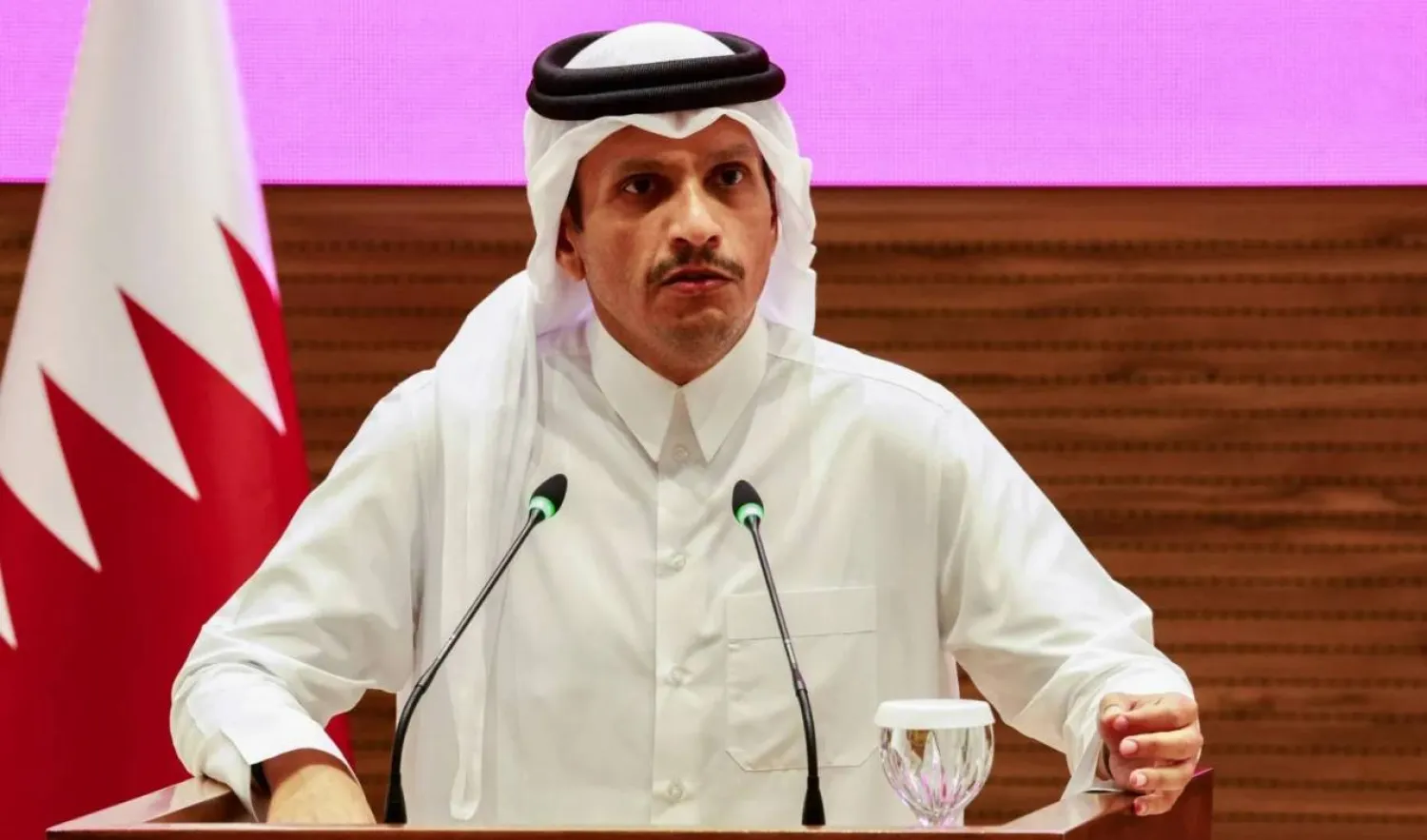
Qatari Prime Minister Sheikh Mohammed bin Abdulrahman Al Thani. AFP
TT

Qatar’s PM Says Consulting with Regional Partners a Response to Israel’s Attack

Qatari Prime Minister Sheikh Mohammed bin Abdulrahman Al Thani. AFP

Qatar’s Prime Minister Sheikh Mohammed bin Abdulrahman Al Thani has said Doha hopes that there will be a “collective response” to Israel’s strike on Hamas officials in the Qatari capital.

“There is a response that will happen from the region. This response is currently under consultation and discussion with other partners in the region,” Al-Thani said.

He stated that an Arab-Islamic summit will be held in Doha in the coming days, where the participants will decide on a course of action.

However, Al-Thani said that Qatar will not ask other regional partners to respond in a particular way.

“There is a collective response that should happen from the region,” Al-Thani said, “We are hoping for something meaningful that deters Israel from continuing this bullying.”

He also told CNN in an interview aired late Wednesday that Israeli Prime Minister Benjamin Netanyahu “killed any hope” of releasing hostages still held in the Gaza Strip.

“I was meeting one of the (Israeli) hostage’s families the morning of the attack,” Sheikh Mohammed said. “They are counting on this (ceasefire) mediation, they have no other hope for that.”

Sheikh Mohammed added: “I think that what Netanyahu has done yesterday, he just killed any hope for those hostages."

Qatar and Egypt have been key mediators to try and reach a ceasefire in the war in Gaza.

Sheikh Mohammed was expected to attend a UN Security Council meeting later Thursday, part of a diplomatic push by Qatar after the strike.

The attack in Doha was nothing less than “state terror,” Al-Thani told CNN.


Saudi Arabia Reaffirms Commitment to NPT at Eleventh Review Conference

The Saudi flag. Asharq Al-Awsat
TT

Saudi Arabia Reaffirms Commitment to NPT at Eleventh Review Conference

The Saudi flag. Asharq Al-Awsat

Saudi Arabia has reaffirmed the importance of the Treaty on the Non-Proliferation of Nuclear Weapons (NPT) as a fundamental pillar of the global non-proliferation regime, stressing full implementation of its provisions and balance among its three pillars.

The stance was made by the Kingdom’s Permanent Representative to the United Nations, Dr. Abdulaziz Alwasil, at the general debate of the Eleventh NPT Review Conference in New York.

The Kingdom called on nuclear-weapon states to honor their disarmament pledges, affirming that the only guarantee against nuclear weapons use is their complete elimination.

It also affirmed the inherent right of States Parties to peaceful uses of nuclear energy in accordance with the treaty. It underscored the importance of transparency and cooperation with the International Atomic Energy Agency (IAEA).

The speech addressed Iranian attacks against the Kingdom, targeting civilians and civilian infrastructure, which were condemned by the international community. It stressed the importance of regional security, good neighborliness, non-interference in internal affairs, and Iran's full cooperation with the IAEA.

The Kingdom affirmed that establishing a Middle East zone free of nuclear weapons and other weapons of mass destruction is a collective international responsibility, noting that Israel's refusal to join the treaty remains a major obstacle to this goal.


Jeddah Summit Stresses Importance of Restoring Navigation Security in Hormuz

Saudi Crown Prince Mohammed bin Salman receives Bahrain's King Sheikh Hamad bin Isa al-Khalifa ahead of the Gulf Cooperation Council (GCC) meeting in Jeddah, Saudi Arabia, April 28, 2026. Bandar Algaloud/Courtesy of Saudi Royal Court/Handout via REUTERS
TT

Jeddah Summit Stresses Importance of Restoring Navigation Security in Hormuz

Saudi Crown Prince Mohammed bin Salman receives Bahrain's King Sheikh Hamad bin Isa al-Khalifa ahead of the Gulf Cooperation Council (GCC) meeting in Jeddah, Saudi Arabia, April 28, 2026. Bandar Algaloud/Courtesy of Saudi Royal Court/Handout via REUTERS

The Gulf summit, which was chaired on Tuesday by Saudi Crown Prince Mohammed bin Salman, discussed the regional situation.

It affirmed the necessity of restoring navigation security in the Strait of Hormuz and strongly condemned the flagrant Iranian aggressions against the Gulf Cooperation Council (GCC) states and Jordan.

GCC Secretary-General Jasem Albudaiwi affirmed in a statement that the summit was held at the invitation of the Saudi leadership and discussed ways to find a diplomatic path to end the crisis and pave the way for agreements and understandings that address the concerns of the Gulf states and enhance long-term security and stability.

He clarified that the leaders expressed strong condemnation and denunciation of the flagrant Iranian aggressions against the Gulf states and Jordan, emphasizing that these treacherous attacks have led to a sharp loss of confidence by the Gulf states in Iran.

Albudaiwi noted that the leaders praised the ability demonstrated by the Gulf states to deal with the challenges they faced due to this crisis, pointing out that the leaders expressed their categorical rejection of illegal Iranian measures to close the Strait of Hormuz and obstruct navigation in it, affirming the necessity of restoring navigation security and freedom and returning the situation in the Strait to what it was before February 28.

Albudaiwi also highlighted that the leaders of the Gulf states directed the urgency of completing the requirements for achieving access to all joint Gulf projects, including transport and logistics services, along with accelerating the implementation of the GCC railway project.

The Secretary-General of the Council further noted the leaders' affirmation of the importance of promptly taking steps towards establishing an oil and gas pipeline project, a water linkage project between the Gulf states, and moving forward with studying the creation of strategic Gulf reserve areas, in addition to the importance of intensifying military integration among the Council's states and accelerating the completion of the ballistic missile early warning system project.


Faisal bin Farhan, Guterres Discuss Regional Developments

Saudi Minister of Foreign Affairs Prince Faisal bin Farhan bin Abdullah
TT

Faisal bin Farhan, Guterres Discuss Regional Developments

Saudi Minister of Foreign Affairs Prince Faisal bin Farhan bin Abdullah

Saudi Minister of Foreign Affairs Prince Faisal bin Farhan bin Abdullah received a telephone call on Tuesday from UN Secretary-General António Guterres.

During the call, they discussed areas of cooperation between the two sides and a number of developments in the region and the world.