


Tencent Deepens Digital Footprint in Saudi Arabia to Support Smart Transformation

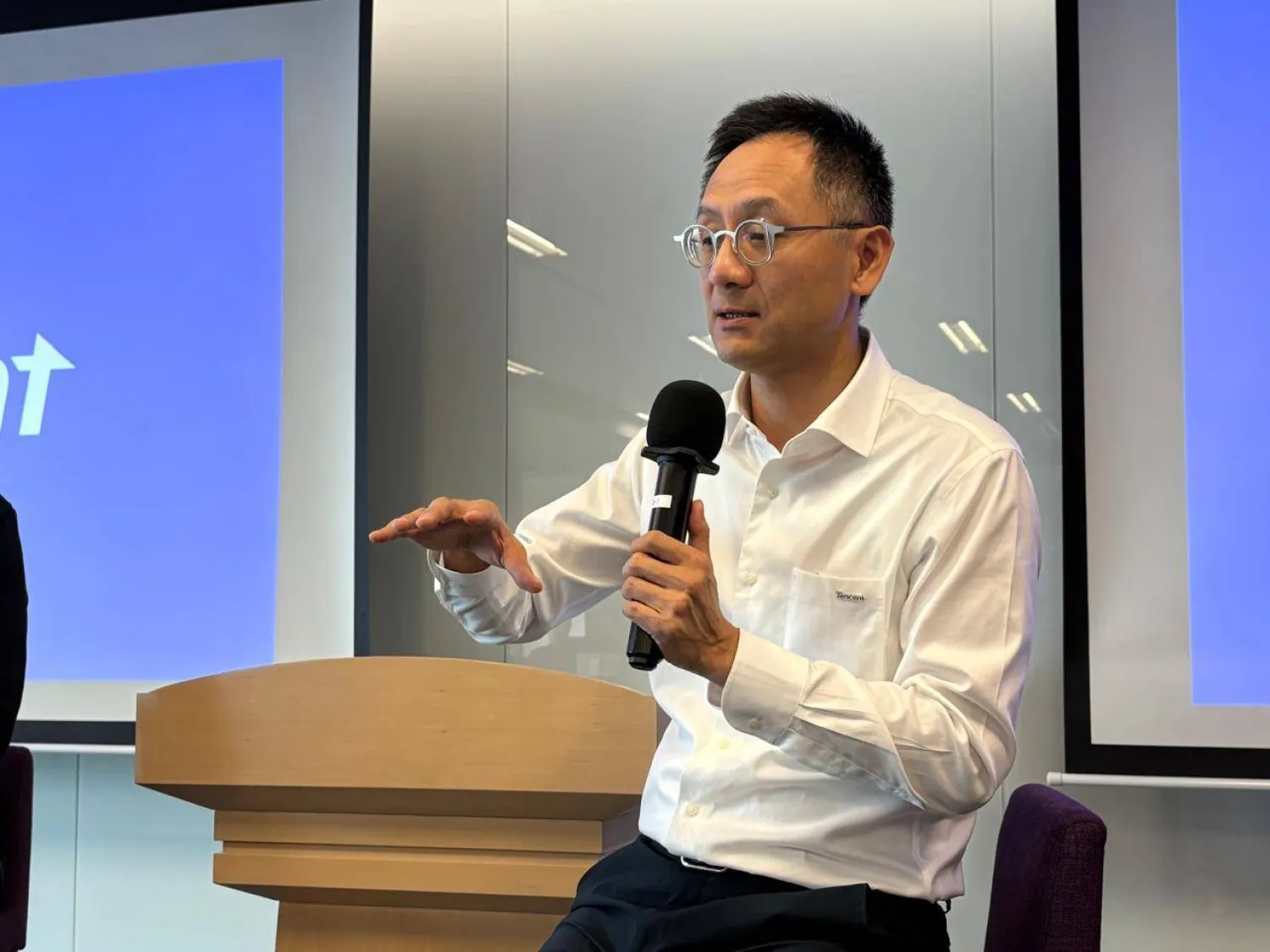
Dowson Tong, Senior Executive Vice President of Tencent and CEO of the Cloud and Smart Industries Group. (Asharq Al-Awsat)
TT

Tencent Deepens Digital Footprint in Saudi Arabia to Support Smart Transformation

Dowson Tong, Senior Executive Vice President of Tencent and CEO of the Cloud and Smart Industries Group. (Asharq Al-Awsat)

As China races to expand its global digital presence, technology giant Tencent is stepping up its investments in Saudi Arabia with major cloud projects that align with the Kingdom’s Vision 2030 digital transformation agenda.

The company’s strategy was outlined during exclusive interviews with Asharq Al-Awsat, the first Arab media outlet to visit Tencent’s global headquarters in Shenzhen.

Founded in 1998, Tencent Holdings is one of the world’s largest internet and technology companies, operating across three main sectors: value-added services, marketing, and financial and business solutions. Listed on Hong Kong’s main exchange since 2004, the firm has grown into a global powerhouse.

In the second quarter of 2025, Tencent reported revenues of 184.5 billion yuan ($25.6 billion), compared with 161.1 billion yuan ($22.4 billion) a year earlier. Net profit rose 16 percent year-on-year to 56 billion yuan ($7.8 billion), boosted by strong gaming revenues and improvements to its AI-driven advertising platform.

Dowson Tong, Senior Executive Vice President of Tencent and CEO of the Cloud and Smart Industries Group, confirmed that the company is in the final stages of launching a new data center in Riyadh, which he described as a “significant growth opportunity.”

“We are already supporting many Chinese companies expanding in the Kingdom, and several of our partners are preparing to use the new facility,” Tong said. “This will enable us to grow not just in Saudi Arabia but across the wider Middle East.”

Tong added that the project reflects Tencent’s strategy of expanding internet coverage and delivering services closer to users. He emphasized that the Middle East is one of the fastest-growing digital markets globally and that Tencent is committed to long-term investment in the region.

For now, the company’s Saudi operations are focused on serving Chinese enterprises active in the Kingdom. However, licensing and regulatory approvals are under way to allow Tencent to extend cloud services to the public sector and make its “public cloud” accessible to Saudi businesses.

In February, Tencent announced the launch of its first Middle East cloud region, based in Saudi Arabia, with a $150 million investment in infrastructure and innovation to support Vision 2030. The hub includes two availability zones and a comprehensive suite of cloud computing and AI services, bringing Tencent’s global network to more than 50 availability zones across 21 regions.

According to Dan Hu, Vice President of Tencent Cloud International for the Middle East and North Africa, the Saudi cloud hub is a “strategic cornerstone” of the company’s regional presence.

He said the facility will accelerate digital transformation and enable smart city growth with solutions such as edge computing and AI-powered analytics, which allow real-time data processing in areas like predictive maintenance, urban planning, and smart building management.

Hu stressed that Saudi Arabia serves as Tencent’s gateway to the Middle East, with growing commitments expected across digital media, gaming, e-commerce, tourism, finance, and telecommunications.

He noted that the Middle East has already emerged as Tencent’s fastest-growing market. In 2024, the company recorded double-digit growth in international markets, fueled by strong demand for digital media services.

The launch of the Saudi cloud region is a milestone in the region’s digital transformation journey, Hu said, adding that it reflects confidence in the Kingdom’s ambition to become a global hub for digital solutions.

Tencent is also tailoring its technologies to local needs by building teams on the ground and working with regional system integrators and developers. This ensures flexibility, regulatory compliance, and alignment with business requirements.

Hu noted that the prioritization of AI by governments in Saudi Arabia, the UAE, and Qatar is strengthening public services, enhancing digital infrastructure, and advancing economic diversification.


Saudi Arabia Bypasses ‘Hormuz’ Disruption with Transcontinental Network

Vehicles complete crossing procedures on King Fahd Causeway linking Saudi Arabia and Bahrain (SPA)
TT

Saudi Arabia Bypasses ‘Hormuz’ Disruption with Transcontinental Network

Vehicles complete crossing procedures on King Fahd Causeway linking Saudi Arabia and Bahrain (SPA)

As global supply chains face unprecedented strain, and the Strait of Hormuz, one of the world’s most critical chokepoints, is disrupted, Saudi Arabia has positioned its transport system as a vital alternative, helping keep global trade moving.

Under the National Transport and Logistics Strategy launched by Crown Prince Mohammed bin Salman in 2021, the kingdom has built a transcontinental network that is now being tested in real time.

Officials say operational success rates exceed 97% in crisis management and evacuation.

The system, designed to position Saudi Arabia as a hub linking three continents, has been activated through new logistics zones, partnerships with global firms, and faster export and import procedures across air, land, and sea.

This has helped ensure the steady flow of goods, services, and energy, shifting the kingdom’s role from infrastructure developer to a key stabilizing force in times of crisis.

Air response

Logistics expert Hassan Al Helil told Asharq Al-Awsat that air transport now drives emergency response, handling 70% to 80% of rapid evacuations.

Sea transport is used for larger operations involving 500 to 2,000 people, with response times of 24 to 72 hours.

He said operations rely on tight coordination and strict safety protocols, including medical screening and in-transit care, despite challenges such as congested airspace, longer flight times of 20% to 30%, regulatory differences, delays of up to 48 hours, and weak infrastructure in crisis areas that can cut efficiency to 40%.

Even so, Saudi Arabia maintains a success rate above 97%, supported by flexible operations and tested emergency plans.

Red Sea shift

Maritime transport has emerged as a key alternative. Red Sea ports, led by Yanbu, are handling cargo that once passed through the Strait of Hormuz.

Integrated with the East-West pipeline, the system allows exports to be rerouted away from tension zones without disrupting supply.

Crude exports from Yanbu’s northern and southern terminals averaged 4.4 million barrels per day over five days through Tuesday. The kingdom is aiming to raise Red Sea exports to 5 million barrels per day.

Transport costs have dropped 58% as vessels move closer to Saudi ports. Large cargoes, including wind turbines, have been redirected from Jubail to Yanbu to speed delivery.

Smarter routes

Al Helil said diversifying export routes has cut exposure to chokepoints by up to 40%.

This helped absorb global shipping cost increases of up to 50%, alongside added geopolitical risk fees and higher insurance costs.

Despite global delays of three to 10 days, Saudi port efficiency and temporary exemptions for vessels reduced idle time by 25% and limited price volatility.

Land and rail

Saudi Arabia has also become a key land corridor for Gulf trade, backed by more than 500,000 trucks and expanded rail capacity exceeding 2,500 containers a day.

Thousands of trucks have moved goods to Kuwait and Bahrain, underscoring the kingdom’s growing role as a regional distribution hub.

The system has also supported passenger movement, including overland transport of Kuwaiti citizens from Riyadh and Iraqi flights arriving at Arar airport.

Regional links

The Saudi Ports Authority has launched a new trade bridge linking Dammam with Sharjah in partnership with Gulftainer, offering faster multimodal shipping.

A Gulf Shuttle service now connects Dammam’s King Abdulaziz Port with Bahrain’s Khalifa Bin Salman Port.

Saudi Arabia Railways has also launched a freight corridor linking eastern ports with the Al Haditha border crossing, strengthening trade links with Jordan and beyond.

Passengers and crisis response

The system has played a key humanitarian role, facilitating the movement of stranded travelers.

Arar International Airport has received flights from Iraq, while maintaining operational success above 97%.

Authorities have also introduced temporary exemptions for ships, cutting idle time by up to 25% and reducing costs without compromising safety.

This has lowered maritime transport costs by 8% to 18% and reduced price volatility by 10% to 20%.

Food security, shuttle shipping

The system has also supported regional food security.

Land crossings, particularly Abu Samra, have ensured steady supplies to Qatar.

Al Helil said Saudi Arabia has diversified imports from more than 25 countries and maintains strategic reserves of up to 12 months for some goods, with availability exceeding 95%.

Also speaking to Asharq Al-Awsat, logistics specialist Nashmi Al Harbi said rail has become a reliable alternative amid disruptions at sea.

A new freight route linking eastern ports to Al Haditha can carry more than 400 containers per train, cutting shipping time in half.

In February 2026, the Saudi cabinet approved a high-speed rail link between Riyadh and Doha, reducing travel time to two hours and supporting steady goods flows.

Al Harbi said that shuttle shipping, using smaller vessels that move frequently between ports, is reshaping supply chains and costs.

He said a parallel maritime link has eased pressure on the King Fahd Causeway, which handled 4.7 million vehicles in 2025, while supporting intra-Gulf trade nearing $1 billion.

Saudi Arabia is also attracting global logistics firms. DHL is investing 130 million euros to build a regional hub in Riyadh, while Maersk has opened a new bonded warehouse.

These efforts have lifted the kingdom 17 places in the World Bank’s Logistics Performance Index to 38th globally.

Saudi Arabia has moved beyond crisis response to strengthen its position in global trade. With integrated ports, stronger infrastructure and flexible operations, it can reroute trade and energy flows efficiently, turning disruption into opportunity.


Sources: Spain, Algeria in Talks to Increase Pipeline Gas Supply by Up to 10%

Spanish Foreing Affairs Minister Jose Manuel Albares speaks during a press conference after the Cabinet meeting at Moncloa Palace in Madrid, Spain, 24 March 2026.  EPA/CHEMA MOYA
Spanish Foreing Affairs Minister Jose Manuel Albares speaks during a press conference after the Cabinet meeting at Moncloa Palace in Madrid, Spain, 24 March 2026. EPA/CHEMA MOYA
TT

Sources: Spain, Algeria in Talks to Increase Pipeline Gas Supply by Up to 10%

Spanish Foreing Affairs Minister Jose Manuel Albares speaks during a press conference after the Cabinet meeting at Moncloa Palace in Madrid, Spain, 24 March 2026.  EPA/CHEMA MOYA
Spanish Foreing Affairs Minister Jose Manuel Albares speaks during a press conference after the Cabinet meeting at Moncloa Palace in Madrid, Spain, 24 March 2026. EPA/CHEMA MOYA

Spain and Algeria are in talks to increase the supply of natural gas via the Medgaz pipeline from Algeria by as much ⁠as 10%, two ⁠sources familiar with the matter said.

Talks are in advanced stage, one of the ⁠sources said, adding that a preliminary agreement may be reached during Spanish Foreign Minister Jose Manuel Albares's visit to Algiers this week.

The increase would be possible as the ⁠pipeline ⁠between the countries has capacity to increase the flow of gas by around 1 billion cubic meters (bcm) per year, Reuters quoted them as saying.

Spain and Algeria agreed to strengthen their energy partnership, Albares said on Thursday after meeting Algerian President Abdelmadjid Tebboune.

Algeria is "a stable and reliable" supplier of gas, Albares said.

The Iran conflict has upended energy markets and increased volatility, leading some to look elsewhere ⁠for their gas. Spanish power ⁠utility Naturgy's CEO Francisco Reynes said this week the company wanted to strengthen its relationship with its Algerian supplier and shareholder Sonatrach.

Naturgy has gas contracts with the Algerian state oil and gas company for ⁠about 5 billion cubic meters per year, according to figures the Spanish company gave to the market in 2022.

Algerian gas made up more than 29% of Spain's total gas imports in the first two months of the year, according to data from Spanish gas grid operator Enagas.

It comes via the Medgaz pipeline, in which Naturgy is ⁠a minority ⁠partner and Sonatrach holds a 51% stake. Sonatrach also has a stake of about 4% in Naturgy.

Other countries are also asking Algeria for more gas in the face of disruption caused by the conflict in the Middle East.

Italian Prime Minister Giorgia Meloni said she hoped Algeria would send more gas to her country during a visit to Algiers this week.


TotalEnergies to Honor All LNG Contracts Despite Qatar Outages

FILE PHOTO: The logo of French oil and gas company TotalEnergies is seen at a petrol station in Paris, France, March 25, 2026. REUTERS/Abdul Saboor/File Photo
TT

TotalEnergies to Honor All LNG Contracts Despite Qatar Outages

FILE PHOTO: The logo of French oil and gas company TotalEnergies is seen at a petrol station in Paris, France, March 25, 2026. REUTERS/Abdul Saboor/File Photo

TotalEnergies' CEO Patrick Pouyanne said on Thursday that the company made a decision not to declare force majeure to any of its liquefied natural gas customers, and that it would respect all the LNG contracts in terms of price and ⁠volume.

Qatar, the world's biggest ⁠LNG producer, has declared force majeure on all of its LNG output after being attacked as part of the US-Israeli war with Iran.

"We said to our customers we will ⁠not invoke force majeure and not deliver the gas... We want to be security of supply for our customers," Pouyanne said.

"Yes, we'll miss energy coming from Qatar and Abu Dhabi, but our portfolio is large enough to redirect part of it," he added, according to Reuters.

Analysts estimate TotalEnergies takes 5.2 million metric tons per annum (mtpa) from ⁠its ⁠share of the QatarEnergy LNG trains.

Sources have said Shell, the world's biggest LNG trader, had declared force majeure on cargoes it buys from QatarEnergy and sells on. Analysts estimate Shell takes 6.8 mtpa of Qatari LNG.

Pouyanne also said that the current energy crisis makes renewables more attractive as they are not subject to the volatility from geopolitical instability.
