
Egypt Says Stolen Pharaoh's Bracelet Melted Down, Sold for $4,000

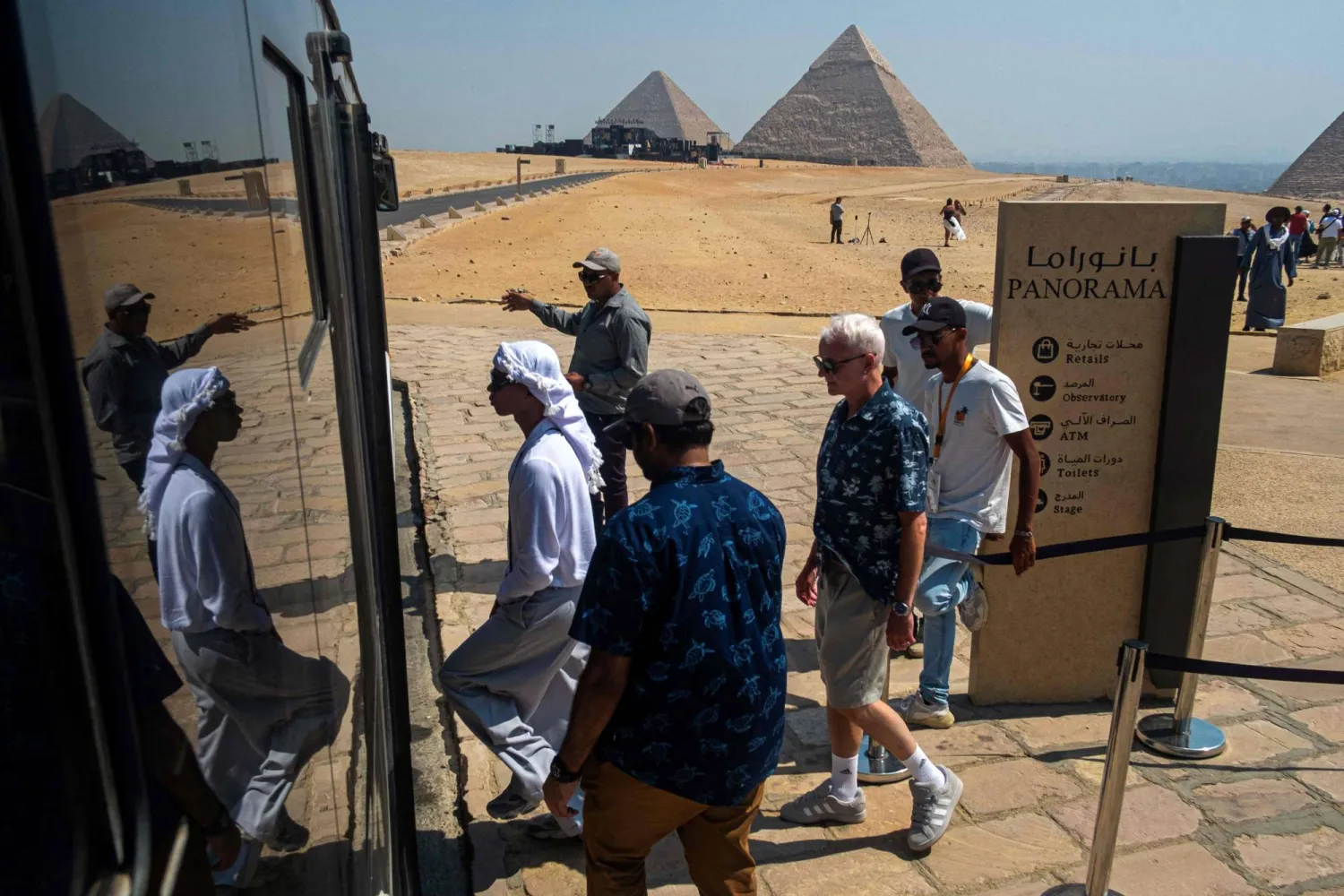
Tourists board an environmentally friendly electric bus, during their visit to the Giza Pyramids necropolis, on the southwestern outskirts of the Egyptian capital Cairo on September 18, 2025. (Photo by Khaled DESOUKI / AFP)
TT

Egypt Says Stolen Pharaoh's Bracelet Melted Down, Sold for $4,000

Tourists board an environmentally friendly electric bus, during their visit to the Giza Pyramids necropolis, on the southwestern outskirts of the Egyptian capital Cairo on September 18, 2025. (Photo by Khaled DESOUKI / AFP)

Egyptian police said on Thursday they arrested a museum employee and three alleged accomplices after a priceless ancient gold bracelet was stolen from Cairo's Egyptian Museum, sold for about $4,000 and then melted down.

The 3,000-year-old bracelet, a gold band adorned with lapis lazuli beads, dated back to the reign of Amenemope, a pharaoh of Egypt's 21st Dynasty (1070-945 BC), AFP reported.

It was reported missing on Saturday by museum staff, a statement from Egypt's interior ministry said, adding that it had been kept in a locked metal safe inside the museum's conservation lab.

It said a restoration specialist working at the museum stole the bracelet on September 9 while on duty.

A silver trader in central Cairo helped facilitate the sale, the police said, first to a gold dealer for 180,000 Egyptian pounds ($3,735), who then sold it to a worker at a gold foundry for 194,000 pounds ($4,025).

The bracelet was then melted down along with other scrap gold, the ministry said.

The suspects were taken into custody and confessed to the crime, according to authorities.

Security camera footage shared by the Egyptian interior ministry appeared to show a man handing over a sum of money before cutting a gold bracelet in two. It was not clear whether the bracelet shown is the same ancient piece stolen from the museum.

Egyptian media outlets had earlier reported the loss was discovered during an inventory check ahead of the "Treasures of the Pharaohs" exhibition scheduled in Rome next month.

Jean Guillaume Olette-Pelletier, an Egyptologist, told AFP the bracelet was discovered in Tanis, in the eastern Nile delta, during archaeological excavations in the tomb of King Psusennes I, where Amenemope had been reburied after the plundering of his original tomb.

Gold Rings Around 2,000 Years Old Found During Dig at Thailand Archaeological Site

In this photo released by The Fine Arts Department, an archaeologist shows two rings with human bones during an ongoing dig at the Don Yai Thong archeological site in Phetchaburi province, Thailand Thursday, July 2, 2026. (The Fine Arts Department via AP)
TT

Gold Rings Around 2,000 Years Old Found During Dig at Thailand Archaeological Site

In this photo released by The Fine Arts Department, an archaeologist shows two rings with human bones during an ongoing dig at the Don Yai Thong archeological site in Phetchaburi province, Thailand Thursday, July 2, 2026. (The Fine Arts Department via AP)

Two gold rings aged around 2,000 years old were discovered during an excavation at a new archaeological site in western Thailand, officials said.

The rings were found with human bones during an ongoing dig at the Don Yai Thong archaeological site in Phetchaburi province last week, the Thai government's Fine Arts Department said in a statement.

One ring found Thursday was engraved with characters believed to be Bhrami script, an ancient Indian writing system. An initial assessment by experts identified the script reading as “pusarakhitasa,” meaning “the one protected by Pushya,” said to be one of the most auspicious zodiac signs in Indian astronomy, The Associated Press quoted the department as saying.

The other ring found with the same skeletal remains is a plain gold ring without any pattern. Experts believe the rings’ owner may have been a merchant of the Indian ancient caste system Vaishyas, the department said.

The Don Yai Thong archaeological site, about 130 kilometers (80 miles) southwest of the capital Bangkok, was discovered early this year after residents found pieces of ancient bronze drums in a rice field, leading to further excavation.

The site was dated to a late prehistoric era in Thailand, a period of human settlement also known as the Iron Age, established to be around 1,500 to 2,500 years ago.

Since February, archaeologists have discovered eight human skeletons, bronze and gold jewelry, pottery and other artifacts indicating a ceremonial burial of wealthy people or members of the society’s upper classes.

The excavation is expected to be complete in another month, with plans to showcase the archaeological finds to the public, the Fine Arts Department said.


Historic Clock at Two Holy Mosques Exhibition Reflects Timekeeping at Prophet's Mosque

A rare historic clock is on display at the Exhibition of the Two Holy Mosques Architecture in Makkah. (SPA)
TT

Historic Clock at Two Holy Mosques Exhibition Reflects Timekeeping at Prophet's Mosque

A rare historic clock is on display at the Exhibition of the Two Holy Mosques Architecture in Makkah. (SPA)

A rare historic clock is on display at the Exhibition of the Two Holy Mosques Architecture in Makkah, offering visitors a glimpse into the long history of care devoted to the Prophet's Mosque, the Saudi Press Agency reported on Sunday.

Believed to date back to 1277 AH (1860 AD), the clock reflects the enduring attention given to the architecture, maintenance and furnishings of the Two Holy Mosques over the centuries.

The clock is among the exhibition's most significant historical artifacts, representing valuable documentation of the development of timekeeping at the Prophet's Mosque during the 13th century AH.

It played an important role in organizing prayer times and acts of worship, while its precise craftsmanship and elegant design reflect the high level of artistry for which industries of that period were renowned.

The exhibition serves as a prominent cultural destination for Makkah visitors, offering an opportunity to explore rare historical treasures associated with serving the Two Holy Mosques and the efforts devoted to their care.

It also showcases the Saudi era, which has witnessed the largest expansion, development, and service projects in the history of the Two Holy Mosques, keeping pace with the growing numbers of visitors and enabling them to perform their acts of worship in an atmosphere of safety and tranquility.


Saudi Arabia’s Cultural Development Fund Signs Global Partnership to Develop, Empower Emerging Talent

The collaboration seeks to enhance leadership and specialized capabilities and strengthen workforce readiness to meet future requirements. SPA
TT

Saudi Arabia’s Cultural Development Fund Signs Global Partnership to Develop, Empower Emerging Talent

The collaboration seeks to enhance leadership and specialized capabilities and strengthen workforce readiness to meet future requirements. SPA

The Saudi Cultural Development Fund (CDF) has signed a memorandum of understanding (MoU) with Fitch Learning, one of the world's leading professional development institutions, to collaborate on designing and implementing specialized development initiatives.

The collaboration seeks to enhance leadership and specialized capabilities and strengthen workforce readiness to meet future requirements.

The partnership will result in the development and implementation of professional development initiatives and programs based on international best practices, contributing to knowledge transfer, strengthening leadership and specialized competencies, fostering a culture of continuous learning, and enhancing the readiness of human capital.

The partnership is also expected to improve CDF's operational efficiency and support its long-term sustainability.