



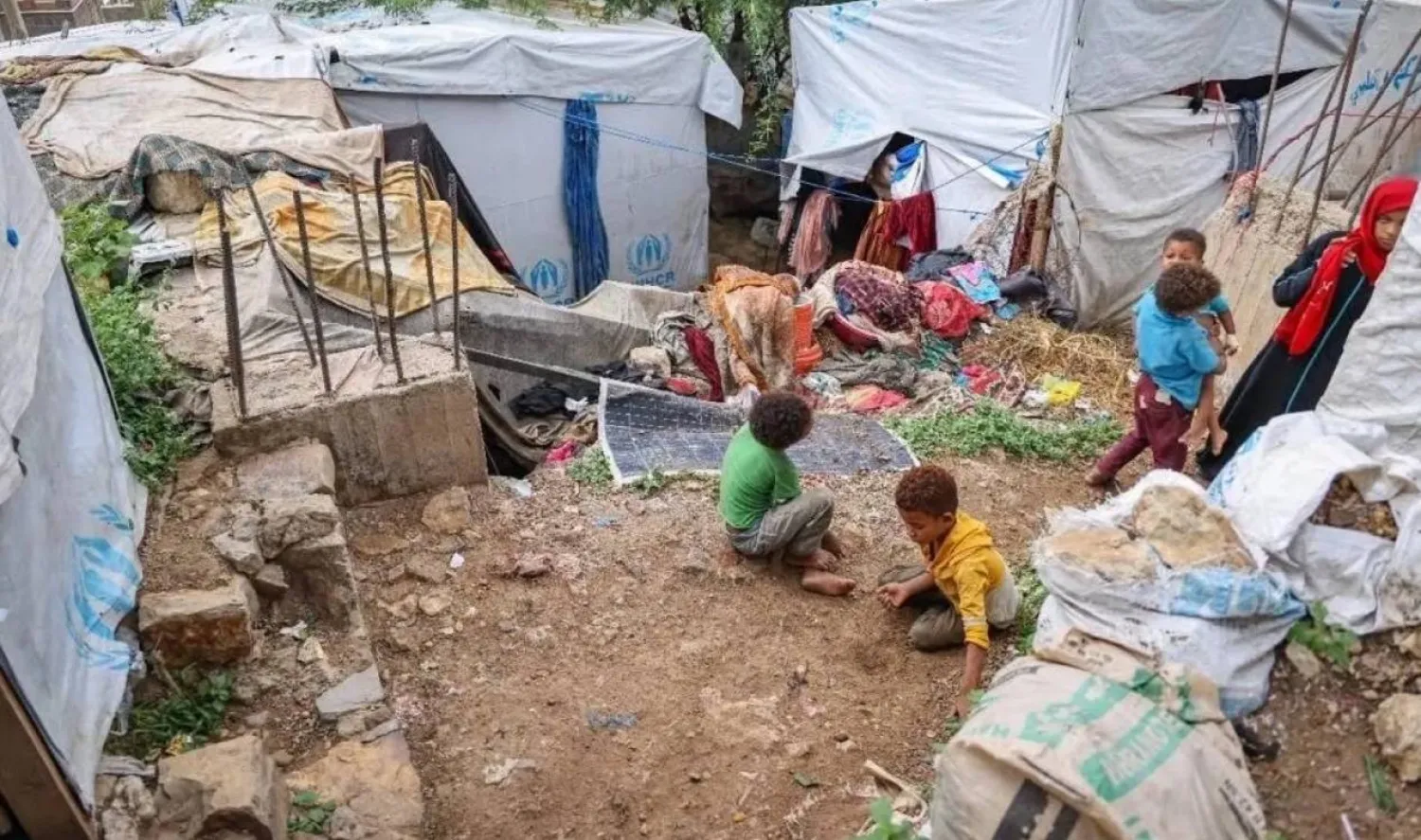

In its worst food security outlook in Yemen since 2022, the UN warned of a new humanitarian catastrophe in the country, saying 18 million people are estimated to face acute hunger with as many as 166 districts expected to slide into emergency levels of food insecurity.
“Yemen is again on the brink of humanitarian disaster, standing as the world’s third most food insecure context,” said the United Nations Office for the Coordination of Humanitarian Affairs (OCHA) in its Yemen Humanitarian Update.
“As of September this year, 18.1 million people are estimated to
face acute hunger (IPC Phase 3 and above),” it added.
The Office warned that hunger is deepening across the country, with as many as 166 districts expected to slide into emergency levels of food insecurity (IPC Phase 4) this month.
It said that without sustained and large-scale assistance, as many as 41,000 people risk experiencing catastrophic, famine-like conditions (IPC Phase 5).
“This is the worst outlook for Yemen since 2022, when the country was grappling with fully fledged conflict,” the OCHA report said.
It noted that the situation is particularly severe for internally displaced persons (IDPs), with nearly seven in ten families reporting in June that they were unable to meet their basic food needs.
That same month, the Office said almost one in three families were going a whole 24-hour period without eating.
And as in other crises around the world, it said women and girls are facing heightened vulnerabilities due to acute food insecurity, often eating least and last and finding themselves increasingly exposed to protection risks.
Collapsing Economy
OCHA said that Yemen’s devastating crisis is driven by a collapsing economy, prolonged conflict, increasingly frequent climate shocks and deteriorating essential services.
“A volatile currency, surging food prices and widespread unemployment have eroded families’ purchasing power, making staple food items unaffordable for millions,” the Office found.
It said ongoing conflict, (Israeli) airstrikes and restrictions on Yemen’s financial system have further damaged infrastructure and livelihoods.
Moreover, delayed rains and severe water shortages have disrupted
planting, with the ensuing drought and now ongoing floods expected to further destroy crops and imperil livestock.
“An estimated 5.1 million farmers and 9.7 million livestock keepers risk losing their livelihoods, deepening food insecurity across the country and widening consumption gaps,” the report said, adding that families across the country have exhausted nearly every survival strategy.
In June, it said, almost four in every five households reported having no savings to provide for their basic needs.
According to OCHA, families are selling assets, such as livestock and shelter, as well as cutting medical and essential expenses to get by. These measures, in part, have worsened an already unparalleled malnutrition crisis, with nearly half of all young children in Yemen now malnourished, the report found.
Also, in response to worsening food insecurity, World Food Program resumed the second food distribution of the year in areas controlled by the de facto authorities (DFA), which was halted in April 2025 due to critical operational impediments.
Funding cuts have also impacted humanitarian operations - both in Yemen and globally, OCHA said.
It warned that the Food Security and Agriculture Cluster (FSAC) in Yemen is 10% funded as of 15 September, having received $109 million of the $1.1 billion required for 2025.
Therefore, urgent funding is needed to prevent further deterioration in food security and ensure millions can continue receiving the assistance they need to survive.
In late July, the UN report said FSAC launched a hyper-prioritized plan to combat further deteriorations in food insecurity.
The plan requests $241 million to provide urgent interventions in locations with the highest levels of food insecurity and malnutrition, which FSAC partners will deliver in close coordination with the Nutrition Cluster.
Under the plan, the hardest-hit areas, including districts anticipated to face pockets of catastrophic hunger (IPC Phase 5), will serve as the entry point for response activities.
Meanwhile, the Yemen Humanitarian Fund is planning to launch a $20 million allocation, which will focus on addressing excess mortality, morbidity and extreme protection issues arising from the negative consequences of rising food insecurity and malnutrition.
Funding will target 17 districts where food insecurity and malnutrition are most severe, and the prioritization of response activities has been done through a bottom-up approach engaging the Regional Coordination Teams to identify the most impactful interventions.
And while urgent humanitarian assistance remains the most critical priority, OCHA said longer-term solutions are also needed.
“Stabilizing Yemen’s economy, controlling inflation, investing in development activities, resuming oil exports and investing in weather-resilient agriculture and livelihoods are critical to reducing aid dependence and improving sustainable food security,” it noted.


