


Full Impact of US Tariff Shock Yet to Come as Growth Holds Up, OECD Says 

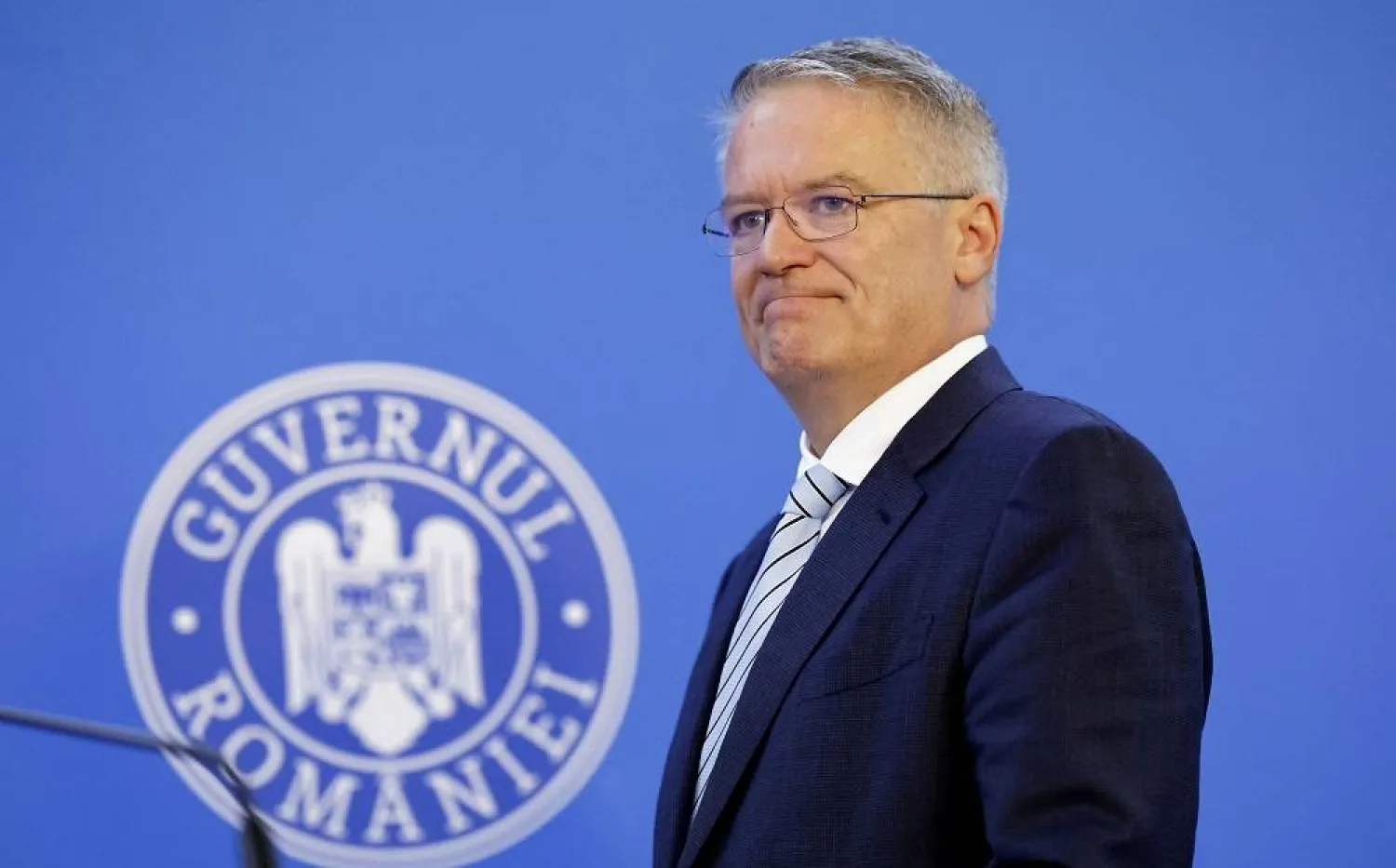
Secretary-General of the Organization for Economic Cooperation and Development (OECD) Mathias Cormann, accompanied by Romanian Prime Minister Ilie Bolojan (not pictured), arrives for a joint media statement following their official meeting at the government headquarters in Bucharest, Romania, 15 September 2025. (EPA)
TT

Full Impact of US Tariff Shock Yet to Come as Growth Holds Up, OECD Says 

Secretary-General of the Organization for Economic Cooperation and Development (OECD) Mathias Cormann, accompanied by Romanian Prime Minister Ilie Bolojan (not pictured), arrives for a joint media statement following their official meeting at the government headquarters in Bucharest, Romania, 15 September 2025. (EPA)

Global growth is holding up better than expected, but the full brunt of the US import tariff shock is still to be felt as AI investment props up US activity for now and fiscal support cushions China's slowdown, the OECD said on Tuesday.

In its latest Economic Outlook Interim Report, the Organization for Economic Cooperation and Development said the full impact of US tariff hikes was still unfolding, with firms so far absorbing much of the shock through narrower margins and inventory buffers.

Many firms stockpiled goods ahead of the Trump administration's tariff hikes, which lifted the effective US rate on merchandise imports to an estimated 19.5% by end-August - the highest since 1933, in the depths of the Great Depression.

"The full effects of these tariffs will become clearer as firms run down the inventories that were built up in response to tariff announcements and as the higher tariff rates continue to be implemented," OECD head Mathias Cormann told a news conference.

OECD'S 2025 GROWTH FORECASTS UPGRADED

Global economic growth is now expected to slow only slightly - to 3.2% in 2025 from 3.3% last year - compared to the 2.9% the OECD had forecast in June.

However, the Paris-based organization kept its 2026 forecast at 2.9%, with the boost from inventory building already fading and higher tariffs expected to weigh on investment and trade growth.

"Additional increases in barriers to trade or prolonged policy uncertainty could lower growth by raising production costs and weighing on investment and consumption," Cormann said.

The OECD forecast US economic growth would slow to 1.8% in 2025 - up from the 1.6% it forecast in June - from 2.8% last year before easing to 1.5% in 2026, unchanged from the previous forecast.

An AI investment boom, fiscal support and interest rate cuts by the Federal Reserve are expected to help offset the impact of the higher tariffs, a drop in net immigration and federal job cuts, the OECD said.

In China, growth was also seen slowing in the second half of the year as the rush to ship exports before the US tariffs recedes and fiscal support wanes.

Nonetheless, China's economy is expected to grow 4.9% this year - up from 4.7% in June - before slowing to 4.4% in 2026 - revised up from 4.3%.

In the euro zone, trade and geopolitical tensions were seen offsetting the boost from lower interest rates, the OECD said.

The bloc's economy was seen growing 1.2% this year - revised up from 1.0% previously - and 1.0% in 2026 - down from 1.2% - as increased public spending in Germany lifts growth while belt-tightening weighs on France and Italy.

Japan's economy is expected to benefit this year from strong corporate earnings and a rebound in investment, lifting growth to 1.1% - up from 0.7% - before momentum fades and the expansion slows to 0.5% in 2026, revised up from 0.4%.

The OECD revised its growth forecast for Britain up to 1.4% this year from 1.3%, and kept its 2026 forecast unchanged at 1.0%.

MONETARY POLICY EXPECTED TO BE LOOSE

With growth slowing, the OECD said it expects most major central banks to lower borrowing costs or keep policy loose over the coming year, as long as inflation pressures continue to ease.

It projected the US Federal Reserve would cut rates further as the labor market weakens unless higher tariffs trigger broader inflation.

Australia, Britain and Canada are expected to see gradual rate cuts, while the European Central Bank is seen holding steady with inflation near its 2% target.

Japan, however, is expected to raise rates as it continues its slow withdrawal from ultra-loose monetary policy.



Gold Climbs to Over One-month High after Fed Rate Cut; Silver Hits Fresh Record

NEW YORK, NEW YORK - DECEMBER 08: Silver jewelry is displayed in the Manhattan Jewelry district on December 9, 2025, in New York City. Spencer Platt/Getty Images/AFP
TT

Gold Climbs to Over One-month High after Fed Rate Cut; Silver Hits Fresh Record

NEW YORK, NEW YORK - DECEMBER 08: Silver jewelry is displayed in the Manhattan Jewelry district on December 9, 2025, in New York City. Spencer Platt/Getty Images/AFP

Gold rose on Thursday to hit its highest level in more than a month after the US Federal Reserve's quarter-point rate cut pushed the dollar lower, while silver surged to a fresh record high.

Spot gold was up 1.2% at $4,275.39 per ounce, as of 11:49 a.m. ET (16:49 GMT), reaching its highest level since October 21. US gold futures for February delivery gained 1.9% to $4,303.90 per ounce.

Spot silver added 3.2% to $63.77 per ounce, hovering near the session’s record high of $63.93, Reuters reported.

"Silver seems to be pulling gold up with it and it's also pulling up platinum and palladium...there's a lot of momentum behind it right now," said Marex analyst Edward Meir.

The US dollar slipped to over seven-week low against a basket of rival currencies, making greenback-priced gold more affordable for overseas buyers.

"Inflation hasn't really come back down to the Fed's 2% target, so, when you're lowering rates in an inflationary environment that is still not optimum, and that's very bullish for gold," Meir added.

The Federal Reserve on Wednesday delivered its third consecutive quarter-point cut, while policymakers also signaled a likely pause in further reductions as they monitor labor market trends and inflation that "remains somewhat elevated.”

Lower interest rates tend to be favorable to gold, as it is a non-yielding asset.

US President Donald Trump has advocated for lower interest rates since the start of his second term in January, and his nominee for the next Federal Reserve chair is expected to maintain that stance. White House economic adviser Kevin Hassett is currently viewed as the leading candidate for the position.

Investors now await the monthly US non-farm payrolls report, set to be released on December 16, for fresh cues on the Fed's policy path.

Meanwhile, India's pension regulator on Wednesday permitted investments in gold and silver ETFs for the country's pension funds.

Elsewhere, platinum gained 2.5% to $1,698.10, while palladium rose 1.3% to $1,494.88.


Saudi Industrial Production Jumps 8.9% in October, Driven by Mining Sector

 A facility operated by the Saudi International Petrochemical Company (Sipchem) (Photo: the company’s website) 
 A facility operated by the Saudi International Petrochemical Company (Sipchem) (Photo: the company’s website) 
TT

Saudi Industrial Production Jumps 8.9% in October, Driven by Mining Sector

 A facility operated by the Saudi International Petrochemical Company (Sipchem) (Photo: the company’s website) 
 A facility operated by the Saudi International Petrochemical Company (Sipchem) (Photo: the company’s website) 

Saudi Arabia’s General Authority for Statistics (GASTAT) released preliminary data for the Industrial Production Index (IPI) for October 2025, reporting a strong 8.9 percent increase compared with the same month last year.

The rise was supported by robust performance across most major economic activities, led by mining and quarrying, manufacturing, and higher output in electricity, gas, water, and wastewater services.

On a monthly basis, the overall index inched up 0.3 percent from September 2025. Mining and quarrying, by far the heaviest-weighted component of the IPI, was the main engine of growth, posting an 11.5 percent annual rise in October. The increase was largely attributed to a sharp boost in Saudi oil production, which reached 10 million barrels per day, up from 8.9 million barrels per day in the same month of 2024.

Month-on-month, the sector continued to strengthen, with its sub-index rising 0.4 percent from September.

The manufacturing sub-index recorded a solid 5.5 percent annual expansion. This performance was driven by coke and refined petroleum products, up 8.0 percent year-on-year, and chemicals and chemical products, which posted 8.1 percent growth.

Monthly data also showed momentum: manufacturing rose 0.9 percent from September, supported by a 2.7 percent increase in chemicals and a 1.5 percent rise in refined petroleum products.

Within manufacturing, most detailed activities registered year-on-year growth. Manufacture of paper and paper products climbed 5.6 percent, while non-metallic mineral products rose 4.4 percent. However, some subsectors diverged: basic metals declined 6.3 percent year-on-year, and food products fell 4.9 percent month-on-month despite recording 1.9 percent annual growth.

In the utilities segment, the electricity, gas, steam, and air conditioning supply index grew 5.1 percent year-on-year. Water supply, wastewater, waste management, and remediation activities posted an even stronger rise of 8.5 percent.

Despite positive annual trends, electricity and gas supply fell 5.8 percent on a monthly basis, whereas water and wastewater services edged up 0.6 percent.

A breakdown by economic activity shows that October’s annual growth was heavily influenced by oil production. The petroleum activities index recorded a 10.8 percent year-on-year increase.

Non-oil industrial activities also expanded, rising 4.4 percent annually. On a monthly basis, petroleum activities grew 0.6 percent, while non-oil activities slipped 0.3 percent compared with September.


Oil Extends Gains after US Seizure of Tanker off Venezuela

FILE PHOTO: A worker walks past infrastructure on D Island, the main processing hub, at the Kashagan offshore oil field in the Caspian sea in western Kazakhstan August 21, 2013.  REUTERS/Stringer/File Photo
FILE PHOTO: A worker walks past infrastructure on D Island, the main processing hub, at the Kashagan offshore oil field in the Caspian sea in western Kazakhstan August 21, 2013. REUTERS/Stringer/File Photo
TT

Oil Extends Gains after US Seizure of Tanker off Venezuela

FILE PHOTO: A worker walks past infrastructure on D Island, the main processing hub, at the Kashagan offshore oil field in the Caspian sea in western Kazakhstan August 21, 2013.  REUTERS/Stringer/File Photo
FILE PHOTO: A worker walks past infrastructure on D Island, the main processing hub, at the Kashagan offshore oil field in the Caspian sea in western Kazakhstan August 21, 2013. REUTERS/Stringer/File Photo

Oil rose for a second straight session on Thursday after the US seized a sanctioned oil tanker off Venezuela’s coast, escalating tensions between the two countries and raising concern over further supply disruptions.
Brent crude futures rose 27 cents, or 0.4%, to $62.48 a barrel by 0101 GMT, and US West Texas Intermediate crude was at $58.79 a barrel, up 33 cents, or 0.6%.
WTI crude oil is trading higher after news that the US seized an oil tanker off Venezuela’s coast, IG market analyst Tony Sycamore said in a note, adding that reports of Ukraine striking a vessel from Russia’s shadow fleet also lent support, reported Reuters.
"These developments are likely to keep crude oil above our key $55 support level into year-end, barring an unexpected peace deal in Ukraine," Sycamore said.
US President Donald Trump said on Wednesday, "we've just seized a tanker on the coast of Venezuela, large tanker, very large, largest one ever, actually, and other things are happening."
Trump administration officials did not name the vessel. British maritime risk management group Vanguard said the tanker Skipper was believed to have been seized off Venezuela.
Traders and industry sources said Asian buyers are demanding steep discounts on Venezuelan crude, pressured by a surge of sanctioned oil from Russia and Iran and heightened loading risks in the South American country as the US boosts its military presence in the Caribbean.
Meanwhile, Ukrainian sea drones hit and disabled a tanker involved in trading Russian oil as it sailed through Ukraine's exclusive economic zone in the Black Sea.
Investors remain focused on developments in Ukraine peace talks. The leaders of Britain, France and Germany held a call with Trump to discuss Washington's latest peace efforts to end the war in Ukraine, in what they said was a "critical moment" in the process.
On the US policy front, a sharply divided Federal Reserve cut interest rates. Lower rates can reduce consumer borrowing costs and boost economic growth and oil demand.