


TikTok's Algorithm to be Licensed to US Joint Venture Led by Oracle, Silver Lake

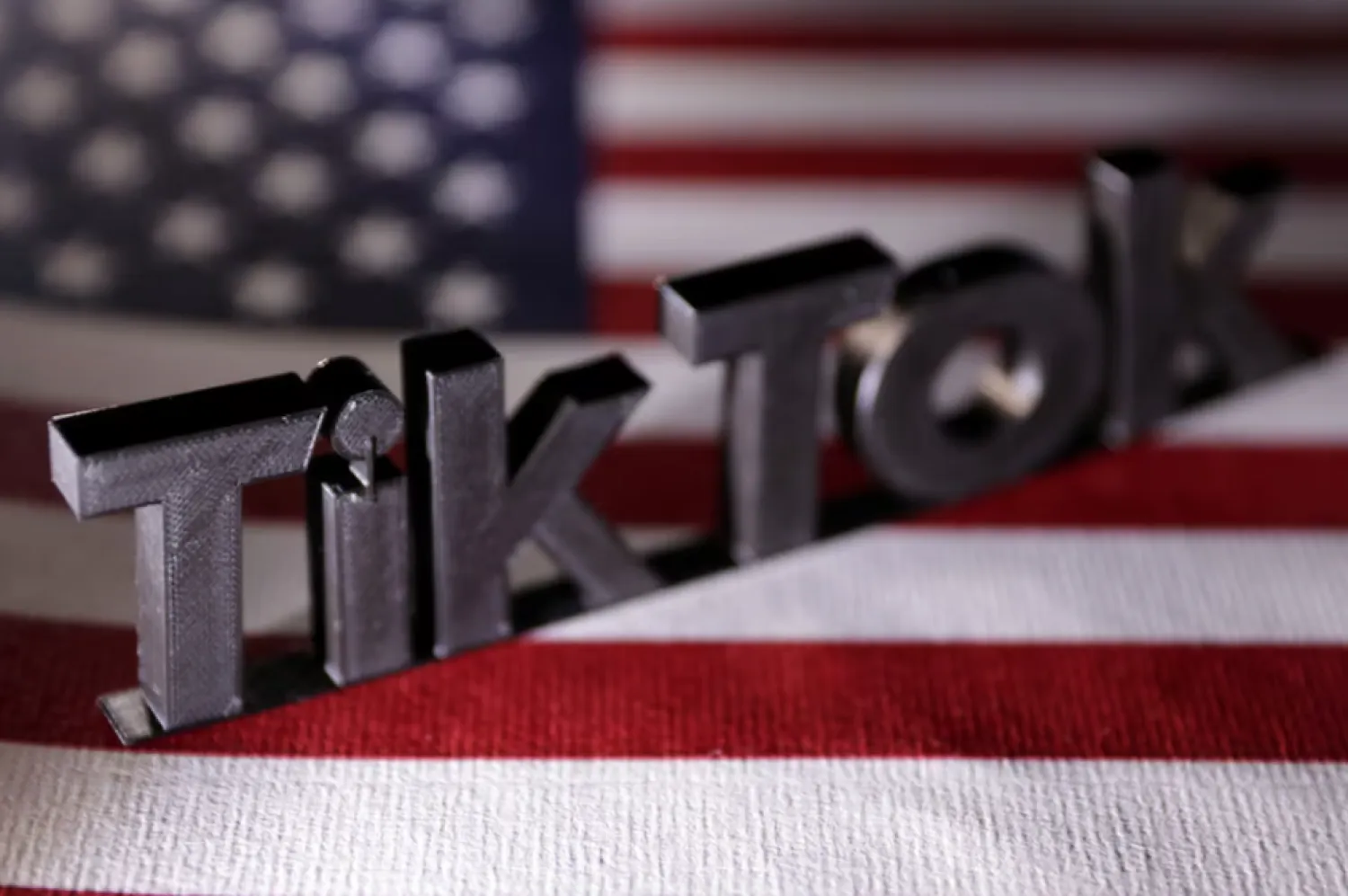
TikTok logo is placed on a US flag in this illustration taken, April 25, 2024. REUTERS/Dado Ruvic/Illustration/File Photo
TT

TikTok's Algorithm to be Licensed to US Joint Venture Led by Oracle, Silver Lake

TikTok logo is placed on a US flag in this illustration taken, April 25, 2024. REUTERS/Dado Ruvic/Illustration/File Photo

Tech giant Oracle will spearhead US oversight of the algorithm and security underlying TikTok's popular video platform under the terms of a deal laid out this week by President Donald Trump's administration.

All the final details still need to be nailed down among several joint venture partners that will include Oracle, investment firm Silver Lake Partners and possibly two billionaires — media mogul Rupert Murdoch and personal computer pioneer Michael Dell. The US administration would not have a stake in the joint venture nor be part of its board, according to a senior White House official, The AP news reported.

President Trump is expected to issue an executive order later this week that declares that the terms of the deal meet the security concerns laid out by the law, the senior White House official said. China still needs to sign off on the framework proposal, and any final deal would still require regulatory approval.

The proposal is aimed at resolving a long-running effort to wrest TikTok's US operations from its Beijing-based parent company, ByteDance, because of national security concerns. TikTok has become a high-profile topic during conversations between Trump and China President Xi Jinping as they continue to spar in a trade war that's roiled the global economy for much of the year.

For now, the two sides are progressing on a framework deal that calls for a consortium of investors, including Oracle and Silver Lake, to take over the US operations of TikTok in a process that might not be completed until early next year under a timeline laid out Monday by the Trump administration. That could mean TikTok's divestment might not be completed until a year after it was supposed to be banned under a law that had bipartisan support but was repeatedly bypassed by Trump.

Under the current terms of the proposal, the new US joint venture would receive a licensed copy of the recommendation algorithm that keeps TikTok users endlessly scrolling through clips on their smartphones. Oracle would review, monitor and secure US data flowing through the service.

American officials have previously warned that ByteDance's algorithm is vulnerable to manipulation by Chinese authorities, who can use it to shape content on the platform in a way that’s difficult to detect.

“It wouldn’t be in compliance if the algorithm is Chinese. There can’t be any shared algorithm with ByteDance,” said a spokesperson for the House Select Committee on China.

The algorithm has been a central issue in the security debate over TikTok. China previously maintained the algorithm must remain under Chinese control by law. But a US regulation passed with bipartisan support said any divestment of TikTok must mean the platform cuts ties — specifically the algorithm — with ByteDance.

Although the details remain sketchy, a Trump administration official said that the licensed copy will be “retrained” with US data to make sure the system is “behaving appropriately."

That makes it unclear if the US version of TikTok will look different from what users are seeing in the rest of the world. Any noticeable changes made to a social media platform's service raises the risk of alienating its audience, said Jasmine Enberg, an analyst for the research firm eMarketer.

“Social media is just as much about the culture as it is the technology, and how users will take to new ownership and potentially a new version of the app is still an open question,” Enberg said.

In a Monday briefing, White House press secretary Karoline Leavitt said the change in control won't change the experience. “TikTok users in the US will be able to see videos posted by users in other countries and vice versa," Leavitt said.

In a prime example of how a change of control can reshape a once-popular social media platform, billionaire Elon Musk triggered an almost immediate backlash after he completed his $44 billion takeover of Twitter nearly three years ago.

But Musk made extremely visible changes, including eventually dropping the Twitter brand and changing its name to X. The changes that gradually occur while different data is fed into the US copy of TikTok's algorithm could be subtle and unnoticeable to most of its audience.

What's clear, for now, is that both Oracle and Silver Lake will be major players in TikTok's future in the US if the deal is finalized by the Trump administration.

Founded nearly 50 years ago, Oracle's success was built on database software that helps manage a wide variety of information crucial to business, and has since expanded into hardware, including data centers that help power artificial intelligence.

Although he no longer runs Oracle as its CEO, company co-founder Larry Ellison remains a top executive while also overseeing an estimated personal fortune of $390 billion. Ellison, 81, now could be in line to become a behind-the-scenes power player in the media, having already helped finance Skydance's recently completed $8 billion merger with Paramount, a deal engineered by his son, David.

Silver Lake has long focused on tech deals, including past buyouts of Dell Computer and the now-defunct video calling service Skype. Michael Dell, who founded Dell Computer, may now be one of investors in the US joint venture overseeing TikTok, according to what Trump told Fox News in a recent interview. Trump also mentioned Murdoch, whose company owns Fox News, as a potential investor in the joint venture.

Other media outlets have reported that another billionaire, venture capitalist Marc Andreessen, is vying to become involved in the investor group. Andreessen was also involved in Silver Lake's 2009 buyout of Skype.

ByteDance is expected to have a 20%, or smaller, stake in the US joint venture, whose board will be controlled by the US investors. ByteDance will be represented by one person on the board, but that individual will be excluded from TikTok’s security committee.



Netanyahu Skeptical of an Iran Breakthrough

Israel's Prime Minister Benjamin Netanyahu leaves after a meeting with US President Donald Trump at the White House February 11, 2026, in Washington, DC. (Photo by Brendan Smialowski / AFP)
TT

Netanyahu Skeptical of an Iran Breakthrough

Israel's Prime Minister Benjamin Netanyahu leaves after a meeting with US President Donald Trump at the White House February 11, 2026, in Washington, DC. (Photo by Brendan Smialowski / AFP)

Israeli Prime Minister Benjamin Netanyahu said he was skeptical that US nuclear talks with Iran will lead to a breakthrough but described his meeting with US President Donald Trump at the White House as “excellent.”

Speaking to reporters Thursday in Washington before boarding a plane to return to Israel, Netanyahu said Trump’s terms and Iran’s “understanding that they made a mistake the last time when they did not reach an agreement, may lead them to agree to conditions that will enable a good agreement to be reached.”

While he said he did “not hide my general skepticism” about any deal, he stressed that any agreement must include concessions about Iran’s ballistic missiles program and support for militant proxies.

He added that the conversation Wednesday with Trump, which lasted more than two hours, included a number of other subjects, including Gaza and regional developments but focused on the negotiations with Iran.


German Court Rejects Palestinian's Claim over Weapons Exports

A view shows the front of the Reichstag building, the seat of the German parliament, the Bundestag, in Berlin, Germany March 5, 2025. REUTERS/Annegret Hilse/File Photo
TT

German Court Rejects Palestinian's Claim over Weapons Exports

A view shows the front of the Reichstag building, the seat of the German parliament, the Bundestag, in Berlin, Germany March 5, 2025. REUTERS/Annegret Hilse/File Photo

Germany's highest court on Thursday threw out a case brought by a Palestinian civilian from Gaza seeking to sue the German government over its weapons exports to Israel.

The complainant, supported by the European Center for Constitutional and Human Rights (ECCHR), had been seeking to challenge export licences for German parts used in Israeli tanks deployed in Gaza.

After his case was rejected by lower courts in 2024 and 2025, he had appealed to the Federal Constitutional Court.

But the court in Karlsruhe dismissed the case, stating that "the complainant has not sufficiently substantiated that the specialized courts misjudged or arbitrarily denied a possible duty to protect him", AFP reported.

While Germany is obliged to protect human rights and respect international humanitarian law, this does not mean the state is necessarily obliged to take specific action on behalf of individuals, the court said.

"It is fundamentally the responsibility of the state authorities themselves to decide how they fulfil their general duty of protection," it added.

The ECCHR called the decision "a setback for civilian access to justice".

"The court acknowledges the duty to protect but only in the abstract and refuses to ensure its practical enforcement," said Alexander Schwarz, co-director of the NGO's International Crimes and Legal Accountability program.

"For people whose lives are endangered by the consequences of German arms exports, access to justice remains effectively closed," he said.

The ECCHR had been hoping for a successful appeal after the Constitutional Court ruled last year that Germany had "a general duty to protect fundamental human rights and the core norms of international humanitarian law, even in cases involving foreign countries".

In that case, two Yemenis had been seeking to sue Berlin over the role of the US Ramstein airbase in a 2012 drone attack.

The complainant was one of five Palestinians who initially brought their case against the German government in 2024.


2 Israelis Charged with Using Classified Military Information to Place Bets

The Israeli Iron Dome air defense system intercepts missiles during an Iranian attack on Tel Aviv, Israel, June 18, 2025. (AP Photo/Leo Correa, File)
TT

2 Israelis Charged with Using Classified Military Information to Place Bets

The Israeli Iron Dome air defense system intercepts missiles during an Iranian attack on Tel Aviv, Israel, June 18, 2025. (AP Photo/Leo Correa, File)

Two Israelis have been charged with using classified military information to place bets on how future events will unfold, Israeli authorities said Thursday, accusing the individuals of “serious security offenses.”

A joint statement by the Israeli Ministry of Defense, domestic security service Shin Bet and police said that a civilian and a reservist are suspected of placing bets on the US-based prediction market Polymarket on future military operations based on information that the reservist had access to, The AP news reported.

Israel’s Attorney General’s Office decided to prosecute the two individuals following a joint investigation by police, military intelligence and other security agencies that resulted in several arrests. The two face charges including bribery and obstruction of justice.

Authorities offered no details on the identity of the two individuals or the reservist's rank or position in the Israeli military but warned that such actions posed a “real security risk” for the military and the Israeli state.

Israel’s public broadcaster Kan had reported earlier that the bets were placed in June ahead of Israel’s war with Iran and that the winnings were roughly $150,000.

Israel's military and security services “view the acts attributed to the defendants very seriously and will act resolutely to thwart and bring to justice any person involved in the activity of using classified information illegally,” the statement said.

The accused will remain in custody until the end of legal proceedings against them, the Prosecutor's Office said.

Prediction markets are comprised of typically yes-or-no questions called event contracts, with the prices connected to what traders are willing to pay, which theoretically indicates the perceived probability of an event occurring.

Their use has skyrocketed in recent years, but despite some eye-catching windfalls, traders still lose money everyday. In the US, the trades are categorized differently than traditional forms of gambling, raising questions about transparency and risk.