GCC Secretary-General Meets Iranian Foreign Minister
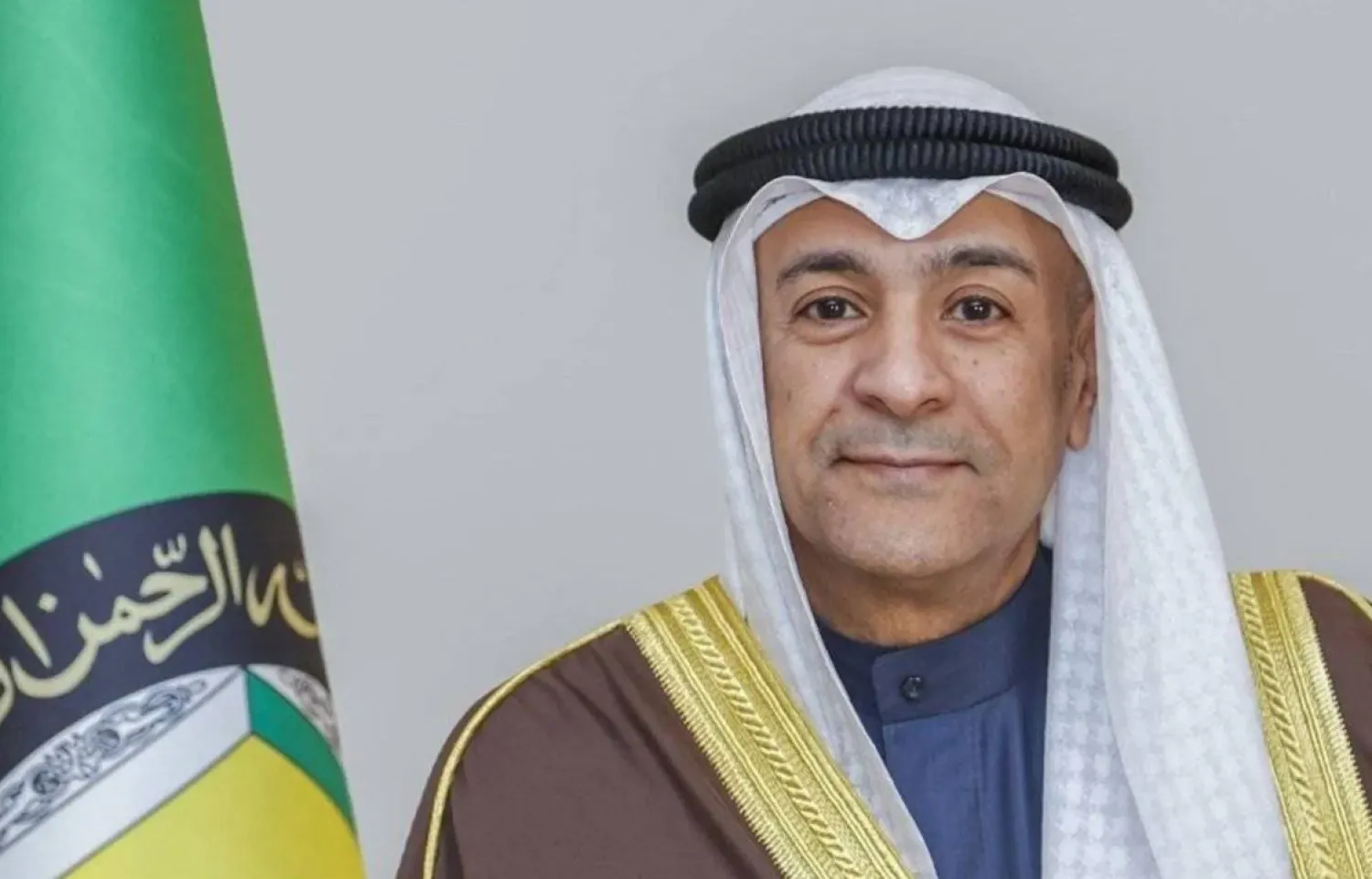
Secretary General of the Gulf Cooperation Council Jasem Mohamed Albudaiwi. GCC
Secretary-General of the Gulf Cooperation Council (GCC) Jasem Mohamed Albudaiwi met with Iranian Minister of Foreign Affairs Abbas Araghchi on the sidelines of the 80th session of the United Nations General Assembly in New York, the Saudi Press Agency reported on Saturday.
The two sides reviewed relations between the GCC and Iran and discussed several issues of common interest.
One resident was killed in an attack on King Fahd International Airport in Dammam in eastern Saudi Arabia, the General Authority of Civil Aviation (GACA) announced early Thursday.
The authority also said eight people were injured in the late Wednesday attack and the airport suffered some material damages.
“All injured individuals were immediately transported to hospital to receive the necessary medical care,” GACA added.
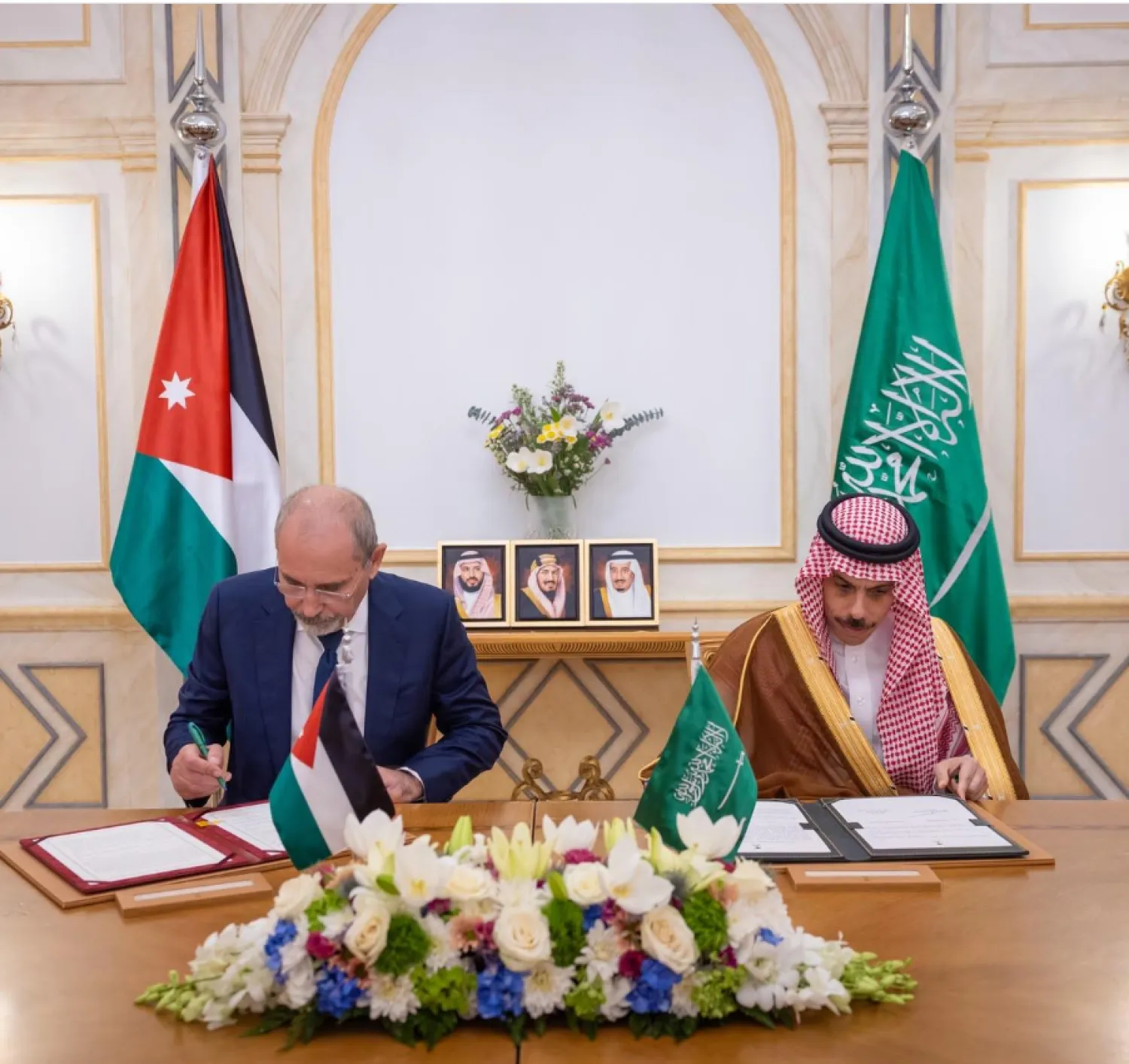
Saudi Minister of Foreign Affairs Prince Faisal bin Farhan bin Abdullah and Jordanian Deputy Prime Minister and Minister of Foreign Affairs and Expatriates Ayman Safadi sign an amended protocol to the minutes establishing the Saudi-Jordanian Higher Coordination Council. (SPA)
TT
TT
Saudi, Jordanian FMs Discuss Houthi Attacks, Sign Protocol on Higher Coordination Council
Saudi Minister of Foreign Affairs Prince Faisal bin Farhan bin Abdullah and Jordanian Deputy Prime Minister and Minister of Foreign Affairs and Expatriates Ayman Safadi sign an amended protocol to the minutes establishing the Saudi-Jordanian Higher Coordination Council. (SPA)
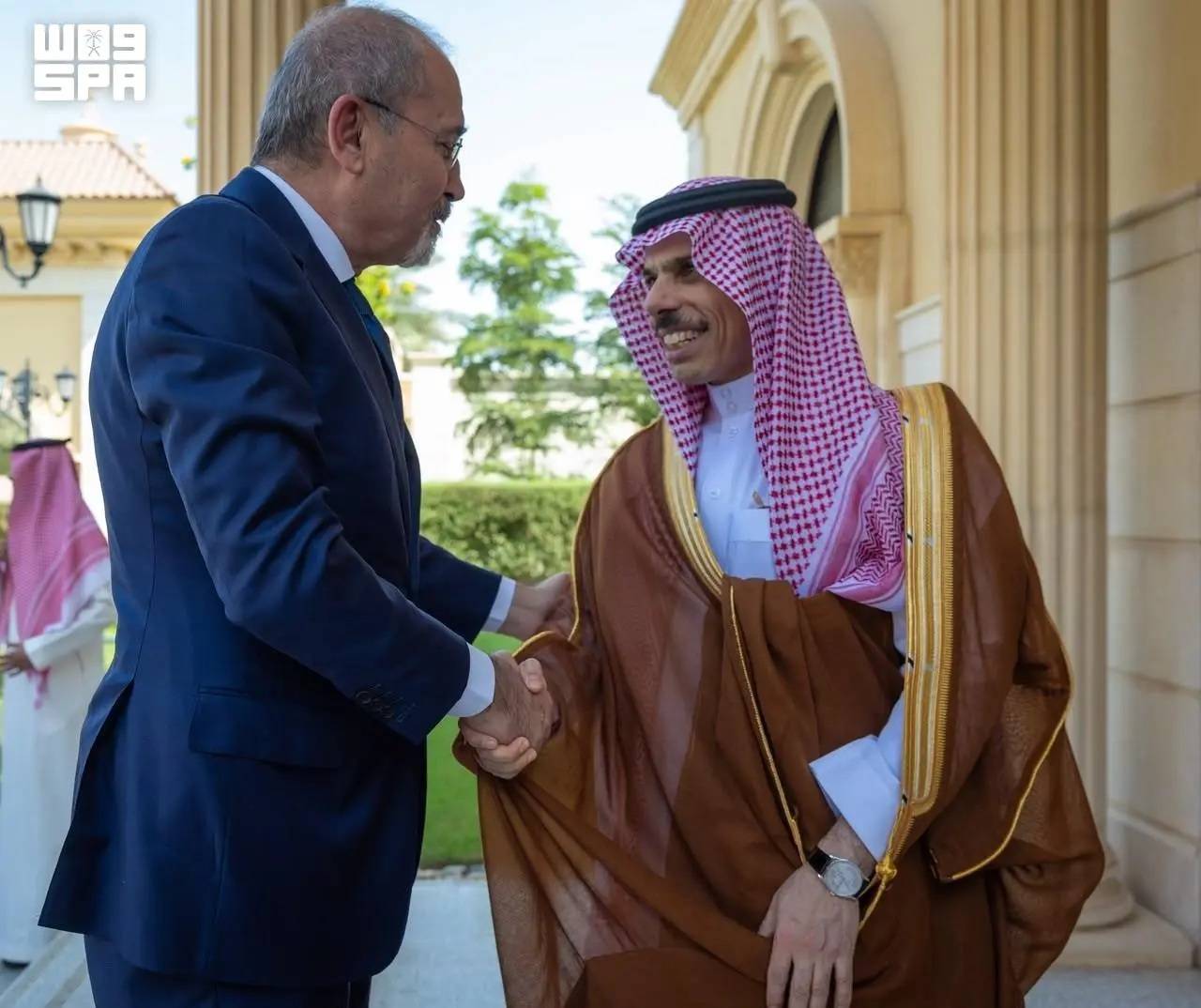
Saudi Minister of Foreign Affairs Prince Faisal bin Farhan bin Abdullah received in Riyadh on Wednesday Jordanian Deputy Prime Minister and Minister of Foreign Affairs and Expatriates Ayman Safadi for talks on bilateral relations and ways to support and develop them in a manner that serves their mutual interests.
They discussed the latest developments in the region, foremost among them the continued attacks by the terrorist Houthi militia on Saudi territory.
Safadi stressed Jordan's full solidarity with Saudi Arabia in confronting these attacks and its full support for all measures the Kingdom takes to protect its security, stability, sovereignty, and the safety of its citizens and residents.
The FMs reviewed efforts to de-escalate tensions, prevent conflicts from spreading, and restore security and stability. These efforts aim to uphold respect for international law, the principles of good neighborliness and non-interference in the affairs of states, and ensure the safety and freedom of navigation through the Strait of Hormuz and the Bab al-Mandeb Strait, contributing to the stability of global markets and the smooth flow of trade.
Saudi Minister of Foreign Affairs Prince Faisal bin Farhan bin Abdullah greets Jordanian Deputy Prime Minister and Minister of Foreign Affairs and Expatriates Ayman Safadi. (SPA)
The FMs also signed an amended protocol to the minutes establishing the Saudi-Jordanian Higher Coordination Council, to be chaired by Prince Mohammed bin Salman bin Abdulaziz Al Saud, Saudi Crown Prince and Prime Minister, and Jordan’s King Abdullah II.
The council aims to strengthen cooperation and coordination across various fields to serve both countries' interests and their brotherly peoples.
The two countries' foreign ministers will head the council's general secretariat, while their respective foreign ministries will oversee its work, including preparations for its meetings and those of the ministerial committees operating under it.
Saudi Crown Prince Receives Written Message to King Salman from Egyptian Presidenthttps://english.aawsat.com/gulf/5332092-saudi-crown-prince-receives-written-message-king-salman-egyptian-president
Prince Mohammed bin Salman bin Abdulaziz Al Saud, Saudi Crown Prince and Prime Minister, meets with Egypt's Minister of Foreign Affairs, International Cooperation and Egyptian Expatriates Dr. Badr Abdelatty in Riyadh on Wednesday. (SPA)
TT
TT
Saudi Crown Prince Receives Written Message to King Salman from Egyptian President
Prince Mohammed bin Salman bin Abdulaziz Al Saud, Saudi Crown Prince and Prime Minister, meets with Egypt's Minister of Foreign Affairs, International Cooperation and Egyptian Expatriates Dr. Badr Abdelatty in Riyadh on Wednesday. (SPA)
Prince Mohammed bin Salman bin Abdulaziz Al Saud, Saudi Crown Prince and Prime Minister, received on Wednesday a written message to Custodian of the Two Holy Mosques King Salman bin Abdulaziz Al Saud from Egypt’s President Abdel Fattah el-Sisi.
The Crown Prince met with Egypt's Minister of Foreign Affairs, International Cooperation and Egyptian Expatriates Dr. Badr Abdelatty, who delivered the message, at the Royal Court in Al-Yamamah Palace in Riyadh.
The meeting reviewed bilateral relations and opportunities to strengthen ties, and discussed regional developments and efforts to coordinate on them.
Attending were Saudi FM Prince Faisal bin Farhan bin Abdullah; Minister of State, Member of the Cabinet, and National Security Advisor Dr. Musaed Al-Aiban; Chief of General Intelligence Khalid Al-Humaidan; and Secretary to the Crown Prince Dr. Bandar Al-Rasheed.
Head of Egypt's General Intelligence Major General Hassan Rashad also attended the meeting.
لم تشترك بعد
انشئ حساباً خاصاً بك لتحصل على أخبار مخصصة لك ولتتمتع بخاصية حفظ المقالات وتتلقى نشراتنا البريدية المتنوعة