

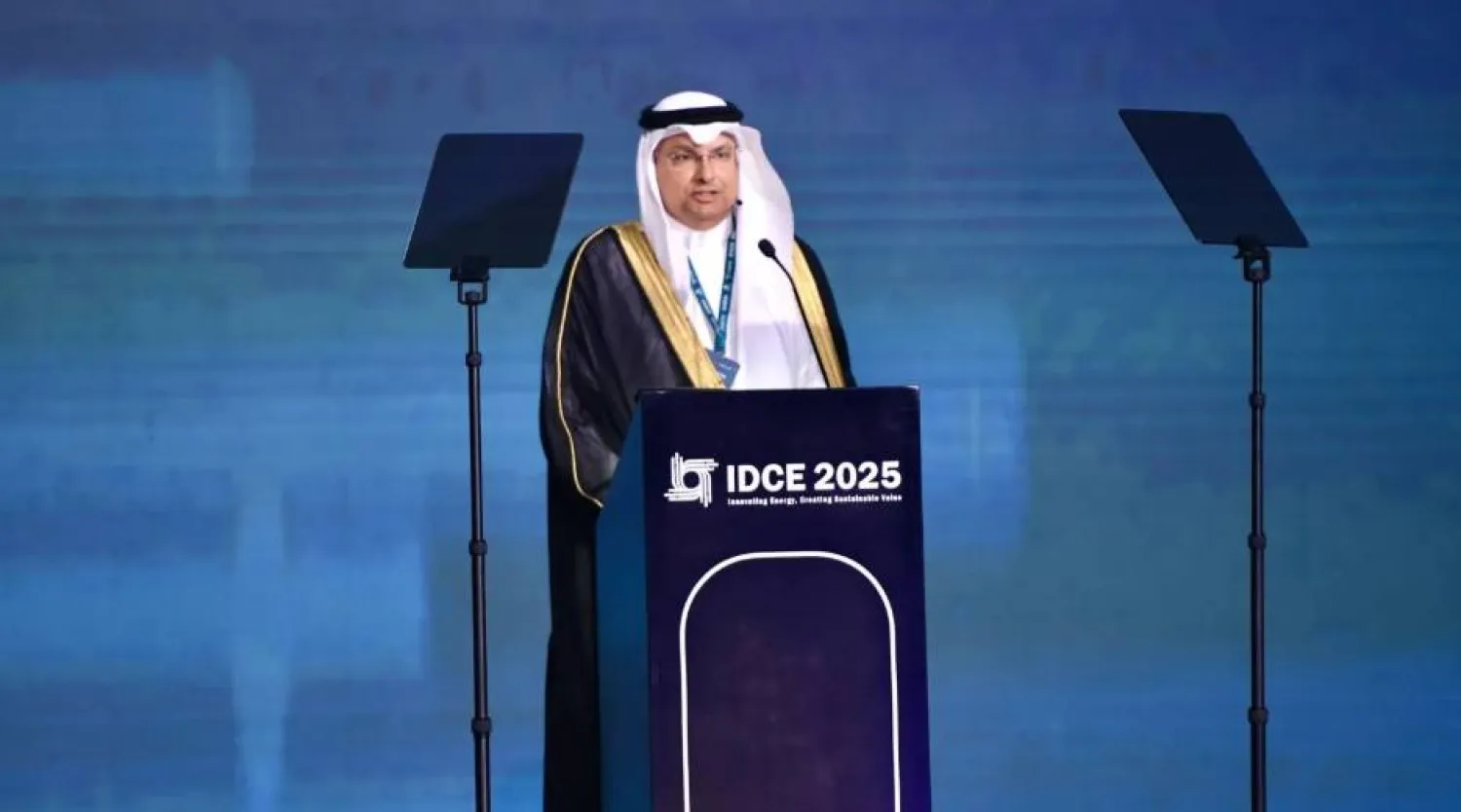

Aramco’s Al Qahtani Highlights Downstream’s Strategic Expansion

Saudi Aramco Downstream President Mohammed Al Qahtani. Photo: Aramco
TT

Aramco’s Al Qahtani Highlights Downstream’s Strategic Expansion

Saudi Aramco Downstream President Mohammed Al Qahtani. Photo: Aramco

Saudi Aramco Downstream President Mohammed Al Qahtani has highlighted the company’s strategic Downstream expansion, which is contributing to help meet the world’s growing energy needs.

In remarks at the Gulf Downstream Association International Downstream Conference & Exhibition (GDA IDCE) held in Bahrain, Al Qahtani stressed on Tuesday the importance of technological innovation and workforce upskilling to achieve Downstream transformation, contribute to energy security, and help reduce emissions.

“I see a clear shift in the narrative of Downstream: from reactive to transformative...and from adaptive to innovative...We view strategic Downstream expansion as essential to diversify our portfolio, capture greater value, and ensure long-term resilience,” Al Qahtani said on Aramco’s Downstream expansion.

“The world still needs more energy...Our global downstream presence, supported by strategic overseas investments, is reinforcing our position as a trusted partner in refining and petrochemicals. As we expand across the portfolio in developing arenas such as retail, fuels, and trading, we remain confident in our ability to thrive in an increasingly carbon-conscious world.”

On technology’s importance to Downstream, Al Qahtani said that tools like AI, cloud computing, IoT, digital twins, and blockchain are supporting the company to operate more efficiently and safely.

“According to research by S&P, with the help of AI, individual assets have achieved cost reductions of 10% to 25%, productivity gains of 3% to 8%, and energy efficiency improvements of 5% to 8%,” he said.

“Our greatest asset remains our HI, Human Intelligence – our people,” he said about Aramco’s workforce evolution and global collaboration.

“As the industry evolves, so does our global workforce. That is why at Aramco, we are investing heavily in developing future leaders – equipping them with new skills and the mindset to lead in a more complex energy world...I believe that together, we can help contribute to a future for this industry that is reliable, resilient, and sustainable,” Al Qahtani told the conference.

The GDA IDCE is a premier event in the Middle East for global energy industry professionals and organizations to explore partnerships and investments, exchange knowledge, address current challenges, and collaborate.

This year’s event brings together more than 5,000 international participants, over 150 speakers, and more than 80 exhibitors to foster innovation, sustainable growth, and downstream excellence.



SABIC Reshapes Global Footprint With $950m Divestment Deals

A SABIC employee (company website) 
TT

SABIC Reshapes Global Footprint With $950m Divestment Deals

A SABIC employee (company website) 

Saudi Basic Industries Corporation (SABIC) has announced a major overhaul of its global portfolio, accelerating its exit from petrochemical and engineering plastics assets in Europe and the Americas through two divestment deals worth a combined $950 million.

The move marks a fundamental shift in the company’s operating model and investment identity. It comes as part of an intensive portfolio-optimization program launched in 2022, aimed at boosting returns on capital, freeing up cash, and refocusing investments on higher-growth markets and more sustainable profit margins.

Following the announcement, SABIC shares came under heavy selling pressure on Thursday, falling to 48.78 riyals — their lowest level since April 2009. The decline reflected investor reaction to deal details that include non-cash losses of about $4.88 billion (18.3 billion riyals), stemming from the fair-value revaluation of divested assets. These charges are expected to weigh on the company’s fourth-quarter 2025 results.

While the market response was cautious, analysts say the accounting hit represents a necessary short-term sacrifice to build a leaner, more competitive company aligned with the new centers of global economic growth in East Asia. The divestments also fit within SABIC’s longer-term strategic shift that began in 2020, when Saudi Aramco acquired a 70% stake in the company from the Public Investment Fund for $69.1 billion in the largest deal in the history of the Saudi stock market.

Focus on Higher-Margin Markets

According to SABIC, the first transaction involves the sale of its European petrochemicals business to investment firm AEQUITA for an enterprise value of $500 million. The second covers the sale of its thermoplastics engineering plastics business in Europe and the Americas to Mutares SE & Co. KGaA for $450 million, with potential additional payments linked to future free cash flow over the next four years or a subsequent resale of the business.

SABIC said the transactions represent a key step in reshaping its portfolio, sharpening its focus on higher-margin markets and products with strong competitive advantages, while redeploying capital into opportunities that deliver stronger returns and improved free cash flow. The company stressed that the divestments will not detract from its commitment to technology and innovation or its ability to serve customers worldwide.

Short-Term Pain, Long-Term Gain

SABIC chairman Khalid Al-Dabbagh described the deals as a “transformational step” in the company’s strategy to maximize shareholder value by strengthening cash generation.

Chief executive Abdulrahman Al-Fageeh said the transactions extend the portfolio-optimization program launched in 2022, which included earlier exits from functional forms and the Hadeed and Alba businesses. He said the strategy allows SABIC to reshape its portfolio more effectively and concentrate on areas where it has clear and sustainable competitive advantages in a rapidly changing global environment.

For his part, Chief financial officer Salah Al-Hareky added that the divestments reflect SABIC’s disciplined approach to capital management. Freeing up capital for redeployment into higher-return opportunities, he said, will improve capital efficiency and enhance returns over the medium to long term.

Assets Involved

The European petrochemicals business being sold includes the production and marketing of ethylene, propylene, polyethylene, polypropylene and value-added polymer compounds, with manufacturing sites in the UK, the Netherlands, Germany and Belgium.

The engineering thermoplastics deal covers SABIC assets producing materials such as polycarbonate, polybutylene terephthalate and ABS resins, with manufacturing facilities in the United States, Mexico, Brazil, Spain and the Netherlands. Mutares co-founder and chief executive Robin Laik said the priority after completion will be ensuring business continuity and supporting employees during the transition, while unlocking the full potential of the assets as a standalone platform.

Completion of both transactions remains subject to customary conditions and regulatory approvals, including employee consultations where required. SABIC expects the deals to close in the second half of 2026.

Analysts see the exits from lower-return assets as a catalyst for improved margins and stronger free cash flow, positioning SABIC for a more resilient and profitable phase beyond the near-term pressures on its share price.


TotalEnergies Gets New Exploration Permit Offshore Lebanon

A sign with the logo of French oil and gas company TotalEnergies is pictured at a petrol station in Bouguenais near Nantes, France, Nov. 14, 2022. (Reuters)
TT

TotalEnergies Gets New Exploration Permit Offshore Lebanon

A sign with the logo of French oil and gas company TotalEnergies is pictured at a petrol station in Bouguenais near Nantes, France, Nov. 14, 2022. (Reuters)

French oil major TotalEnergies has obtained government permission for a new exploration permit offshore Lebanon, it said on Friday.

Total, ‌which owns ‌a 35% ‌operating ⁠stake ​in ‌the permit, will begin 3D seismic surveys on Block 8 with partners Eni (35%) and QatarEnergy (30%).

The French company moved to hunt for natural ⁠gas in Lebanon in late 2022, ‌following the government's ‍landmark agreement ‍of a maritime border with ‍Israel in the Mediterranean Sea - though an initial exploration campaign on an adjacent block was disappointing.

"Although ​the drilling of the well Qana 31/1 on ⁠Block 9 did not give positive results, we remained committed to pursue our exploration activities in Lebanon," TotalEnergies CEO Patrick Pouyanne said in a statement.


World Food Prices Dip in December but Still up in 2025, UN’s FAO Says

A shopkeeper arranges food oil bottles at his grocery store in northern Tehran, Iran, Tuesday, Jan. 6, 2026. (AP)
TT

World Food Prices Dip in December but Still up in 2025, UN’s FAO Says

A shopkeeper arranges food oil bottles at his grocery store in northern Tehran, Iran, Tuesday, Jan. 6, 2026. (AP)

World food prices declined for a fourth consecutive month in December, mostly pressured by dairy, ​meat and vegetable oil prices, marking the lowest average since January 2025, the United Nations' Food and Agriculture Organization said on Friday.

The FAO Food Price Index, which tracks a basket of globally traded food commodities, averaged 124.3 points in December, down from 125.1 in November and 2.3% lower than a year earlier.

For the full 2025 year, the index ‌averaged 127.2 ‌points, up 4.3% from 2024, as higher ‌world ⁠prices ​for ‌vegetable oils and dairy products outweighed declines in cereal and sugar quotations.

The dairy index declined by 4.4% in December, driven by a steep drop in butter prices following increased cream availability in Europe. However, for 2025 as a whole, dairy prices averaged 13.2% above 2024, reflecting strong import demand and limited exportable supplies earlier in ⁠the year.

Meat prices dipped 1.3% last month, led by falls in bovine and ‌poultry categories, but the full-year index ‍remained 5.1% above the previous ‍year's value, supported by strong global demand and uncertainty linked ‍to animal diseases and geopolitical tensions, the FAO said.

Vegetable oil prices eased 0.2% in December to a six-month low, as weaker soy, rapeseed and sunflower oil quotations offset gains in palm oil. For the ​whole of 2025, the vegetable oil index averaged 17.1% higher than in 2024, reaching a three-year high amid ⁠tight global supplies.

The FAO Cereal Price Index rose 1.7% in December with wheat supported by renewed concerns over Black Sea export flows, and maize buoyed by strong ethanol production in both Brazil and the United States.

For the whole of 2025, the cereal index averaged 4.9% below its 2024 level, its third consecutive annual decline and the lowest annual average since 2020.

Sugar prices rose 2.4% in December after three consecutive monthly declines, mainly due to lower production in Brazil's southern regions.

The sugar index reached ‌a five-year low for 2025, down 17% from 2024, as global supplies remained plentiful.