


Iraqi Farmers Protest Cultivation Ban amid Drought

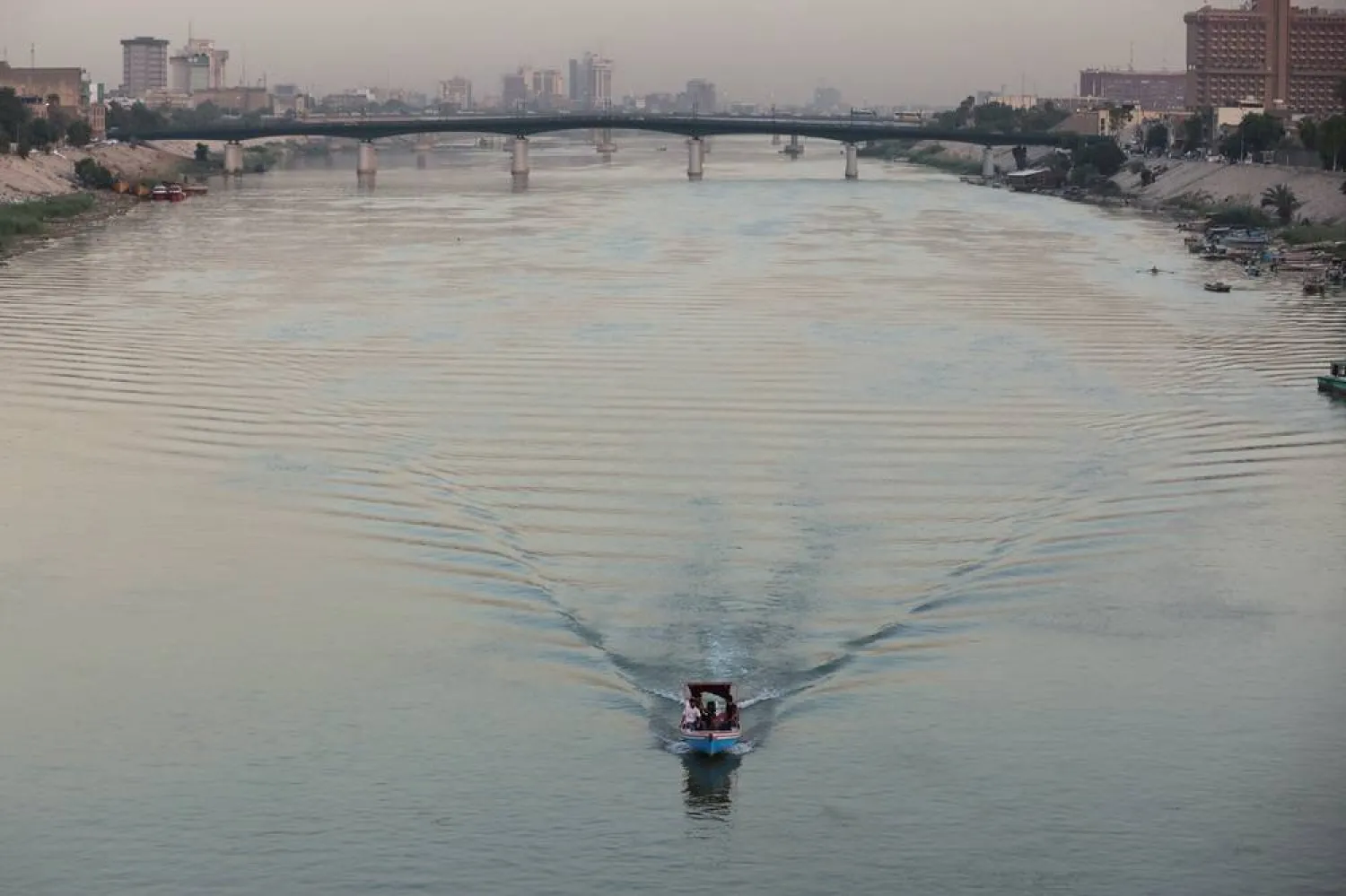
An Iraqi man rides his boat at dusk in the Tigris River in central Baghdad, on September 30, 2025. (AFP)
TT

Iraqi Farmers Protest Cultivation Ban amid Drought

An Iraqi man rides his boat at dusk in the Tigris River in central Baghdad, on September 30, 2025. (AFP)

Hundreds of Iraqi farmers protested Saturday against the government's policy of curbing land cultivation to preserve dwindling water supplies, an AFP correspondent said.

Year-on-year droughts and declining rainfall have brought agriculture to its knees in a country still recovering from decades of war and chaos, and where rice and bread are diet staples.

Water scarcity has forced many farmers to abandon their plots, and authorities have drastically reduced farm activity to ensure sufficient drinking water for Iraq's 46 million people.

In the Ghammas area in the southern province of Diwaniyah, hundreds of farmers, including from neighboring provinces, gathered to urge the government to allow them to farm their lands.

They called on the authorities to compensate them for their losses and distribute water for agriculture.

"We have come from four provinces to demand the rights and compensation owed to farmers," one of the protesters, Mahmoud Saleh, said.

"The farmer has been wronged. They will not let us cultivate the wheat crop next year, and they have cut off water supplies," he added.

Mohammed Amoush, who used to cultivate 100 dunum (25 hectares) of farms, said "our land has become fallow."

"There is no agriculture, only financial loss. We are devastated," he added.

Iraq's historically fertile plains stretched along the once-mighty Tigris and Euphrates, but water levels have plummeted drastically over the past decades.

In addition to the drought, authorities also blame upstream dams in neighboring countries for reducing the rivers' flow.

In recent weeks, the Euphrates has seen its lowest levels in decades, especially in the southern provinces, and water reserves in artificial lakes are at their lowest in the country's recent history.

Iraq currently receives less than 35 percent of its share of the river water allocated according to preexisting agreements and understandings with neighboring countries, according to authorities.

Decades of war have also left the country's water management systems in disrepair.


India Secures 60 Days of Oil Supply amid Hormuz Disruption

Small boats sail loaded with goods in front of a container ship in the waters of the Strait of Hormuz off the coast of Oman, June 25, 2025 (AFP)
TT

India Secures 60 Days of Oil Supply amid Hormuz Disruption

Small boats sail loaded with goods in front of a container ship in the waters of the Strait of Hormuz off the coast of Oman, June 25, 2025 (AFP)

India has secured crude oil supplies for the next 60 days, ensuring stable fuel supplies in the country despite disruption in shipments from the Middle East, the oil ministry said in a statement on Thursday.

India, the world's third biggest oil consumer and importer, was buying over 40% of its oil imports from the Middle East. Those supplies are disrupted due to the US-Israeli war on Iran.

Higher availability of crude in global markets, mainly from the Western hemisphere, has helped offset the shortfall, the government said.

Taking advantage of a temporary US waiver, Indian refiners have also ramped up purchases of Russian crude, securing millions of barrels to fill the supply gap.

"Despite the situation at the Strait of Hormuz, India is today receiving more crude oil from its 41-plus suppliers across the world than what was previously arriving through the Strait," the ministry said.

As a net exporter of petroleum products, India’s domestic availability of petrol and diesel remains structurally secure, the government said.

The world's fourth-largest refiner has oil and fuel stocks sufficient to meet 60 days of demand, against a total storage capacity of 74 days, it added.

"Nearly two months of steady supply is available for every Indian citizen, regardless of what happens globally. The next two months of crude procurement have also been secured," it added.

India has asked refiners to maximize production of liquefied petroleum gas, used as cooking fuel, as the nation was buying 90% of its LPG imports from the Middle East.

Domestic daily LPG production has been increased by 40% to 50,000 metric tons against a requirement of 80,000 tons, it said.

In addition, Indian companies have secured 800,000 tons of LPG cargoes from the United States, Russia, Australia, and other countries, it said.

These shipments, arriving across India's 22 LPG import terminals, provide roughly one month of assured supply, with further procurement underway, the government said.


SAMA Licenses Two Companies to Provide Open Banking Services

SAMA Licenses Two Companies to Provide Open Banking Services
TT

SAMA Licenses Two Companies to Provide Open Banking Services

SAMA Licenses Two Companies to Provide Open Banking Services

The Saudi Central Bank (SAMA) announced the licensing of “Altknwlwjya aljadydh llhulul albrmjyh” and “lyn tknwlwjyz Company Saudi Arabia litqniyat nuzum almaelumat” to conduct payment services by providing account information—one of the services associated with open banking.

The licenses were granted following the successful completion of the regulatory sandbox phase under SAMA’s supervision.

The decision reflects SAMA’s ongoing efforts to support and enable the financial sector, enhance the efficiency and flexibility of financial transactions, and promote innovation in financial services. This aims to advancing financial inclusion and expanding access to financial services across all segments of society.

SAMA emphasizes the importance of dealing exclusively with authorized financial institutions. To view licensed and permitted financial institutions, visit SAMA's official website.


UK Suffers OECD's Biggest Growth Downgrade as Iran War Pushes Up Energy Costs

This overhead view shows buildings along the River Thames in London on March 25, 2026. (Photo by JUSTIN TALLIS / AFP)
TT

UK Suffers OECD's Biggest Growth Downgrade as Iran War Pushes Up Energy Costs

This overhead view shows buildings along the River Thames in London on March 25, 2026. (Photo by JUSTIN TALLIS / AFP)

Britain's economic ‌growth prospects this year received the sharpest downgrade of any major economy in the OECD's interim forecast update on Thursday following the US-Israeli war ​on Iran, while inflation is set to rise faster too.

The Paris-based international body cut its 2026 forecast for British economic growth by half a percentage point to 0.7%, compared with a 0.4 percentage point downgrade for the euro zone and a 0.3 percentage point upgrade for the United States.

"Planned fiscal tightening and higher energy prices ‌are anticipated to keep ‌growth subdued in the United ​Kingdom, ‌though the ⁠impact ​will be ⁠attenuated by lower policy rates next year," Reuters quoted the OECD as saying in its report.

Following are further highlights from the report and other context:

Britain's growth forecast for 2027 is unchanged at 1.3%.

Britain's inflation forecast for 2026 is revised up by 1.5 percentage points from December to 4.0%, the ⁠biggest upward revision of any large, advanced ‌economy.

UK inflation in 2027 ‌is forecast to be 2.6%, 0.5 percentage ​points higher than in ‌December and above the Bank of England's 2% target.

Poorer UK households spend more on gas and electricity than in other rich countries, though total energy spending makes up a smaller share of UK inflation than elsewhere.

The OECD expects the ‌BoE to keep interest rates unchanged this year then cut in Q1 2027 as inflation ⁠eases.

⁠Britain's Office for Budget Responsibility, in forecasts finalized just before the start of the conflict, predicted GDP growth of 1.1% this year and 1.6% in 2027.

The BoE this month forecast inflation would rise to 3.0-3.5% over the next couple of quarters.

Prime Minister Keir Starmer has made boosting growth and reducing the cost of living top goals for his government.

Finance minister Rachel Reeves said the forecasts showed the war in the Middle East ​was affecting Britain but ​she would still focus on "regional growth, embracing AI and innovation, and establishing a closer relationship with the EU."
