
Saudi Arabia: Reform Momentum Propels Non-Oil Sector to Strongest Growth in Six Months

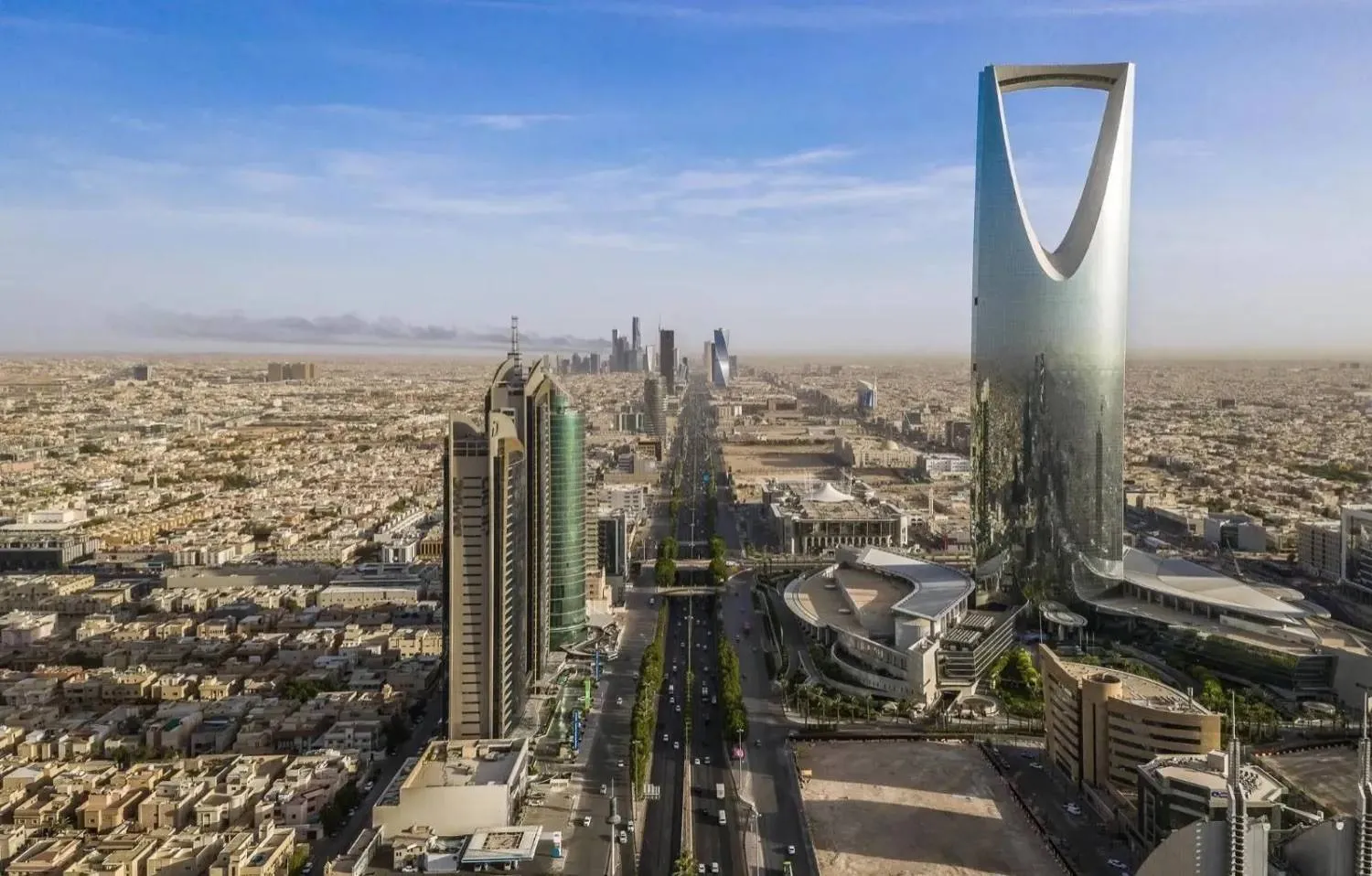
The Saudi capital, Riyadh (SPA)
TT

Saudi Arabia: Reform Momentum Propels Non-Oil Sector to Strongest Growth in Six Months

The Saudi capital, Riyadh (SPA)

In a clear sign of the continued strength of Saudi Arabia’s reform drive and its growing success in diversifying the economy away from oil, the Kingdom’s non-oil private sector recorded exceptional performance in September 2025.

According to the latest Riyad Bank Purchasing Managers’ Index (PMI), the non-oil economy expanded at its fastest pace in six months, supported by a solid rise in both domestic and export demand, along with stronger production and employment activity.

This strong performance reflects firm confidence in the business environment and confirms the resilience of Saudi Arabia’s recovery trajectory as the economy moves into the final quarter of the year with positive momentum and encouraging indicators.

The data coincides with the Saudi government’s preliminary 2026 budget statement, which projects non-oil activities to grow by about 5 percent by the end of 2025, driven by sustained domestic demand and improved labor market conditions.

The Riyad Bank headline PMI rose from 56.4 in August to 57.8 in September, remaining well above the neutral 50-point threshold that separates expansion from contraction. This marks the strongest improvement in business conditions for the non-oil private sector since March.

The September survey revealed significant growth in business activity and new orders, boosted by firm domestic consumption and expanding export opportunities. Companies also reported faster purchasing activity and steady job creation, while price pressures eased slightly.

The report highlighted that the rise in business activity was the main driver of growth in September, as non-oil firms ramped up output to its highest level since February. About 27 percent of respondents reported increased activity, compared with just 1 percent who saw a decline, marking the largest monthly gain in four years.

Firms also noted a strong acceleration in new orders, supported by favorable market conditions, successful marketing efforts, and an expanding client base. Combined with robust domestic demand, these factors contributed to a second consecutive monthly increase in new international business.

Rising demand encouraged companies to boost input purchases at the fastest rate in three months, leading to the largest stock accumulation since April. The report said effective inventory management became a common theme among firms seeking to ensure smooth distribution channels and prepare for future orders.

Employment levels remained solid in September, driven by stronger demand and increased workloads. Companies expanded their workforce to maintain delivery schedules, enhance productivity, and support sales operations. After two months of backlog accumulation, unfinished business levels stabilized, reflecting better operational efficiency.

Business confidence toward the year ahead improved for the second month in a row, recovering from July’s brief dip. The report attributed this optimism to expectations of stronger demand, increased sales inquiries, effective marketing campaigns, and the acquisition of new clients.

However, some caution remained. Inflation in input costs stayed above the long-term average, driven by rising wages, higher supplier prices, and general cost inflation. Selling prices continued to rise, though at the slowest pace in four months, as some firms offered discounts to protect market share.

Dr. Naif Alghaith, Chief Economist at Riyad Bank, said that non-oil private sector business conditions strengthened noticeably in September, with the PMI climbing to 57.8 — the highest reading since March — reflecting faster output growth and stronger demand.

He noted that new business inflows rose sharply, supported by local demand and export orders, particularly from Gulf Cooperation Council countries.

He further added that successful marketing campaigns boosted demand, which in turn supported production growth, revived purchasing activity, and helped firms build inventories for upcoming projects.

Alghaith underlined that improved supplier delivery times helped companies meet rising demand smoothly. “While employment growth moderated slightly, the overall pace remained strong, easing production pressures and stabilizing output levels,” he said.


Saudi Arabia’s flynas, Syrian Civil Aviation Authority Partner to Launch 'flynas Syria'

The new airline will operate commercial air transport services in accordance with approved regulations and standards (flynas)
TT

Saudi Arabia’s flynas, Syrian Civil Aviation Authority Partner to Launch 'flynas Syria'

The new airline will operate commercial air transport services in accordance with approved regulations and standards (flynas)

Saudi budget carrier flynas has signed an agreement with the Syrian General Authority of Civil Aviation and Air Transport to establish a new commercial airline under the name "flynas Syria," with operations scheduled to begin in the fourth quarter of 2026.

Saturday’s agreement comes within the framework of bilateral cooperation between Saudi Arabia and Syria, as well as the strategic investment agreements between the two countries, coordinated with the Saudi Ministry of Investment and the Syrian General Authority of Civil Aviation and Air Transport.

The new airline will operate commercial air transport services in accordance with approved regulations and standards, meeting the highest safety and aviation security requirements. All licensing and operational procedures will be completed in coordination with the relevant authorities.

The carrier will be established as a joint venture, with 51% ownership held by the Syrian General Authority of Civil Aviation and Air Transport and 49% by flynas.

The new airline will operate flights to several destinations across the Middle East, Africa, and Europe. This expansion aims to bolster air traffic to and from Syria, enhance regional and international connectivity, and meet growing demand for air travel.

"This step is part of our commitment to supporting high-quality cross-border investments. The aviation sector is a key enabler of economic development, and the establishment of 'flynas Syria' serves as a model for constructive investment cooperation,” said Saudi Minister of Investment Khalid Al-Falih.

“This partnership enhances economic integration and market connectivity and supports development goals by advancing air transport infrastructure, ultimately serving the mutual interests of both nations and promoting regional economic stability,” he added.

President of the Syrian General Authority of Civil Aviation and Air Transport Omar Hosari also stated that the establishment of flynas Syria represents a strategic step within a comprehensive national vision aimed at rebuilding and developing Syria's civil aviation sector on modern economic and regulatory foundations.

“This will be achieved while balancing safety requirements, operational sustainability, investment stimulation, and passenger services. The partnership reflects the state's orientation toward smart cooperation models with trusted regional partners, ensuring the transfer of expertise, the development of national capabilities, and the enhancement of Syria's air connectivity with regional and international destinations, in line with global best practices in the air transport industry."

flynas Chairman Ayed Al-Jeaid stated that the company continues to pursue strategies aimed at growth and international expansion, describing the agreement as a historic milestone in the company's journey and a promising investment model in partnership with Syria.

flynas CEO Bander Al-mohanna said the step represents a qualitative leap in the company's strategy and financial performance, highlighting the transfer of the company's low-cost aviation experience to the Syrian market to support regional and international air connectivity.

flynas currently operates 23 weekly flights from Riyadh, Jeddah, and Dammam to Damascus, including two daily direct flights from Riyadh, one daily flight from Jeddah, and two weekly flights from Dammam.

The airline made history on June 5, 2025, by adding the Syrian capital to its network, becoming the first Saudi carrier to resume scheduled flights to Damascus.


Egypt to Establish Middle East’s 1st Sodium Cyanide Plant for Gold Extraction

CEO of the General Authority for Investment and Free Zones (GAFI) Mohamed el-Gawsaky, received a delegation from DrasChem Specialty Chemicals (Egyptian Cabinet)
TT

Egypt to Establish Middle East’s 1st Sodium Cyanide Plant for Gold Extraction

CEO of the General Authority for Investment and Free Zones (GAFI) Mohamed el-Gawsaky, received a delegation from DrasChem Specialty Chemicals (Egyptian Cabinet)

The Egyptian government has announced the establishment of the first sodium cyanide production plant in the Middle East in Alexandria Governorate on the Mediterranean coast, with an annual production capacity of 50,000 tons and investments of $200 million in the first phase.

In a statement, the cabinet said on Saturday that CEO of the General Authority for Investment and Free Zones (GAFI) Mohamed el-Gawsaky met with a delegation from DrasChem Specialty Chemicals, a Private Free Zone company, to discuss the steps required to establish the company’s sodium cyanide production facility at the Sidi Kerir Petrochemicals Complex in Alexandria.

The DrasChem project plans to begin production in 2028 following the completion of the facility’s first phase, with initial investments estimated at $200 million. This phase targets the production and export of 50,000 tons of sodium cyanide annually, a key input in gold extraction.

The second phase will focus on either doubling production capacity or manufacturing additional sodium cyanide derivatives, while a third phase will target the production of sodium-ion battery components.

El-Gawsaky said the project aligns with the country’s developmental priorities, particularly those related to increasing exports, transferring and localizing advanced technology, deepening local manufacturing and creating sustainable job opportunities.

The CEO also noted that the plant would benefit from the results of Egypt's economic reform program, which has caused significant improvements in investment, trade, and logistics indicators.

El-Gawsaky urged Egyptian companies, including DrasChem, to adopt integrated, export-oriented industrial strategies, with a particular focus on African markets.

He said the Ministry of Investment and Foreign Trade aims to increase exports by $4 billion. The focus will be on sectors with high competitive advantages, particularly the chemicals sector.

He also highlighted that DrasChem’s sodium cyanide products are of strategic importance to gold mines in Africa, which account for about a quarter of global gold production.

Bassem El-Shemmy, Vice President for Strategic Partnerships at Austria-based Petrochemical Holding GmbH, the largest shareholder in DrasChem, said project partner Draslovka of the Czech Republic will, for the first time, transfer its proprietary technology - developed at its facilities in the US - to Africa and the Middle East.

This move, he said, will help position Egypt as a regional hub for gold extraction technologies and sodium-ion battery manufacturing, a more sustainable and cost-effective alternative to lithium-ion batteries.

For his part, Andrey Yurkevich, Deputy Managing Director for Strategy and Business Development at Petrochemical Holding GmbH, said the DrasChem facility will create up to 500 direct jobs and generate approximately $120 million in annual foreign-currency revenues.

He said that the project will enhance the stability and sustainability of local supply chains and strengthen Egypt’s regional standing as home to the first sodium cyanide production facility in both Egypt and the Middle East.


Türkiye Says to Maintain Tight Monetary Policy, Fiscal Discipline

FILE PHOTO: People shop at a green market in Istanbul, Türkiye, October 22, 2025. REUTERS/Dilara Senkaya/File Photo
TT

Türkiye Says to Maintain Tight Monetary Policy, Fiscal Discipline

FILE PHOTO: People shop at a green market in Istanbul, Türkiye, October 22, 2025. REUTERS/Dilara Senkaya/File Photo

Türkiye will maintain its tight monetary policy and keep fiscal discipline in order to further lower inflation, Vice President Cevdet Yilmaz said on Saturday.

Turkish consumer price inflation leapt to a higher-than-expected 4.84% month-on-month in January, official data showed on Tuesday, driven in part by new year price adjustments and a jump in food and non-alcoholic drinks prices. Annual inflation dipped to 30.65%.

Speaking at an event in the southeastern province of Siirt, Yilmaz said ⁠the 45-point fall in inflation since May 2024 was not enough, adding the government was on a path to further lower consumer prices.

"We will maintain our tight monetary policy, we will keep our disciplined fiscal policies, we are determined to do this. But ⁠these are not enough either. On the other hand, we have to contribute to our battle with inflation through our supply-side policies," he added, according to Reuters.

Last month, Türkiye's central bank lowered its key interest rate by a less-than-expected 100 basis points to 37%, citing firming inflation, pricing behavior and expectations that threaten the disinflation process.

After a brief policy reversal early last year due to political turmoil, the bank's ⁠rate-cutting cycle resumed in July with a 300-basis-point cut, followed by more subsequent cuts.

The bank has eased by 1,300 points since 2024, when it held rates at 50% for most of the year to wrestle down inflation expectations.

Last month, the head of the Turkish Exporters Assembly told reporters late that Türkiye's extended period of tight economic policies had hurt manufacturers, with high interest rates and costs posing risks to the country's official $282 billion export target.