


Egypt Targets Greater Competitiveness Through Digitalization, Institutional Reform

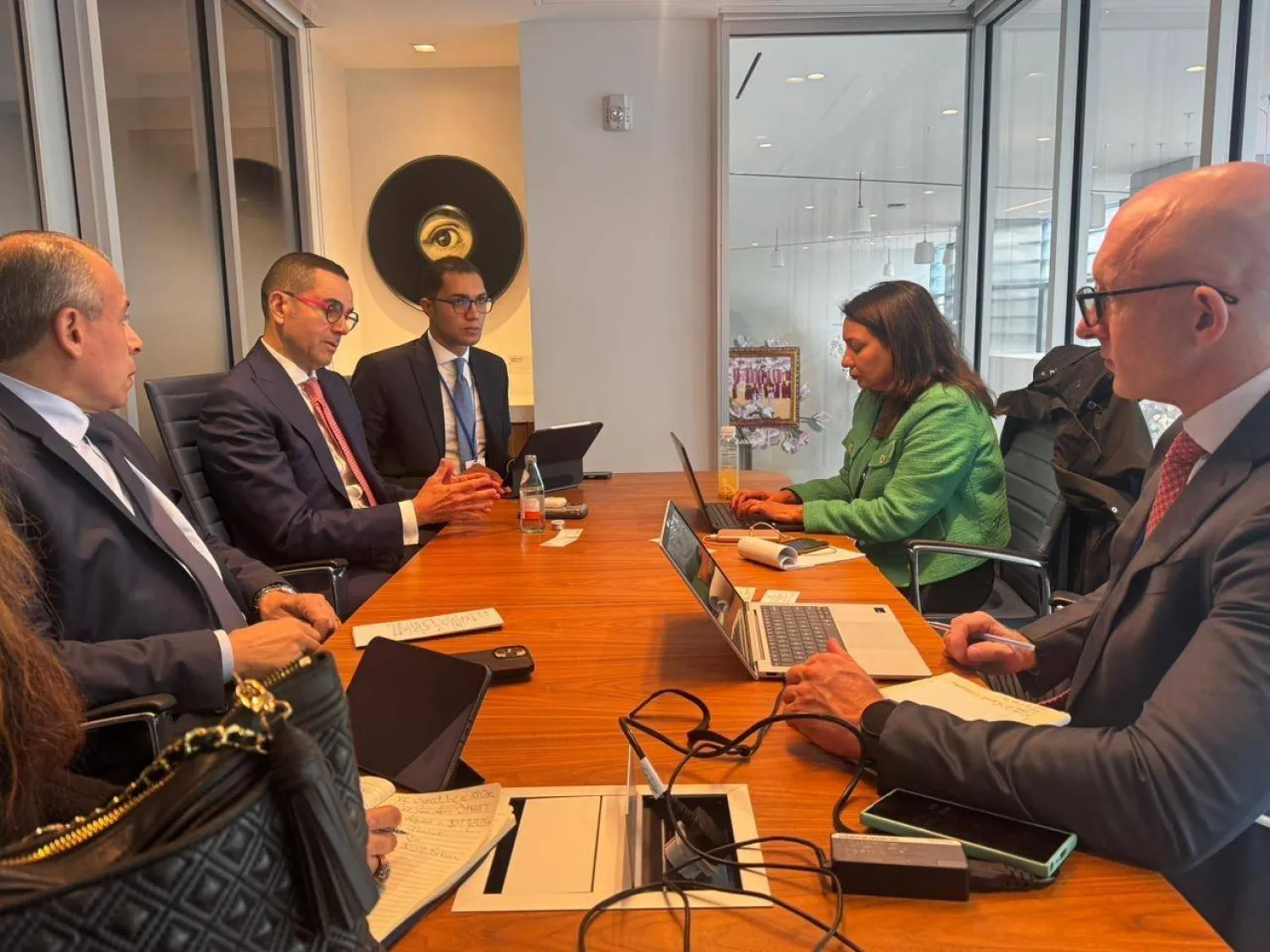
The meeting between the Egyptian Minister of Investment and officials from Fitch Ratings (Ministry) 
TT

Egypt Targets Greater Competitiveness Through Digitalization, Institutional Reform

The meeting between the Egyptian Minister of Investment and officials from Fitch Ratings (Ministry) 

Egypt is pursuing an ambitious national economic program to boost investment competitiveness through digital transformation, structural reform, and more effective management of state assets, according to Minister of Investment and Foreign Trade Hassan El-Khatib.

Speaking to Asharq Al-Awsat on the sidelines of the IMF and World Bank meetings, El-Khatib highlighted the government’s progress since taking office a year and three months ago.

“In this short period, we have done far more than what was achieved in three years under the previous IMF program,” he said. “When monetary policy is sound, inflation falls, capital inflows improve, and foreign reserves strengthen. These are signs that correct policies lead to positive results.”

The interview followed El-Khatib’s meetings with senior representatives of J.P. Morgan, Starlink, and Fitch Ratings, during which he outlined measures designed to stimulate investment, clarify Egypt’s structural reform agenda, and present what he called the “lost opportunity” roadmap for better management of state assets.

El-Khatib explained that his discussions with international investors, banks, and ratings agencies aimed to clarify the government’s reform priorities across monetary, fiscal, and trade policy, as well as the state’s evolving role in the economy. He said major investment banks already have a good understanding of the economic situation in Egypt, but need to hear directly about the government’s structural reform plans and overall direction.

Fitch recently affirmed Egypt’s long-term foreign currency rating at “B” with a stable outlook, while Standard & Poor’s raised its sovereign rating to “B” from “B-,” also with a stable outlook. El-Khatib also confirmed talks with Starlink on entering the Egyptian market, promising support to help the company secure the necessary licenses.

He emphasized that the government has established a clear national program to ensure coordination between the central bank, the Ministry of Finance, and the Ministry of Investment.

On the monetary front, the strategy is centered on using a flexible exchange rate to contain inflation and create a stable environment for investors. Inflation has already fallen from 40 percent two years ago to 12 percent today, and the government aims to reduce it further to between 7 and 9 percent by the end of next year.

In terms of fiscal policy, El-Khatib pointed to a major shift in the relationship between taxpayers and the tax authority, built on trust and credibility. This has translated into a 35 percent increase in tax revenues in just one year — a record level — alongside the submission of tax filings by more than 100,000 companies. He also noted that the government is actively working to lower fees and ease burdens to enhance competitiveness.

Digital transformation is another central pillar of the reform agenda. A temporary licensing platform launched in June now links 41 government bodies and offers 389 licenses online. The number of services will soon increase to 460, and the platform will be renamed “Services Platform.” All steps for company registration, licensing, and daily operational requirements will be handled through this single portal. The platform will be rolled out in phases over the next two years.

Trade facilitation has also seen progress. Customs clearance times have been reduced by 63 percent in just over a year, with the ultimate goal of cutting time and cost by 90 percent, eventually bringing the process down to only a few hours.

Egypt also aims to join the World Bank’s Business Ready Report by 2026 and rank among the world’s top 50 countries in trade and investment competitiveness. To achieve this, the government has held 37 interagency meetings, identified challenges through 1,700 questions, and designed a reform matrix comprising 209 measures, with the majority focusing on legislative and regulatory frameworks affecting 270 economic activities.

The minister underscored the importance of both domestic and foreign direct investment for driving growth. Saudi investments in Egypt currently stand at $25 billion, but Cairo is seeking to diversify, attracting capital from the United States, Europe, Asia, and the Gulf region. Sectoral plans covering the next two decades are being drawn up to generate ready-to-implement projects. For example, in tourism, Egypt intends to double visitor numbers by upgrading infrastructure and providing fully approved land plots, enabling projects to start within three months of approval.

El-Khatib concluded by highlighting Egypt’s political stability, clear foreign policy, competitive production costs, and strategic location, reinforced by extensive infrastructure investment. These factors, he said, position the country strongly to attract and localize industries aimed at boosting exports.



Egypt Plans $1 Billion Red Sea Marina, Hotel Development

This picture shows a partial view of Egypt's Red Sea city of Sharm el-Sheikh, October 7, 2025. (AFP)
TT

Egypt Plans $1 Billion Red Sea Marina, Hotel Development

This picture shows a partial view of Egypt's Red Sea city of Sharm el-Sheikh, October 7, 2025. (AFP)

Egypt announced plans on Monday for a new $1 billion marina, hotel and housing development on the Red Sea in a bid to boost the region's tourist industry.

Construction on the "Monte Galala Towers and Marina" project would ‌start in ‌the second ‌half ⁠of the ‌year and run for seven years, Ahmed Shalaby, managing director of the main developer, Tatweer Misr, said.

The 10-tower development - a partnership with the ⁠housing ministry and other state bodies ‌including the armed ‍forces' engineering authority - ‍would cost about 50 ‍billion Egyptian pounds ($1.07 billion), he added.

The project, also announced by the cabinet, will cover 470,000 square meters on the Gulf of Suez, about ⁠35 km south of Ain Sokhna, Shalaby said.

Egypt aims to boost total tourist arrivals to around 30 million by 2030, from around 19 million recorded by the tourism ministry in 2025.


Saudi-Polish Investment Forum Explores Prospects for Economic and Investment Cooperation

The forum brought together government officials, business leaders, and investors from both countries with the aim of enhancing economic cooperation - SPA
TT

Saudi-Polish Investment Forum Explores Prospects for Economic and Investment Cooperation

The forum brought together government officials, business leaders, and investors from both countries with the aim of enhancing economic cooperation - SPA

The Saudi-Polish Investment Forum was held today at the headquarters of the Federation of Saudi Chambers in Riyadh, with the participation of Minister of Investment Khalid Al-Falih, Minister of Finance of the Republic of Poland Andrzej Domański, and Vice President of the Federation of Saudi Chambers Emad Al-Fakhri.

The forum brought together government officials, business leaders, and investors from both countries with the aim of enhancing economic cooperation, expanding investment partnerships in priority sectors, and exploring high-quality investment opportunities that support sustainable growth in Saudi Arabia and Poland.

During a dedicated session, the forum reviewed economic and investment prospects in both countries through presentations highlighting promising opportunities, investment enablers, and supportive legislative environments.

Several specialized roundtables addressed strategic themes, including the development of the digital economy, with a focus on information and communication technologies (ICT), financial technologies (fintech), and artificial intelligence-driven innovation, SPA reported.

Discussions also covered the development of agricultural value chains from production to market access through advanced technologies, food processing, and agricultural machinery. In addition, participants examined ways to enhance the construction sector by developing systems and materials, improving execution efficiency, and accelerating delivery timelines. Energy security issues and the role of industrial sectors in supporting economic transformation and sustainability were also discussed.

The forum witnessed the announcement of two major investment agreements. The first aims to establish a framework for joint cooperation in supporting investment, exchanging information and expertise, and organizing joint business events to strengthen institutional partnerships.

The second agreement focuses on supporting reciprocal investments through the development of financing and insurance tools and the stimulation of joint ventures to boost investment flows.

The forum concluded by emphasizing the importance of continued coordination and dialogue between the public and private sectors in both countries to deepen Saudi-Polish economic relations and advance shared interests.


Gold Rises as Dollar Slips, Focus Turns to US Jobs Data

FILE PHOTO: An employee places ingots of 99.99 percent pure gold in a workroom at the Novosibirsk precious metals refining and manufacturing plant in the Siberian city of Novosibirsk, Russia, September 15, 2023. REUTERS/Alexander Manzyuk/File Photo
TT

Gold Rises as Dollar Slips, Focus Turns to US Jobs Data

FILE PHOTO: An employee places ingots of 99.99 percent pure gold in a workroom at the Novosibirsk precious metals refining and manufacturing plant in the Siberian city of Novosibirsk, Russia, September 15, 2023. REUTERS/Alexander Manzyuk/File Photo

Gold prices rose on Monday, buoyed by a softer dollar as investors braced for a week packed with US economic data that could offer more clues on the US Federal Reserve's monetary policy.

Spot gold rose 1.2% to $5,018.56 per ounce by 9:30 a.m. ET (1430 GMT), extending a 4% rally from Friday.

US gold futures for April delivery also gained 1.3% to $5,042.20 per ounce.

The US dollar fell 0.8% to a more than one-week low, making greenback-priced bullion cheaper for overseas buyers.

"The big mover today (in gold prices) is the US dollar," said Bart Melek, global head of commodity strategy at TD Securities, adding that expectations are growing for weak economic data, particularly on the labor front, Reuters reported.

Investors are closely watching this week's release of US nonfarm payrolls, consumer prices and initial jobless claims for fresh signals on monetary policy, with markets already pricing in at least two rate cuts of 25 basis points in 2026.

US nonfarm payrolls are expected to have risen by 70,000 in January, according to a Reuters poll.

Lower interest rates tend to support gold by reducing the opportunity cost of holding the non-yielding asset.

Meanwhile, China's central bank extended its gold buying spree for a 15th month in January, data from the People's Bank of China showed on Saturday.

"The debasement trade continues, with ongoing geopolitical risks driving people into gold," Melek said, adding that China's purchases have had a psychological impact on the market.

Spot silver climbed 2.9% to $80.22 per ounce after a near 10% gain in the previous session. It hit an all-time high of $121.64 on January 29.

Spot platinum was down 0.2% at $2,092.95 per ounce, while palladium was steady at $1,707.25.

"A slowdown in EV sales hasn't really materialized despite all the policy softening, so I do see that platinum and palladium will possibly slow down," after a bullish run in 2025, WisdomTree commodities strategist Nitesh Shah said.