


Saudi Arabia, UN Discuss Ways to Revive Libya’s Political Roadmap

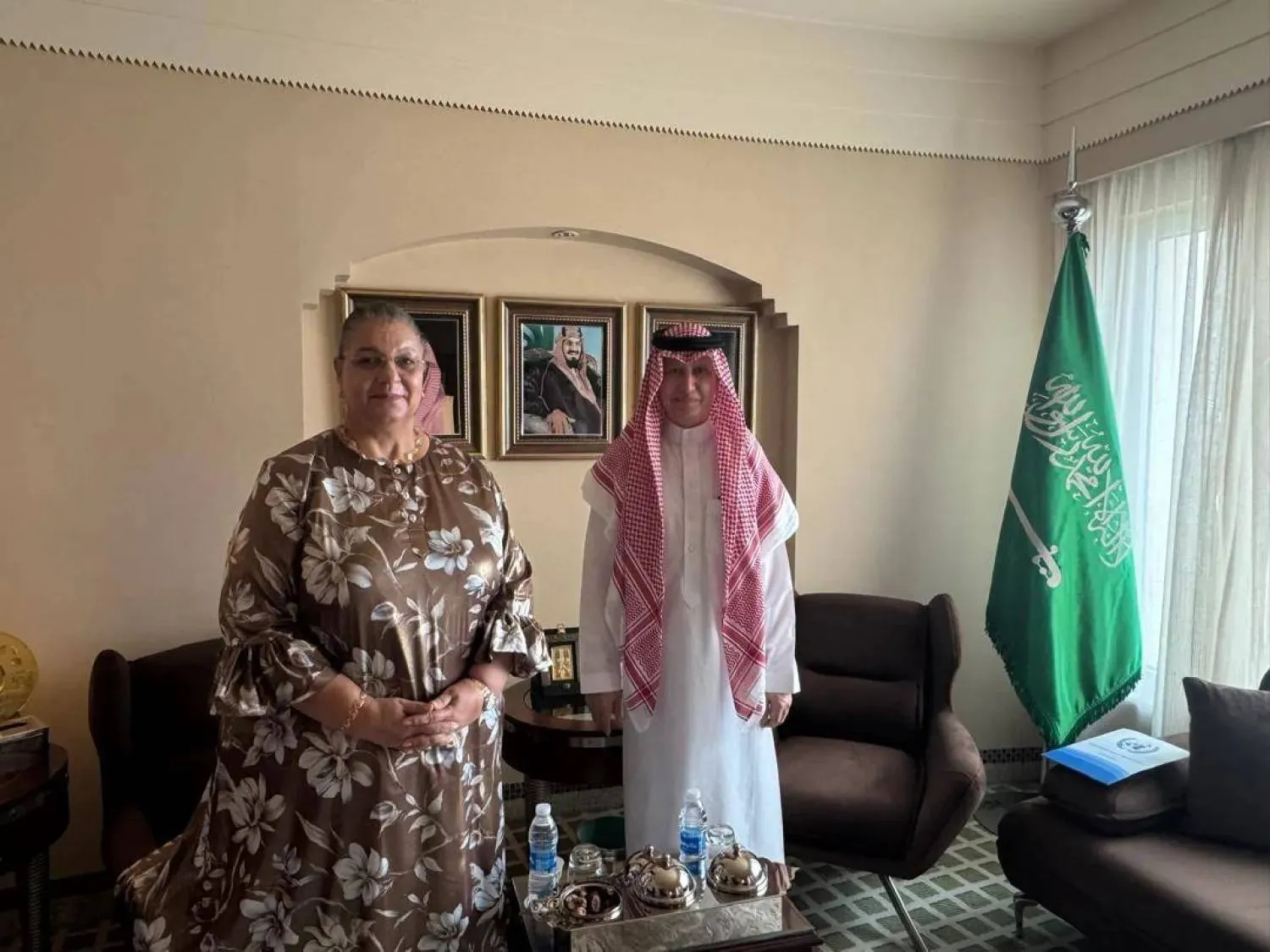
The Chargé d'Affaires of the Saudi Embassy in Libya, Abdullah Al-Sulami, and Special Representative of the Secretary-General for Libya and Head of the UN Support Mission in Libya (UNSMIL) Hannah Tetteh. (UNSMIL)
TT

Saudi Arabia, UN Discuss Ways to Revive Libya’s Political Roadmap

The Chargé d'Affaires of the Saudi Embassy in Libya, Abdullah Al-Sulami, and Special Representative of the Secretary-General for Libya and Head of the UN Support Mission in Libya (UNSMIL) Hannah Tetteh. (UNSMIL)

The UN Support Mission in Libya (UNSMIL) briefed on Tuesday the Chargé d'Affaires of the Saudi Embassy in Libya, Abdullah Al-Sulami, on the latest developments in Libya and means to revive the country’s political roadmap, proposed by Special Representative of the Secretary-General for Libya and Head of the mission, Hannah Tetteh.

In a statement, the Mission said Tetteh and her Deputy for Political Affairs, Stephanie Khoury, discussed with Al-Sulami the special representative’s briefing to the UN Security Council on October 14.

They addressed the UN mission's political roadmap to unify Libyan institutions and hold national elections.

Both parties agreed that Libyan institutions must drive the roadmap forward and that dialogue should lead to shared interests, the Mission said.

“They stressed the need to coordinate international support for the UN-facilitated political process,” it added.

Tetteh thanked the Kingdom for its continued cooperation and support, commending its efforts to promote peace and development globally.

Tetteh’s roadmap, unveiled during a briefing on August 21, lays out a 12–18 month plan for Libya and is built around three core pillars: adopting a technically sound and politically viable electoral framework, unifying institutions through a new, unified government and holding a structured dialogue, enabling broad Libyan participation in tackling critical issues.

Since the announcement of the political plan, the UN mission has been working to bring the Libyan parties together. However, Tetteh last week said the Mission will be forced to adopt a different approach if the House of Representatives and High Council of State fail to agree on the High National Elections Commission and the constitutional and legal framework governing the electoral process.



GCC Secretary-General Condemns Iranian Attacks on UAE Tankers and Commercial Ships

Gulf Cooperation Council (GCC) Secretary-General Jasem Albudaiwi
TT

GCC Secretary-General Condemns Iranian Attacks on UAE Tankers and Commercial Ships

Gulf Cooperation Council (GCC) Secretary-General Jasem Albudaiwi

Secretary-General of the Gulf Cooperation Council (GCC) Jasem Albudaiwi strongly condemned the repeated Iranian attacks on ADNOC tankers belonging to the United Arab Emirates (UAE), as well as commercial vessels in the Strait of Hormuz, the Saudi Press Agency reported on Saturday.

He underscored that such deliberate and brutal attacks constitute an unacceptable escalation and a grave violation of the security and safety of maritime navigation.

The GCC Secretary-General stressed the urgent need for Iran to immediately cease all hostile actions that threaten regional and international security and stability. He also called on the international community to exert pressure on Iran to end these hostilities and uphold the safety and freedom of maritime navigation.

He concluded his statement by reiterating the GCC's full and unwavering solidarity with the UAE, standing by its side and supporting all measures it takes to protect its security, territorial sovereignty, and interests.


Oil Spill Affects 12 km of Oman Coast, Masirah Unaffected

Aerial view of oil spilling from the oil tanker Caroline Bezengi into the water, off Al-Qibliyyah island, Hallaniyat Group Of Islands, Oman, August 13, 2026, in this still image taken from a handout video. (Reuters)
TT

Oil Spill Affects 12 km of Oman Coast, Masirah Unaffected

Aerial view of oil spilling from the oil tanker Caroline Bezengi into the water, off Al-Qibliyyah island, Hallaniyat Group Of Islands, Oman, August 13, 2026, in this still image taken from a handout video. (Reuters)

Oil pollution is affecting about 12 kilometres (7.46 miles) of coastline near Oman's Ras Madraka, while Masirah Island remains unaffected, state news agency ONA said on Saturday after efforts to tackle a spill from a leaking tanker have made progress.

Oil began reaching Oman's coast on Wednesday after spreading at sea for weeks, Reuters reported.

The Environment Authority said response operations were under way and the offshore slick was moving towards open waters.


ADNOC Vessel Attacked Again in Strait of Hormuz

FILE PHOTO: Vessels near the Strait of Hormuz, as seen from Musandam, Oman, August 10, 2026. REUTERS/Stringer/File Photo
TT

ADNOC Vessel Attacked Again in Strait of Hormuz

FILE PHOTO: Vessels near the Strait of Hormuz, as seen from Musandam, Oman, August 10, 2026. REUTERS/Stringer/File Photo

A tanker owned by Abu Dhabi National Oil Company (ADNOC) was attacked while transiting through the Strait of Hormuz, Emirati state-run WAM news agency said Saturday.

The attack happened Friday evening, and there were no injuries, the agency reported.

This is the third such attack on vessels operated by ADNOC in the critical waterway in the last week.

The UAE has previously accused Iran of the attacks.

The United Kingdom Maritime Trade Operations center said that a bulk carrier was struck by an unknown projectile that hit the hull on Friday. It was not immediately clear if it was the ADNOC vessel.

Shipping has been disrupted and the strait has been virtually closed since the Iran war started on Feb, 28.