
Vatican Will Return Dozens of Artifacts to Indigenous Groups in Canada as Gesture of Reconciliation

Pope Francis dons a headdress during a visit with Indigenous peoples at Maskwaci, the former Ermineskin Residential School, Monday, July 25, 2022, in Maskwacis, Alberta. (AP Photo/Eric Gay, File)
TT

Vatican Will Return Dozens of Artifacts to Indigenous Groups in Canada as Gesture of Reconciliation

Pope Francis dons a headdress during a visit with Indigenous peoples at Maskwaci, the former Ermineskin Residential School, Monday, July 25, 2022, in Maskwacis, Alberta. (AP Photo/Eric Gay, File)

The Vatican is expected to soon announce that it will return a few dozen artifacts to Indigenous communities in Canada as part of its reckoning with the Catholic Church’s troubled role in helping suppress Indigenous culture in the Americas, officials said Wednesday, The AP news reported.

The items, including an Inuit kayak, are part of the Vatican Museum’s ethnographic collection, known as the Anima Mundi museum. The collection has been a source of controversy for the Vatican amid the broader museum debate over the restitution of cultural goods taken from Indigenous peoples during colonial periods.

Negotiations on returning the Vatican items accelerated after Pope Francis in 2022 met with Indigenous leaders who had traveled to the Vatican to receive his apology for the church's role in running Canada's disastrous residential schools. During their visit, they were shown some objects in the collection, including wampum belts, war clubs and masks, and asked for them to be returned.

Francis later said he was in favor of returning the items and others in the Vatican collection on a case-by-case basis, saying: “In the case where you can return things, where it’s necessary to make a gesture, better to do it.”

The Canadian Conference of Catholic Bishops said Wednesday it has been working with Indigenous groups on returning the items to their “originating communities.” It said it expected the Holy See to announce the return. Vatican and Canadian officials said they expected an announcement in the coming weeks, and that the items could arrive on Canadian soil before the end of the year.

The Globe and Mail newspaper first reported on the progress in the restitution negotiations.

Doubt cast on whether the items were freely given Most of the items in the Vatican collection were sent to Rome by Catholic missionaries for a 1925 exhibition in the Vatican gardens that was a highlight of that year’s Holy Year.

The Vatican insists the items were “gifts” to Pope Pius XI, who wanted to celebrate the church’s global reach, its missionaries and the lives of the Indigenous peoples they evangelized.

But historians, Indigenous groups and experts have long questioned whether the items could really have been offered freely, given the power imbalances at play in Catholic missions at the time. In those years, Catholic religious orders were helping to enforce the Canadian government’s forced assimilation policy of eliminating Indigenous traditions, which Canada’s Truth and Reconciliation Commission has called “cultural genocide.”

Part of that policy included confiscating items used in Indigenous spiritual and traditional rituals, such as the 1885 potlatch ban that prohibited the integral First Nations ceremony. Those confiscated items ended up in museums in Canada, the US and Europe, as well as private collections.

The return of the items in the Vatican collection will follow the “church-to-church” model the Holy See used in 2023, when it gave its Parthenon Marbles to the Orthodox Christian Church in Greece. The three fragments were described by the Vatican as a “donation” to the Orthodox church, not a state-to-state repatriation to the Greek government.

In this case, the Vatican is expected to hand over the items to the Canadian bishops conference, with the explicit understanding that the ultimate keepers will be the Indigenous communities, a Canadian official said Wednesday, speaking on condition of anonymity because the negotiations are not concluded.

What happens after the items are returned The items, accompanied by whatever provenance information the Vatican has, will be taken first to the Canadian Museum of History in Gatineau, Quebec. There, experts and Indigenous groups will try to identify where the items originated, down to the specific community, and what should be done with them, the official said.

The official declined to say how many items were under negotiation or who decided what would be returned, but said the total numbered “a few dozen.” The aim is to get the items back this year, the official said, noting the 2025 Jubilee which celebrates hope but is also a time for repentance.

This year's Jubilee comes on the centenary of the 1925 Holy Year and missionary exhibit, which is now so controversial that its 100th anniversary has been virtually ignored by the Vatican, which celebrates a lot of anniversaries.

The Assembly of First Nations said some logistical issues need to be finalized before the objects can be returned, including establishing protocols.

“For First Nations, these items are not artifacts. They are living, sacred pieces of our cultures and ceremonies and must be treated as the invaluable objects that they are,” National Chief Cindy Woodhouse Nepinak told Canadian Press.

Gloria Bell, associate professor of art history at McGill University who has conducted extensive research on the 1925 exhibit, said the items were acquired during an era of “Catholic Imperialism” by a pope who “praised missionaries and their genocidal labors in Indigenous communities as ‘heroes of the faith.’”

“This planned return marks a significant shift in the recognition of Indigenous sovereignty and perhaps the beginning of healing,” said Bell, who is of Metis ancestry and wrote about the 1925 exhibit in “Eternal Sovereigns: Indigenous Artists, Activists, and Travelers Reframing Rome.”

Saudi Heritage Commission Announces Discovery of 20 Rock Engravings in Soudah Peaks Project

The newly identified sites feature inscriptions and rock carvings estimated to be between 4,000 and 5,000 years old. (SPA)
TT

Saudi Heritage Commission Announces Discovery of 20 Rock Engravings in Soudah Peaks Project

The newly identified sites feature inscriptions and rock carvings estimated to be between 4,000 and 5,000 years old. (SPA)

Saudi Arabia’s Heritage Commission, in collaboration with Soudah Development, a Public Investment Fund company, announced on Tuesday the discovery of 20 ancient rock art sites within the Soudah Peaks area.

Spanning more than 636.5 square kilometers across Soudah and parts of Rijal Almaa, the project area is now recognized as home to some of the region’s oldest cultural landmarks. The newly identified sites feature inscriptions and rock carvings estimated to be between 4,000 and 5,000 years old, offering valuable insights into the region’s rich history.

The findings include Thamudic inscriptions, along with vivid depictions of ibex, hyenas, and ostriches, as well as scenes of hunters, dancers, palm trees, and weapons, reflecting the environmental and social practices of the ancient communities that once inhabited the area.

The survey forms part of a memorandum of understanding signed between the Heritage Commission and Soudah Development. Conducted in four scientific phases, the initiative began with data collection and site analysis, concluding with the documentation and classification of high-value archaeological sites in preparation for future development and preservation efforts.

Soudah Development remains committed to protecting and promoting the natural and cultural heritage of the project area. The company continues to work towards creating an integrated cultural and tourism experience that reflects the authenticity and historical richness of the region, in line with its vision to transform Soudah Peaks into a premier luxury mountain destination rooted in heritage.


Ancient Rome Meets Modern Technology as Tourists Visit Restored, Frescoed Home via Livestream Tours

 Colosseum Archeological Park guide Valentina uses a head-mounted device to livestream a guided tour for the press of the newly-restored underground House of Griffins, dated between the II and I century B.C., on the Palatine Hill next to the Colosseum, in Rome, Tuesday, Jan. 13, 2026. (AP)
Colosseum Archeological Park guide Valentina uses a head-mounted device to livestream a guided tour for the press of the newly-restored underground House of Griffins, dated between the II and I century B.C., on the Palatine Hill next to the Colosseum, in Rome, Tuesday, Jan. 13, 2026. (AP)
TT

Ancient Rome Meets Modern Technology as Tourists Visit Restored, Frescoed Home via Livestream Tours

 Colosseum Archeological Park guide Valentina uses a head-mounted device to livestream a guided tour for the press of the newly-restored underground House of Griffins, dated between the II and I century B.C., on the Palatine Hill next to the Colosseum, in Rome, Tuesday, Jan. 13, 2026. (AP)
Colosseum Archeological Park guide Valentina uses a head-mounted device to livestream a guided tour for the press of the newly-restored underground House of Griffins, dated between the II and I century B.C., on the Palatine Hill next to the Colosseum, in Rome, Tuesday, Jan. 13, 2026. (AP)

One of the best-preserved ancient Roman homes on the Palatine Hill is opening to the public for the first time, albeit via a livestreamed tour of its hard-to-reach underground frescoes and mosaics.

The House of the Griffins was first discovered during the excavations in the early 20th century of the Palatine Hill, the verdant hill that rises up from the Roman Forum and dominates views of central Rome today with its striking red brick ruins.

The hill, located just off the Colosseum, was the site of temples and homes of leading citizens during Rome’s Republican era, which is traditionally dated from 509 B.C. to 27 B.C. It became the aristocratic quarter during the Roman Empire that followed, when new palaces were built on top of the older homes.

The House of the Griffins is one of those earlier Republican-era homes, and was hidden to the world underground after the Emperor Domitian built his palace on top of it in the first century A.D.

Now for the first time, the general public can virtually visit the House of the Griffins and its newly restored frescoes, including the decoration that gives the home its name: An arched lunette fresco featuring two griffins — the half-eagle, half-lion mythological creatures.

Visitors won’t actually walk through the home’s intimate rooms, which are only accessible via a perilously steep staircase underground. Rather, visitors above ground will watch as a tour guide wearing a head-mounted smartphone descends into the domus and walks through its rooms, livestreaming the visit and narration.

The live, virtual tour serves multiple purposes: It allows visitors to “see” a domus that, because of its underground location, would otherwise be off-limits. And by limiting the number of people in its rooms, the livestreaming protects the delicate frescoes from too much humidity and carbon dioxide.

Project chief Federica Rinaldi said archaeologists don’t know much about the family who lived there, but said they were clearly well-off. The level of decoration recalls some of the elegant homes of the era in Pompeii: The frescoes feature richly colored faux marble designs, and floor mosaics of three-dimensional cubes.

“Its location at the highest point of the hill, its distribution over several levels that take advantage of the slopes of the Palatine Hill itself, and its preservation make it today an almost textbook reference," she said. “It was certainly a domus of the highest standard.”

Starting on March 3, the livestreamed tours will be held weekly, on Tuesdays, with one in Italian and one in English, though more are foreseen. Groups are limited to a dozen people and require reservations, as well as an additional ticket beyond the typical Colosseum-Palatine Hill entrance fee.

The restoration of the House of the Griffins is one of 10 projects funded by the European Union in the archaeological park and is part of an effort to spread tourists out beyond the must-see Colosseum and Forum, which often get overwhelmed with visitors.

“It’s a great occasion to value the full territory of the park,” said the head of the park, Simone Quilici.


Sudan Recovers 570 Artifacts Looted During War

Artifacts that were recovered after being looted from the National Museum in Khartoum during the country's long-running war, are displayed during an official ceremony in Port Sudan on January 13, 2026. (AFP)
TT

Sudan Recovers 570 Artifacts Looted During War

Artifacts that were recovered after being looted from the National Museum in Khartoum during the country's long-running war, are displayed during an official ceremony in Port Sudan on January 13, 2026. (AFP)

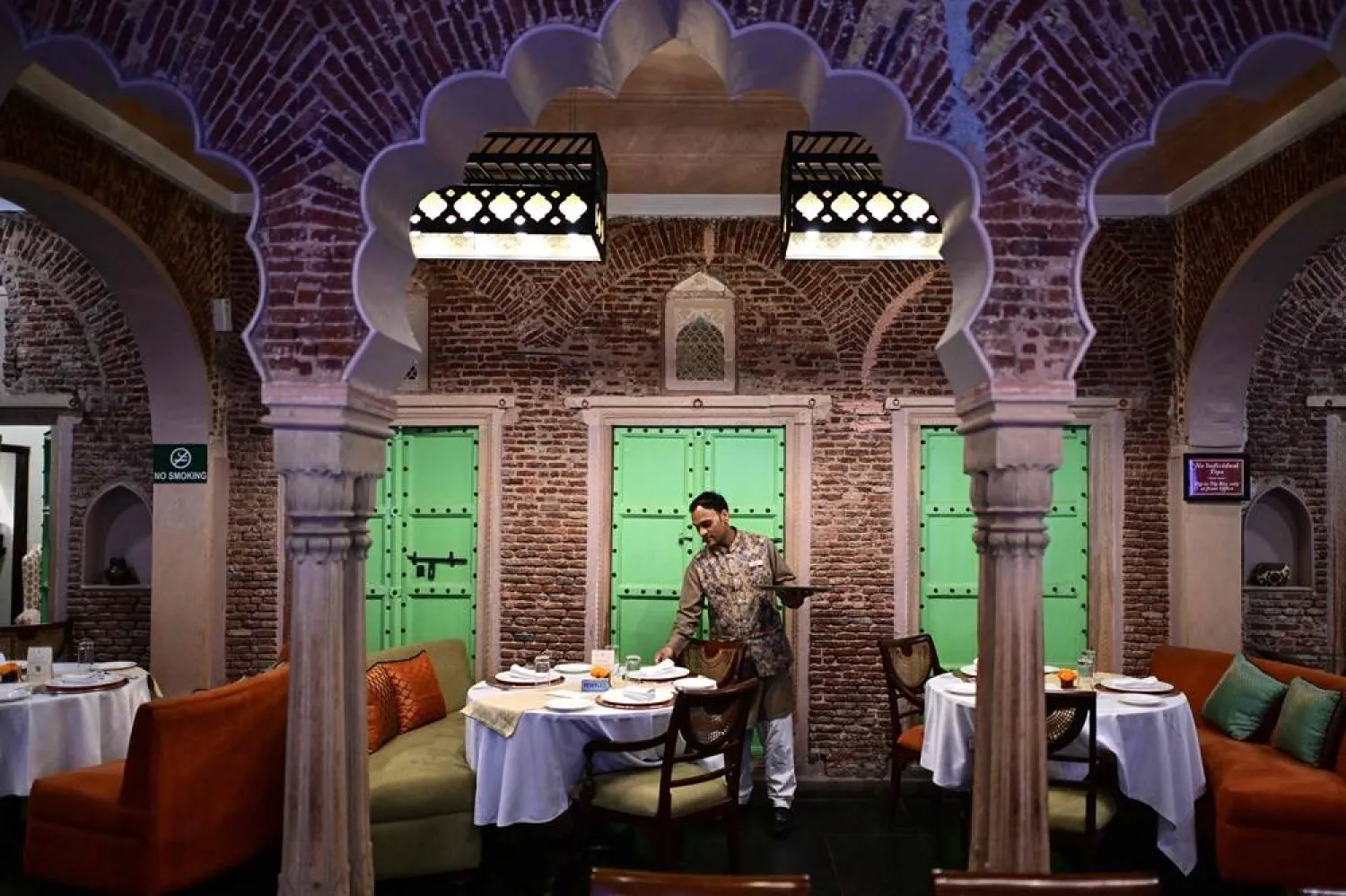
Sudanese authorities displayed ancient figurines, ornate vases and scarab-shaped amulets at a ceremony Tuesday in Port Sudan celebrating the recovery of more than 570 antiquities stolen from the national museum during the country's long-running war.

The artifacts, arranged on large tables under heavy security, were recovered after months of investigation and brought to the wartime capital of Port Sudan.

The National Museum in Khartoum, which housed some of Sudan's most important archaeological collections, was looted and badly damaged after the paramilitary Rapid Support Forces (RSF) seized the capital in the early days of its war with the army, its former ally.

At the time, satellite images showed trucks carrying artifacts west, towards the vast region of Darfur -- now completely under RSF control.

Since then, Sudanese authorities have worked with UNESCO and Interpol to track down the stolen items.

Authorities did not detail on Tuesday exactly how the artifacts were recovered.

"Sudan heritage is not only of national importance, it is a treasure of humanity," said UNESCO's representative in Sudan, Ahmed Junaid, referring to international efforts to combat illicit trafficking of cultural property.

"Many people do not know the value of the objects displayed on the tables, but they reflect the identity of the nation and its history," said Sudan's finance minister Gibril Ibrahim.

Khalid Aleisir, minister of information and culture, announced a "financial reward" for anyone returning antiquities to the authorities, without specifying an amount.

Officials estimate that the recovered items account for about 30 percent of the objects looted from the museum.

Still missing are the contents of the so-called "gold room", the museum's most valuable collection, which included ancient jewellery and 24-carat gold pieces, some nearly 8,000 years old.