


Egyptian Intelligence Chief’s Israel Visit Aims to Ease Bilateral Tensions

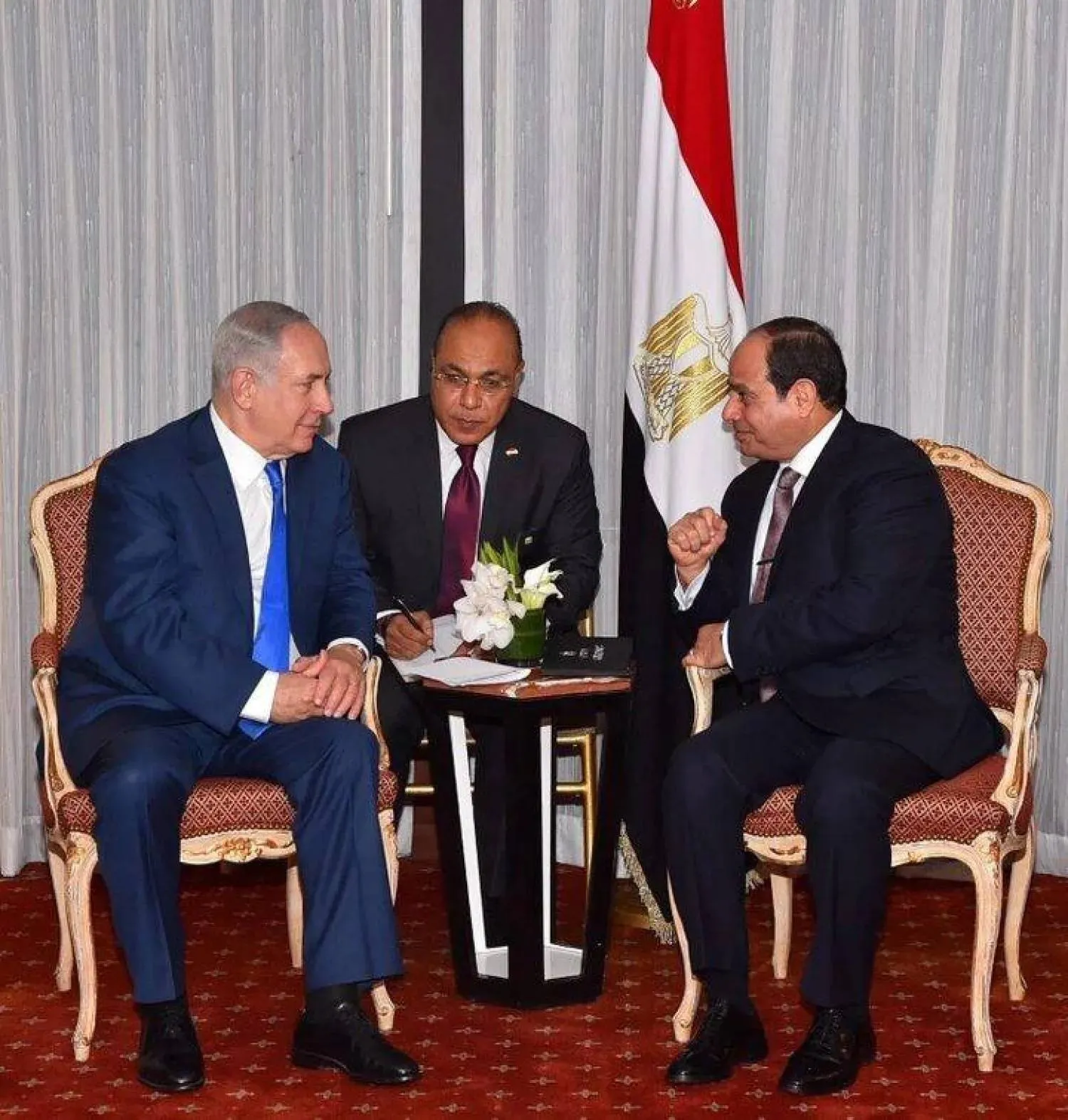
Egyptian President Abdel Fattah el-Sisi meets Israeli Prime Minister Benjamin Netanyahu in New York (Egyptian Presidency)
TT

Egyptian Intelligence Chief’s Israel Visit Aims to Ease Bilateral Tensions

Egyptian President Abdel Fattah el-Sisi meets Israeli Prime Minister Benjamin Netanyahu in New York (Egyptian Presidency)

Egyptian Intelligence Chief Major General Hassan Rashad visited Israel on Tuesday as part of mediator-led efforts to solidify the ceasefire in Gaza, marking a turning point in bilateral relations that have faced mounting tensions since Israel’s war on the Gaza Strip two years ago.

The strains had escalated to fears of a possible military confrontation, alongside accusations of breaching the 1979 peace treaty.

Rashad’s visit, the first by a senior Egyptian official since the war, included a meeting with Israeli Prime Minister Benjamin Netanyahu.

According to a statement from Netanyahu’s office, the two discussed Egyptian-Israeli relations and strengthening peace between the two countries, which observers described as “the beginning of tension containment.”

The deterioration in relations had reached low points over Israel’s control of the “Philadelphia axis” and oversight of the Palestinian side of the Rafah crossing, which Egypt refused to recognize.

Egyptian President Abdel Fattah el-Sisi warned last September at the extraordinary Arab-Islamic summit in Doha that continued conflict in Gaza “undermines the peace process.”

He told the Israeli people: “What is happening now threatens the future of peace, your security, and the security of all peoples in the region, obstructing any chance for new peace agreements and jeopardizing existing accords with regional states. The consequences would be grave.”

Military expert Brig. Gen. Samir Ragab, said Rashad’s visit is part of an Egyptian strategy to “penetrate decision-making circles in Israel,” building on contacts initiated between Sisi and Netanyahu during US President Donald Trump’s visit to Israel on October 13.

The Egyptian presidency said Sisi had received calls from Trump and Netanyahu, with Netanyahu agreeing to attend a peace summit in Sharm El-Sheikh—a decision he later reversed, citing the proximity of Israeli holidays.

Ragab added: “Tensions between Egypt and Israel remained within a framework of peace. Even during periods of reduced communication, relations never broke off completely. Now, they are returning to high-level engagement.”

Israeli media have repeatedly accused Egypt of violating the peace agreement. Last month, the US outlet Axios reported that Netanyahu asked the Trump administration to pressure Egypt to reduce its “current military buildup” in Sinai.

Egypt’s State Information Service responded swiftly, asserting that “the forces deployed in Sinai are primarily tasked with securing Egypt’s borders against all threats, including terrorism and smuggling.”

Reports from several Israeli media outlets in recent months indicated that President Sisi had refused calls from Netanyahu, while Cairo also delayed appointing a new ambassador to Israel and did not approve the credentials of Israel’s ambassador.

Yahya Kadawani, a member of the Egyptian House of Representatives’ Defense and National Security Committee, described Rashad’s visit as “important and aimed at preventing a flare-up, especially given Israeli violations of the ceasefire in recent days, which have obstructed the second phase of the agreement.”

The second phase involves discussions on rebuilding Gaza, the future of Hamas’ weapons, and post-war administration of the Strip. Cairo is preparing to host a Gaza reconstruction conference in November.

Ragab emphasized the visit’s significance, noting that “working solely with a negotiating team will not achieve the desired outcomes in upcoming stages, particularly given Netanyahu’s known centralization of power. Egyptian presence in Israel is crucial to influence Netanyahu’s decisions, advance the Gaza ceasefire, and implement subsequent phases.”

Kadawani told Asharq Al-Awsat the visit “marks the start of easing tensions between the two countries, while Egypt monitors Israel’s next steps and commitment to the agreement.”

Ragab said the visit aims not only to “ease tensions” but also to “bridge gaps and shift positions.” “Rashad is the highest-ranking Egyptian official on this file after the president, making this a high-level visit essential for advancing the peace process,” he said.

The military expert added: “Egypt has been able to influence Hamas; now that influence needs to extend to Israel. We are beginning to see some thawing of its previously frozen positions.”

Ragab did not rule out “repeat visits by Rashad or other Egyptian officials to Israel in the coming period if necessary,” predicting that “the intelligence chief’s visit will bear fruit and open a path for communications and negotiations with delegations.”



Iraq's Parliament Elects Al-Halbousi as Its New Speaker

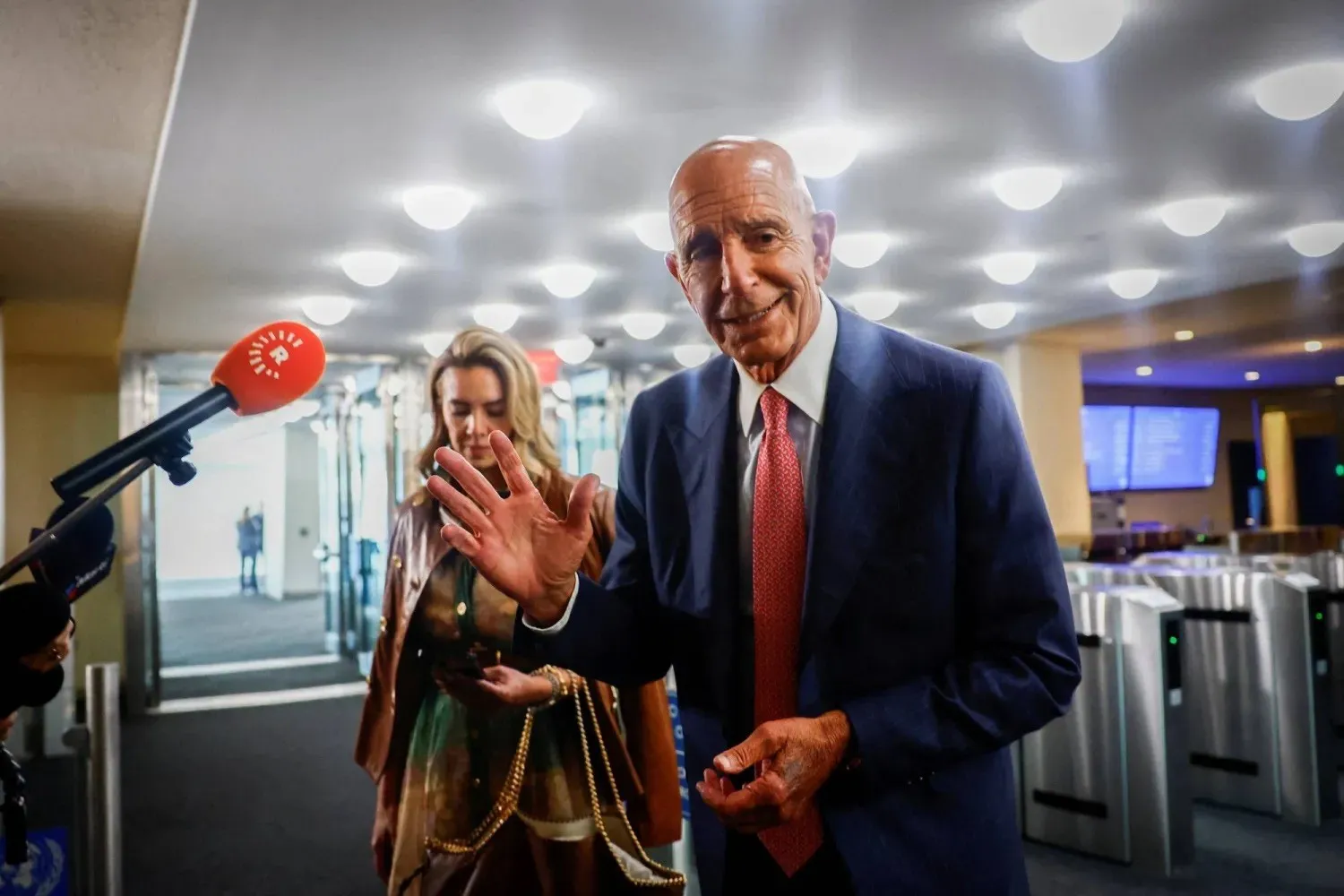
 The new speaker of parliament Haibet Al-Halbousi, center, looks on before the start of their first legislative session in Baghdad, Iraq, Monday, Dec. 29, 2025. (AP Photo/Hadi Mizban)
The new speaker of parliament Haibet Al-Halbousi, center, looks on before the start of their first legislative session in Baghdad, Iraq, Monday, Dec. 29, 2025. (AP Photo/Hadi Mizban)
TT

Iraq's Parliament Elects Al-Halbousi as Its New Speaker

 The new speaker of parliament Haibet Al-Halbousi, center, looks on before the start of their first legislative session in Baghdad, Iraq, Monday, Dec. 29, 2025. (AP Photo/Hadi Mizban)
The new speaker of parliament Haibet Al-Halbousi, center, looks on before the start of their first legislative session in Baghdad, Iraq, Monday, Dec. 29, 2025. (AP Photo/Hadi Mizban)

Iraq's parliament on Monday elected a new speaker following overnight talks to break a political deadlock.

Haibet Al-Halbousi received 208 votes from the 309 legislators who attended, according to The AP news. He is a member of the Takadum, or Progress, party led by ousted speaker and relative Mohammed al-Halbousi. Twenty legislators did not attend the session.

Iraq held parliamentary elections in November but didn’t produce a bloc with a decisive majority. By convention, Iraq’s president is always Kurdish, while the more powerful prime minister is Shiite and the parliamentary speaker is Sunni.

The new speaker must address a much-debated bill that would have the Hashd al-Shaabi, or Popular Mobilization Units become a formal security institution under the state. Iran-backed armed groups have growing political influence.

Al-Halbousi also must tackle Iraq’s mounting public debt of tens of billions of dollars as well as widespread corruption.

Babel Governor Adnan Feyhan was elected first deputy speaker with 177 votes, a development that might concern Washington. Feyhan is a member of the Asaib Ahl al-Haq, or League of the Righteous, a US-sanctioned, Iran-backed group with an armed wing led by Qais al-Khazali, also sanctioned by Washington.


Hamas Armed Wing Confirms Spokesman Killed by Israel in August

FILE Photo of Hamas now late spokesperson Abu Ubaida. (Screengrab from al-Qassam brigades video)
TT

Hamas Armed Wing Confirms Spokesman Killed by Israel in August

FILE Photo of Hamas now late spokesperson Abu Ubaida. (Screengrab from al-Qassam brigades video)

Hamas' armed wing confirmed on Monday the death of its spokesperson, Abu Obeida, months after Israel announced that he had been killed in an air strike in Gaza.

Ezzedine Al-Qassam Brigades released a video statement on its Telegram channel, saying: "We pause in reverence before... the masked man loved by millions... the great martyred commander and spokesperson of the Qassam Brigades, Abu Obeida", AFP reported.

Israel had announced it had killed Abu Obeida in a strike on Gaza on August 30.

Born on February 11, 1985, and raised in the Jabalia refugee camp in northern Gaza, Abu Obeida joined Hamas at an early age before becoming a member of the Ezzedine al-Qassam Brigades.

He later became the group's sole spokesman, delivering video statements in military uniform with his face consistently concealed by a red keffiyeh. He had been the target of multiple Israeli assassination attempts.

According to Hamas officials, Abu Obeida embodied what they describe as "resistance" and was known for fiery and impactful speeches, many of which included threats against Israel or announcements of military operations.

"For many years, only a very small circle of Hamas officials knew his true identity," a Hamas official told AFP.

Israel has decimated Hamas's leadership, saying it seeks to eradicate the group following Hamas's October 7, 2023 attack on Israel, which triggered the war.

The video announcing Abu Obeida's death was delivered by a masked man dressed in the former spokesperson's distinctive style, who said he would adopt his predecessor's name for future statements.

In the same video, he also announced the deaths of four other Hamas commanders in Israeli attacks during the war.


Iraq’s Newly Elected Parliament Holds First Session

A view of the Iraqi Parliament building in Baghdad, Iraq, Monday, Dec. 29, 2025. (AP)
TT

Iraq’s Newly Elected Parliament Holds First Session

A view of the Iraqi Parliament building in Baghdad, Iraq, Monday, Dec. 29, 2025. (AP)

Iraq's newly elected parliament convened ​on Monday for its first session since the November national election, opening the ‌way for ‌lawmakers ‌to begin ⁠the ​process ‌of forming a new government.

Parliament is due to elect a speaker and ⁠two deputies ‌during its first meeting. ‍

Lawmakers ‍must then ‍choose a new president by within 30 days of ​the first session.

The president will subsequently ⁠ask the largest bloc in parliament to form a government, a process that in Iraq typically drags on for ‌months.