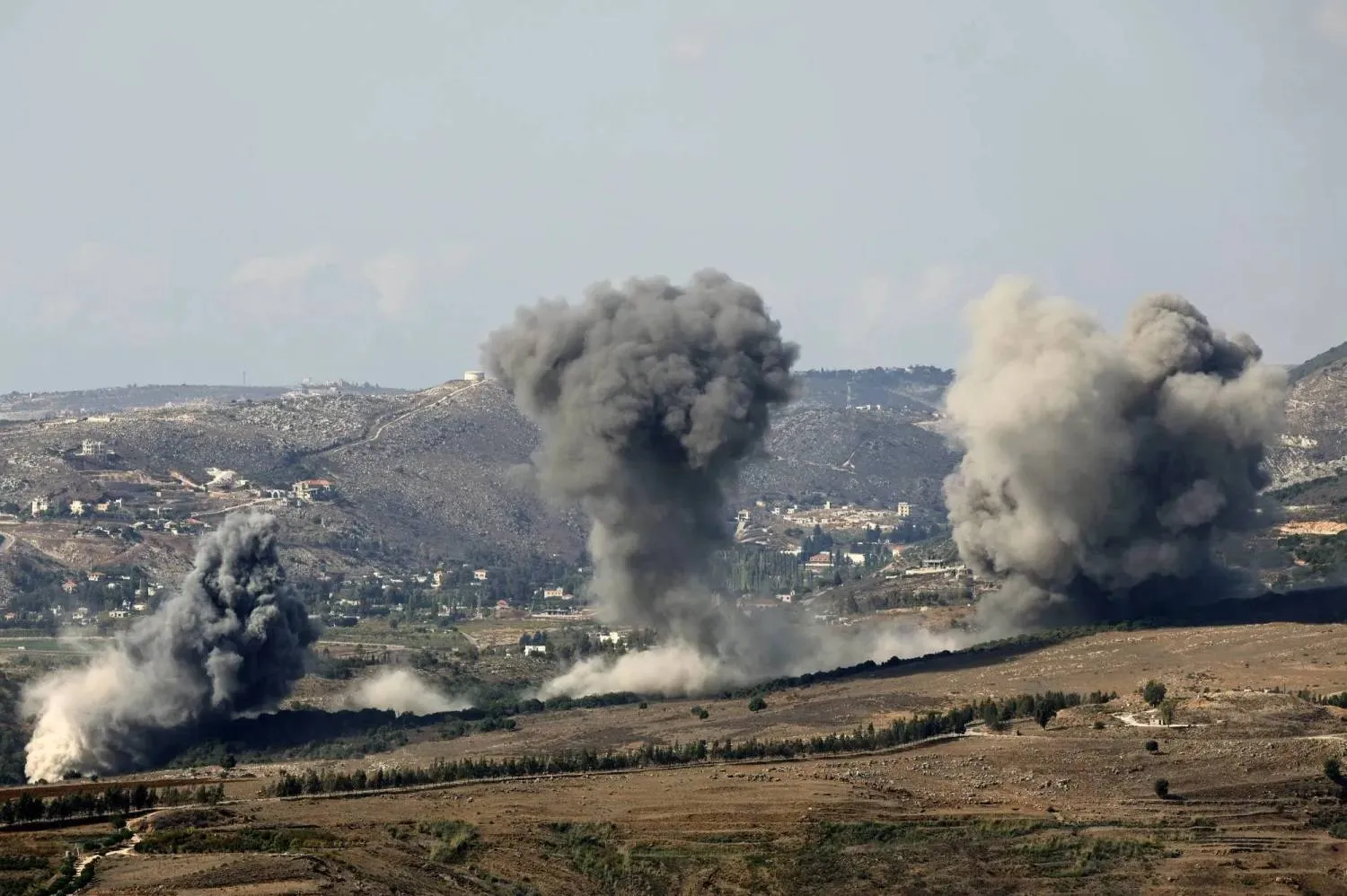

As Israeli surveillance drones continued to circle over Lebanon in recent days, Tel Aviv escalated its military operations with a series of heavy airstrikes targeting the eastern and western mountain ranges of the Bekaa Valley, specifically in the Shaara area and the outskirts of Hermel, while warplanes flew at low altitude over the plain.
Lebanon’s Health Ministry said two people were killed in an initial toll from strikes on the towns of Janta and Shmestar, where several students were also wounded.
The state-run National News Agency (NNA) reported that Israeli warplanes carried out multiple raids on Janta, on the eastern range, extending to several sites on the outskirts of Shmestar, west of Baalbek.
The strikes killed two people and injured others, while panic swept through students at Shmestar Secondary School after several of its classroom windows were shattered during school hours.
Israeli military spokesperson Avichay Adraee said on the social media platform X that “Israeli Air Force jets struck several Hezbollah targets in the Bekaa region, including a camp used for training members of the organization, where groups were seen operating inside.
The army also targeted a site for precision missile production in Lebanon, as well as infrastructure within a military compound in the Sherebin area in the north.”
With these strikes, Israel appeared to be expanding its operations from the southern border deep into the Bekaa, linking aerial pressure with psychological warfare on the ground.
Ain Qana Assassination
Less than 24 hours before the Bekaa raids, an Israeli drone carried out a strike on the town of Ain Qana in the Iqlim al-Tuffah region, firing a guided missile at a motorcycle driven by Issa Ahmad Karbala (known as Hadi).
Israeli military deputy spokesperson Captain Ella said on X that “Karbala was involved in transporting weapons within Lebanon and sought to carry out operations against Israel.”
Military Drills
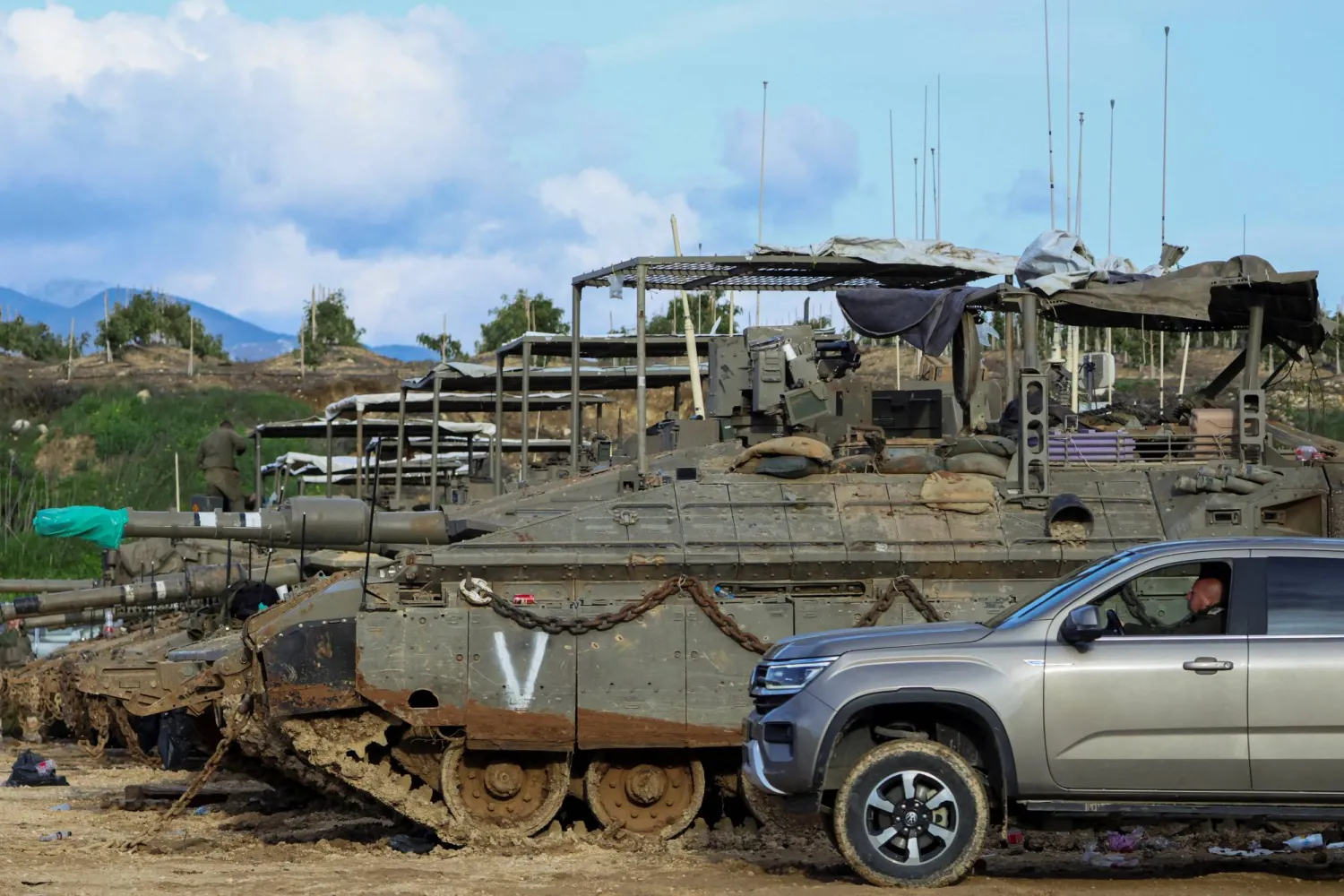
In parallel with the air escalation, Israeli Chief of Staff Lt. Gen. Eyal Zamir inspected Division 91’s drills, held from Sunday to Thursday along the northern border with Lebanon.
He told troops: “Alongside ongoing operations and thwarting threats, you must return to training and raise your readiness for war in all arenas.”
The combination of drills, air raids, and continuous drone activity since Sunday created a unified scene of coordinated escalation, a blend of military and political messaging aimed at keeping Lebanon under dual pressure, both psychological and military, while signaling Israel’s full preparedness for any future confrontation.
On Tuesday, the Israeli army also struck what it said were Hezbollah positions in the Mount Rous area (Har Dov). Spokesperson Adraee said that “reserve forces from the 810th Mountain Brigade under Division 210 destroyed Hezbollah sites to prevent the group’s future entrenchment in the area.”
On the Edge of Confrontation
Retired Brigadier General Saeed Qazzah told Asharq Al-Awsat that “the military drills carried out by the Israeli army are, in principle, routine exercises to boost readiness.”
But, he added, “the difference here is that these maneuvers are taking place along a tense border with Lebanon and carry clear political and security messages, both to Lebanon and to the international community.”
“The first message,” Qazzah explained, “is that Israel is at the highest level of preparedness, while the second targets armed groups, emphasizing that any weapon outside the framework of the state is considered a legitimate target.”
Qazzah noted that “these drills usually simulate multiple scenarios, defending the border or carrying out ground incursions into Lebanese territory.”
He said Israel’s troop deployment near Mount Hermon and close to Rashaya and al-Masnaa “makes any field training there a real preparation for a possible future ground offensive.”
Regarding the intense drone flights over the presidential palace and sensitive sites in Beirut, Qazzah described them as “a blatant violation of Lebanese sovereignty and a direct message to the government that the entire country, not just Hezbollah, is viewed as a potential target.”
He added that Hezbollah has shifted its military structure: “The group no longer relies on large depots or long-range missiles after the failure of that model in the previous war, when Israel managed to track and destroy most sites on the first day. Today, Hezbollah operates through small, separate cells in a cluster system, where each unit is isolated from the others to reduce the risk of infiltration or detection.”
The Significance of Mount Dov
“The Israeli activity in Mount Dov (the Shebaa Farms) is effectively an incursion into Lebanese territory,” Qazzah said, “as the area borders Lebanese villages such as Kfar Shouba and Ghajar.”
He added that “the latest infiltration could be part of the ongoing exercises or the destruction of old Hezbollah sites that Israel claims to be neutralizing to prevent future use. In essence, though, it forms part of field maneuvers simulating direct confrontation with Hezbollah’s small units, which are now being reorganized.”
Qazzah said Israel regards Mount Dov as an advanced contact zone where it conducts drills on infiltration and counterattack scenarios in anticipation of possible ambushes or cross-border operations.