



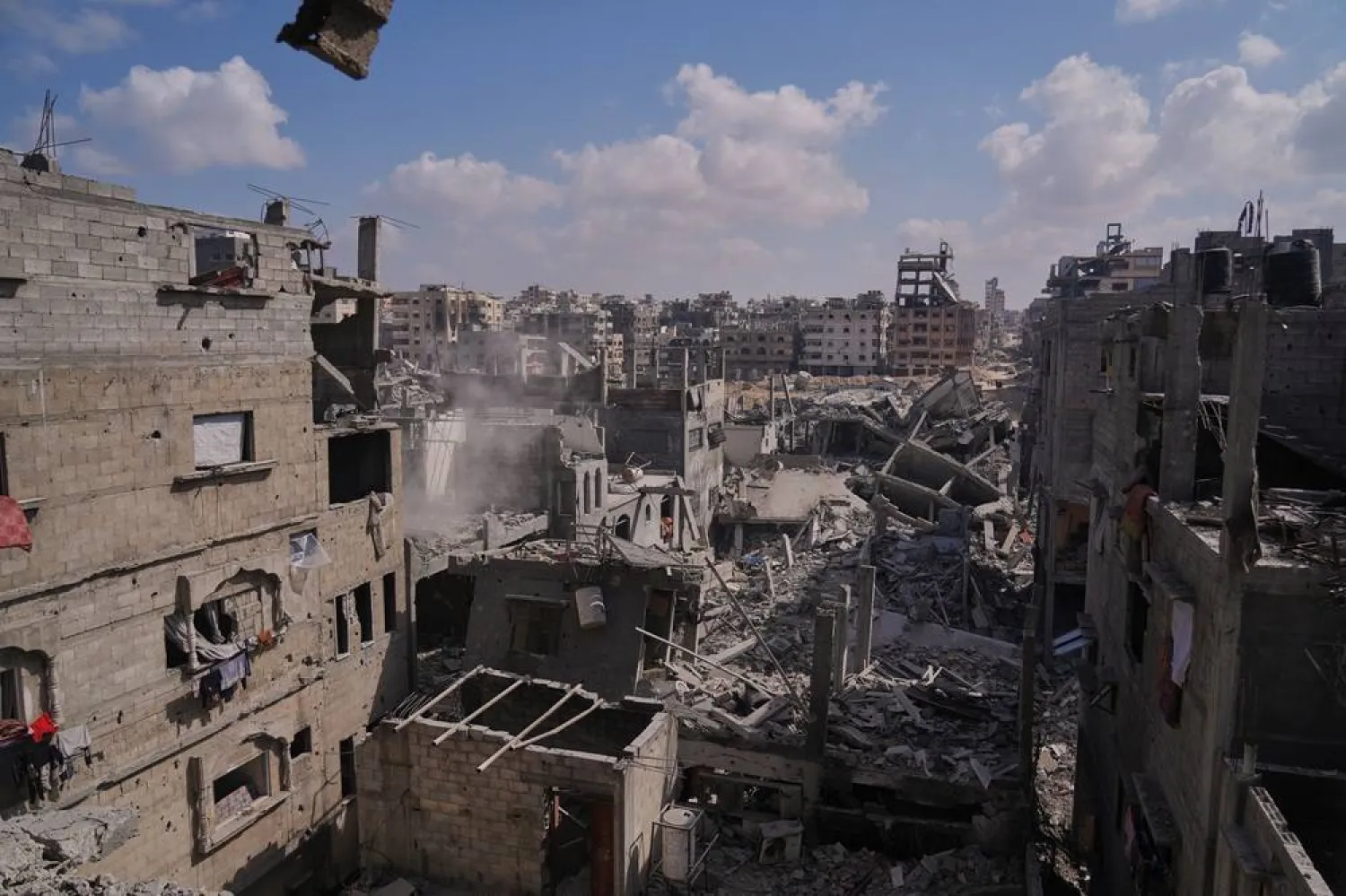

A meeting between the rival Palestinian factions Fatah and Hamas in Cairo has rekindled speculation about the possibility of reaching consensus on managing the next phase in the Gaza Strip, particularly amid discussions over the terms of a ceasefire agreement.
The agreement, which Egypt has been pushing forward, includes a second phase tied to local and international security arrangements as well as administrative and disarmament measures.
Analysts who spoke to Asharq Al-Awsat said the deal could be “within reach” if Hamas and Fatah finalize their understandings and Palestinian factions unite behind a single vision, noting that in such a scenario, “Israel would find it difficult to obstruct implementation.”
A Palestinian source told Asharq Al-Awsat on Friday that Thursday’s Cairo meeting between the Fatah and Hamas delegations, held under the auspices of Egyptian intelligence, was “positive” and witnessed “convergence in viewpoints, particularly regarding the administration of Gaza and the handover of authority.”
The source added that Hussein al-Sheikh, the Palestinian Authority’s vice president who took part in the talks, would brief President Mahmoud Abbas to shape a unified stance before a broader dialogue among factions expected in Cairo in the coming days.
“The understandings between the two movements will help ensure the success of that dialogue,” the source said.
Egypt's Al-Qahera News confirmed on Thursday that the Hamas-Fatah meeting was held to discuss post-war arrangements in Gaza.
Neither faction issued details about the outcomes of their talks, which coincided with a series of meetings held by Egyptian intelligence chief Maj. Gen. Hassan Rashad with several Palestinian factions, according to the channel.
The Quds News Network reported that the factions attending those talks included Hamas, Islamic Jihad, the Popular Front for the Liberation of Palestine, the Popular Front-General Command, the Democratic Front, the Palestinian National Initiative and the Democratic Reform Current.
A final statement released Friday following a separate meeting of several Palestinian factions in Cairo said participants had discussed the latest developments in the Palestinian cause and the second phase of US President Donald Trump’s ceasefire plan for Gaza, which includes “security and administrative arrangements.”
The statement added that the talks were part of preparations for a “comprehensive national dialogue aimed at protecting the national project and restoring unity.”
The factions agreed to support and continue implementing the ceasefire terms, hand over Gaza’s administration to a temporary committee of independent figures from the enclave and establish an international committee to oversee funding and reconstruction.
They also reaffirmed their commitment to “the unity of the Palestinian political system and the independence of national decision-making.”
The statement said the factions would take all necessary measures to maintain security and stability across Gaza, stressing the importance of a UN resolution authorizing the deployment of temporary international forces to monitor the ceasefire.
They also called for “an urgent meeting of all Palestinian forces and factions to agree on a national strategy and activate the Palestine Liberation Organization (PLO) as the sole legitimate representative of the Palestinian people,” though no date was set.
Egyptian strategic affairs expert Dr. Khaled Okasha said “a new spirit” was emerging among the factions as they recognized “the gravity of the moment and the need for a different approach to shape a unified national vision capable of facing challenges on the ground through flexibility and joint action.”
He added that this was exactly what Cairo sought to achieve in the current round of talks: pushing for Palestinian-Palestinian understandings.
“Both Fatah and Hamas now have enough flexibility to engage more maturely, after the painful experience the Palestinian body politic endured over the past two years,” Okasha said, adding that Egypt’s extensive efforts were likely to succeed as they did with the Sharm el-Sheikh ceasefire agreement.
Palestinian political analyst Dr. Ayman al-Raqab said Cairo had succeeded in creating “a new Palestinian dynamic” that could lead to a broader consensus ahead of the expected dialogue.
He added that the Hamas-Fatah meeting “provides a foundation for that dialogue and its anticipated outcomes toward a comprehensive vision for Palestinian unity.”


