


Trump Reverses Biden-era Rules on Copper Smelters

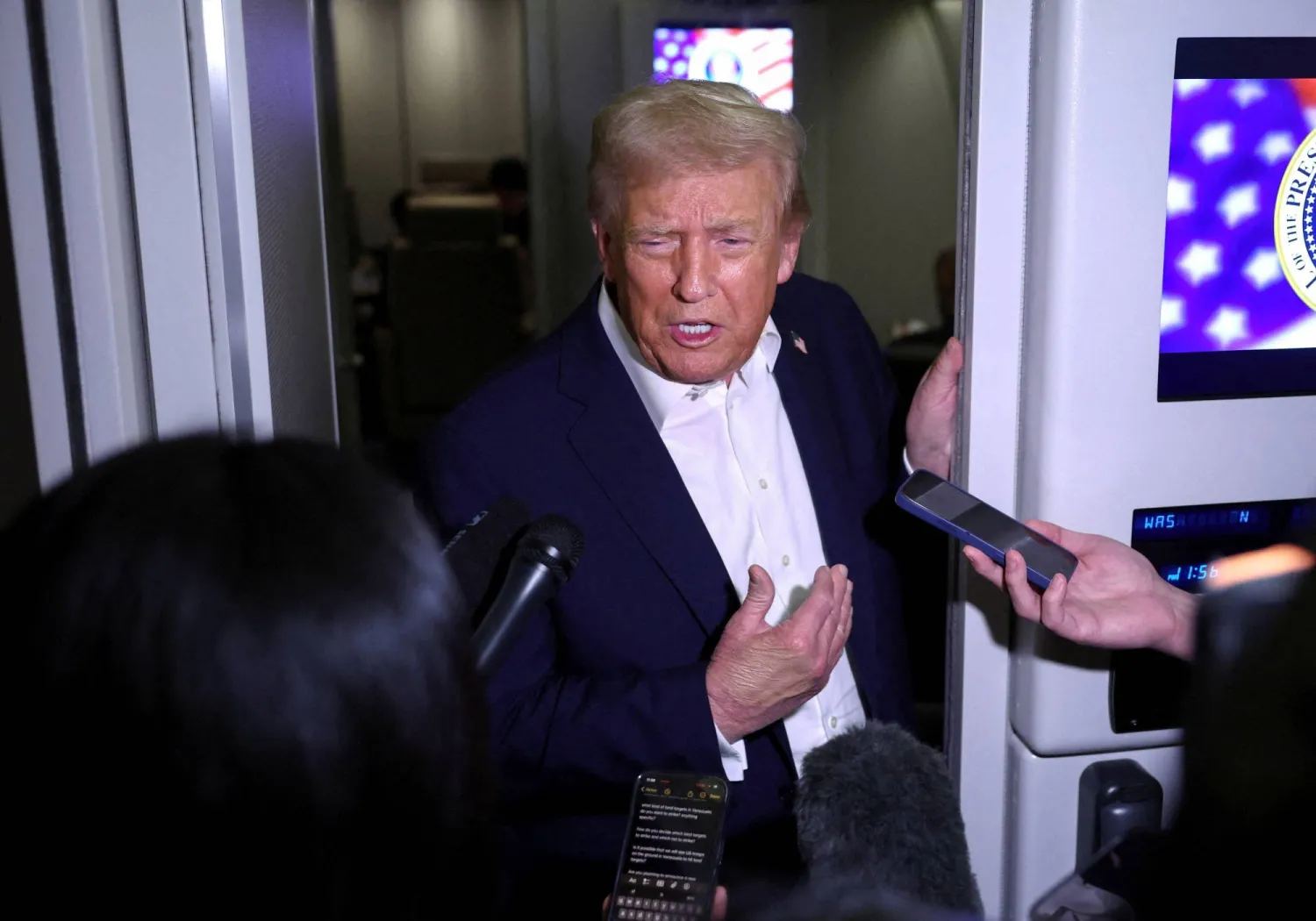
US President Donald Trump speaks to reporters aboard Air Force One en route to Asia, October 25, 2025. REUTERS/Evelyn Hockstein
TT

Trump Reverses Biden-era Rules on Copper Smelters

US President Donald Trump speaks to reporters aboard Air Force One en route to Asia, October 25, 2025. REUTERS/Evelyn Hockstein

US President Donald Trump on Friday reversed a Biden-era air pollution rule that had imposed stricter limits on emissions from copper smelters.

The copper rule, finalized in May 2024, had required smelters to curb pollutants including lead, arsenic, mercury, benzene and dioxins under updated federal air standards.

Trump's proclamation grants a two-year exemption from compliance for affected stationary sources, which the White House said would help promote American mineral security by reducing regulatory burdens on domestic copper producers, Reuters reported.

"Imposing these requirements on such a limited and already strained domestic industry risks accelerating further closures, weakening the Nation’s industrial base, undermining mineral independence, and increasing reliance on foreign-controlled processing capacity," the White House said in announcing the changes.

The proclamation referenced the two copper smelters in the United States, one operated by Freeport-McMoRan and the other by Rio Tinto. It stated the order would apply to Freeport’s smelter and it was not immediately clear how it would affect Rio Tinto’s facility.

Phoenix-based Freeport thanked Trump and said the two-year exemption shows copper's importance for national security.

"This action acknowledges the operational realities facing domestic copper smelting and provides needed time to assess and plan for appropriate regulatory reconsideration of the Copper Rule and future implementation," a Freeport spokesperson said.

Rio did not respond to a request for comment.

Trump signed an executive order earlier this year that identified copper as a critical material for defense, infrastructure and emerging technologies, including clean energy and electric vehicles.

It led to a Section 232 investigation to determine whether copper imports threaten US national security, particularly due to dependence on a small number of foreign suppliers.

Following the review, the administration imposed a 50% tariff on certain imported copper and mandated that an increasing percentage of high-quality scrap copper produced in the US be sold domestically.



OPEC Further Lowers 2026 Global Oil Demand Growth Forecast

FILE PHOTO: People walk past an installation depicting barrel of oil with the logo of Organization of the Petroleum Exporting Countries (OPEC)  in Baku, Azerbaijan November 19, 2024. REUTERS/Maxim Shemetov/File Photo
FILE PHOTO: People walk past an installation depicting barrel of oil with the logo of Organization of the Petroleum Exporting Countries (OPEC) in Baku, Azerbaijan November 19, 2024. REUTERS/Maxim Shemetov/File Photo
TT

OPEC Further Lowers 2026 Global Oil Demand Growth Forecast

FILE PHOTO: People walk past an installation depicting barrel of oil with the logo of Organization of the Petroleum Exporting Countries (OPEC)  in Baku, Azerbaijan November 19, 2024. REUTERS/Maxim Shemetov/File Photo
FILE PHOTO: People walk past an installation depicting barrel of oil with the logo of Organization of the Petroleum Exporting Countries (OPEC) in Baku, Azerbaijan November 19, 2024. REUTERS/Maxim Shemetov/File Photo

OPEC on Wednesday lowered its forecast for world oil demand growth in 2026 to 580,000 barrels per day, a copy of its monthly report showed, marking the fourth straight downward revision.

The producer group continues to see a smaller impact on consumption since the Iran war started than other forecasters such as the International Energy Agency, which expects demand to decline in 2026, Reuters reported.

The Organization of the Petroleum Exporting Countries also raised its forecast for 2027 oil demand growth, according to the report on OPEC's website.


Bank of America Pledges $250 Billion for US Infrastructure Financing

Signage is seen at the Bank of America Tower in Manhattan, New York City, New York, US, November 2, 2022. (Reuters)
TT

Bank of America Pledges $250 Billion for US Infrastructure Financing

Signage is seen at the Bank of America Tower in Manhattan, New York City, New York, US, November 2, 2022. (Reuters)

Bank of America said on Wednesday it plans to deploy $250 billion by July 2027 to support US digital and infrastructure projects, a move it says will boost the country's economic growth and help create tens of thousands of jobs.

The Wall Street bank said its "Critical Infrastructure Finance Initiative," launched on the heels of the nation's 250th anniversary celebrations, will provide primary market lending, investments, ‌capital markets services, ‌and banking and advisory offerings.

The announcement underscores how ‌major ⁠US financial institutions are seeking ⁠to capitalize on rising demand for AI data centers, critical minerals and energy infrastructure upgrades.

It comes days after Morgan Stanley said it would facilitate roughly $1.5 trillion over the next decade to finance technology and infrastructure projects.

Last year JPMorgan Chase launched a $1.5 trillion plan to facilitate, finance and invest in industries deemed critical to the US national security and economic resilience, including defense, ⁠energy and advanced manufacturing.

BOOSTING GROWTH, CREATING JOBS

Bank of ‌America's financing will target three areas: ‌digital infrastructure, including data centers and computing; energy and power infrastructure, including renewable generation ‌and energy storage; and core infrastructure such as transportation and natural gas.

"Meeting ‌America's growing infrastructure needs requires mobilizing capital at scale across increasingly interconnected sectors," said Karen Fang, global head of infrastructure and sustainable finance at Bank of America.

"Delivering these projects requires integrated financing solutions spanning corporate and project-level capital in both public ‌and private markets."

The $250 billion target will be measured over an 18-month period from January 1, 2026, to July ⁠4, 2027, ⁠the bank said.

"If we all do our job right, we should be deploying more capital," said Fang, who is also co-head of global capital solutions at BofA, when asked about potential deployment of more capital after July 2027.

Many projects require new infrastructure to be built before becoming operational, she said.

In the United States, infrastructure construction loans typically have terms of five to seven years. Once projects are completed and operating, they are often refinanced with longer-term debt lasting 10, 15 or 20 years, Fang said.

She said greater infrastructure investment would help drive economic growth and create long-term jobs.

"Infrastructure spending will lead to economic growth and prosperity," she said.


IEA Cuts 2026 Oil Demand Forecast Again as Hormuz Remains Shut

Boats and a vessel in the Strait of Hormuz, as seen from Musandam, Oman, August 3, 2026. (Reuters)
TT

IEA Cuts 2026 Oil Demand Forecast Again as Hormuz Remains Shut

Boats and a vessel in the Strait of Hormuz, as seen from Musandam, Oman, August 3, 2026. (Reuters)

The International Energy Agency on Wednesday sharply reduced its forecast for global oil demand this year, as supplies remain crimped by the closure of the Strait of Hormuz and high prices deter buyers.

Demand is expected to slump by 1.6 million barrels per day (mb/d), compared with its forecast slump of one million barrels in its previous monthly report in July.

Crude prices have remained well above levels seen before the US and Israeli attacks on Iran in late February, sparking a war that has seen Iran launch attacks at several Gulf countries.

Tehran also responded by effectively shutting down tanker and cargo traffic in the Strait of Hormuz, through which around one-fifth of global oil supplies usually transit.

"The ongoing closure of the Strait of Hormuz and elevated fuel prices continue to weigh on oil consumption," the Paris-based IEA said.

Despite a purported ceasefire and repeated claims that a deal to open the strait was imminent -- what the IEA referred to as "sudden diplomatic pivots" -- only a handful of ships are being let through, leading to volatile pricing on global oil markets.

The IEA said global supplies rose by 2.4 million barrels per day in July, to reach 101.5 mb/d, but that was still 6.3 mb/d lower than a year ago.

But "renewed hostilities and maritime disruptions in July and early August undermined the recovery efforts," the agency said.

It now expects global supply to fall by 4.3 mb/d on average this year, before recovering next year.

On the demand side, the IEA is projecting a return to growth in the fourth quarter of this year.