


Saudi Arabia Reiterates Support for Diplomatic Efforts to Peacefully Resolve Conflicts

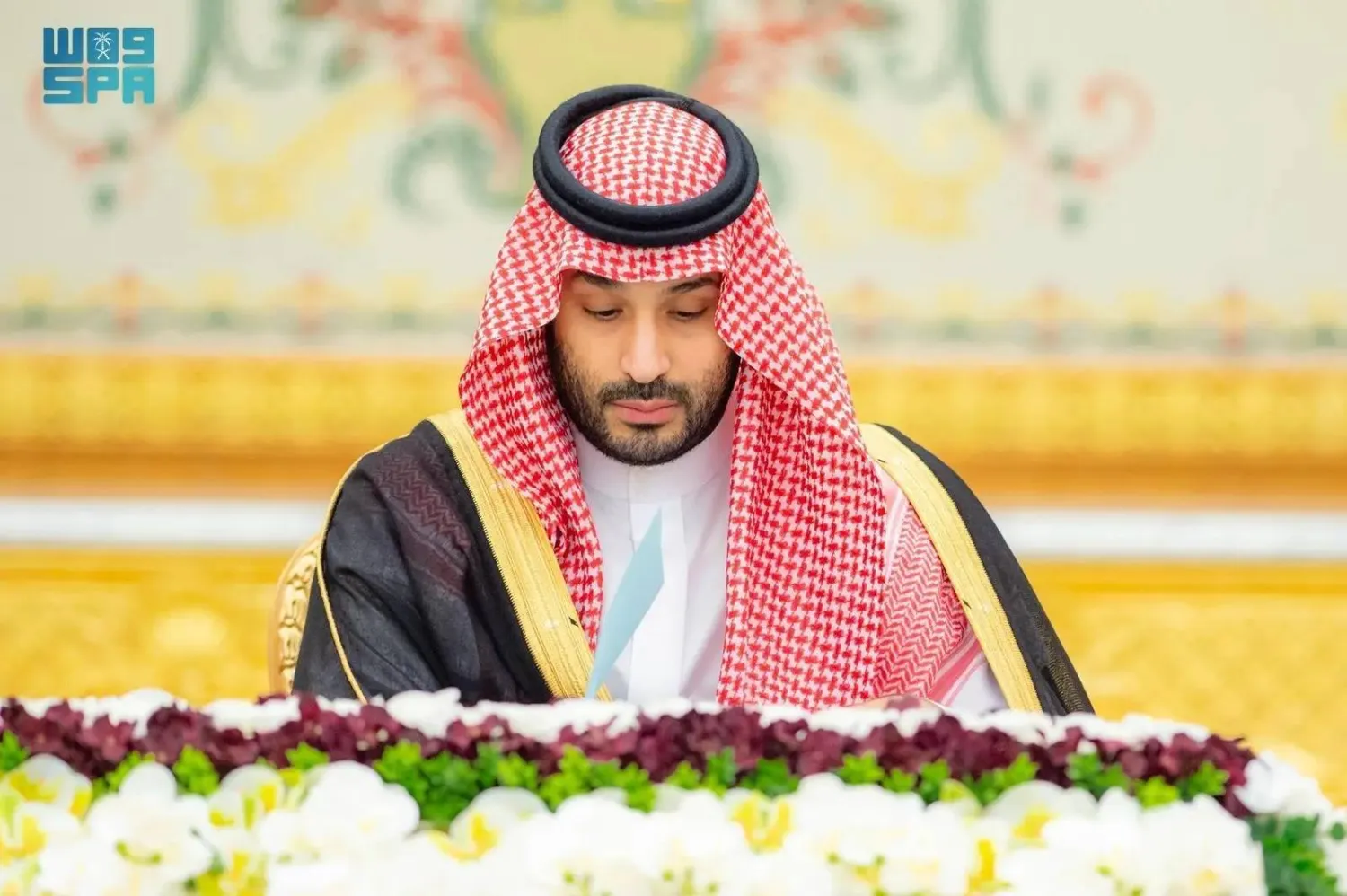
Prince Mohammed bin Salman bin Abdulaziz Al Saud, Crown Prince and Prime Minister, chairs the cabinet meeting in Riyadh. (SPA)
TT

Saudi Arabia Reiterates Support for Diplomatic Efforts to Peacefully Resolve Conflicts

Prince Mohammed bin Salman bin Abdulaziz Al Saud, Crown Prince and Prime Minister, chairs the cabinet meeting in Riyadh. (SPA)

The Saudi government underlined on Tuesday the Kingdom’s support for diplomatic efforts aimed at peacefully resolving conflicts and establishing international security and peace.

Prince Mohammed bin Salman bin Abdulaziz Al Saud, Crown Prince and Prime Minister, chaired the cabinet meeting held in Riyadh.

The cabinet welcomed the ceasefire agreement between Thailand and Cambodia which should pave the way for sustainable peace that fulfills the aspirations of both countries and their peoples.

The cabinet reviewed regional and global developments and international efforts to address them. It reiterated its strong condemnation of the Israeli Knesset's approval of two draft laws aimed at imposing sovereignty over the West Bank and establishing illegal settlements.

The cabinet renewed its support for the legitimate and historical right of the Palestinian people to establish an independent state on the 1967 borders, with East Jerusalem as its capital.

It expressed its gratitude to the leaders and heads of government for participating in the ninth edition of the Future Investment Initiative (FII9) conference in Riyadh. It hoped that the conference would help translate visions into practical strategies that drive joint international action for global development and prosperity.

The cabinet highlighted the agreement between Saudi Arabia and Pakistan to launch an Economic Cooperation Framework, saying it is an extension of the two countries' efforts to consolidate fraternal relations. It reflects their shared vision for building a sustainable partnership across various economic, trade, and investment fields, ultimately serving the aspirations and common interests of both peoples.

Moreover, the cabinet discussed developments in partnerships with international organizations, noting the Kingdom's planned hosting of the UNCTAD Global Supply Chain Forum in 2026. Hosting the forum underscores the Kingdom's global position in supporting international trade, strengthening cooperation among countries, and enhancing logistical connectivity.

The cabinet commended the success of the Global Health Exhibition held in Riyadh and the announcement of initiatives and investments, totaling approximately SAR124 billion, which are expected to strengthen the Kingdom's leadership in the medical and healthcare sectors, localize technologies, and support innovation in line with national objectives.

On domestic affairs, the cabinet reviewed a number of economic indicators and statistics, noting the continued growth of non-oil exports as the national economy diversifies its pathways to support various key and promising sectors and activities.

The cabinet also hailed the launch of new renewable energy projects across the Kingdom, with a total capacity of 4,500 megawatts and investments exceeding SAR9 billion, which will help in achieving the optimal energy mix for electricity production by 2030 and enhance the Kingdom’s global leadership in this field.


Albudaiwi: Regional Arrangements Excluding Gulf States Are Rejected

Albudaiwi affirmed that Gulf states had long been a pillar of regional and global stability (GCC)
TT

Albudaiwi: Regional Arrangements Excluding Gulf States Are Rejected

Albudaiwi affirmed that Gulf states had long been a pillar of regional and global stability (GCC)

Secretary-General of the Gulf Cooperation Council (GCC) Jasem Albudaiwi on Thursday called for Gulf states to be included in talks or agreements to resolve the crisis between Iran and the US and Israel.

“We stress the importance of involving GCC countries in any talks or agreements to resolve this crisis, in a way that contributes to strengthening their security and stability,” said Albudaiwi.

He added that the bloc rejected “any arrangements intended to redraw the map of the Middle East after the conflict ends.”

He said the GCC’s first choice was a diplomatic and political solution, describing it as “the wisest and most successful option,” while noting that Gulf states were reviewing all options in line with international law and the UN Charter.

Speaking in Riyadh to Arab and foreign ambassadors, Albudaiwi urged partners to send a unified international message to Iran demanding an immediate and unconditional halt to attacks on GCC states.

He said the Gulf’s goal “has never been to destroy Iran or weaken it, but to reach a normal relationship based on mutual respect, non-interference and non-aggression.”

He rejected framing the situation as part of “Middle East complexities,” calling it “a blatant violation of international law” and “a systematic targeting” of states not involved in any conflict.

Albudaiwi said Gulf states would not accept becoming targets of aggression (GCC)

Albudaiwi said GCC states had long been a pillar of regional and global stability, a reliable energy source, and a responsible economic partner. But he said they would not accept becoming targets of aggression, arenas for regional rivalries, or seeing their citizens killed without accountability.

He said Iranian attacks over 25 days had exceeded 5,000 ballistic missiles and drones targeting GCC states.

Albudaiwi revealed that 85% of Iranian missiles launched in the war were aimed at Gulf states.

He praised Gulf air defenses for limiting the impact of the attacks, but said that this does not diminish the scale of the aggression or absolve Iran of full responsibility.

He said Iran had “crossed every line” by closing the Strait of Hormuz, blocking commercial ships and oil tankers, and imposing transit fees, in violation of international law.

He also cited repeated ship hijackings and attacks carried out through Iran’s regional proxies.

He warned that disruption to shipping would hit not only Gulf states but the global economy, especially as some countries face oil and gas shortages.

Albudaiwi explained that maritime passages are governed by international agreements, and no party can obstruct them or impose conditions.

The impact of closing the Strait of Hormuz may begin with higher energy prices, but its cumulative repercussions on the global economy, energy markets, marine insurance, and civil aviation would be catastrophic.

“What happens in the Strait of Hormuz does not stay in the Strait of Hormuz,” he added.

Albudaiwi said Gulf states were surprised by US and Israeli strikes on Iran, stressing they had made clear they would not take part in military action or allow their territory to be used against Iran, and had informed Tehran of that.

“Yet this position did not prevent it from attacking GCC states,” he said.

He said GCC states had shown restraint and chosen not to respond to avoid widening the conflict, and in the hope that Iran would come to its senses and stop these attacks.

He said Gulf states produce about 16 million barrels per day of crude oil, or 22% of global output, and account for 27% of global oil exports, or 11.5 million barrels per day.

They also hold 33% of global oil reserves and 21% of natural gas reserves.

These figures make the Gulf an indispensable pillar of the global economy, Albudaiwi affirmed, warning that any disruption would directly affect energy security and global economic stability.


Zelenskyy Arrives in Jeddah

Ukrainian President Volodymyr Zelenskyy in Kyiv (AFP)
TT

Zelenskyy Arrives in Jeddah

Ukrainian President Volodymyr Zelenskyy in Kyiv (AFP)

President Volodymyr Zelenskyy of Ukraine arrived in Jeddah Thursday. At King Abdulaziz International Airport, he was welcomed by Deputy Governor of Makkah Region Prince Saud bin Mishaal bin Abdulaziz and several other officials.

Zelenskiy said he would hold "important meetings" in the Kingdom as part of an effort to bolster ties with Middle East countries amid the Iran war.

"Arrived in Saudi Arabia. Important meetings are scheduled. We appreciate ⁠the support and support ‌those who ‌are ready to work ​with us ‌to ensure security," Zelenskyy wrote ‌on X.

Rustem Umerov, the head of Ukraine's National Security and Defense Council, accompanied Zelenskiy on the ‌visit.


Saudi FM Discusses Regional Developments with his French, Canadian Counterparts

Saudi Foreign Minister Prince Faisal bin Farhan (Asharq Al-Awsat)
TT

Saudi FM Discusses Regional Developments with his French, Canadian Counterparts

Saudi Foreign Minister Prince Faisal bin Farhan (Asharq Al-Awsat)

Saudi Minister of Foreign Affairs Prince Faisal bin Farhan bin Abdullah met on Thursday with France's Minister for Europe and Foreign Affairs Jean-Noël Barrot on the sidelines of his participation in the Group of Seven (G7) ministerial meeting held France.

During the meeting, they reviewed relations between the two countries, along with ways to strengthen and develop them.

They also discussed the latest developments in the region and ongoing efforts in this regard.

According to SPA, the Saudi minister also met with Canadian Minister of Foreign Affairs Anita Anand.

During their meeting they reviewed cooperation between the two countries in various fields, in addition to discussing the latest developments and issues of common interest.
