


40 Years Later, Michael J. Fox Looks Back on ‘Back to the Future’

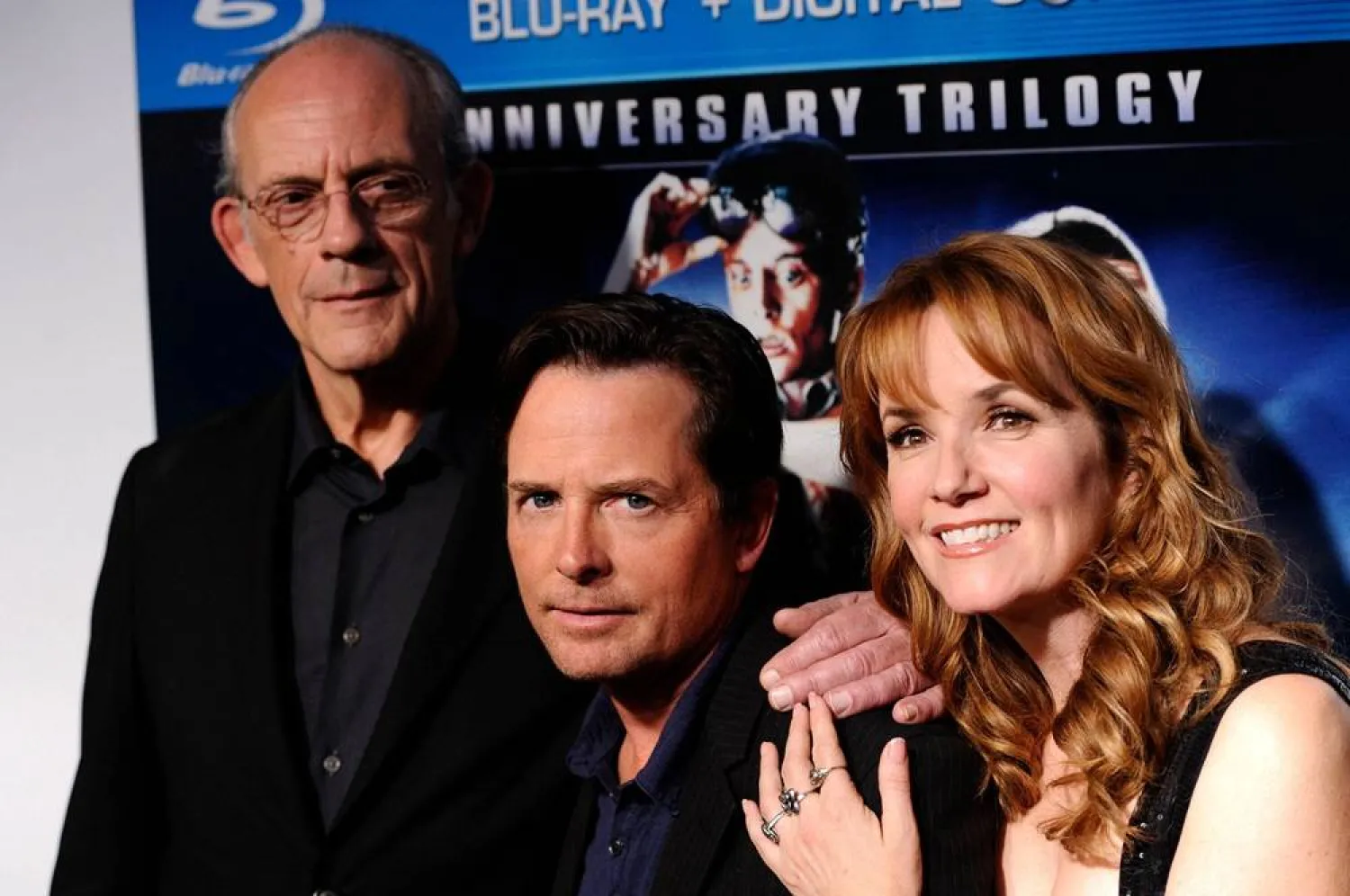
Cast members Christopher Lloyd, from left, Michael J. Fox and Lea Thompson appear at the "Back To The Future" 25th anniversary reunion in New York on Oct. 25, 2010. (AP)
TT

40 Years Later, Michael J. Fox Looks Back on ‘Back to the Future’

Cast members Christopher Lloyd, from left, Michael J. Fox and Lea Thompson appear at the "Back To The Future" 25th anniversary reunion in New York on Oct. 25, 2010. (AP)

Michael J. Fox has been living with “Back to the Future” for a long time.

“I’ll be on the street and some kid will go, ‘There’s Marty McFly!’” Fox says. “No, this is an old man.”

It’s been 40 years since “Back to the Future” debuted in theaters, but neither time, nor Parkinson’s disease has done much — regardless of what he says — to diminish Fox’s boyish good nature. For Fox, traveling through time with “Back to the Future” has been part of life. It’s the film that strapped a flux capacitor to his career and has, ever since, stayed in his rear view.

“Sometimes I look at it and think about my family,” Fox, 64, said in a recent interview by Zoom from his apartment in New York. “I think about how I have a 37-year-old son who wasn’t born yet. It’s a long time ago.”

On Friday, “Back to the Future” is, again, back in theaters. The anniversary celebration also includes a new 4K trilogy gift set that comes complete with an OUTATIME license plate. Fox, himself, has just released “Future Boy: ‘Back to the Future’ and My Journey Through the Space-Time Continuum,” a book he penned with Nelle Fortenberry.

While anniversary re-releases are commonplace for cherished classics, the occasion is a little different for Robert Zemeckis’ sci-fi landmark. On the one hand, the movie’s turn-back-the-clock nostalgia is indelibly linked to its 1980s moment. After its release on July 3, 1985, “Back to the Future” was the No. 1 movie in theaters for 11 of its first 12 weeks. Then-President Ronald Reagan was among its biggest fans.

But what was once so firmly lodged in the space-time continuum has, over the years, turned curiously timeless. Watch “Back to the Future” now and you might be astonished at how effects-free most of it is, despite its director’s predilection for pushing film technology. Instead, “Back to the Future” conjures its magic with a DeLorean, some Calvin Klein briefs and its most special effect: Christopher Lloyd’s eyebrows.

“The distance between now and 1985 is greater than the distance between 1985 and 1955,” Fox says. “In a way, that makes it more accessible. People aren’t locked into their time period. They’re not saying: This is real, this isn’t real. It’s all fantasy.”

Even more harrowing than pondering the distance from now to 1985 is recalling the flying-car future of the 1989 sequel. That movie was set in the faraway time of 2015. Say it with me now: Doc, this is heavy.

But what most definitely hasn’t aged is Fox’s live wire performance in the original. His Marty McFly is like the Everykid ur-text: a seminal, guitar-playing, big-screen teenager trying to keep his family together.

“I found my voice changing. This kind of squeaky incredulity came out,” Fox says. “I get into the time machine, the DeLorean. I just felt comfortable in there. Very different than Alex (P. Keaton). Alex was harder because he knows everything. Marty knows nothing and knows he knows nothing. Everything is a new day to him.”

Fox was 24 at the time of the film's making. He was thrown into the role while in the midst of playing Keaton on “Family Ties.” “Back to the Future” famously began with Eric Stoltz in the part, but Stoltz was fired after several weeks of shooting. Fox, stepping right onto the set, brought a more screwball energy.

“No time for neurosis. No time for self-indulgent bulls---,” Fox says. “I didn’t have time to investigate what happened with Eric. I had no rehearsal. I had no pep talk. I just showed up and then I was in a parking lot in the City of Industry. It’s all lit for days, this parking lot. It’s wet, with pockets of streaky luminescence. I remember looking at it and thinking: This must have cost more than the entire budget of ‘Family Ties.'”

For Fox, Marty’s time-traveling confusion matched the whirlwind he was experiencing off set. “Sitting around with (executive producer) Steven Spielberg was not where I thought I’d be,” recalls the Edmonton, Canada, native.

Fox had no choice but to take the ball and run — even if he sometimes found himself mistakenly searching for Marty’s camcorder on the set of “Family Ties.” Most remarkably, he and Lloyd found their chemistry on the fly.

“He’s like a father figure and a little brother to me, in a weird way,” Fox says, chuckling. “I love him a lot. But at that time, I didn’t know him very well. I got to know him on part three. We jokingly call that ‘Brokeback to the Future.’”

As time has moved on, “Back to the Future” has meant different things to Fox at different times. Right now, in his fight for a cure for Parkinson’s, what resonates is “the whole sense about this clock that’s ticking,” he says. In January, Fox was awarded the Presidential Medal of Freedom by then-President Joe Biden. The Michael J. Fox Foundation, founded in 2000, is the world’s largest nonprofit funder of Parkinson’s research.

“My kids are grown up and they’re doing well and getting married one by one,” says Fox, who has four children with his wife, Tracy Pollan. “Exhaustion is my biggest issue. But I feel good. And I love rolling around in this movie because I know how much it means to people.”

Often, “Back to the Future” recedes in Fox’s busy life. After five years of acting retirement, he'll make a guest appearance on the upcoming third season of the Apple TV+ series “Shrinking.” But every now and then, like Doc emerging out of thin air in the DeLorean, “Back to the Future” suddenly reappears.

“I tell this one story about one Christmas when we were decorating the tree, I went to get some popcorn and heard the opening on the TV,” Fox says, smiling. “I sat down and watched it. An hour later, my wife said, ‘Where are you?’ I said, ‘I’m watching “Back to the Future.” And, you know, it’s really good. I’m good in it.’ Watching it on Christmas Eve, with a bowl of popcorn, I really loved it.”


Italy Bans Kanye West Concert Over Security Concerns

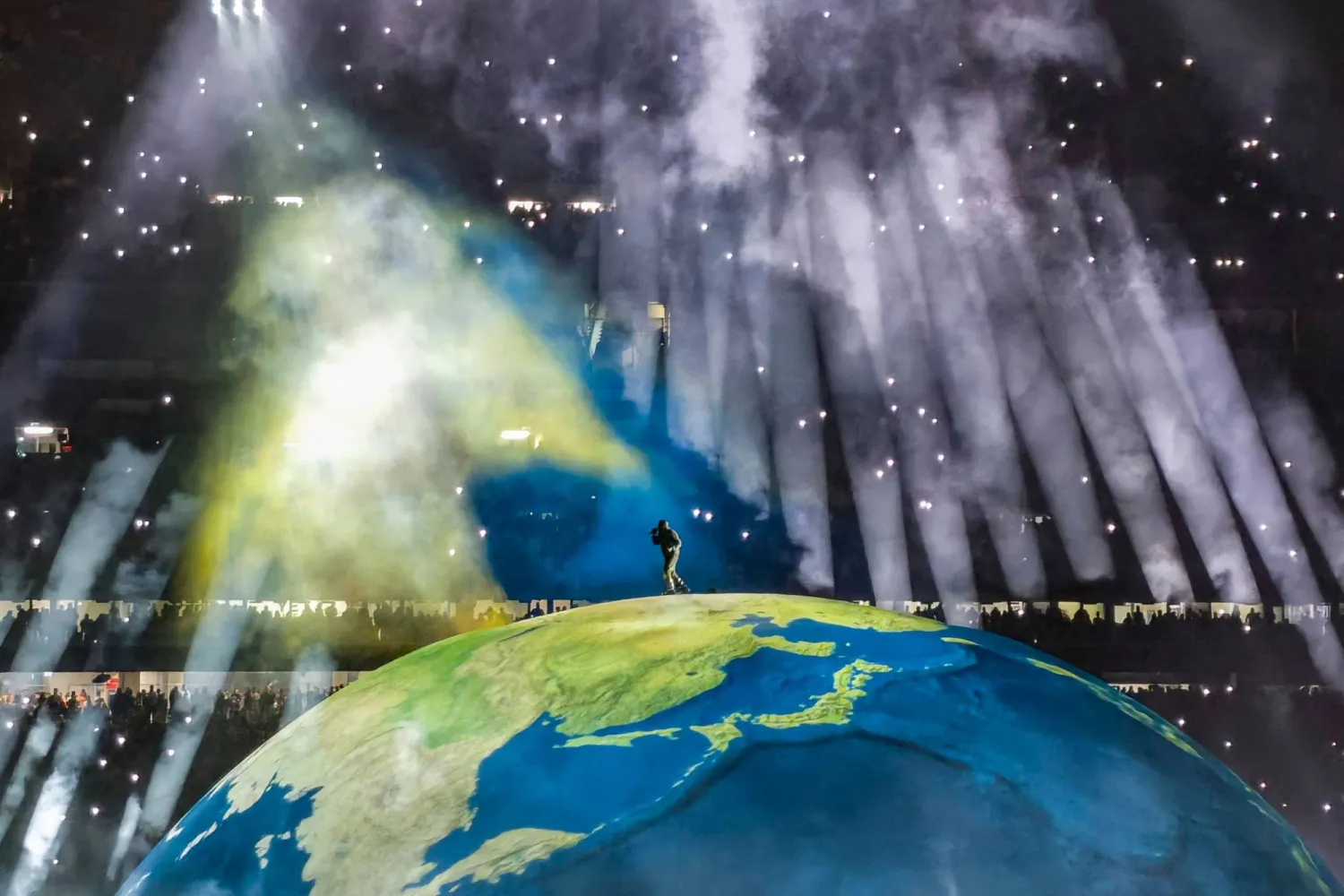
US rapper and producer Kanye West performs on stage during a concert at the Ataturk Olympic Stadium in Istanbul as part of his tour "YE Live in Istanbul" on May 30, 2026. (Photo by Yasin AKGUL / AFP)
TT

Italy Bans Kanye West Concert Over Security Concerns

US rapper and producer Kanye West performs on stage during a concert at the Ataturk Olympic Stadium in Istanbul as part of his tour "YE Live in Istanbul" on May 30, 2026. (Photo by Yasin AKGUL / AFP)

A concert by the US rapper Kanye West, who was supposed to perform on July 18 in Reggio Emilia in northern Italy, has been banned on public safety grounds, the authorities said.

The prefect of the province, Salvatore Angieri, said the decision was made following requests from bodies including the local Jewish community.

They had "expressed reservations" about the appearance of the rapper as part of the Pulse of Gaia Festival, the statement released on Friday evening said.

Another concert by the US rapper Travis Scott on July 17 has also been scrapped.

"The decision... was taken for reasons of protection of public order and safety, in view of the close timing of the events and the large crowd expected within a 24-hour period," AFP quoted the prefecture as saying.

"In the overall assessment, the cancellation of previous concerts by the American rapper in other countries and the concrete risk of counter-demonstration also weighed in."

West, who is also known as Ye, has sparked controversy with statements and songs glorifying Adolf Hitler as well as antisemitic diatribes, which he blamed on his bipolar disorder.

The scandal has led to the cancellation of a string of concerts.

Last month, the UK government banned him from entering the country, and a festival at which he was due to appear in July was cancelled.

He was also forced to scrap a planned concert in the southern French city of Marseille, while he has also been stopped from performing in Poland and Switzerland.

West performed in Istanbul on Saturday and is still due to appear at concerts in the Netherlands on June 6 and 8, in Tirana on July 11, and Prague on July 25.

In January, he took out a full-page advert in the Wall Street Journal in which he said he was "not a Nazi or an antisemite", adding: "I love Jewish people."


Hollywood Studios and Actors’ Union Find Common Ground on AI

 SAG-AFTRA chief negotiator Duncan Crabtree-Ireland attributed the mostly drama-free agreements with studios during this round of negotiations to a new mindset. (AFP)
SAG-AFTRA chief negotiator Duncan Crabtree-Ireland attributed the mostly drama-free agreements with studios during this round of negotiations to a new mindset. (AFP)
TT

Hollywood Studios and Actors’ Union Find Common Ground on AI

 SAG-AFTRA chief negotiator Duncan Crabtree-Ireland attributed the mostly drama-free agreements with studios during this round of negotiations to a new mindset. (AFP)
SAG-AFTRA chief negotiator Duncan Crabtree-Ireland attributed the mostly drama-free agreements with studios during this round of negotiations to a new mindset. (AFP)

As Hollywood's performers cast their ballots to approve the latest negotiated contract, union leaders say they have made some progress in conversations with studio bosses since the massive strike in 2023, especially when it comes to concerns about artificial intelligence.

SAG-AFTRA chief negotiator Duncan Crabtree-Ireland attributed the mostly drama-free agreements in this round of negotiations to a new mindset, "because the studios and streamers came to the table with a different perspective."

With 160,000 members working in film, television and video games, SAG-AFTRA is the largest and most influential union of its kind globally.

Members of the actors' union are voting on a newly negotiated agreement that was approved by the national board earlier this month, ahead of the current contract's expiration at the end of June.

"The tone of the negotiation was much more collaborative and a lot more creativity was brought by both sides, so I really believe that the 2023 strikes -- while they were very difficult for all of us -- did help effectuate a reset in the relationship between the studios and the unions in general," Crabtree-Ireland told AFP.

Approval would mean avoiding a repeat of disastrous 2023 strikes that shuttered productions, costing studios billions of dollars, while actors stood their ground against AI and other issues.

- AI's evolutions -

The strike by the Screen Actors Guild-American Federation of Television and Radio Artists (SAG-AFTRA) lasted 118 days, with star-studded picket lines outside major studios in Los Angeles and New York, marking the longest such revolt in Hollywood history.

AI technology was a sticking point for many, and that tension persists, Crabtree-Ireland said.

"They do feel more secure than they did in 2023 but there's still a very, very strong concern about AI -- and especially because the generative AI tools have advanced so much in the last three years," he said.

The latest agreement does not close the door on AI, but it does introduce new protections.

Under the new contract, digital replicas -- which use AI or any technology to replicate an actual living or deceased performer -- must "have informed consent and fair compensation," Crabtree-Ireland said.

The contract allows for limited use of synthetics, under "unusual circumstances," when a generative AI system can be used to create a character who is not based on any actual person in the world.

"There's now process in place which would require the companies to come to the union if they want to use a synthetic in a project, they have to demonstrate to us that this synthetic brings a significant additional value to the production," Crabtree-Ireland said.

"While this doesn't rise quite to the level of a complete prohibition, it's a very strong disincentive."

Voting on the latest contract closes June 4.


Oscar-Winning ‘Star Wars’ Editor Marcia Lucas Dies at 80

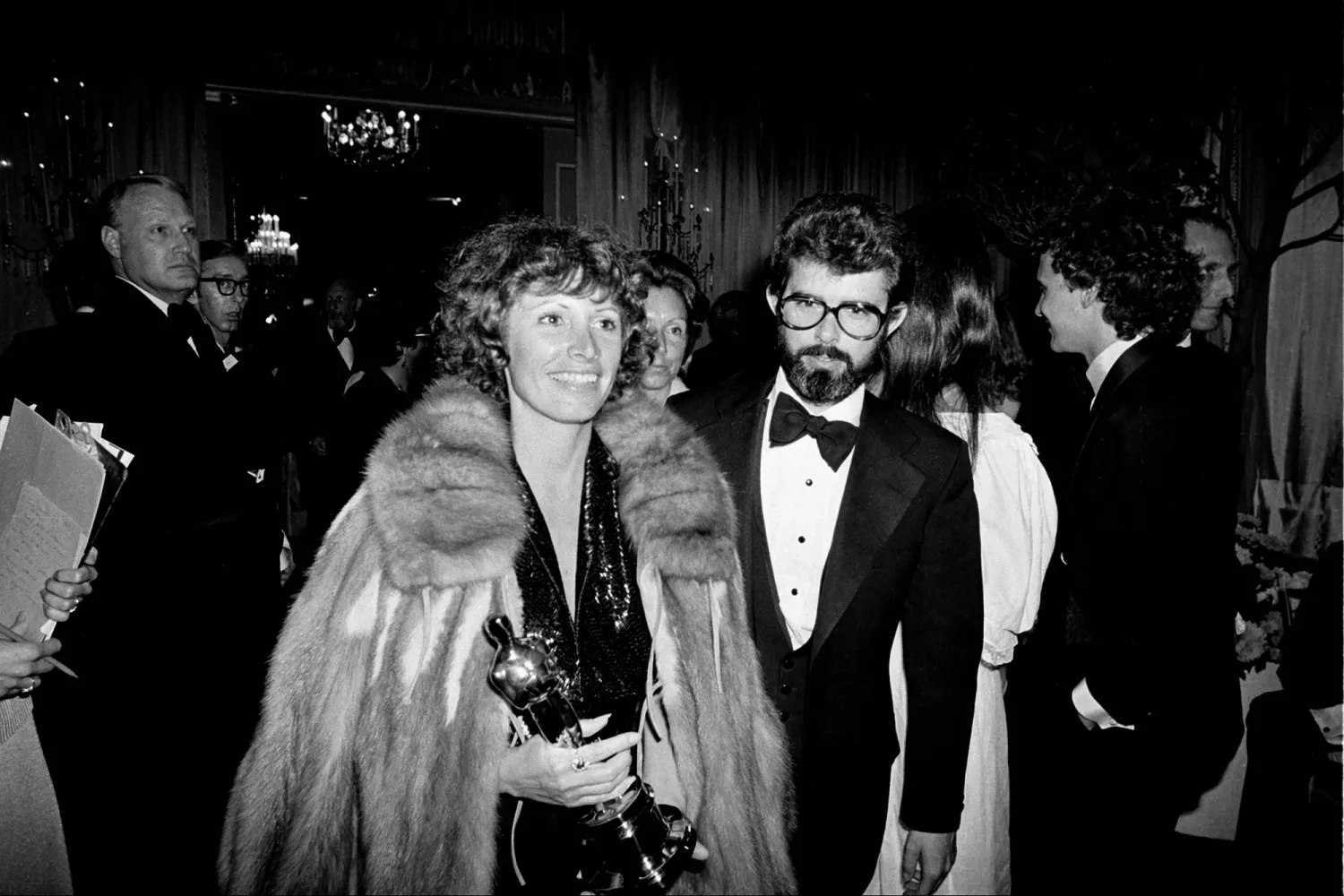
Marcia Lucas, wife of director George Lucas, right, carries her Oscar statuette as they arrive at a post Academy Awards party at the Beverly Hilton Hotel in Los Angeles, April 4, 1978. (AP)
TT

Oscar-Winning ‘Star Wars’ Editor Marcia Lucas Dies at 80

Marcia Lucas, wife of director George Lucas, right, carries her Oscar statuette as they arrive at a post Academy Awards party at the Beverly Hilton Hotel in Los Angeles, April 4, 1978. (AP)

Marcia Lucas, who won an Oscar as editor of the original 1977 “Star Wars" and was part of a group of women whose editing was essential to film's New Hollywood era, has died, a lawyer for her family said Friday. She was 80.

Lucas, who was married to “Star Wars” creator George Lucas from 1969 to 1983, died Wednesday from metastatic cancer, attorney Deidre Von Rock said in an email to The Associated Press. She died in Rancho Mirage, California, surrounded by loved ones, Von Rock said.

Marcia Lucas was the editor on 1983's “Return of the Jedi” and the pre-“Star Wars” George Lucas-directed films “THX 1138” and “American Graffiti.”

She was also part of the editing team for director Martin Scorsese's 1970s films “Taxi Driver,” “Alice Doesn't Live Here Anymore” and “New York, New York.”

Editor was a rare senior creative position where a woman could find a foothold in Hollywood. Marcia Lucas became one of several women whose work in the editing chair made sense of the work of the overwhelmingly male directors of the New Hollywood of the late 1960s through the early 1980s, including Dede Allen, editor of “Bonnie and Clyde” and “Dog Day Afternoon”; Verna Fields, editor of “Paper Moon” and “Jaws"; and Thelma Schoonmaker, editor of most of Scorsese's films starting with 1980's “Raging Bull.”

Lucas was often called the unsung hero of “Star Wars,” the original film that after sequels, prequels and spinoffs has come to be known by its subtitle, “A New Hope.”

She convinced her then-husband that he should have Obi-Wan Kenobi, played by Alec Guinness, die in his lightsaber battle with Darth Vader and become a spirit guide to Mark Hamill's Luke Skywalker.

And she had to make sense of raw footage that could have been a mess in the wrong hands, including the climactic rebel attack on the Death Star.

“It was extremely complex and we had 40,000 feet of dialogue footage of pilots saying this and that. And she had to cull through all that, and put in all the fighting as well,” George Lucas told Rolling Stone in an interview a few months after the film came out. “Nobody really has ever tried to interweave an actual plot story into a dogfight, and we were trying to do that."

Lucas was born Marcia Griffin in Modesto, California shortly after the end of World War II. She moved to Los Angeles with her mother after her parents divorced when she was a small child.

She began working as a film librarian and moved into working as an editor on commercials, trailers and promotional films. She was an assistant editor on the documentary “Journey to the Pacific” for Fields, who also hired George Lucas, then a film student at the University of Southern California.

The couple became engaged soon after. Their marriage would essentially end in 1982, but they kept their divorce under wraps until after the release of “Return of the Jedi” in 1983. Marcia Lucas was then married to Tom Rodrigues, a production manager at the Skywalker Ranch production center, from 1983 to 1993.

She is survived by her daughters, Amanda Lucas and Amy Soper, and grandchildren Felix Hallikainen, Aeliana Hallikainen and Knox Soper.

"Her influence on film is indelible, but those who knew her best will remember the way she made life feel more vivid, more beautiful, more fun, and more full of love,” a family statement said. “Her work was known for its emotional intelligence, rhythm, and humanity — a rare ability to find the truth of a scene and bring heart, momentum, and clarity to the screen.”