



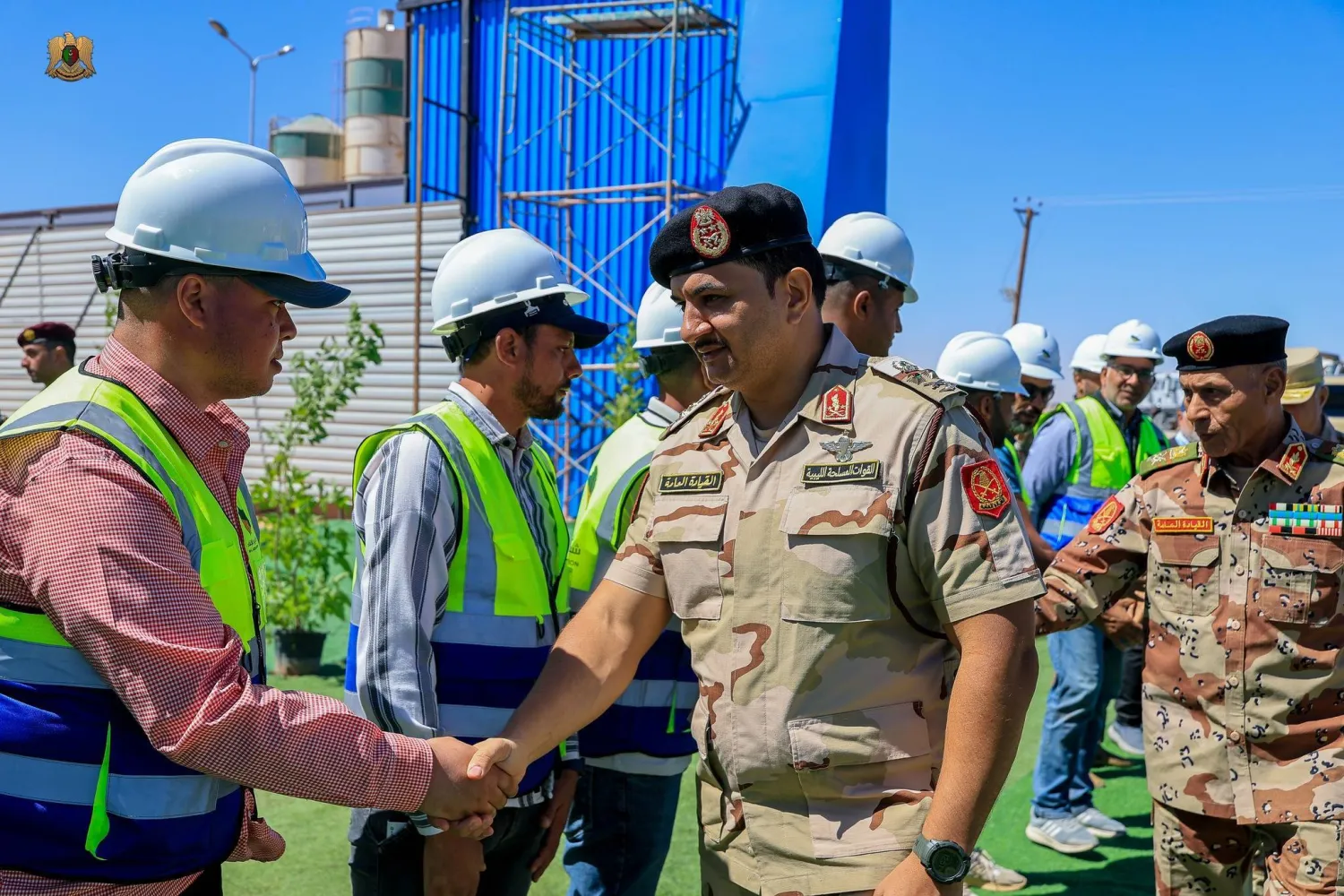

Deputy commander of the Libyan National Army (LNA) Saddam Haftar laid the foundation stone on Thursday for a project of “integrated services and military buildings” in the southern city of Sabha in what was seen as an expansion of the military’s influence in the region in its rivalry with the interim Tripoli-based Government of National Unity (GNU).
Haftar had arrived in the city on Wednesday, meeting with local elders and youths. He vowed to restore security in the area and achieve development in the South. He launched the “Together for the South” initiative, which is part of the “General Command’s Vision 2030”.
“We are working on making security the foundation for development. Fairness in offering opportunities and services is the basis for real stability,” Haftar stressed.
“Balanced development is the only way to ensure the nation’s unity and revival,” he added.
He also spoke about connecting southern cities with a modern network of roads, developing infrastructure, and supporting agricultural projects, which are key to food security.
In the years since the collapse of longtime ruler Moammar al-Gaddafi's regime in 2011, residents of the South have complained that they were being “marginalized and discriminated against.” They have also complained about the lack of public services.
The region has been neglected by successive governments and the GNU since Gaddafi’s ouster. The LNA, meanwhile, has for years been trying to expand its influence there.
Speaking to the people of Sabha, Haftar stressed: “The General Command’s vision can only be achieved with your sincere partnership and real support.”
Moreover, he declared that the LNA will continue to ensure the security of the South, fight crime and cross-border gangs, and confront illegal migration.
Authorities will work on improving electricity, fuel, health and water services, as well as education and create job opportunities for the youths “so that they can build their future in their country” instead of immigrating.
The new project in Sabha boasts services and military buildings, including command centers and a military zone, a military hospital, and a hotel for senior visitors.
The facilities will be built according to international standards and provide an integrated work environment for the armed forces recruits, Haftar said.
The project is part of efforts to develop military facilities in the southern region in line with Vision 2030, he explained.
A local said the project brings back hope in the region, saying Haftar’s work is “an actual embodiment of the state’s vision whereby security and stability will pave way for the country’s revival.”
Politicians from western Libya, however, expressed their rejection of “Libya’s militarization”.
They warned that the LNA’s expansion in the South “consolidates the military and political division.”


