
Militia Attack on Hospital in Darfur Came in Waves, WHO Says

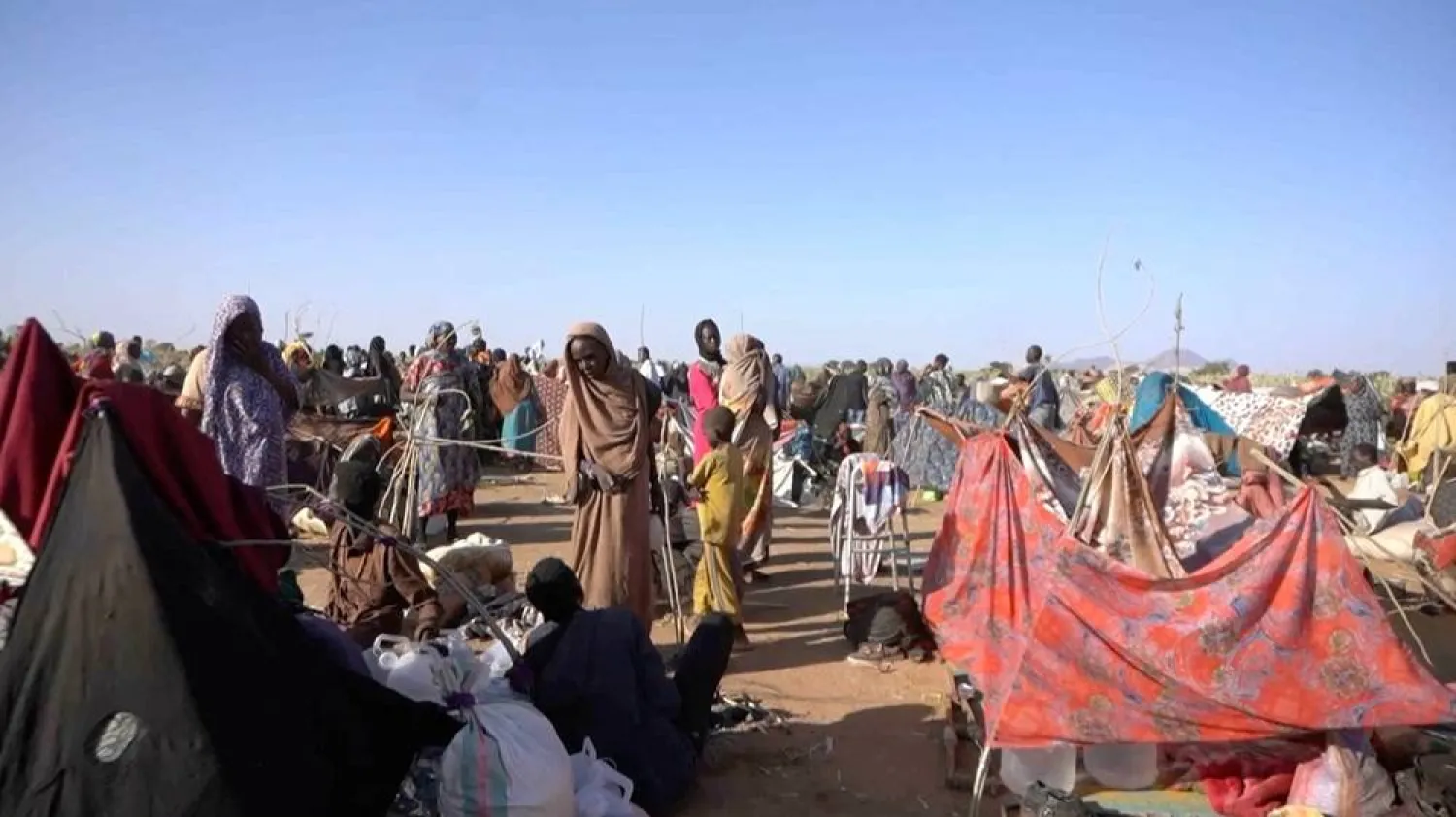
 Displaced Sudanese gather and sit in makeshift tents after fleeing el-Fasher city in Darfur, in Tawila, Sudan, October 29, 2025, in this still image taken from a Reuters' video. (Reuters)
Displaced Sudanese gather and sit in makeshift tents after fleeing el-Fasher city in Darfur, in Tawila, Sudan, October 29, 2025, in this still image taken from a Reuters' video. (Reuters)
TT

Militia Attack on Hospital in Darfur Came in Waves, WHO Says

 Displaced Sudanese gather and sit in makeshift tents after fleeing el-Fasher city in Darfur, in Tawila, Sudan, October 29, 2025, in this still image taken from a Reuters' video. (Reuters)
Displaced Sudanese gather and sit in makeshift tents after fleeing el-Fasher city in Darfur, in Tawila, Sudan, October 29, 2025, in this still image taken from a Reuters' video. (Reuters)

Groups of gunmen who reportedly killed at least 460 people at a hospital in Sudan attacked in several waves, abducting doctors and nurses, then gunning down staff, patients and people sheltering there, the World Health Organization said Friday.

The attack Tuesday in the country's Darfur region was part of a reported rampage by the Rapid Support Forces, a powerful paramilitary group, as it captured the key city of el-Fasher after besieging it for 18 months. Witnesses have reported fighters going house-to-house, killing civilians and committing sexual assaults.

Many details of the hospital attack and other violence in the city have been slow to emerge, and the total death toll remains unknown.

The fall of el-Fasher heralds a new phase of the brutal, two-year war between the RSF and the military in Africa’s third-largest country.

The war has killed more than 40,000 people, according to UN figures, but aid groups say that is an undercount and the true number could be many times higher. The war has displaced more than 14 million people and fueled outbreaks of diseases believed to have killed thousands. Famine has been declared in parts of Darfur, a region the size of Spain, and other parts of the country.

The hospital attack occurred in waves

Communications are down in el-Fasher, located deep in a semi-desert region some 800 kilometers (500 miles) southwest of Khartoum, the capital. Aid groups that had been operating there have largely been forced out.

Some survivors have staggered into a refugee camp about 40 miles away in the town of Tawila.

More than 62,000 people are believed to have fled el-Fasher between Sunday and Wednesday, the UN migration agency said. But far fewer have made it to Tawila. The Norwegian Refugee Council, which manages the camp, put the number at around 5,000 people, raising fears over the fate of tens of thousands.

Christian Lindmeier, a WHO spokesman, provided new details about the killings at el-Fasher’s Saudi Hospital, which had been the only hospital in the city still providing limited services during the siege.

Gunmen returned to the facility at least three times, Lindmeier told a UN press briefing in Geneva. At first, the fighters came and abducted a number of doctors and nurses, and at least six are still being held, he said. They later returned and “started killing,” he said.

They came a third time and “finished off what was still standing, including other people sheltering in the hospital,” Lindmeier said, without specifying who the attackers were.

Grisly details are shared online and by witnesses

A number of grisly videos have circulated online showing bodies and at least one fighter shooting a man. The Associated Press has not been able to independently verify the details of the assault.

The RSF denied committing killings at the hospital. On Thursday, it posted on social media a video filmed at the hospital, showing what it said were some patients at the facility. A person speaking in the video said RSF fighters were caring for the patients, offering them change of wounds and food. At least one wounded man spoke to the reporter.

It was not immediately clear when the video was filmed, although a timestamp stated it was Thursday.

Dr. Teresa Zakaria, WHO’s unit head for humanitarian operations, told the briefing that the hospital was offering “limited service” now. But he said that since el-Fasher’s seizure on Sunday, “there is no longer any humanitarian health presence in the city, and access has remained blocked.”

Fatima Abdulrahim, 70, fled el-Fasher with her grandchildren a few days before it was captured to escape the siege. She described a harrowing journey out of the town, hiding in trenches, dodging bullets and gunmen behind walls and empty buildings. She walked for five days to reach Tawila.

Along the way, she said she witnessed militiamen shoot and kill young men trying to bring food into the city. The road was littered with bodies of people killed and injured, unable to move.

“The people dead on the streets were countless,” she said, speaking to AP from Tawila. “I kept covering the eyes of the little ones so they don’t see. Some were injured and beaten and could not move. We pulled some to the paved road, hoping a car would come and take them.”

Militia accused of repeated mass killings

El-Fasher was the Sudanese military’s last stronghold in Darfur, and its fall secures the RSF’s hold over most of the large western region. That raises fears of a new split in Sudan, with the military holding Khartoum and the country's north and east.

The RSF and its allied militias have been accused of repeated mass killings and rapes when it controlled the capital Khartoum, and as it has seized towns across Darfur and further south over the past two years – mostly targeting civilians of Central and East African ethnicities.

The RSF is largely made up of fighters from the Janjaweed militia, which is accused of carrying out a government-backed genocidal campaign in Darfur in the 2000s in which some 300,000 people were killed.

The Janjaweed were initially recruited by the military to fight Darfur insurgents, who were rebelling against power concentrated in the north. The militia later were reorganized into the RSF as an official force.

The military and the RSF were briefly allied in ruling Sudan following popular protests that ousted longtime leader Omar al-Bashir. They had a falling out in 2023 in a struggle for power.

Al-Sharaa: Israel’s Push for a Buffer Zone in Southern Syria Puts the Region at Risk

Syrian President Ahmad al-Sharaa speaks during the 23rd annual Doha Forum (Reuters). 
TT

Al-Sharaa: Israel’s Push for a Buffer Zone in Southern Syria Puts the Region at Risk

Syrian President Ahmad al-Sharaa speaks during the 23rd annual Doha Forum (Reuters). 

Syrian President Ahmad al-Sharaa warned on Saturday that Israel’s effort to establish a demilitarized buffer zone in southern Syria risks pushing the country into a “dangerous place.”

Speaking on the sidelines of the Doha Forum, al-Sharaa said US-mediated negotiations with Israel remain underway to address the “security concerns” of both sides.

Following the ouster of Bashar al-Assad on Dec. 8, Israel has carried out hundreds of airstrikes on Syrian military positions, saying its goal is to prevent the new authorities from seizing the former army’s weapons arsenal.

Over the past year, Israel has repeatedly publicized ground operations and arrests of individuals it accuses of “terrorist” activity in southern Syria. Israeli forces have also entered the Golan Heights disengagement zone established under the 1974 cease-fire agreement.

Al-Sharaa said all major international actors back Syria “in its demand that Israel withdraw and reposition to the lines of Dec. 8.” He emphasized that Damascus insists on full respect for the 1974 accord, describing it as a durable, internationally supported agreement.

“Tampering with this agreement, while proposing alternatives such as a new buffer zone, could drive us into dangerous territory,” he said.

Al-Sharaa accused Israel of “fighting ghosts” and “searching for enemies” in the wake of the Gaza war, adding that since assuming office a year ago he has sent “positive messages about peace and regional stability.”

Thirteen people were killed in late November during an Israeli incursion into the southern town of Beit Jin, a raid Damascus denounced as a “war crime.” Israel said the operation targeted suspects linked to the ISIS group.

Though Syria and Israel maintain no diplomatic relations and remain technically at war, several US-brokered ministerial meetings have been held in recent months.

“Negotiations are ongoing, and the United States is fully engaged,” al-Sharaa said, noting broad international support for addressing “legitimate security concerns so both sides can feel secure.”

He asked: “Syria is the one under attack, so who should be demanding a buffer zone and withdrawal?”

In September, al-Sharaa warned in New York of the risk of renewed Middle East instability if Damascus and Tel Aviv fail to reach a security arrangement, accusing Israel of “delaying negotiations and continuing to violate our airspace and territory.”

Israeli Prime Minister Benjamin Netanyahu visited Israeli forces deployed in the buffer zone outside the occupied Golan Heights in November, a move Damascus condemned as “illegitimate.”

Domestically, al-Sharaa said all segments of Syrian society are now represented in government “on the basis of competence, not sectarian quotas.” Syria, he said, is charting a “new path” for post-conflict governance. He acknowledged the country inherited “deep problems” from the former regime and said investigative bodies are working to address alleged crimes in the coastal region and Sweida.

He stressed that Syria is “a state of law, not a collection of sects,” and that accountability and institutional reform are essential to rebuilding the state.

The Syrian president added that economic revitalization is crucial for lasting stability, which is why Damascus continues to argue for the lifting of the Caesar Act sanctions.


Arab Parliament Backs UNRWA Mandate Renewal, Reaffirms Support for Palestinian Rights

Arab Parliament Backs UNRWA Mandate Renewal, Reaffirms Support for Palestinian Rights
TT

Arab Parliament Backs UNRWA Mandate Renewal, Reaffirms Support for Palestinian Rights

Arab Parliament Backs UNRWA Mandate Renewal, Reaffirms Support for Palestinian Rights

Speaker of the Arab Parliament Mohamed Alyammahi welcomed the UN General Assembly’s decision to renew the mandate of the United Nations Relief and Works Agency for Palestine Refugees in the Near East (UNRWA) for another three years, saying the vote reflects broad international support for Palestinian rights and a clear rejection of efforts to undermine their cause.

Alyammahi stressed that the mandate’s renewal is particularly critical amid the continued aggression and blockade facing Palestinians, ensuring the agency can maintain its essential services. He noted the strong backing for related resolutions calling for an end to the occupation and the establishment of an independent Palestinian state with Jerusalem as its capital.

The speaker urged leveraging this growing international consensus to halt the assault on Gaza, facilitate the entry of humanitarian aid, intensify legal and diplomatic action against the occupation, and advance a credible political process that can help ease the suffering of the Palestinian people.


Israeli Soldiers Kill 55-Year-Old Palestinian and Teenager in West Bank

28 November 2025, Palestinian Territories, Hebron: Israeli forces block Palestinian farmers trying to access to their agricultural fields in the town of Tarqumiyah. (dpa)
TT

Israeli Soldiers Kill 55-Year-Old Palestinian and Teenager in West Bank

28 November 2025, Palestinian Territories, Hebron: Israeli forces block Palestinian farmers trying to access to their agricultural fields in the town of Tarqumiyah. (dpa)

Israeli soldiers killed a Palestinian teenager who was driving a car towards them as well as a Palestinian bystander in the West Bank on Saturday, according to an Israeli security official.

The military said that an "uninvolved person" was hit in addition to the driver of the car who had "accelerated" towards soldiers at a checkpoint in West Bank city of Hebron.

In an earlier statement, the military said two "terrorists" were killed, before later clarifying that only one person was involved.

An Israeli security official, speaking on condition of anonymity, said a 17-year-old was driving the car and a 55-year-old was the bystander.

Palestinian state news agency WAFA reported that 55-year-old Ziad Naim Abu Dawood, a municipal street cleaner, was killed while working. It said another Palestinian was killed but did not report the circumstances that led the soldiers to open fire.

The Palestinian health ministry identified the second Palestinian as 17-year-old Ahmed Khalil Al-Rajabi.

The military did not report any injuries to the soldiers.

The motive for the 17-year-old's actions was not immediately clear, and no armed group claimed responsibility.

Since January, 51 Palestinian minors, aged under 18, have been killed in the West Bank by Israeli forces, according to the Palestinian health ministry.

Violence has surged this year in the Israeli-occupied West Bank. Israeli settler attacks on Palestinians have risen sharply, while the military has tightened movement restrictions and carried out sweeping raids in several cities.

Palestinians have also carried out attacks on Israeli soldiers and civilians, some of them deadly.