‘IISS Manama Dialogue’ Concludes, Addresses Political Transformations, Security Challenges
The 21st edition of the IISS Manama Dialogue 2025 (BNA)
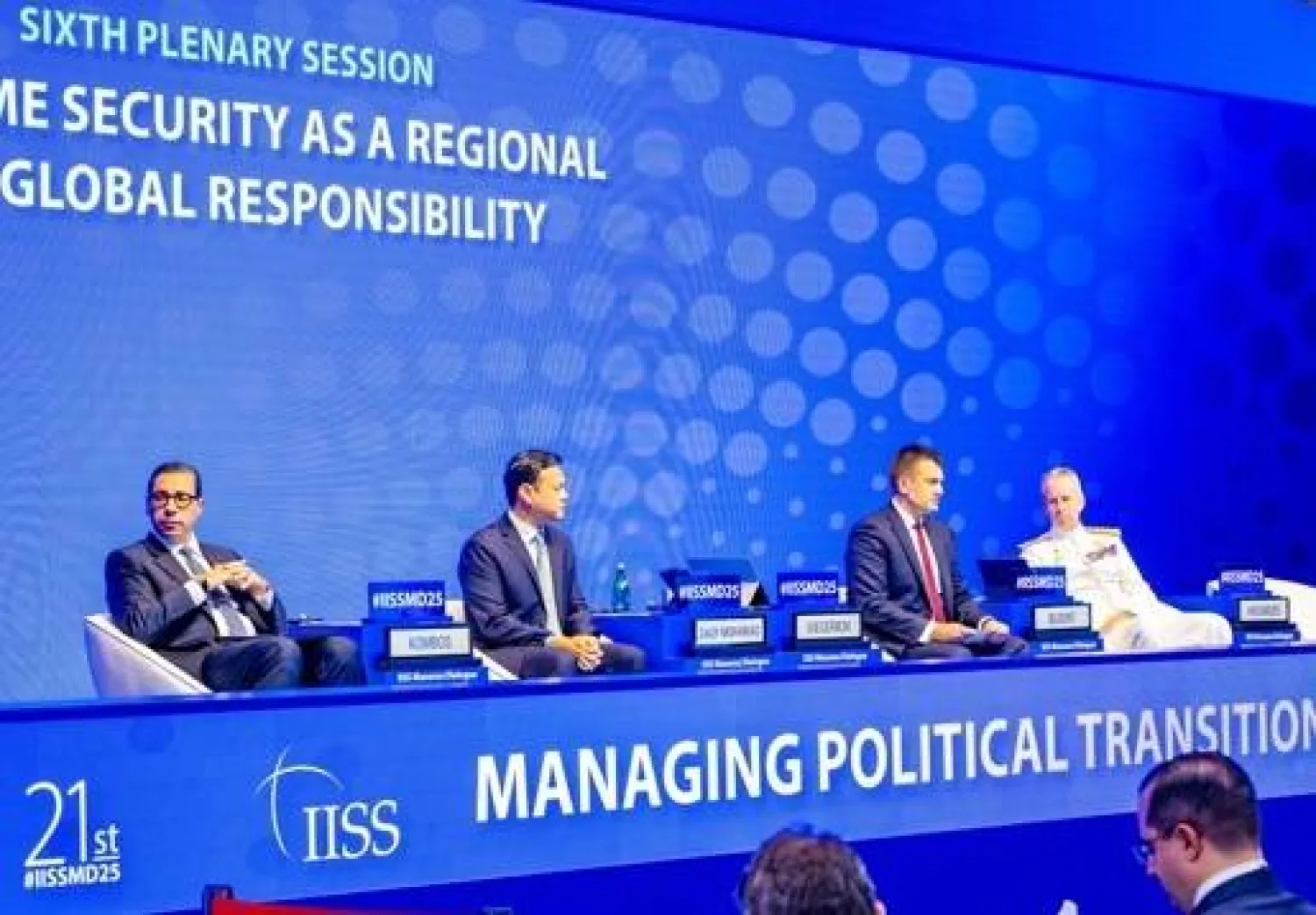
The 21st edition of the IISS Manama Dialogue 2025 concluded on Sunday, featuring sessions that addressed key political transformations and regional and international challenges affecting security and stability.
Organized by the International Institute for Strategic Studies (IISS) in partnership with the Bahraini Foreign Ministry, the forum underscored the importance of international cooperation, comprehensive approaches to security and peace, dialogue, and practical strategies to address the root causes of crises while promoting sustainable development, aiming to achieve a more stable and prosperous future for the region and the world.
The Manama Dialogue hosted hundreds of participants, including senior officials, decision-makers, and strategic thinkers from the public and private sectors across different regions.
They gather to share perspectives and opinions on geopolitical developments, challenges, political, military, and security trends.
The conference discussions primarily revolve around the Middle East region.
In the final session entitled, “Another Nuclear Age? Strategic Risks and Opportunities,” Dr. Bastian Giegerich, Director General and Chief Executive of IISS, said this year’s dialogue brought together over 700 delegates from 65 countries, including 27 youth leaders.
He said the forum was also attended by high-level participation from ministers, intelligence chiefs, national security advisors, and defense leaders.
IISS facilitated 103 bilateral meetings between participating nations, alongside numerous independent delegation discussions, he said.
Participants highlighted the forum’s achievements this year and reaffirmed the importance of dialogue as a means to foster understanding, cooperation, and progress toward regional and global peace and security.
Saudi Crown Prince, Russian President Discuss Regional Developmentshttps://english.aawsat.com/gulf/5321467-saudi-crown-prince-russian-president-discuss-regional-developments
15 September 2026, Egypt, Cairo: Prince Mohammed bin Salman bin Abdulaziz Al Saud, Saudi Crown Prince and Prime Minister, meets with Egypt's President Abdel Fattah al-Sisi. (SPA)
TT
TT
Saudi Crown Prince, Russian President Discuss Regional Developments
15 September 2026, Egypt, Cairo: Prince Mohammed bin Salman bin Abdulaziz Al Saud, Saudi Crown Prince and Prime Minister, meets with Egypt's President Abdel Fattah al-Sisi. (SPA)
Prince Mohammed bin Salman bin Abdulaziz Al Saud, Saudi Crown Prince and Prime Minister, received on Tuesday a phone call from Russian President Vladimir Putin, with whom he reviewed relations between the two countries and ways to develop them across various fields.
They discussed the latest developments in the region, efforts to achieve security and stability, and other regional and international issues of mutual interest.
They also addressed the negative repercussions of the escalation on maritime navigation security and the global economy.
Saudi Arabia Writes a New Chapter in Its Energy Journey: An Oil Legacy and Nuclear Ambitionhttps://english.aawsat.com/gulf/5321455-saudi-arabia-writes-new-chapter-its-energy-journey-oil-legacy-and-nuclear-ambition
Saudi Arabia Writes a New Chapter in Its Energy Journey: An Oil Legacy and Nuclear Ambition
A file photo of an oil pump in Saudi Arabia. (SPA)
When oil flowed from Dammam Well No. 7 in 1938, around six years had passed since the declaration of Saudi Arabia's unification, and the search for resources to help build the state was ever-present in the decisions of its founder, King Abdulaziz.
Following years of anticipation and exploration, the well, which later became known as the "Well of Prosperity," triggered an economic transformation that transformed daily life, expanded cities, and connected the corners of the country with roads.
As the Kingdom marks its 96th National Day, its energy narrative is expanding beyond the oil and gas industry to encompass solar and wind projects, alongside prospects for the peaceful use of nuclear energy. Saudi Arabia recalls this journey in a year when supply disruptions during the war with Iran demonstrated the value of its alternative facilities and export outlets, notably Yanbu on the Red Sea coast, which helped ensure the uninterrupted flow of Saudi oil to global markets.
The well that paved the way
The historical account published in Aramco World preserves the details of those difficulties, ranging from stuck drilling tools and rockfalls inside the well to growing anxiety over the feasibility of continued spending. In that atmosphere, geologist Max Steineke held fast to his conviction that persevering was worth the effort, relying on the evidence gathered during his fieldwork. Tests in March 1938 ultimately proved the presence of commercial production, clearing the way for expansion.
New living and working requirements began to emerge around the exploration sites. Machinery needed maintenance, workers required housing, water, and roads, and the demand for training, transport, and services expanded. These daily details reveal a facet of the transformation: Saudis took on jobs and skills tied to modern industry, making the experience workers gained on-site part of the wealth accumulating above the ground.
Growing industry and experience
Over the decades, the industry evolved and the Saudi role in its management expanded. Government ownership of Aramco was finalized in 1980, followed by the establishment of the Saudi Arabian Oil Company (Saudi Aramco) in 1988. This journey marked a transition in responsibility and resource management capabilities, alongside the growth of refining, marketing, and overseas investment operations.
The economic footprint of each barrel expanded from refinery operations to derivative-reliant industries, as well as associated contracting and engineering services. As these activities expanded, the importance of universities, vocational training, and applied research grew, ensuring local knowledge could operate and develop the facilities. Consequently, the capability to manage a field or refinery accumulated through years of labor, passing from one generation to the next.
A file photo of the King Fahd Industrial port in Yanbu. (SPA)
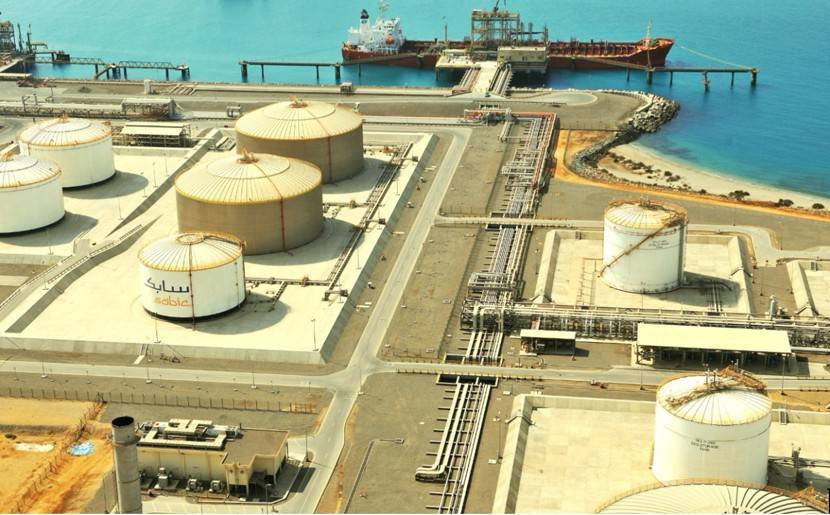
Yanbu tested during the war
During the US-Israeli war with Iran in 2026, shipping disruptions in the Strait of Hormuz demonstrated the importance of diversifying export outlets. Reuters reported on April 2 that Saudi crude exports via Yanbu rose to around 4.6 million barrels per day as shipping routes were diverted. This came at a time when producing countries, including Saudi Arabia, were forced to cut production due to the disruption of transit through the strait.
This response relied on the East-West pipeline, as well as the storage and export facilities established and developed over decades. This system allowed the transfer of a large portion of supplies to the Red Sea, demonstrating the practical value of investing in an alternative outlet capable of receiving, storing, and loading oil when the usual route is disrupted. The Kingdom thus benefited from its position spanning two coasts, and from the infrastructure connecting production areas to marketing outlets.
In the first-half results statement for 2026, Aramco President and CEO Amin Nasser explained that decades-long planning, including pipelines, storage, and terminals, helped the company maintain production and export operations despite the Hormuz disruptions. Aramco announced an adjusted net income of $67.2 billion for the first half, indicating its financial resilience during that turbulent period.
The Yanbu provides a tangible example of the resilience of the Saudi energy sector; past investments made it possible to limit supply disruptions and kept a significant portion of commercial activity functional under pressure. War remains costly for production, transport, and markets, while ready alternatives help contain some of its impacts and grant economic policymakers broader scope to handle shocks.
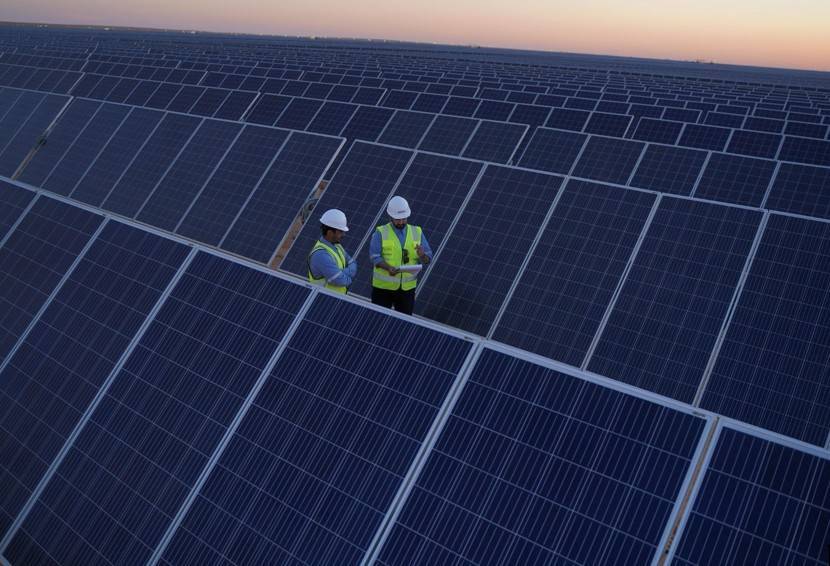
Workers at the Sakaka Solar Power Plant. (SPA)
More energy options
Preserving oil industry capabilities runs parallel to steps aimed at diversifying energy sources. In July 2025, power purchase agreements were announced for solar and wind projects with a total capacity of 15 gigawatts, representing investments approaching $8.3 billion, through an ACWA Power-led consortium. These initiatives align with targets to generate approximately half of the nation's electricity from renewable sources by 2030, thereby expanding the utilization of solar and wind resources across the Kingdom.
The expansion also extends to the gas sector. Aramco's first-half results for 2026 indicated that sales gas and condensate production continues from the first phase of the Jafurah field, while work proceeds on the second phase, which is expected to be completed in 2027. Developing gas adds a resource that can be deployed in electricity generation and industry, granting the energy system broader options to meet domestic demand.
The impact of these investments extends beyond the generation sites themselves. The projects require power transmission grids, suppliers to provide equipment, and skilled personnel to handle operation and maintenance. The value of diversification increases when it is linked to building these capabilities within the Kingdom and expanding the participation of local enterprises in the operations, so that the growth in supply is accompanied by growth in expertise and economic opportunities.
Nuclear ambitions
In this context, peaceful nuclear energy emerges among the options that Saudi Arabia is working to develop to meet its future needs. This technology enables the production of low-carbon electricity, as the heat generated from nuclear fission is used to operate the power generation system. According to the International Atomic Energy Agency, the operation of nuclear plants produces virtually none of the carbon dioxide emissions that accompany the burning of fossil fuels.
Building a nuclear program requires long-term preparation, encompassing human resources, licensing, regulation, fuel arrangements, and radioactive waste management. The IAEA provides guidelines and reviews for countries developing their programs, assisting them in building the necessary institutions and expertise.
Saudi-US partnership
Within the partnerships serving this path, the reciprocal visits of US President Donald Trump and Prince Mohammed bin Salman, Crown Prince and Prime Minister, brought key milestones for cooperation. During Trump's visit to Riyadh in May 2025, the discussions covered energy, technology, minerals, and infrastructure files. Subsequently, the Crown Prince's visit to Washington in November of the same year witnessed the announcement of the completion of cooperation negotiations in civil nuclear energy, alongside agreements in other fields.
On July 22, the US Department of Energy announced the signing of a peaceful nuclear cooperation agreement, known as the "Section 123" agreement, between Saudi Minister of Energy and Minister of Industry and Mineral Resources, Prince Abdulaziz bin Salman, and US Secretary of Energy Chris Wright. The statement said that the agreement establishes a legal foundation for a long-term partnership, adding that it will be referred to Congress for review. This step falls within the founding stages of cooperation, paving the way for potential subsequent projects and executive arrangements.
The value of these partnerships lies in the access they provide to technologies and expertise, and their role in advancing Saudi capabilities. While projects may start with an agreement, their execution demands institutions and skilled professionals capable of turning those plans into production and services that align with domestic economic needs.
Sustainability
Throughout this journey, Saudi expertise remains the element that connects these stages together; from the worker who learned to maintain drilling equipment, to the engineer managing the supply network, and the researcher preparing for new energy applications. The more institutions expand their capacity to prepare these individuals and qualify those who follow them, the more their capability expands to benefit from resources and confront changes.
On its National Day, Saudi Arabia recalls the Well of Prosperity as the beginning of a major economic chapter. Eighty-eight years after the discovery, the fruits of that journey are evident in an integrated industry, export outlets that proved their importance in times of crisis, and new resources currently being developed. With its accumulated experience, the Kingdom continues to write the next chapter of its energy story, expanding what this story offers to its future generations.
FMs of Saudi Arabia, Egypt, Pakistan, Türkiye Condemn Houthi Attacks on Saudi Arabiahttps://english.aawsat.com/gulf/5321443-fms-saudi-arabia-egypt-pakistan-t%C3%BCrkiye-condemn-houthi-attacks-saudi-arabia
The foreign ministers of Saudi Arabia, Egypt, Pakistan and Türkiye meet in New York. (SPA)
TT
TT
FMs of Saudi Arabia, Egypt, Pakistan, Türkiye Condemn Houthi Attacks on Saudi Arabia
The foreign ministers of Saudi Arabia, Egypt, Pakistan and Türkiye meet in New York. (SPA)
The foreign ministers of Saudi Arabia, Egypt, Pakistan and Türkiye stressed on Tuesday that dialogue and diplomacy were the only ways to reach sustainable solutions in the region, expressing their deep concern over the continued hostilities.
The FMs met in New York on the margins of the 81st Session of the United Nations General Assembly.
The meeting provided an opportunity to exchange views on recent regional and international developments. The ministers “reaffirmed the importance of continued consultation and coordination among the four countries in support of peace, security, stability and prosperity in the Middle East and the broader region,” said a statement.
Expressing deep concern over continued tension and hostilities in the region, the ministers underscored that “dialogue and diplomacy remain the only path towards sustainable resolution,” and in this context they underscored the need for upholding the Islamabad Memorandum of Understanding for lasting peace and stability.
“The ministers strongly condemned all attacks against Saudi Arabia, including the recent Houthi attacks, and reaffirmed their unwavering support for the sovereignty, territorial integrity and security of the Kingdom,” added the statement.
They further affirmed “the Kingdom’s inherent right to defend itself, its territory, and its people, in accordance with international law and the Charter of the United Nations.”
They also stressed the importance of safeguarding the safety and freedom of maritime navigation. The ministers reaffirmed their “unwavering support for the legitimate Yemeni Government and the Presidential Leadership Council in their efforts to achieve security, stability and development in Yemen through a political process and an inclusive Yemeni – Yemeni dialogue involving different parties.”
Reaffirming the centrality of the Palestinian cause to the achievement of peace, security and stability in the Middle East, the ministers reiterated their support for “the legitimate rights of the Palestinian people, including their inalienable right to self-determination and to establish an independent, sovereign, viable and contiguous State of Palestine on the basis of the 4 June 1967 lines, with East Jerusalem as its capital, in accordance with relevant United Nations Security Council resolutions.”
The ministers underscored “their unwavering support for the sovereignty, unity, independence and territorial integrity of Sudan, and stressed the importance of preserving its legitimate national institutions, and rejecting any parallel entities that undermine Sudan's sovereignty and unity.”
They stressed the necessity of halting the illicit flow of weapons, mercenaries and foreign fighters into Sudanese territory.
The ministers agreed to maintain close coordination and continue their consultations on regional and international developments, with a view to strengthening collective security and promoting long-term regional stability.
لم تشترك بعد
انشئ حساباً خاصاً بك لتحصل على أخبار مخصصة لك ولتتمتع بخاصية حفظ المقالات وتتلقى نشراتنا البريدية المتنوعة