'Hostage Diplomacy': Longstanding Iran Tactic Presenting Dilemma for West

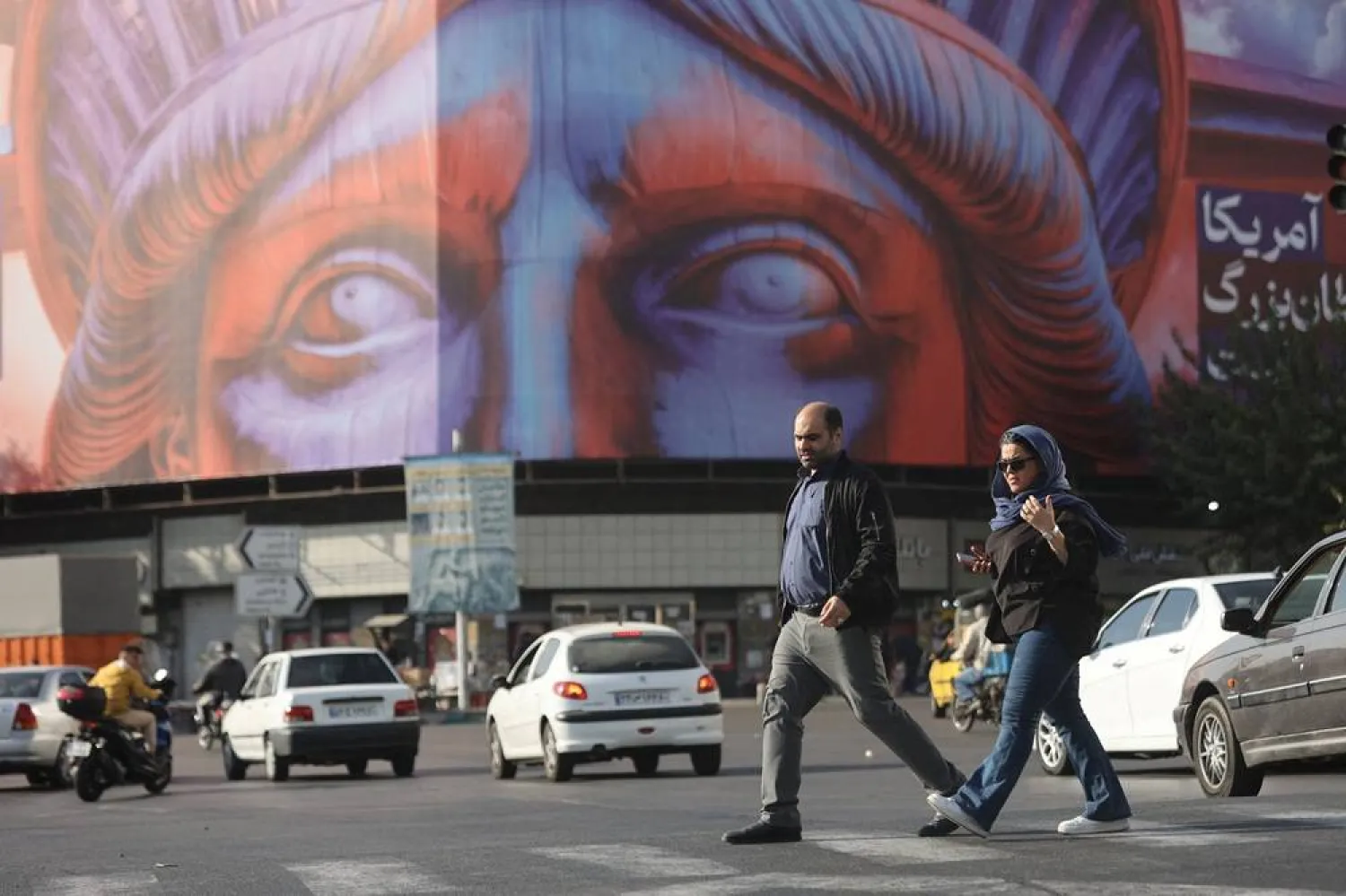
People walk past an anti-US billboard on a street in Tehran, Iran, November 5, 2025. Majid Asgaripour/WANA (West Asia News Agency) via Reuters
TT

'Hostage Diplomacy': Longstanding Iran Tactic Presenting Dilemma for West

People walk past an anti-US billboard on a street in Tehran, Iran, November 5, 2025. Majid Asgaripour/WANA (West Asia News Agency) via Reuters

Iran since the revolution has employed the tactic of arresting Westerners in a bid to extract concessions from its foes, in a strategy of "hostage diplomacy" that has long presented Europe and the United States with a dilemma, observers say.

Iranian authorities this week released two French nationals, Cecile Kohler and Jacques Paris, from jail in Tehran after more than three years.

They had been convicted on charges of espionage, but their families said they were innocent tourists unwittingly caught up in a wider game being played out between Tehran and the West.

France described the pair, as well as several other French nationals detained in Iran who were recently released, as "state hostages". Over the last years, dozens of Europeans and Americans have been detained in similar circumstances.

The strategy has long antecedents, going back to the seizure of the US embassy in Tehran in November 1979 by radicals in the wake of the revolution, which saw dozens of Americans held for 444 days into early 1981.

"Iran has pursued hostage diplomacy since the founding of the Islamic Republic in 1979," said Jason Brodsky, policy director of US-based think tank United Against Nuclear Iran.

"It uses hostages as pawns to extract concessions that it could not otherwise achieve from the United States and its allies," he added.

Tehran denies it has any strategy of hostage taking and all foreigners jailed are convicted after due legal process.

Such concessions include unfreezing assets or the release of Iranian nationals convicted in the United States, Europe and elsewhere on charges such as sanctions violations, assassination plots, or terrorism, he said.

"What the Iranian regime is practicing is state-sponsored hostage taking, also known as hostage diplomacy," added Daren Nair, a security consultant who has for years campaigned for detainees' releases worldwide.

For Clement Therme, an academic at France's Universite de Montpellier Paul-Valery, who closely follows the issue, the policy is "a pillar of Iranian foreign policy".

"Over time, there are arrests and releases, during periods of rapprochement and tension. But it's the intensity that varies, and the practice continues."

The release of Kohler and Paris, who have yet to be allowed to return to France, came after France freed on bail Iranian woman Mahdieh Esfandiari, detained in Paris on charges of spreading terror propaganda.

Tehran had explicitly linked the two cases, although the French foreign ministry has declined to comment on any deal.

The release of Western nationals detained in similar circumstances over the last years was often timed with Tehran receiving something in return after painstaking and ultra-secret diplomacy.

The cases of several British citizens, including dual national Nazanin Zaghari-Ratcliffe, were linked to a payment owed by the UK to Iran for tanks ordered by the ousted shah that were never delivered. That debt was eventually settled and Zaghari-Ratcliffe and two other Britons were released in 2022.

In 2023, five Americans held in Iran, including the US-Iranian businessman Siamak Namazi who had been imprisoned for eight years, were released in a scheme that saw $6 billion of Iranian assets unfrozen in South Korea.

The release of British-Australian academic Kylie Moore-Gilbert by Iran in 2020 came after Thailand freed three Iranian men jailed over a 2012 bomb plot.

But despite the recent releases, others remain held by Tehran, including Swedish-Iranian academic Ahmadreza Djalali, sentenced to death in 2017 on espionage charges his family vehemently rejects.

British couple Lindsay and Craig Foreman have been held in Iran since January on espionage charges after Iranian authorities seized the pair while they were on a round-the-world motorbike trip.

Brodsky said Europe and the United States should consider imposing a wholesale ban on travel to Iran by their nationals. But he acknowledged too that Washington and its allies had treated "this problem in a piecemeal manner" for too long.

"The US government should be working collectively with its allies to impose a range of multinational penalties on Iran the moment any hostage from these countries is taken by the Iranian regime -- this includes sanctions and diplomatic isolation," he said.


For Palestinian Citizens of Israel, a Historic Vote Borne of Fear and Frustration

Palestinian candidate Mansour Abbas, leader of the Ra'am party, holds his daughter as he places his vote at a polling station, on the day of Israel’s national election, in Maghar, Israel, October 27, 2026. REUTERS/Rami Shlush
TT

For Palestinian Citizens of Israel, a Historic Vote Borne of Fear and Frustration

Palestinian candidate Mansour Abbas, leader of the Ra'am party, holds his daughter as he places his vote at a polling station, on the day of Israel’s national election, in Maghar, Israel, October 27, 2026. REUTERS/Rami Shlush

For Palestinian citizens of Israel, it was a rare moment of political triumph.

Hundreds of thousands voted in record numbers, giving two Arab-led parties their largest-ever number of seats in Israel’s parliament.

Many boycotted past elections, seeing little point. But after years of their communities being demonized or neglected, some of Israel’s most marginalized citizens turned to the ballot box to fight back against the most right-wing government in the country’s history.

“We are here and we’re not on the sidelines,” declared Mansour Abbas, leader of the Ra'am party, as supporters cheered in a wedding hall Tuesday night, watching the exit polls.

The surge makes them a major political force that could enable opposition parties to assemble a coalition to oust Prime Minister Benjamin Netanyahu.

But the question is whether Netanyahu’s main rival, Gadi Eisenkot, and other opponents will ally with them. Only once has an Arab-led party ever served in an Israeli government. During the campaign, Netanyahu had accused his main opponents of planning to form a coalition with them, which Eisenkot denied.

Netanyahu and his allies are now turning up the anti-Arab rhetoric even further, making unproven claims that foreign powers bribed voters to back Arab-led parties. In a Thursday post on X, Netanyahu warned against any party forming a government with them, saying it would lead to the "Islamization of Israel.”

Palestinian grievances fueled the surge

More than 800,000 people on Tuesday voted for Ra’am and the Joint List, a coalition of three Arab-led parties, a more than 60% increase from the last elections in 2022, according to figures from the Central Election Committee.

The parties won 19 seats in Israel's 120-member Knesset, surpassing the previous record of 15.

Crowds packed polling places in Arab communities from the Negev Desert to the northern Galilee.

In Tarabin, a Bedouin village in the Negev, Netanyahu’s party had won majorities the past two elections. Turnout nearly doubled on Tuesday and Ra’am won 93% of the vote.

The northern town of Sakhnin had Israel’s highest voter turnout, at 87%. Mayor Mazen Ghnaim said voters saw it as an emergency measure to fight rising violent crime in Arab communities and incitement by Netanyahu's far-right allies.

“I want to protect my constituents from being killed, my children from being attacked at their universities and Arab doctors getting attacked at hospitals,” said Ghnaim, a Ra'am supporter, referring to recent incidents of anti-Arab violence.

The parties worked hard to overcome past reluctance to vote among Palestinians, who have long felt ignored in the halls of power. They held community meetings in cities and towns that Jewish-led parties mostly ignored. A grassroots movement went door-to-door in Bedouin villages to encourage women to vote.

A reaction to Israel's most far-right government ever Voters and candidates said their heightened participation did not reflect faith in Israeli democracy — it was a sign of desperation to unseat Netanyahu.

Two of his far-right allies, Itamar Ben Gvir and Bezalel Smotrich, are responsible for some of Israel’s most extreme policies and anti-Arab incitement.

Ben Gvir, the national security minister, raised alarm on Election Day over Arab turnout, telling his supporters, “If you want this country to remain Jewish and Zionist ... then get out and vote!”

The rhetoric, also echoed by Netanyahu and Smotrich, may have only galvanized Arab voters.

“We see the government going from bad to worse,” 52-year-old Awni Zoabi said after voting in Nazareth. “We want to live, we want a future for our children, and we want a future for ourselves.”

The parties offer different visions Palestinians who managed to stay in Israel after the 1948 war surrounding its creation — when hundreds of thousands were expelled or fled — today, along with their descendants, make up more than 20% of the population. They have Israeli citizenship, including the right to vote, but also feel deep solidarity with Palestinians in Gaza and the West Bank.

Ra'am and the Joint List both campaigned on combating crime and securing investment for Arab communities. But they offered different visions for how to approach the wider conflict.

Ra’am made the advantages of joining a coalition government central to its pitch to voters and said little that could alienate potential Jewish allies. It placed a Jewish former police official second on its candidate list.

In contrast, members of the Joint List called Israel’s campaign in Gaza a genocide and compared the occupation of the West Bank to apartheid South Africa. Most Jewish Israelis ardently reject both accusations.

“People are clever enough to see what’s happening. Of the two options, one is proposing a genocide, and the other is proposing apartheid. These are the choices: bad or worse,” said Sami Abou Shehadeh, the leader of one of the slate’s parties.

Strong showing doesn't guarantee a role in government

Mainstream Israeli parties have long resisted partnering with Arab-led parties elected to the Knesset, portraying them as threats to Israel’s Jewish character or questioning their loyalty to the state.

Netanyahu’s opponents welcomed Ra’am into a short-lived coalition government in 2021, in return offering investment in Arab communities and legal status for unrecognized Bedouin villages facing the threat of demolition.

The Islamist party's inclusion broke a longstanding taboo and gave it newfound political influence.

But given Israel's rightward shift, it will be difficult for Eisenkot to maintain support if he partners with Arab-led parties this time, said Tamar Hermann, senior research fellow at the Israel Democracy Institute.

Israel, she said, has been “moving away from a liberal democracy and moving toward an ethnic democracy where one ethnicity has advantages over others.”

Ra’am and the Joint List could handily give Eisenkot the numbers needed to form a government. Both have expressed openness to anything that removes Netanyahu, including abstaining from a Knesset leadership vote to lower the threshold Eisenkot would need to win a majority.

But in public, rather than court them, Eisenkot has set conditions, including that they profess that Israel is a Jewish and democratic state and declare Hamas a terrorist organization “to be demolished.”

Leaders of both parties have condemned Hamas’ Oct. 7, 2023, attack on Israel but have balked at labeling the group a terrorist organization, in part because it would appear to justify Israel's devastating campaign in Gaza. Abbas acknowledged Israel as a Jewish state in 2021, while some Joint List leaders have questioned whether a country can be both democratic and privilege members of one religion.

The conditions of any such partnership are unclear

Abbas said Tuesday that he was confident Ra'am would join a government. But his party did not respond to questions this week about whether it would accept Eisenkot’s conditions or what its own terms were.

Yousef Jabareen, the Joint List’s leader, told The Associated Press on Wednesday he had not yet spoken to Eisenkot but was ready for talks. He said parties on his slate had not agreed on their conditions, but hoped for protections and equality for Palestinian citizens, and promises to revive the peace process.

Above all, he recognized the desire to see Netanyahu gone.

“We have promised our community to do our best to get rid of this fascist government,” Jabareen said.


What to Know about the Impacts of Flávio Bolsonaro’s Move from Brazil to the US

(FILES) WASHINGTON, DC - MARCH 19: US President Donald Trump and Brazilian President Jair Bolsonaro participate shake hands after a joint news conference at the Rose Garden of the White House March 19, 2019 in Washington, DC. President Trump is hosting President Bolsonaro for a visit and bilateral talks at the White House today. (Photo by MARK WILSON / GETTY IMAGES NORTH AMERICA / AFP)
TT

What to Know about the Impacts of Flávio Bolsonaro’s Move from Brazil to the US

(FILES) WASHINGTON, DC - MARCH 19: US President Donald Trump and Brazilian President Jair Bolsonaro participate shake hands after a joint news conference at the Rose Garden of the White House March 19, 2019 in Washington, DC. President Trump is hosting President Bolsonaro for a visit and bilateral talks at the White House today. (Photo by MARK WILSON / GETTY IMAGES NORTH AMERICA / AFP)

Flávio Bolsonaro is now in Miami after fleeing to the US following his stunning defeat to Luiz Inácio Lula da Silva in Brazil’s presidential elections.

Bolsonaro has refused to concede and has positioned himself as the “leader of Brazil” while declaring that there was electoral fraud, without providing evidence. In a letter on Wednesday, the senator for Rio de Janeiro said he relocated to the US because he is the victim of political and judicial persecution.

The departure of the 45-year-old ally of US President Donald Trump from Brazil days after losing the runoff vote is sending shock waves across Brazil’s right and reverberating across the region, and it may spell more trouble for relations between Washington and Brasilia.

Here’s what to know about the possible impacts of Bolsonaro’s exodus from Brazil.

The shake-up of Brazil’s right

Bolsonaro has promised to lead the opposition to Lula from abroad. “I will say what you cannot say, and I will assume the risks you cannot take,” he said in a letter on Wednesday, addressing himself to political representatives of his party.

But Bolsonaro’s move to Miami complicates that vow, analysts say, leaving a power vacuum on the Brazilian right, which had united around Flávio’s presidential bid. His father, former President Jair Bolsonaro, appointed him as his political heir last December. The elder Bolsonaro is serving a 27-year sentence for attempting a coup.

“Flávio’s departure, along with the difficulty of directing the process from a distance and all the criticism he is likely to face for saying he wouldn’t flee and then fleeing, is likely to weaken him,” said Carlos Melo, a political-science professor at Insper university.

But as a political force, the right may lose neither influence nor impact following his departure due to its gains in Congress, said Luciana Santana, a political scientist at the Federal University of Alagoas.

“The group in Congress retains instruments to block proposals, negotiate with government and dispute the public agenda,” Santana said.

Impact on the global far right A Bolsonaro win would have aligned Brazil with many of its regional neighbors, where conservatives have swept to power in seven presidential elections in 18 months.

Across much of Latin America, voters fed up with rising crime have rewarded presidential candidates promising to restore order. From Peru’s Keiko Fujimori to Colombia’s Abelardo de la Espriella, newly elected conservatives have courted Trump while taking their cues from El Salvador’s President Nayib Bukele, whose sweeping gang crackdown has sharply reduced homicides at the cost of mass arrests and suspended civil liberties.

Bolsonaro’s defeat is a setback for the far-right in the region and beyond, as it stops its ascension to the presidency of an economic powerhouse in the region that has significant diplomatic weight, said Santana.

But Lula’s win will not necessarily translate into the overall weakening of the movement, she said. As well as the gains in Congress, Flávio received nearly 60 million votes, indicating the competitiveness of the movement in Brazil.

Beyond Brazil’s borders, the international repercussions of Flávio’s flight depend on how the episode will be interpreted.

“Bolsonaro’s escape can be used by international networks as a symbol of alleged persecution. This could mobilize those who most strongly identify with the movement,” said Santana.

Tense relations between Washington and Brasilia

As congratulations poured in from Brazil’s allies and rivals around the world, Trump suggested Monday, without providing evidence, that Lula’s reelection was “rigged.”

But when asked about Bolsonaro’s assertion on Wednesday that he was the “rightful president-elect of Brazil” — a term the defeated candidate later softened to “leader of Brazil” — the US president said he would not comment. Instead, Trump said he has given Bolsonaro a “pass” to come into the country.

“I won’t get involved,” Trump said, before repeating his claim that the election was “very strange.”

Lula’s win cements Latin America’s most populous country and largest economy as a counterweight to Washington and limits Trump’s drive to tighten his grip on the Western Hemisphere.

Lula has championed Brazil’s long tradition of nonalignment, cultivating ties with competing powers. His government deepened trade ties with China and sought greater global influence through BRICS, a group of emerging economies.

While Bolsonaro’s presence in the US adds “a new layer of problems to the already complicated bilateral relationship,” it is unlikely to be decisive, said Oliver Stuenkel, a political scientist and researcher at the Carnegie Endowment think-tank.

While there will now be two Bolsonaro brothers potentially lobbying the US government on behalf of specific policies vis-a-vis Brazil, whether Washington heeds any such calls remains to be seen, Stuenkel said.

“Either Trump will pursue a pragmatic stance and basically recognize that US pressure to elect Flávio failed (...) or there will continue to be continued friction,” he said.


Takeaways From Israel’s Inconclusive Election

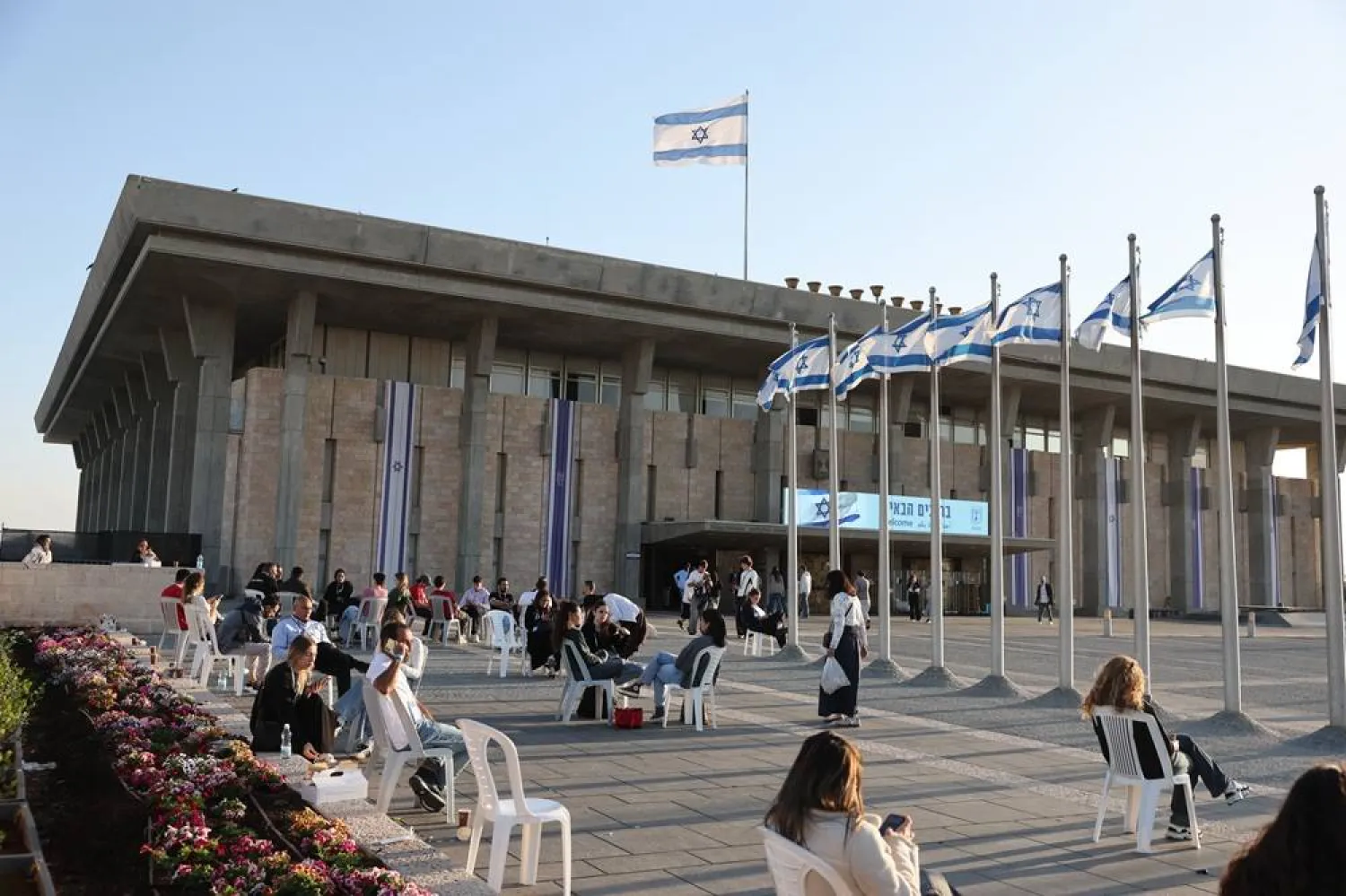
People sit outside the Israeli parliament Knesset in Jerusalem, 28 October 2026. (EPA)
TT

Takeaways From Israel’s Inconclusive Election

People sit outside the Israeli parliament Knesset in Jerusalem, 28 October 2026. (EPA)

Israelis faced political uncertainty Wednesday after no clear winner appeared to have emerged from a high-turnout election. The path to forming a government is fraught for Prime Minister Benjamin Netanyahu and his main opponent, and another round of elections cannot be ruled out.

The first elections since Hamas' Oct. 7, 2023, attack were seen as a pivotal moment in Israel's history, serving both as a referendum on Netanyahu's nearly unbroken 17-year rule and a choice between different visions for the country's future.

The initial results show a deeply divided electorate with multiple fault lines.

Netanyahu lost support but could remain in office. His main opponent, former military chief Gadi Eisenkot, would most likely have to partner with Arab-led parties to unseat him, a politically costly move that could alienate other opposition factions.

They could also partner with Netanyahu in a broad-based unity government, but that would be seen as a major betrayal by many of their voters after they put his ouster at the heart of their campaigns.

Final, official results are expected on Thursday or Friday, but there will likely be weeks of negotiations before a prime minister is declared — or new elections are called.

Here are the main takeaways:

Netanyahu is down but not out

Initial results show Netanyahu's religious and ultranationalist coalition falling short of a parliamentary majority of 61 seats, after reaching a peak of 68 seats in the previous parliament. Netanyahu's right-wing Likud also appears to have been whittled down from 32 seats to around 27.

That could reflect growing disillusionment with his long rule, anger at his handling of the Oct. 7 attacks and their aftermath, and his support for the exemption of ultra-Orthodox Jews from military service, an intensely divisive issue as the country is embroiled in multiple wars.

But Likud still appears to have emerged as the largest party, putting Netanyahu in the best position to be tasked first with forming a government.

He would need support from at least one opposition party, or several defectors from that side, to rule. Most have promised not to partner with Netanyahu, but the Israeli leader, a savvy political operator, could offer them concessions. He is also likely to argue that a broad-based government under his leadership is preferable to one relying on Arab-led parties — or another round of elections.

He can already claim a victory of sorts by having retained much of his support even after the deadliest security breakdown in Israel's history unfolded on his watch.

Netanyahu “manages to overcome situations that I can’t see anyone else managing to overcome,” said Tamar Hermann, senior research fellow at the Israel Democracy Institute, a Jerusalem think tank. “Politically, he is a magician.”

The opposition faces an uphill battle

Initial results indicate that parties opposed to Netanyahu won a parliamentary majority. But they include Arab-led factions that have long been politically sidelined, and which some Jewish-led parties have refused to partner with.

In the face of “a politics of supremacy, racism and exclusion, we are offering a totally different alternative,” Yousef Jabareen, the head of the Arab Joint List, said on X. “The change comes through Jewish-Arab partnership, a true and equal partnership. Nothing more, nothing less.”

Only one Arab party has ever joined an Israeli governing coalition, in 2021, and that government only lasted about 18 months. The level of distrust is far higher after Oct. 7 and the resulting wars. Netanyahu is likely to exploit that by casting any partnership with Arab-led parties as illegitimate or treasonous.

Without the Arabs, Eisenkot and his Jewish allies have no clear path to forming a coalition to unseat Netanyahu, and another round of elections might further weaken their hand.

Tens of thousands of Israelis who flew in for this election may not return for another one, and Netanyahu would stay on as caretaker prime minister, giving him a platform to attack his opponents and try to expand his own coalition.

That leaves the prospect of forming a government with Netanyahu — after a campaign in which they blamed him for the failures surrounding the Oct. 7 attack, portrayed him as a threat to Israel's democratic institutions and highlighted his ongoing corruption trial.

Arab parties' success could make it harder to partner with them

The Arab-led parties represent Palestinians with Israeli citizenship, who make up about 20% of the country’s population. Descendants of Palestinians who remained in Israel after its creation in 1948, they are entitled to vote and serve in parliament.

While they hold senior roles in many sectors of Israeli society, they face discrimination, and many Jewish Israelis view them with suspicion because of their general support for the Palestinian cause.

Surging Arab turnout, driven in part by disgust at Netanyahu's far-right allies, may have delivered a historic victory for Arab-led parties, who could win around 19 seats in the 120-member Knesset.

That would give them significant power in any partnership with Eisenkot — potentially making such an alliance less likely. The opposition might also have to partner with hard-line Arab factions that are even more widely rejected among Jewish Israelis.

The results do little to assuage Israel's internal divisions

The elections were an inflection point for Israel after three years of war. But they also highlighted the same divisions that have roiled the country for decades.

Netanyahu's coalition, made up of ultranationalist and ultra-Orthodox parties, supported strengthening Israel's Jewish character. It pushed for more settlement construction in the occupied West Bank and allowed for military draft exemptions for ultra-Orthodox Jews. It also attempted to push through an overhaul of the country's judiciary in 2023 that drew mass protests.

Eisenkot's camp promoted a vision where Israel's Jewish character lives in harmony with its liberal democratic ideals. It promised honest leadership and accountability for Israel's Oct. 7 failures, vowed to bolster the judiciary and end the military draft exemptions. They also promised to fix Israel's international standing, which has deteriorated because of the Gaza war and settler violence in the West Bank.

The apparently stalemated results suggest Israel's divisions are deeper than ever.