


KSrelief Aims to Deliver Aid to El-Fasher Displaced

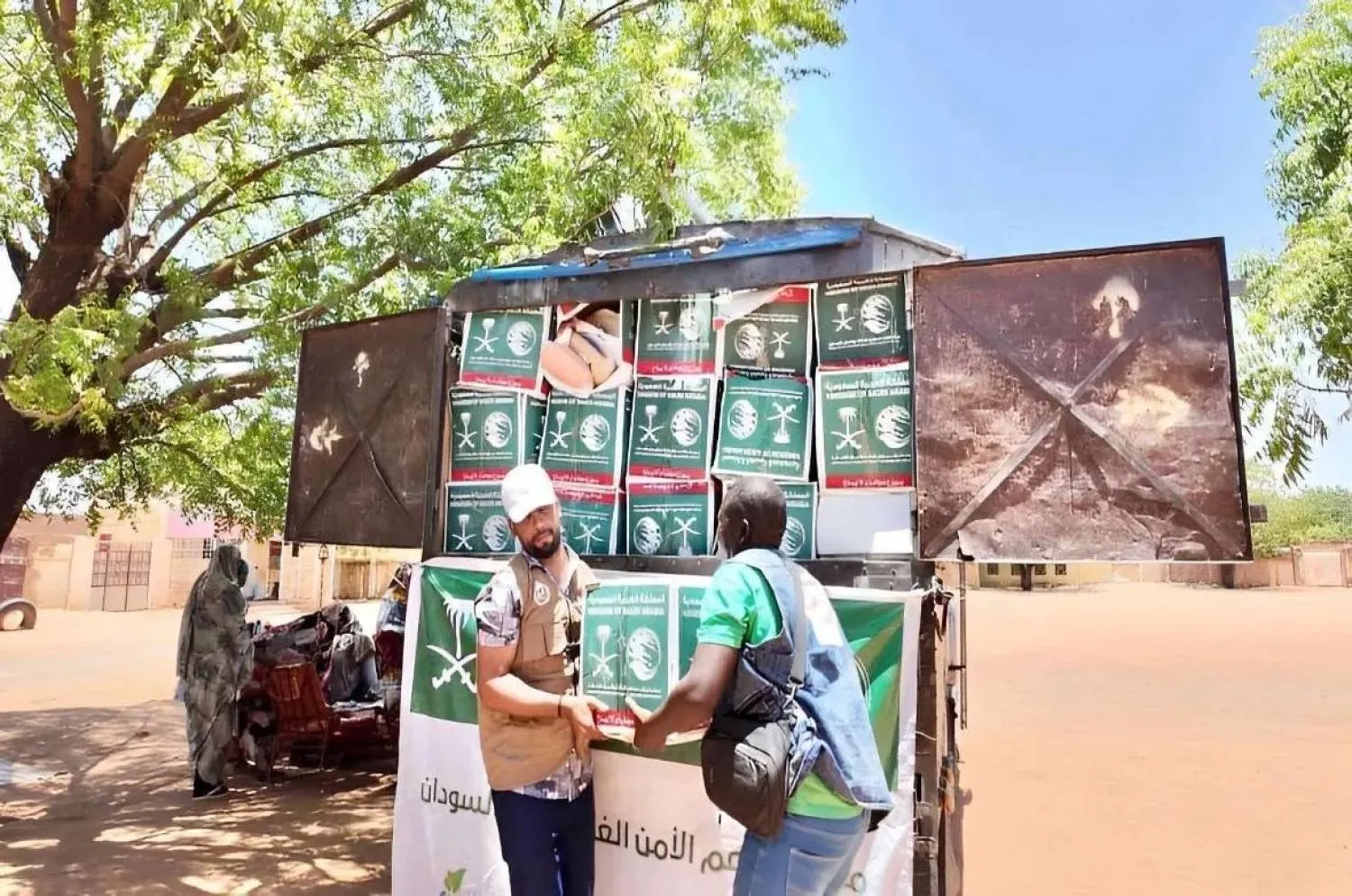
KSrelief distributes aid in Um Rawaba, North Kordofan, to boost food security (SPA)
TT

KSrelief Aims to Deliver Aid to El-Fasher Displaced

KSrelief distributes aid in Um Rawaba, North Kordofan, to boost food security (SPA)

The King Salman Humanitarian Aid and Relief Center (KSrelief) said it continues to implement a response plan to deliver aid across Sudan’s war-affected states.

Fahad Al-Osaimi, Director of Emergency Relief at KSrelief, told Asharq Al-Awsat that the center is coordinating with UN organizations that have access to the city of El-Fasher.

He said the center is providing humanitarian assistance to those displaced from El-Fasher in the areas where they have sought refuge, while also supporting Sudan’s Ministry of Health with medicines and equipment to ease the impact of the crisis on Sudanese civilians.

Al-Osaimi said KSrelief was awaiting further information on the situation in El-Fasher, noting that the center functions as a donor agency, while implementation on the ground is carried out by its partners.

He added that KSrelief conducts monitoring visits to affected areas when security conditions allow, while partner organizations oversee operations in areas the center cannot reach.

New figures showed that Saudi Arabia’s total humanitarian and relief support for Sudan since the outbreak of the conflict has exceeded $134 million as of early November.

Al-Osaimi noted that Saudi Arabia was among the first to assist those in need when the crisis began, saying the center had dispatched 55 ships and 13 aircraft carrying thousands of tons of medical, food, and shelter aid, in addition to medical campaigns aimed at alleviating the suffering of Sudanese citizens.

He said KSrelief’s assistance targets key sectors affected by the conflict, including food security, health, water and sanitation, agriculture, and education.

KSrelief has also distributed food aid in several areas across North Kordofan State, according to the Saudi Press Agency (SPA).

Al-Osaimi highlighted Saudi Arabia’s successful evacuation efforts during the early stages of the nearly two-and-a-half-year conflict, when 8,455 people were evacuated, including 404 Saudi citizens and 8,051 people of various nationalities.

He said Saudi Arabia also helped several friendly countries evacuate their nationals, numbering more than 11,184 people.

Public Response

The Saudi public’s donations to the national campaign to aid the Sudanese people, organized through the Sahem platform, have surpassed $19.4 million, according to recent official estimates.

The campaign, launched in May 2023 under the directives of King Salman bin Abdulaziz and Crown Prince and Prime Minister Mohammed bin Salman, has drawn contributions from more than 537,000 donors to date.

Saudi Condemnation of Atrocities in El-Fasher

Last week, Saudi Arabia expressed deep concern and condemnation over the grave human rights violations committed during recent attacks by the Rapid Support Forces (RSF) on the Sudanese city of El-Fasher.

In a statement, the Saudi Ministry of Foreign Affairs urged the RSF to fulfill its duty to protect civilians, ensure the delivery of humanitarian aid, and comply with international humanitarian law as stipulated in the Jeddah Declaration on the Commitment to Protect Civilians in Sudan, signed on May 11, 2023.

Call for Dialogue

In the same statement, Riyadh called for a return to dialogue to achieve an immediate ceasefire, reaffirming its commitment to Sudan’s unity, security, and stability, the preservation of its legitimate institutions, and its rejection of foreign interference that prolongs the conflict and exacerbates the suffering of the Sudanese people.

On Sunday, prosecutors at the International Criminal Court said they were gathering evidence of alleged mass killings and rapes in Sudan, some of which may amount to war crimes, after the RSF seized control of El-Fasher, the army’s last stronghold in the Darfur region of western Sudan.

Thousands of Sudanese civilians remain at risk in El-Fasher, the capital of North Darfur State, which the RSF captured on October 26, and in Bara, a strategic town in North Kordofan State, where large-scale displacement toward the city of El-Obeid has been reported.

Médecins Sans Frontières (Doctors Without Borders) warned on Saturday that thousands of civilians remain trapped in El-Fasher and face imminent danger following the RSF takeover.

Satellite images have revealed evidence of ongoing massacres in the capital of North Darfur.

Survivors who fled to the nearby town of Tawila reported mass killings, shootings of children in front of their families, and assaults and looting targeting civilians trying to escape.

The United Nations said more than 65,000 people have fled El-Fasher since Sunday, though tens of thousands remain trapped. Researchers at Yale University said recent satellite images show continuing signs of mass killings inside and around the city.



Al-Alimi Orders Closure of Illegal Prisons in Southern Yemen

The Port of Aden during sunset, in Aden, Yemen, October 20, 2024. (Reuters)
TT

Al-Alimi Orders Closure of Illegal Prisons in Southern Yemen

The Port of Aden during sunset, in Aden, Yemen, October 20, 2024. (Reuters)

Chairman of Yemen's Presidential Leadership Council Dr. Rashad al-Alimi ordered on Monday the closure of all illegal prisons and detention centers in southern Yemen.

The prisons are located in the governorates of Aden, Lahj and Dhaleh.

Al-Alimi met in the Saudi capital Riyadh with Tobias Tunkel, Germany’s Commissioner for the Middle East, Near East and North Africa, and German Ambassador to Yemen, Thomas Schneider, the state news agency Saba reported.

Al-Alimi ordered the immediate release of detainees who have been illegally imprisoned. He tasked the security and military agencies to coordinate with the Defense Ministry public prosecution to carry out the order.

He made the order amid accusations by rights groups that forces aligned with the dissolved Southern Transitional Council had run illegal jails.

Al-Alimi warned against supporting these illegal armed groups, saying backing them does not help in the fight against terrorism.

Security chaos and legitimizing weapons outside state control are the greatest threat to the security of Yemen, the region and international waterways, he cautioned.

Al-Alimi and the German delegation discussed the latest developments in Yemen in wake of the handover of military camps to the legitimate forces and the withdrawal of the STC.

He said the move will help consolidate internal stability and pave the way for normal work to resume at state institutions, the flow of aid and restore the international community's trust.


Sudan Paramilitary Strike on Southeastern City Kills 27

RSF fighters. (AFP file photo)
TT

Sudan Paramilitary Strike on Southeastern City Kills 27

RSF fighters. (AFP file photo)

Sudan's paramilitary Rapid Support Forces launched drones at an army base in the southeastern city of Sinja on Monday, killing 27 people, military and health sources told AFP.

Sinja, the capital of Sennar state, lies around 300 kilometers (180 miles) southeast of the capital Khartoum, along a strategic road connecting the national capital to the army-controlled east.

The strike comes a day after the army-aligned government announced its return to Khartoum after close to three years operating from its wartime base in the eastern city of Port Sudan.

Since April 2023, the war between the army and the RSF has killed tens of thousands of people, displaced 11 million internally and across borders, and created the world's largest displacement and hunger crises.

Sinjah had largely been spared the fighting since the army recaptured the area in late 2024 as part of a wider offensive that saw it later retake Khartoum.

The military source, speaking anonymously because they were not authorized to brief the media, said RSF drones "targeted the headquarters of the army's 17th Infantry Division" in Sinja.

Ibrahim al-Awad, the Sennar state health minister, said that the attack carried out by the RSF also wounded 73 people.

A security source told AFP on condition of anonymity that the attack targeted the army headquarters "during a meeting attended by military, security and government officials" from several eastern and central states.

One resident of Sinja told AFP that they "heard explosions and anti-aircraft fire".

The Sennar region had last been targeted by drones in October.

- Fragile return -

In the year following its recapture, more than 200,000 people returned to Sennar state, according to the United Nations' migration agency.

But the agency has warned many such returns across the country remain "fragile", often taking place in areas with damaged infrastructure and ongoing insecurity.

Along with the government, millions of civilians had fled Khartoum early in the war when RSF fighters quickly overran it.

Since the army regained control last year, around 1.2 million have gradually returned, according to the latest UN figures.

Reconstruction efforts are underway, but the RSF, which with its allies now rules around a third of the country, sporadically launches long-range drones deep into army-controlled territory, particularly targeting infrastructure.

The army and its government control Sudan's north, east and center.

The RSF now dominates the vast western region of Darfur and has pushed through the southern region of Kordofan, aiming to capture cities that would bring it closer to Khartoum.

With multiple cities under paramilitary siege, hundreds of thousands face mass starvation in Kordofan.

The UN has called the conflict a "war of atrocities", with both sides accused of targeting civilians.


Drone Strike Kills 3 in Gaza as Hamas Prepares to Transfer Governance to New Committee

 A tent camp for displaced Palestinians stretches across an area in Deir al-Balah, in the central Gaza Strip, Saturday, Jan. 10, 2026. (AP)
A tent camp for displaced Palestinians stretches across an area in Deir al-Balah, in the central Gaza Strip, Saturday, Jan. 10, 2026. (AP)
TT

Drone Strike Kills 3 in Gaza as Hamas Prepares to Transfer Governance to New Committee

 A tent camp for displaced Palestinians stretches across an area in Deir al-Balah, in the central Gaza Strip, Saturday, Jan. 10, 2026. (AP)
A tent camp for displaced Palestinians stretches across an area in Deir al-Balah, in the central Gaza Strip, Saturday, Jan. 10, 2026. (AP)

An Israeli drone strike on Monday killed three Palestinians who had crossed the ceasefire line near central Gaza’s Morag corridor, hospital officials said.

Israel’s military did not immediately respond to questions about the strike, which came as Gaza awaits an expected announcement this week of a “Board of Peace” to oversee its governance.

Hamas said it will dissolve its existing government once the new committee takes over the territory, as mandated under the US-brokered peace plan.

The Gaza Health Ministry reports that more than 440 people have been killed since Israel and Hamas agreed last October to suspend their two-year war. Since then each side has accused the other of violating the ceasefire, which remains in its initial stage as efforts continue to recover the remains of the final Israeli hostage in Gaza.

Israel’s military controls a buffer zone that covers more than half of Gaza, while the Hamas-run government retains authority over the rest.

Throughout the war, Israel has supported anti-Hamas groups, including an armed group in southern Gaza that claimed responsibility on Monday for the killing of a senior Hamas police officer in Khan Younis.

Lt. Col. Mahmoud al-Astal was gunned down in the Muwasi area, the Hamas-run Interior Ministry said in a statement.

Hamas spokesperson Hazem Kassem, in a post on Telegram on Sunday, called for a speeding up of the establishment of the Palestinian technocratic committee set to govern Gaza.

Hamas and the rival Palestinian Authority have not announced the names of who will sit on the committee and it remains unclear if they will be cleared by Israel and the US.

Officials say that Trump will announce his appointments to the Board of Peace in the coming days.

Under Trump’s plan, the board would supervise the new Palestinian government, the disarmament of Hamas, the deployment of an international security force, additional pullbacks of Israeli troops and reconstruction. The US has reported little progress on any of these fronts so far.

According to Turkish officials, Foreign Minister Hakan Fidan participated on Monday in a video conference with the US and others meeting to discuss “preparations for the second stage” of the ceasefire agreement. The talks, held as a continuation of the meeting in Miami at the end of December, also included officials from Egypt and Qatar.

Dozens of Palestinians, including medical workers, held a protest in Gaza City on Monday to demand the release of thousands of Palestinian prisoners still being held in Israeli prisons. The protest was organized by the Palestinian Prisoners Committee outside the building of the International Committee of the Red Cross in Gaza City.

Meanwhile, groups that advocate for Palestinian prisoners said that Israeli authorities have confirmed the death of a detainee from Gaza.

In a statement Sunday, the Prisoners’ Affairs Commission and the Palestinian Prisoner Society said that Hamza Abdullah Abdelhadi Adwan died in prison on Sept. 9, based on information the family received from the Israeli military.

Adwan, 67, a father of nine with serious health problems, had been detained at a checkpoint on Nov. 12, 2024. Two of his children were killed in the Gaza war.

Since the start of the war, 87 Palestinian detainees have died in Israeli prisons — including 51 from Gaza — according to the Palestinian Prisoners’ Affairs Commission. They said that more than 100 detainees — some not yet identified — had died of torture, starvation, medical neglect, and abuse.