


Musk Plans Tesla Mega AI Chip Fab, Mulls Potential Intel Partnership 

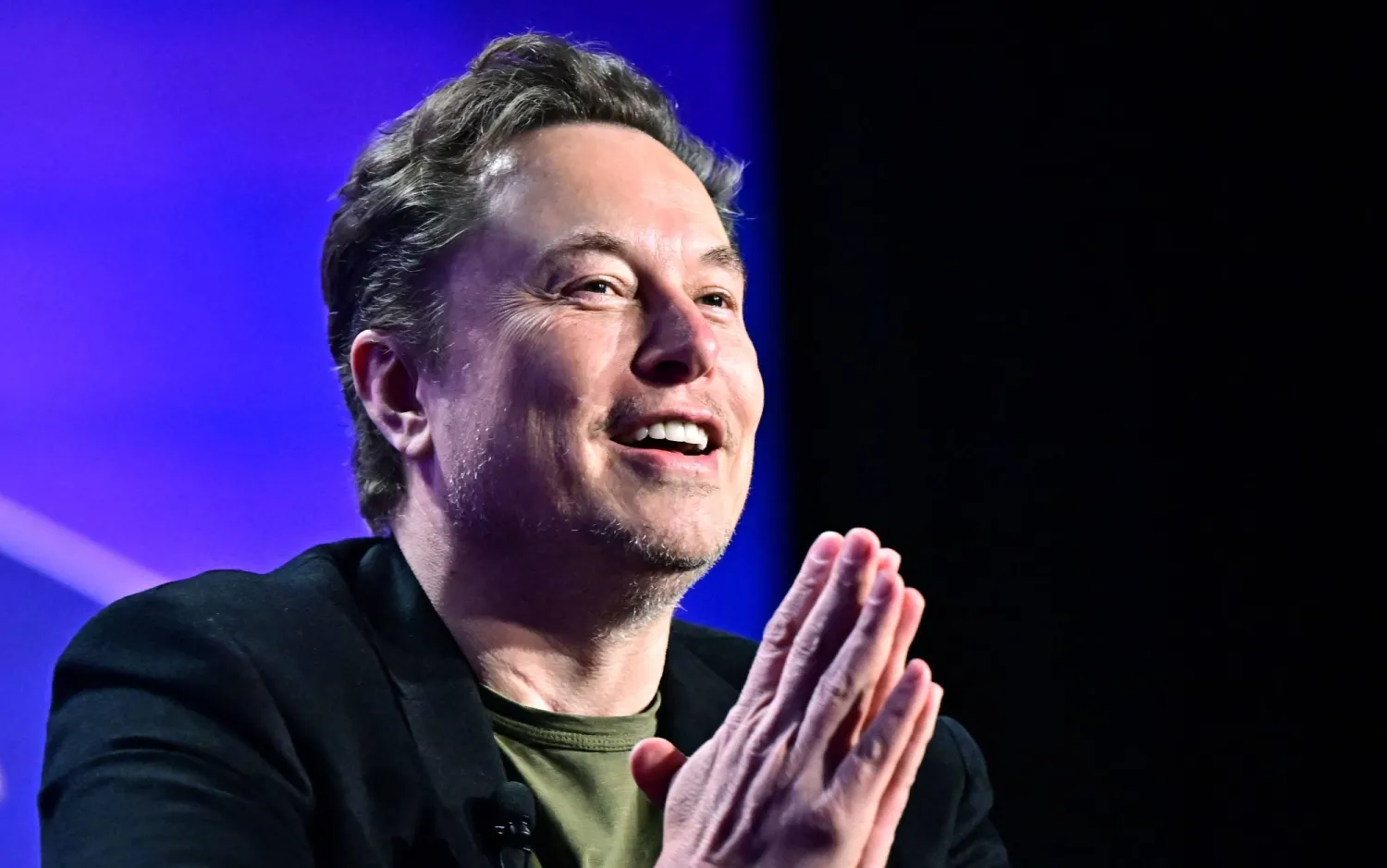
Tesla CEO Elon Musk speaks at the 27th annual Milken Institute Global Conference at the Beverly Hilton in Los Angeles on May 6, 2024. (AFP)
TT

Musk Plans Tesla Mega AI Chip Fab, Mulls Potential Intel Partnership 

Tesla CEO Elon Musk speaks at the 27th annual Milken Institute Global Conference at the Beverly Hilton in Los Angeles on May 6, 2024. (AFP)

CEO Elon Musk on Thursday said Tesla probably will have to build "a gigantic chip fab" to make artificial intelligence chips and publicly mused the EV maker could work with Intel.

Tesla is designing its fifth-generation AI chip to power its autonomous ambitions, and Musk at the company's annual meeting laid out potential manufacturing plans.

"You know, maybe we'll, we'll do something with Intel," Musk said to a cheering crowd of Tesla shareholders. "We haven't signed any deal, but it's probably worth having discussions with Intel."

Struggling US chipmaker Intel has its own chipmaking factories, but has lagged far behind Nvidia in the AI chip race. The US government recently took a 10% stake in Intel, which needs to find an external customer for its newest manufacturing technology. Intel shares popped 4% in after-hours trading on Musk's remarks.

Intel declined to comment.

Musk scored an important victory on Thursday as shareholders approved a $1 trillion pay package over the next decade, endorsing his vision of morphing the EV maker into an AI and robotics juggernaut.

Musk has teased the AI5 chip before and reiterated that Tesla was also partnering with Taiwan's TSMC and South Korea's Samsung. The AI chips power Tesla's autonomous driving systems, including the Full Self-Driving software. Tesla is currently on its fourth-generation chip.

A small number of AI5 units would be produced in 2026, with high volume production only possible in 2027, Musk said in an X post on Tuesday, adding that AI6 will use the same fabs but achieve roughly twice the performance with volume production mid-2028.

"Even when we extrapolate the best-case scenario for chip production from our suppliers, it's still not enough," he said on Thursday.

"So I think we may have to do a Tesla terafab. It's like giga but way bigger. I can't see any other way to get to the volume of chips that we're looking for. So I think we're probably going to have to build a gigantic chip fab. It's got to be done," he said.

Musk, who often talks about his vision for the company in abstract terms, did not offer details of how such a fab would be built, but he said that it would make at least 100,000 wafer starts per month. A wafer start is the measurement of the output of a semiconductor wafer plant.

He did say the chip would be inexpensive, power-efficient and optimized for Tesla's own software. This chip would probably consume about a third of the power used by Nvidia's flagship Blackwell chip, at 10% of the cost to make, Musk said.

"I'm super hardcore on chips right now as you may be able to tell," he said. "I have chips on the brain."



Adobe Shares Drop after CEO Exit Adds to AI-disruption Concerns

FILE PHOTO: Signage for Adobe is displayed at National Retail Federation (NRF) 2026: Retail's Big Show, in New York City, US, January 12, 2026. REUTERS/Kylie Cooper/File Photo
TT

Adobe Shares Drop after CEO Exit Adds to AI-disruption Concerns

FILE PHOTO: Signage for Adobe is displayed at National Retail Federation (NRF) 2026: Retail's Big Show, in New York City, US, January 12, 2026. REUTERS/Kylie Cooper/File Photo

Adobe's shares plunged 9% in premarket trading on Friday after the Photoshop maker said CEO Shantanu Narayen would step down after 18 years at the helm, unsettling investors already wary of AI-driven disruptions to the design software market.

The longtime CEO's exit comes at a critical juncture as Adobe works to reassure investors it can keep pace with sweeping changes brought by artificial intelligence in the software landscape.

It follows a broader slide in software stocks after fears that ⁠AI agents could ⁠supplant some traditional applications that led to a nearly $1 trillion rout in software stocks globally last month.

"The loss of an iconic leader at a time of peak uncertainty around the future of software more broadly, and the positioning of Adobe ⁠specifically in this new GenAI world is bound to further investor uncertainty and anxiety around the shares," said analysts at Morgan Stanley.

Adobe's shares are down about 23% so far this year, extending a slide that has stretched over the past two years.

The company, which makes Illustrator, Premiere Pro and other tools for creative professionals, is among a group of SaaS providers including Salesforce that have ⁠struggled to win ⁠new clients amid a wave of AI start-ups.

On Thursday, Adobe reported double-digit growth in total revenue and customer subscription segments in the first quarter, reflecting resilient spending on its product suite.

"After steering the Adobe ship through rough seas over the past several years, several data points from the most recent quarter suggest the captain (Narayen) may have brought this franchise into a safe harbor, from which it can continue to thrive," Morgan Stanley analysts said.


AI Agent 'Lobster Fever' Grips China Despite Risks

A man wears a lobster hat that represents the OpenClaw logo, an open-source AI assistant at the Baidu headquarters in Beijing on March 11, 2026. (Photo by ADEK BERRY / AFP)
TT

AI Agent 'Lobster Fever' Grips China Despite Risks

A man wears a lobster hat that represents the OpenClaw logo, an open-source AI assistant at the Baidu headquarters in Beijing on March 11, 2026. (Photo by ADEK BERRY / AFP)

Chinese entrepreneur Frank Gao used to spend long hours running his social media accounts but now outsources the chore to AI agent tool OpenClaw, which is taking the country by storm despite official warnings over cybersecurity.

OpenClaw, created in November by an Austrian coder, differs from bots like ChatGPT because it can execute real-life tasks such as sending emails, organizing files or even booking flight tickets.

"Since January, I've spent hours on the lobster every day," Gao told AFP, referring to OpenClaw's red crustacean mascot. "We're family."

After downloading OpenClaw, users connect it to existing artificial intelligence models of their choice, then give it simple instructions through instant messaging apps, as if to a friend or colleague.

The tool has fascinated tech circles worldwide but particularly in China, gripping tech-savvy companies and individuals keen to keep up with the next big thing in AI.

Hundreds of people queued at tech giant Baidu's Beijing headquarters this week for an OpenClaw event where engineers helped attendees set up their "little lobsters".

It was one of many similar meetups to experiment with the tool, which are drawing crowds from Shanghai to Shenzhen.

Some municipalities, including the eastern cities of Wuxi and Hangzhou, have pledged hundreds of thousands of dollars to support the adoption and development of OpenClaw and other AI agents.

But the lobster fever, as it has been dubbed, has also sparked security concerns.

"What's truly scary about agents like OpenClaw is this: once they have your digital keys, they can theoretically access all the services you've authorized, and can autonomously decide when to activate them," Gao warned.

"The attacker effectively gains a 'master key' to your digital identity," said the engineer, who has named his OpenClaw agent "Q" after his business name QLab.

- 'Use with caution' -

Chinese national cybersecurity authorities and Beijing's ministry of industry and IT have warned of the risks of OpenClaw hacks.

"Use intelligent agents such as 'lobster' with caution," national IT research institute expert Wei Liang advised government agencies, public institutions, companies and individuals in a message on state media.

The mixed signals of rolling out policy incentives while issuing warnings "reflects the authorities' cautious tolerance towards 'lobster fever'," Zhang Yi, founder of tech consultancy iiMedia, told AFP.

Austrian programmer Peter Steinberger, who built OpenClaw to help organize his digital life, was hired last month by ChatGPT maker OpenAI.

Meanwhile, a separate team of coders that made Moltbook, a Reddit-like pseudo social network where OpenClaw agents converse, are joining Meta.

Top Chinese tech companies have also been quick to get involved.

The likes of Tencent, Alibaba, ByteDance and Baidu are offering simplified installation and affordable coding plans to help users who want to host OpenClaw agents on their cloud servers -- seen as safer than downloading it onto a personal computer.

In recent days AI companies big and small have also launched their own competing agent tools, such as ByteDance's ArkClaw, Tencent's WorkBuddy and Zhipu AI's AutoClaw.

The relatively low cost for cloud deployment of OpenClaw in China, subsidised by big tech firms, is one factor behind its popularity, said Gao Rui, a senior product manager at Baidu AI Cloud.

"For most people, it's likely just the price of a cup of coffee... which is why people will probably be keen to give it a try," she told AFP.

- FOMO -

Fear of missing out is also a big driver behind OpenClaw's success in China, said Chen Yunfei, an AI developer who created a popular online guide for using the tool.

"Most Chinese people are quite studious and forward-looking, so when confronted with new things, they might have stronger feelings" of so-called FOMO, he said.

Xie Manrui, a programmer whose latest project is a visualized system for managing OpenClaw agents, said the tool had arrived "at the right moment" to change perceptions in China of what AI can do.

"For many, AI is merely a clever chatbot that talks all the time but cannot act," he said.

Either way, it has piqued the curiosity of many young users.

At the Baidu event in Beijing, 24-year-old college student Zheng Huimin was waiting patiently in line with her friends.

"I'd like to give it a go to see what tasks it can actually help me accomplish," she told AFP.


EU Spokesperson: X Submits Remedies Relating to Blue Check Mark

FILE PHOTO: A 3D-printed miniature model of Elon Musk and the X logo are seen in this illustration taken January 23, 2025. REUTERS/Dado Ruvic/Illustration/File Photo
TT

EU Spokesperson: X Submits Remedies Relating to Blue Check Mark

FILE PHOTO: A 3D-printed miniature model of Elon Musk and the X logo are seen in this illustration taken January 23, 2025. REUTERS/Dado Ruvic/Illustration/File Photo

Elon Musk's social media platform X has submitted remedies in relation to its blue checkmark verification feature following a fine of 120 million euros ($137.63 million), a European Commission spokesperson said on Friday.

EU tech regulators fined X in December for breaching online content rules, the first such action under a landmark legislation that drew criticism from the US government.

Here are the details:

The Commission will ⁠now carefully assess ⁠the proposed remedies, European Commission spokesperson Thomas Regnier added, without giving details.

X did not immediately respond to Reuters requests for comment.

The EU action against X had followed a two-year-long investigation under ⁠the bloc's Digital Services Act (DSA), which requires online platforms to do more to tackle illegal and harmful content.

The European Commission in July 2024 had charged X with deceiving users, saying that the blue checkmark does not correspond to industry practices and that anyone can pay to get a "verified" status.

Bloomberg News first reported on ⁠Thursday ⁠that X has agreed to change its verification mechanism in the European Union.

The blue checkmark had previously indicated that an account belonged to a public figure whose identity was verified, but Musk changed it to indicate it belonged to a paid subscriber after acquiring X, formerly known as Twitter, in 2022.