


Lebanon: Israel Changes ‘Rules of Engagement’, Drops ‘Civilian Immunity’ Principle

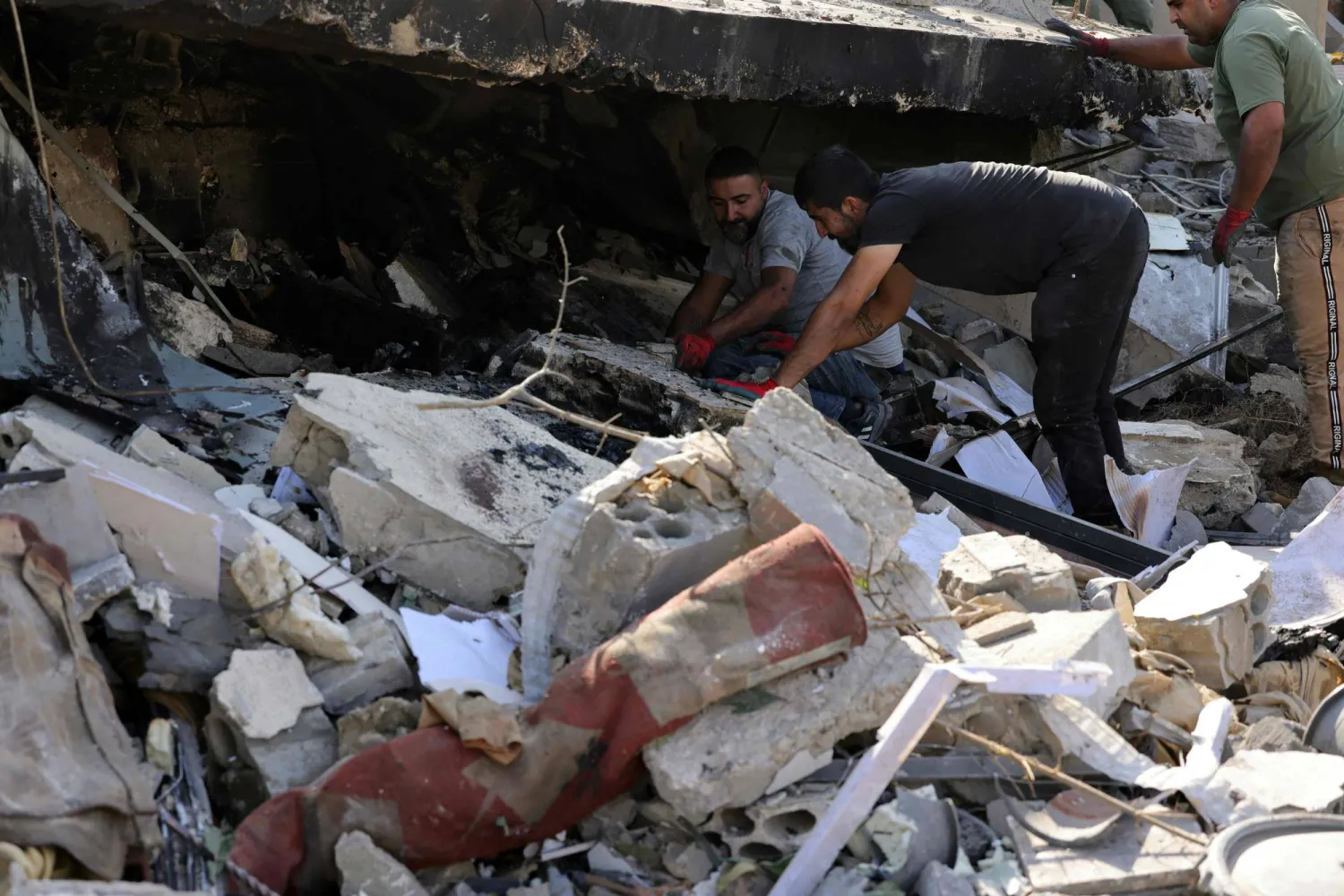
Workers remove the rubble from a site targeted overnight by an Israeli airstrike in the southern Lebanese village of Et Taybeh, on November 7, 2025. (Photo by Rabih DAHER / AFP)
TT

Lebanon: Israel Changes ‘Rules of Engagement’, Drops ‘Civilian Immunity’ Principle

Workers remove the rubble from a site targeted overnight by an Israeli airstrike in the southern Lebanese village of Et Taybeh, on November 7, 2025. (Photo by Rabih DAHER / AFP)

Israeli strikes in southern Lebanese towns and villages are intensifying at an unprecedented pace, signaling a shift in the established ‘rules of engagement’.

After previously focusing on open areas, Israeli air raids have now moved deep into residential zones in Lebanon, reviving scenes of evacuation warnings and mass displacement.

On Thursday, thousands of residents fled their homes following evacuation orders, soon followed by airstrikes that hit populated neighborhoods, vehicles and residential areas in Lebanon’s south.

On Friday, tense calm was witnessed in but the Israeli strikes resumed midday on Saturday, killing two brothers, from the town of Shebaa, in a strike that targeted their vehicle in Rachaya al-Wadi.

Seven other people were wounded when two guided missiles struck a car near Salah Ghandour Hospital in the city of Bint Jbeil, followed by a third airstrike that hit another vehicle in the town of Baraashit in the Nabatieh region.

These incidents mark Israel’s escalating pattern of attacks, which in recent months have increasingly penetrated populated areas.

A Shift in the Rules of Engagement

In the past, Israel tended to target military locations only when they were clearly separated from civilian areas, to minimize collateral damage.

Today, that principle appears to be collapsing with strikes hitting cars inside neighborhoods, homes being destroyed at dawn, and civilian gatherings coming under fire. This shift reflects a strategic decision by Tel Aviv aimed at increasing the social and human cost of popular support for Hezbollah and undermining the social cohesion of communities along the front lines.

Objectives Behind the Escalation

In remarks to Asharq Al-Awsat, retired Brigadier General Saeed Qazzah said Israel’s overall strategy has not changed, stressing that its constant goal remains “to subdue Hezbollah and the Axis of Resistance - from Iran to Iraq, Yemen, Palestine, and finally Lebanon.”

He said that Israel’s foremost priority is to ensure the security of its settlers in northern Israel, relying on a tactic of concentrated strikes against what it deems military targets - including fighters, combat equipment, and weapons depots -“even if these are located in populated areas, and regardless of civilian presence or casualties, which it considers collateral damage.”

Qazzah added that “this behavior is nothing new; we saw it clearly in Gaza, where Israel showed little regard for civilian lives.”

He affirmed that Israel is working to intensify its strikes in the coming two months, predicting “an increase in assassinations and targeted attacks against Hezbollah members and facilities - even within civilian gatherings.”

He added that Israel’s goal is “to weaken support for Hezbollah and prompt segments of its base to question the value of continuing down this path.”

“Israel does not concern itself with civilian casualties, and no one holds it accountable,” underscored Qazzah, noting that it will continue striking what it considers military targets anywhere in Lebanon as long as Hezbollah has not clearly committed to the government decision issued on August 5 regarding the state’s monopoly on arms.

Escalatory Israeli Rhetoric and Intelligence Warnings

This military development is accompanied by a hardline discourse in Israel. Hebrew media have reported growing concern over Hezbollah’s expanding capabilities in northern Lebanon, noting that “the Israeli army’s restraint so far from striking Beirut may not last if reinforcement operations continue.”

Israeli Haaretz newspaper cited intelligence reports warning that “Hezbollah is working to restore its capabilities, which could prompt the Israeli army to expand its operations to prevent future risks.”

Other reports indicated that “Western assessments observe a partial recovery of Hezbollah’s supply networks via Syria and Iraq, while the Lebanese army faces challenges in preventing the group from rebuilding its combat infrastructure.”



Rescue Teams Search for Survivors in Building Collapse that Killed at Least 2 in Northern Lebanon

A Lebanese flag is pictured, in the aftermath of a massive explosion, in Beirut's damaged port area, Lebanon August 17, 2020. REUTERS/Hannah McKay
TT

Rescue Teams Search for Survivors in Building Collapse that Killed at Least 2 in Northern Lebanon

A Lebanese flag is pictured, in the aftermath of a massive explosion, in Beirut's damaged port area, Lebanon August 17, 2020. REUTERS/Hannah McKay

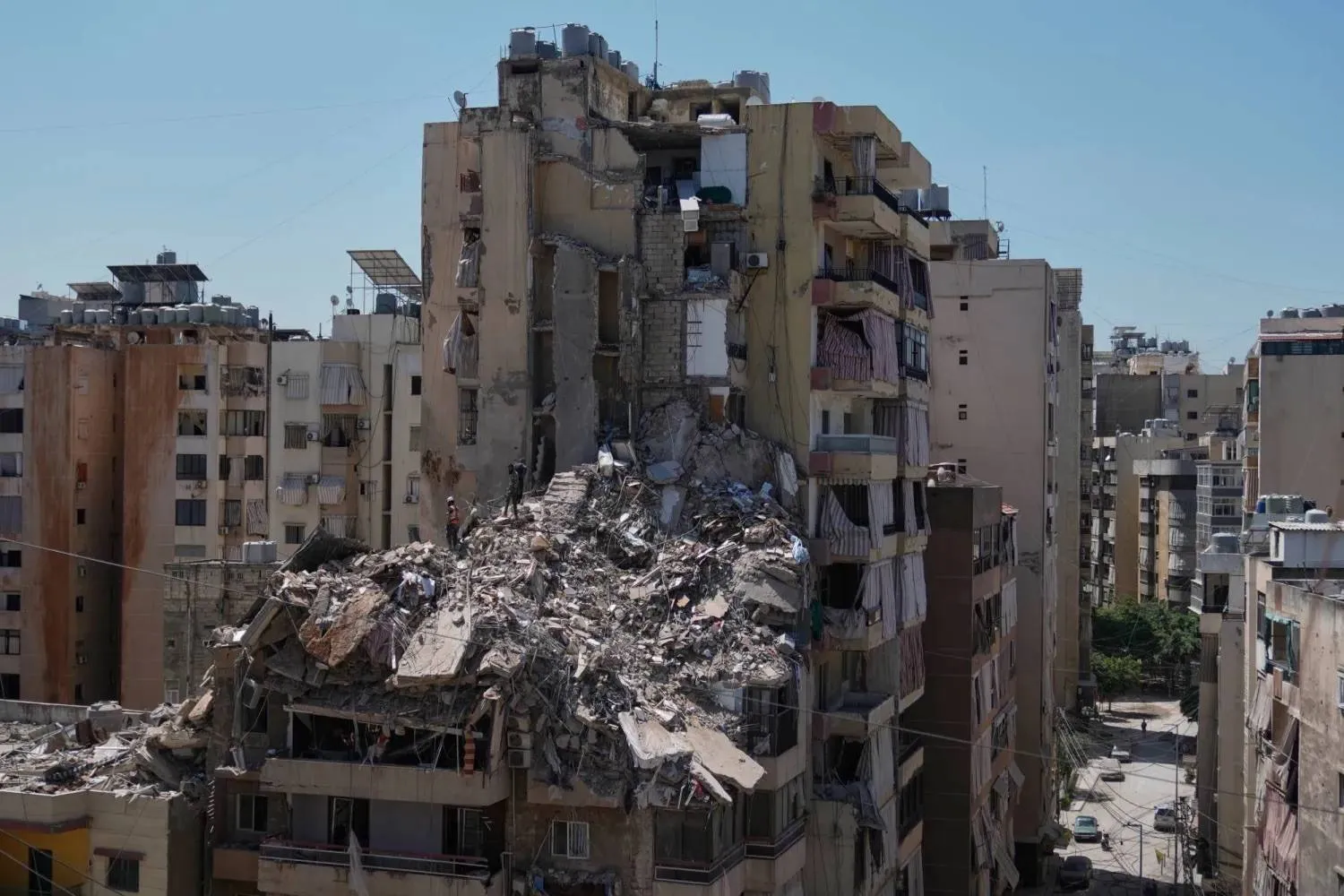
At least two people were killed and four rescued from the rubble of a multistory apartment building that collapsed Sunday in the city of Tripoli in northern Lebanon, state media reported.

Rescue teams were continuing to dig through the rubble. It was not immediately clear how many people were in the building when it fell.

The bodies pulled out were of a child and a woman, the state-run National News Agency reported.

Dozens of people crowded around the site of the crater left by the collapsed building, with some shooting in the air.

The building was in the neighborhood of Bab Tabbaneh, one of the poorest areas in Lebanon’s second largest city, where residents have long complained of government neglect and shoddy infrastructure. Building collapses are not uncommon in Tripoli due to poor building standards, according to The AP news.

Lebanon’s Health Ministry announced that those injured in the collapse would receive treatment at the state’s expense.

The national syndicate for property owners in a statement called the collapse the result of “blatant negligence and shortcomings of the Lebanese state toward the safety of citizens and their housing security,” and said it is “not an isolated incident.”

The syndicate called for the government to launch a comprehensive national survey of buildings at risk of collapse.


Israel to Take More West Bank Powers and Relax Settler Land Buys

A view of Israeli settlement of Maale Adumim, in the West Bank, Sunday, June 18, 2023. (AP)
TT

Israel to Take More West Bank Powers and Relax Settler Land Buys

A view of Israeli settlement of Maale Adumim, in the West Bank, Sunday, June 18, 2023. (AP)

Israel's security cabinet approved a series of steps on Sunday that would make it easier for settlers in the occupied West Bank to buy land while granting Israeli authorities more enforcement powers over Palestinians, Israeli media reported.

The West Bank is among the territories that the Palestinians seek for a future independent state. Much of it is under Israeli military control, with limited Palestinian self-rule in some areas run by the Western-backed Palestinian Authority (PA).

Citing statements by Finance Minister Bezalel Smotrich and Defense Minister Israel Katz, Israeli news sites Ynet and Haaretz said the measures included scrapping decades-old regulations that prevent Jewish private citizens buying land in the West Bank, The AP news reported.

They were also reported to include allowing Israeli authorities to administer some religious sites, and expand supervision and enforcement in areas under PA administration in matters of environmental hazards, water offences and damage to archaeological sites.

Palestinian President Mahmoud Abbas said the new measures were dangerous, illegal and tantamount to de-facto annexation.

The Israeli ministers did not immediately respond to requests for comment.

The new measures come three days before Prime Minister Benjamin Netanyahu is scheduled to meet in Washington with US President Donald Trump.

Trump has ruled out Israeli annexation of the West Bank but his administration has not sought to curb Israel's accelerated settlement building, which the Palestinians say denies them a potential state by eating away at its territory.

Netanyahu, who is facing an election later this year, deems the establishment of any Palestinian state a security threat.

His ruling coalition includes many pro-settler members who want Israel to annex the West Bank, land captured in the 1967 Middle East war to which Israel cites biblical and historical ties.

The United Nations' highest court said in a non-binding advisory opinion in 2024 that Israel's occupation of Palestinian territories and settlements there is illegal and should be ended as soon as possible. Israel disputes this view.


Arab League Condemns Attack on Aid Convoys in Sudan

A general view shows the opening session of the meeting of Arab foreign ministers at the Arab League Headquarters (Reuters)
TT

Arab League Condemns Attack on Aid Convoys in Sudan

A general view shows the opening session of the meeting of Arab foreign ministers at the Arab League Headquarters (Reuters)

Arab League Secretary-General Ahmed Aboul Gheit strongly condemned the attack by the Rapid Support Forces on humanitarian aid convoys and relief workers in North Kordofan State, Sudan.

In a statement reported by SPA, secretary-general's spokesperson Jamal Rushdi quoted Aboul Gheit as saying the attack constitutes a war crime under international humanitarian law, which prohibits the deliberate targeting of civilians and depriving them of their means of survival.

Aboul Gheit stressed the need to hold those responsible accountable, end impunity, and ensure the full protection of civilians, humanitarian workers, and relief facilities in Sudan.