


Mexican Art Historians Weigh in on Upcoming Kahlo’s Auction That Could Fetch up to $60 Million 

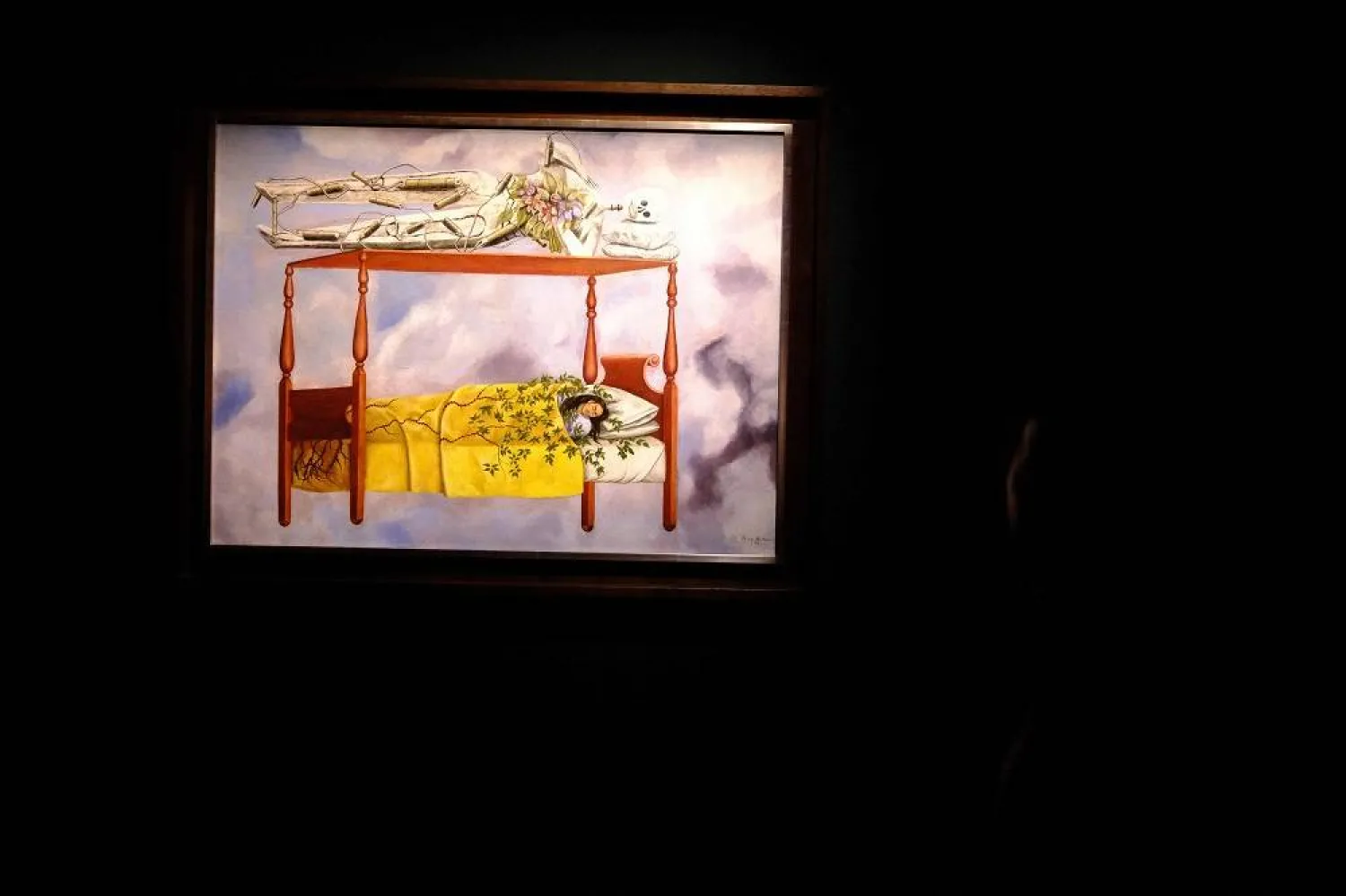
"El sueno" by Frida Kahlo is pictured at Sotheby's Marquee Sales Series in New York on November 8, 2025. (AFP)
TT

Mexican Art Historians Weigh in on Upcoming Kahlo’s Auction That Could Fetch up to $60 Million 

"El sueno" by Frida Kahlo is pictured at Sotheby's Marquee Sales Series in New York on November 8, 2025. (AFP)

Frida Kahlo’s “El sueno (La cama)” — in English, “The Dream (The Bed)” — is causing a stir among art historians as its estimated $40 million to $60 million price tag would make it the most expensive work by any female or Latin American artist when it goes to auction later this month.

Sotheby’s auction house will put the painting up for sale on Nov. 20 in New York after exhibiting it in London, Abu Dhabi, Hong Kong and Paris.

“This is a moment of a lot of speculation,” said Mexican art historian Helena Chavez Mac Gregor, a researcher at UNAM’s Institute of Aesthetic Research and author of “El liston y la bomba. El arte de Frida Kahlo.” (The ribbon and the bomb. The art of Frida Kahlo).

In Mexico, Kahlo’s work is protected by a declaration of artistic monument, meaning pieces within the country cannot be sold or destroyed. However, works from private collections abroad, like the painting in question, whose owner remains unrevealed, are legally eligible for international sale.

“The system of declaring Mexican modern artistic heritage is very anomalous,” said Mexican curator Cuauhtemoc Medina, an art historian and specialist in contemporary art.

Judas in bed “El sueno (La cama)” was created in 1940 following Kahlo's trip to Paris, where she came into contact with the surrealists.

Contrary to contemporary belief, the skull on the bed’s canopy is not a Day of the Dead skeleton, but a Judas — a handmade cardboard figure. Traditionally lit with gunpowder during Easter, this effigy symbolizes purification and the triumph of good over evil, representing Judas Iscariot who betrayed Jesus.

In the painting, the skeleton is detailed with firecrackers, flowers on its ribs and a smiling grimace — a detail inspired by a cardboard skeleton Kahlo actually kept in the canopy of her own bed.

Kahlo “spent a lot of time in bed waiting for death,” said Chavez Mac Gregor. “She had a very complex life because of all the illnesses and physical challenges with which she lived.”

Although Kahlo’s painting is being auctioned alongside works by surrealists like Salvador Dali, Rene Magritte, Max Ernst and Dorothea Tanning, she did not consider herself a member of the movement, despite having met its founder, Andre Breton, in Mexico and had an exhibition organized by him in Paris in 1939.

“Breton was fascinated by Frida’s work, because he saw that surrealist spirit there,” said Chavez Mac Gregor.

Kahlo, a committed communist, considered surrealism — a movement proposing a revolution of consciousness — to be bourgeois. As Chavez Mac Gregor noted, “Frida always had a critical distance from that.”

Despite this, specialists have found elements of surrealism in Kahlo’s work related to the dreamlike, to an inner world and to a revolutionary freedom — a concept visible in a bed suspended in the sky with Kahlo sleeping among a vine.

‘Crazy-priced purchases’

“El sueno (La cama)” was last exhibited in the 1990s, and after the auction, it could disappear from public view once again, a fate shared by many paintings acquired for large sums at auction.

There are exceptions, including “Diego y yo” (“Diego and I”), which set Kahlo’s record sale price when it sold for $34.9 million in 2021.

The painting, depicting the artist and her husband muralist Diego Rivera, was acquired by Argentine business owner Eduardo Costantini and then lent to the Museum of Latin American Art of Buenos Aires (Malba) where it remains on exhibit.

Medina, the art historian, regretted that the “crazy-priced” purchases have reduced art to a mere economic value.

He lamented that when funds purchase art as mere investments, like buying shares in a public company, the works are often relegated to tax-free zones to avoid costs. Their fate, he said, “may be worse; they may end up in a refrigerator at Frankfurt airport for decades to come.”

The current sale record for a work by a female artist is held by Georgia O’Keeffe’s “Jimson Weed/White Flower No. 1,” which fetched $44.4 million at Sotheby’s in 2014.

However, the auction market still reflects a profound disparity as no female artist has yet exceeded the maximum sale price of a male artist. The current benchmark is “Salvator Mundi,” attributed to Leonardo da Vinci, which was auctioned by Christie’s for $450.3 million in 2017.



Saudi Arabia, Syria Underline Depth of their Cultural Ties

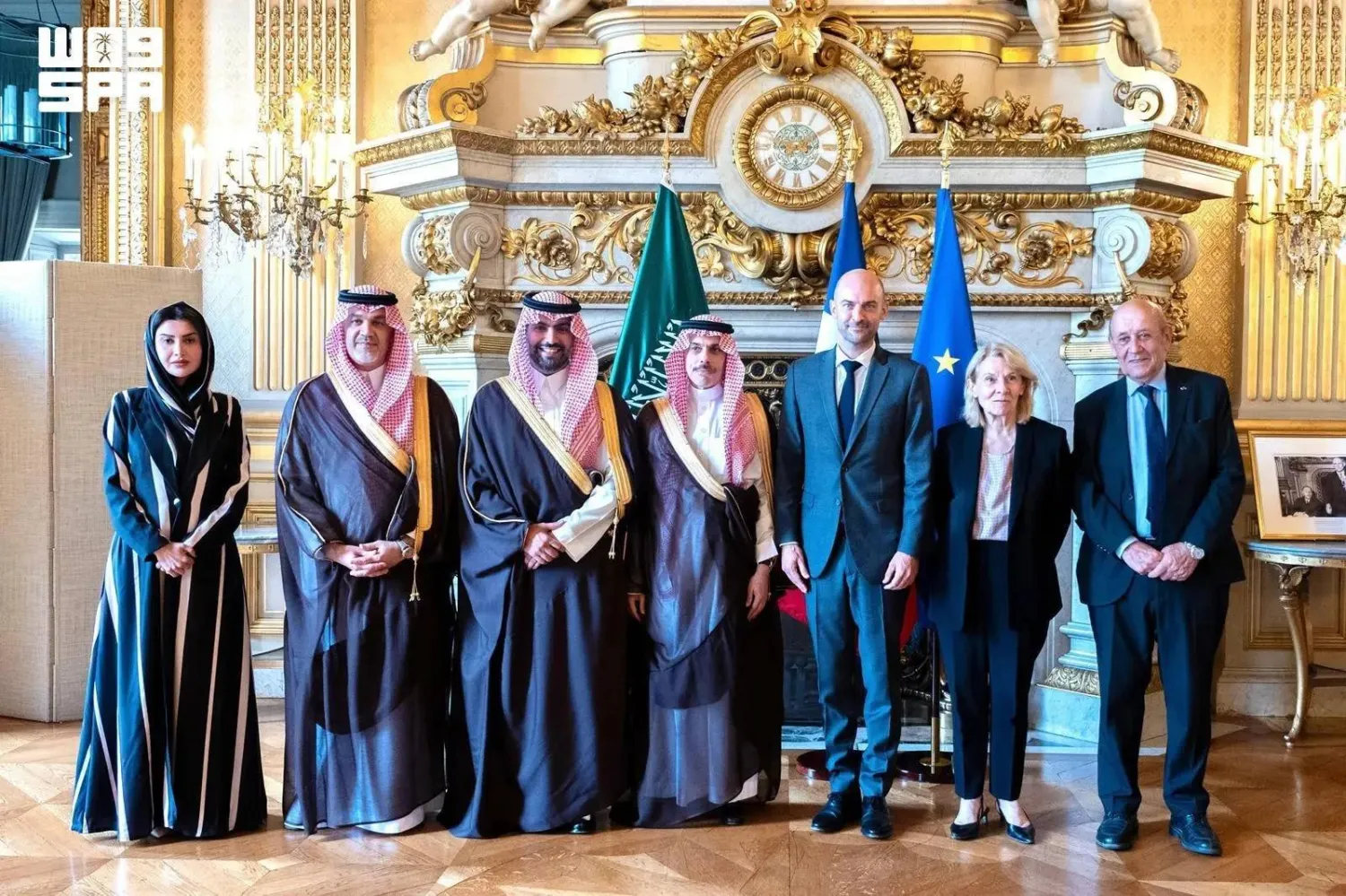
Syrian President al-Sharaa receives the Saudi minister of culture and the accompanying delegation at the Conference Palace in Damascus on Thursday. (SPA)
TT

Saudi Arabia, Syria Underline Depth of their Cultural Ties

Syrian President al-Sharaa receives the Saudi minister of culture and the accompanying delegation at the Conference Palace in Damascus on Thursday. (SPA)

Saudi Arabia and Syria underlined the strength of their cultural relationship during high-level meetings held in Damascus on Thursday, on the sidelines of the opening of the Damascus International Book Fair 2026, where the Kingdom is participating as guest of honor.

Syrian President Ahmad al-Sharaa received Saudi Minister of Culture Prince Badr bin Abdullah bin Farhan at the Conference Palace in the capital.

Earlier the same day, Prince Badr met with his Syrian counterpart, Minister of Culture Mohammad Yassin Saleh, during an official visit to attend the fair. T

he Saudi minister congratulated Syria on hosting the exhibition and expressed his wishes for continued prosperity, progress, and stability for the Syrian government and people.

Both meetings highlighted the depth of cultural relations between the two countries, the importance of expanding joint cultural cooperation across various fields, and the alignment of positions on issues of mutual interest in a way that serves both nations.

The Saudi delegation included senior officials and advisers, among them representatives from the Royal Court, the Ministry of Culture, and the King Abdulaziz Public Library, reflecting broad institutional engagement in the visit.

In the evening, Prince Badr attended the opening ceremony of the fair’s special session, held under the patronage and in the presence of al-Sharaa. The event drew wide official and cultural participation, including Arab ministers, political and intellectual figures, and a distinguished group of writers and cultural figures.

In a post on the X platform, Prince Badr thanked “our brothers in Syria for their generous hospitality and their efforts in organizing the Damascus International Book Fair.”

The minister also inaugurated the Kingdom’s pavilion at the fair in the presence of the Syrian minister of culture and the Qatari minister of culture.

Saudi Arabia’s guest-of-honor participation continues until Feb. 16 and reflects its growing prominence and leadership in the Arab and global cultural landscape.

This participation aligns with Saudi Vision 2030, which places culture at the heart of national development, viewing it as a space for dialogue, a bridge for civilizational communication, and a tool for strengthening ties among Arab peoples.

The Saudi Literature, Publishing and Translation Commission is leading the Kingdom’s participation, highlighting the development of the cultural sector and reaffirming the central role of books as carriers of knowledge and awareness.

The Saudi pavilion boasts a comprehensive cultural program featuring intellectual seminars, poetry evenings, a manuscript exhibition, traditional Saudi fashion displays, hospitality corners, archaeological replicas, and performing arts that express the depth of the Kingdom’s cultural heritage.

On the sidelines of the visit, Prince Badr, accompanied by Minister Saleh, toured the National Museum of Damascus, which houses rare artifacts spanning prehistoric eras, ancient Syrian civilizations, classical and Islamic periods, as well as traditional and modern art.


UNESCO Honors Al-Bisht Al-Hasawi as Thousands Flock to Al-Ahsa Festival

Visitors can explore interactive displays, participate in live workshops, and witness the meticulous process of tailoring this iconic symbol of prestige - SPA
TT

UNESCO Honors Al-Bisht Al-Hasawi as Thousands Flock to Al-Ahsa Festival

Visitors can explore interactive displays, participate in live workshops, and witness the meticulous process of tailoring this iconic symbol of prestige - SPA

The third edition of Al-Bisht Al-Hasawi Festival is drawing thousands of regional and international visitors to Ibrahim Palace in historic Al-Hofuf.

Organized by the Heritage Commission, this year’s festival celebrates the inscription of the Bisht on UNESCO’s Representative List of the Intangible Cultural Heritage of Humanity.

The event showcases Al-Ahsa’s centuries-old tradition of hand-weaving and gold embroidery, a craft passed down through generations of local families, SPA reported.

Visitors can explore interactive displays, participate in live workshops, and witness the meticulous process of tailoring this iconic symbol of prestige.

With UNESCO's participation and representatives from six countries, the festival has evolved into a global platform for cultural dialogue, cementing the Bisht’s status as a world-class cultural treasure.


Saudi, Syrian Culture Ministers Tour National Museum of Damascus

The ministers observed the museum’s extensive collections spanning prehistoric eras to modern art. SPA
TT

Saudi, Syrian Culture Ministers Tour National Museum of Damascus

The ministers observed the museum’s extensive collections spanning prehistoric eras to modern art. SPA

Saudi Minister of Culture Prince Badr bin Abdullah bin Farhan and his Syrian counterpart, Mohammed Yassin Saleh, have toured the National Museum of Damascus during the Kingdom’s participation as guest of honor at the 2026 Damascus International Book Fair.

The ministers observed on Thursday the museum’s extensive collections spanning prehistoric eras to modern art.

A particular focus was placed on the Arab-Islamic wing, featuring significant artifacts from the Umayyad period.

The Kingdom's participation as guest of honor at the 2026 Damascus International Book Fair, which runs until February 16, stems from the role culture plays within Saudi Vision 2030.