

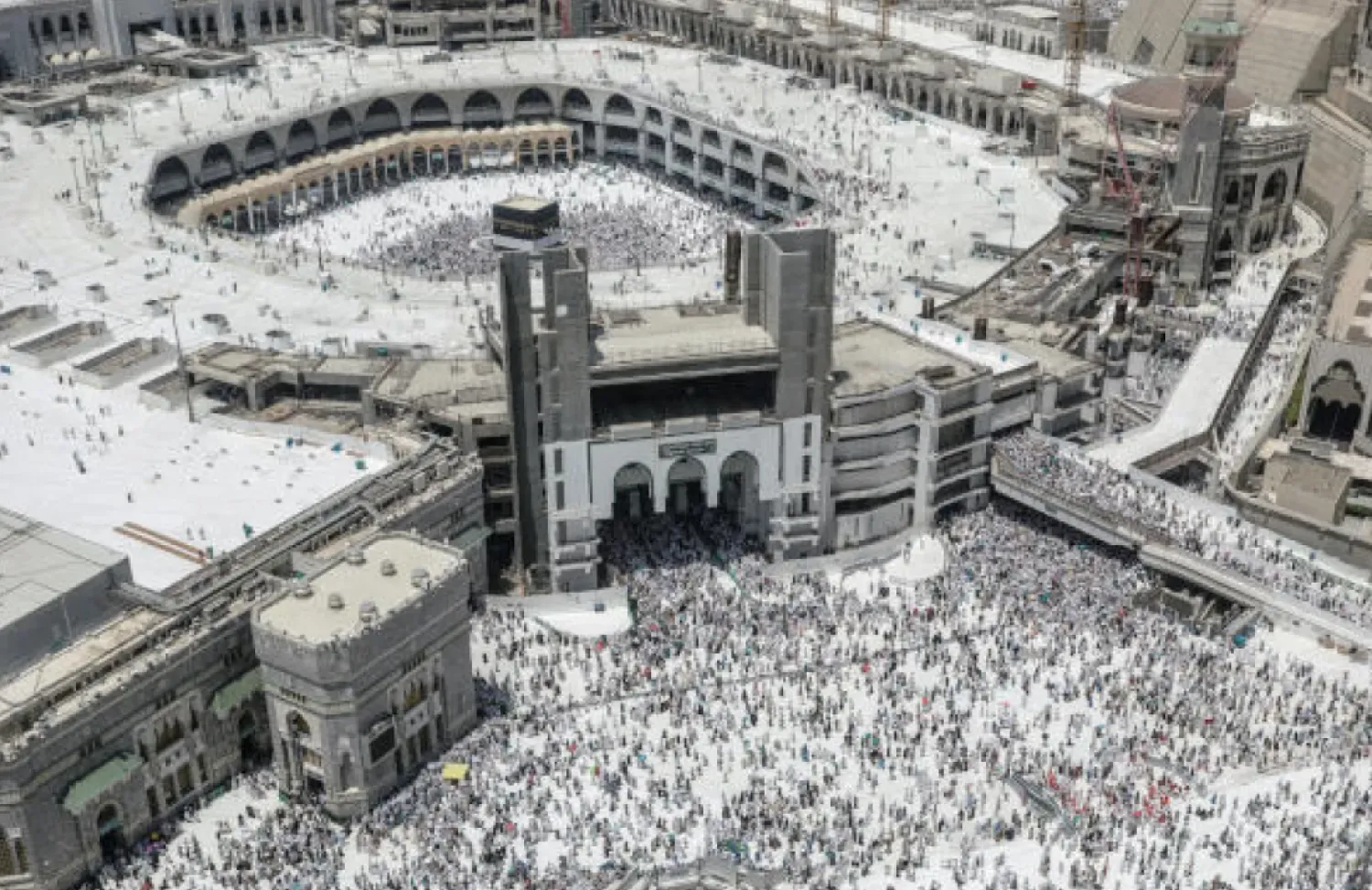

Darah Launches ‘History of Hajj and the Two Holy Mosques’ Forum

Muslim pilgrims walk out after the Friday prayer at the Grand mosque ahead of annual Hajj pilgrimage in the holy city of Makkah, Saudi Arabia August 17, 2018.REUTERS/Zohra Bensemra
TT

Darah Launches ‘History of Hajj and the Two Holy Mosques’ Forum

Muslim pilgrims walk out after the Friday prayer at the Grand mosque ahead of annual Hajj pilgrimage in the holy city of Makkah, Saudi Arabia August 17, 2018.REUTERS/Zohra Bensemra

King Abdulaziz Foundation for Research and Archives (Darah) launched Monday the “History of Hajj and the Two Holy Mosques” forum at the Hajj Conference and Exhibition, organized by the Ministry of Hajj and Umrah in collaboration with the “Pilgrim Experience Program”.

The forum aims to highlight the Kingdom’s historical and organizational efforts in serving the Two Holy Mosques, document the architectural and artistic transformations of the holy sites, and adopt the latest digital methods for studying the history of Hajj, SPA reported.

Secretary-General of the Muslim World League, Chairman of the Council of Muslim Scholars, and member of the Supreme Supervisory Committee for the Hajj and Two Holy Mosques History Project Sheikh Dr. Mohammed bin Abdulkarim Al-Issa delivered a speech underscoring the importance of preserving the history of Hajj and its landmarks. He emphasized the scholarly responsibility to document the Kingdom’s prominent role in serving pilgrims and caring for the Two Holy Mosques throughout history.

For his part, Minister of Hajj and Umrah Tawfig Al-Rabiah highlighted major advancements in the Hajj ecosystem, including administration, organization, and services. He stressed the importance of harnessing historical research and modern technologies to support decision-making, shape the future of Hajj and Umrah, and enhance the quality of services provided to pilgrims.

The forum aims to promote specialized scientific research in this field and translate its outcomes into educational and media content. It also seeks to shed light on the historical evolution of the Hajj in the Islamic world, reflecting the Kingdom’s deep commitment to documenting and preserving the legacy of Hajj and the Two Holy Mosques, two of Islam’s greatest rituals and enduring symbols of civilization.

The forum’s significance lies in its focus on Hajj as a pillar of Islamic identity and a manifestation of unity among Muslims. Through this platform, Darah seeks to transform research outputs into accessible cultural and educational content. Organized as part of the broader project on the history of Hajj and the Two Holy Mosques, the forum aligns with the Foundation’s mission to preserve and document the Kingdom’s history and that of its holiest sites.

It aspires to serve as a national and global reference for chronicling the Hajj ritual and promoting the Kingdom’s cultural and civilizational image, in line with Vision 2030 objectives in culture and tourism, through interactive scientific and digital content that showcases the historical depth of Hajj and the Two Holy Mosques.



Riyadh Art Unveils Tuwaiq Sculpture 2026

The exhibition site on Tahlia Street was strategically chosen for its historical legacy of innovation to provide a conceptual framework for the works. SPA
TT

Riyadh Art Unveils Tuwaiq Sculpture 2026

The exhibition site on Tahlia Street was strategically chosen for its historical legacy of innovation to provide a conceptual framework for the works. SPA

The Royal Commission for Riyadh City, via its Riyadh Art program, has launched the Tuwaiq Sculpture 2026 exhibition on Prince Mohammed bin Abdulaziz Street (Tahlia).

Open to the public from February 9 to 22, the exhibition showcases 25 new artworks themed "Traces of What Will Be," exploring transformation and urban renewal.

The sculptures were crafted during a live phase from January 10 to February 5, during which artists from 18 countries used local stone and recycled metals, allowing the public to witness the creative process firsthand.

The exhibition site on Tahlia Street was strategically chosen for its historical legacy of innovation to provide a conceptual framework for the works.

Overseen by a panel of international experts, the exhibition serves as an interactive cultural platform featuring workshops and panel discussions to foster community engagement.

All 2026 pieces will join Riyadh Art's permanent collection, which has hosted over 170 artists since 2019 and already installed more than 60 sculptures across the city to integrate contemporary art into Riyadh's urban fabric.


Syrian Culture Minister Applauds Saudi Pavilion at Damascus Book Fair

The 2026 Damascus International Book Fair is held from February 6 to 16 - SPA
TT

Syrian Culture Minister Applauds Saudi Pavilion at Damascus Book Fair

The 2026 Damascus International Book Fair is held from February 6 to 16 - SPA

Syrian Minister of Culture Mohammed Yassin Saleh visited the Kingdom’s pavilion at the 2026 Damascus International Book Fair, held from February 6 to 16, where the Kingdom is serving as the Guest of Honor.

He commended the efforts of the Literature, Publishing and Translation Commission in showcasing the rich diversity of the Saudi cultural and literary scene. The pavilion features exhibitions of manuscripts, a Saudi fashion corner, and archaeological replicas, SPA reported.

The minister reviewed the commission's Tarjim translation initiative and Saudi literature comics.

This participation at the 2026 Damascus International Book Fair showcases Saudi creativity and fosters cultural dialogue, supporting Saudi Vision 2030’s goals of knowledge exchange and cultural leadership.


Saudi Arabia, Syria Underline Depth of their Cultural Ties

Syrian President al-Sharaa receives the Saudi minister of culture and the accompanying delegation at the Conference Palace in Damascus on Thursday. (SPA)
TT

Saudi Arabia, Syria Underline Depth of their Cultural Ties

Syrian President al-Sharaa receives the Saudi minister of culture and the accompanying delegation at the Conference Palace in Damascus on Thursday. (SPA)

Saudi Arabia and Syria underlined the strength of their cultural relationship during high-level meetings held in Damascus on Thursday, on the sidelines of the opening of the Damascus International Book Fair 2026, where the Kingdom is participating as guest of honor.

Syrian President Ahmad al-Sharaa received Saudi Minister of Culture Prince Badr bin Abdullah bin Farhan at the Conference Palace in the capital.

Earlier the same day, Prince Badr met with his Syrian counterpart, Minister of Culture Mohammad Yassin Saleh, during an official visit to attend the fair. T

he Saudi minister congratulated Syria on hosting the exhibition and expressed his wishes for continued prosperity, progress, and stability for the Syrian government and people.

Both meetings highlighted the depth of cultural relations between the two countries, the importance of expanding joint cultural cooperation across various fields, and the alignment of positions on issues of mutual interest in a way that serves both nations.

The Saudi delegation included senior officials and advisers, among them representatives from the Royal Court, the Ministry of Culture, and the King Abdulaziz Public Library, reflecting broad institutional engagement in the visit.

In the evening, Prince Badr attended the opening ceremony of the fair’s special session, held under the patronage and in the presence of al-Sharaa. The event drew wide official and cultural participation, including Arab ministers, political and intellectual figures, and a distinguished group of writers and cultural figures.

In a post on the X platform, Prince Badr thanked “our brothers in Syria for their generous hospitality and their efforts in organizing the Damascus International Book Fair.”

The minister also inaugurated the Kingdom’s pavilion at the fair in the presence of the Syrian minister of culture and the Qatari minister of culture.

Saudi Arabia’s guest-of-honor participation continues until Feb. 16 and reflects its growing prominence and leadership in the Arab and global cultural landscape.

This participation aligns with Saudi Vision 2030, which places culture at the heart of national development, viewing it as a space for dialogue, a bridge for civilizational communication, and a tool for strengthening ties among Arab peoples.

The Saudi Literature, Publishing and Translation Commission is leading the Kingdom’s participation, highlighting the development of the cultural sector and reaffirming the central role of books as carriers of knowledge and awareness.

The Saudi pavilion boasts a comprehensive cultural program featuring intellectual seminars, poetry evenings, a manuscript exhibition, traditional Saudi fashion displays, hospitality corners, archaeological replicas, and performing arts that express the depth of the Kingdom’s cultural heritage.

On the sidelines of the visit, Prince Badr, accompanied by Minister Saleh, toured the National Museum of Damascus, which houses rare artifacts spanning prehistoric eras, ancient Syrian civilizations, classical and Islamic periods, as well as traditional and modern art.