


'Architecture of the Two Holy Mosques' Exhibition Traces Expansion through History at Hajj Conference

'Architecture of the Two Holy Mosques' exhibition at Darah Pavilion showcases expansions through history at Hajj Conference. (SPA)
TT

'Architecture of the Two Holy Mosques' Exhibition Traces Expansion through History at Hajj Conference

'Architecture of the Two Holy Mosques' exhibition at Darah Pavilion showcases expansions through history at Hajj Conference. (SPA)

The King Abdulaziz Foundation for Research and Archives (Darah) is showcasing an exhibition titled “Architecture of the Two Holy Mosques and the Holy Sites” as part of the Hajj Conference and Exhibition 2025.

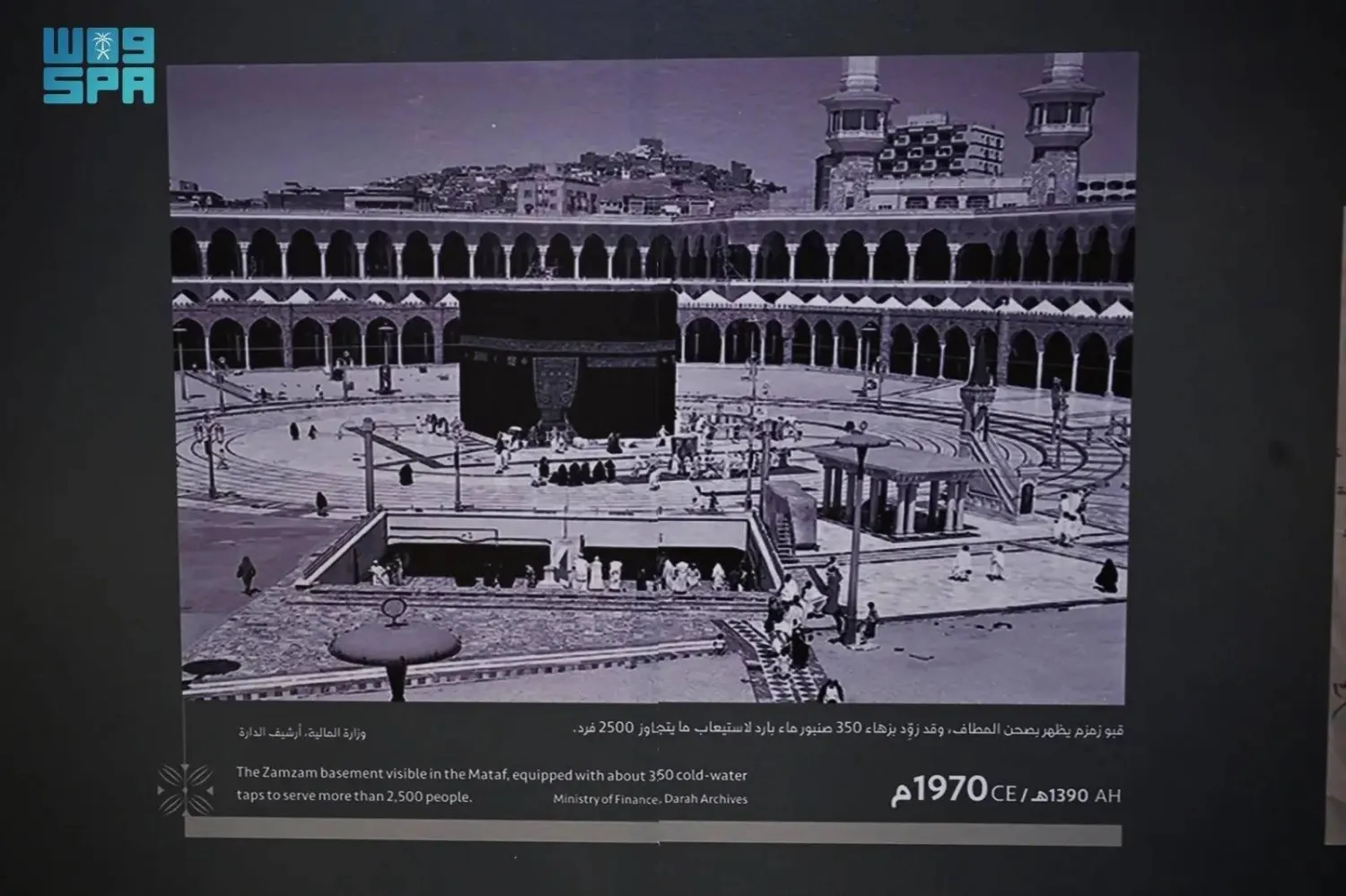
The pavilion offers a visual journey through key stages in the expansions of the Two Holy Mosques and the development of the holy sites over the decades, from the earliest construction works to the completion of major projects that define the sacred places today, the Saudi Press Agency reported on Monday.

The pavilion takes visitors back to the first expansion phase of the Grand Mosque, featuring rare photographs showing the construction of the second floor of Al-Safa and Al-Marwah corridor (Al-Masaa), highlighting the advanced architectural and engineering work of that time.

The exhibition also includes documentary footage capturing the final moments of the first and second expansions, with scenes showing heavy equipment, excavation, and concrete works at construction sites.

Extending to Madinah, the display presents historical photographs of the Prophet’s Mosque, including the western façade and the installation of large sunshades built under the directive of the late King Faisal bin Abdulaziz Al Saud, which marked a major milestone in enhancing comfort within the mosque courtyards.

A prominent section of the pavilion is dedicated to the Kiswa (the covering of the Kaaba) and the evolution of its craftsmanship over the decades.

It features samples and photographs documenting the stages of production - from spinning and weaving to embroidery and modern design technologies - as well as images of artisans at the King Abdulaziz Complex for the Holy Kaaba Kiswa, meticulously working with gold and silver threads, blending manual artistry with advanced technology in service of Islam's holiest site.

Beyond the Two Holy Mosques, the exhibition highlights the development of the holy sites, showcasing archival images of pilgrims’ tents in Mina in earlier years and their gradual transformation into organized and fully equipped accommodations for lodging, prayer, and meal preparation.

It also presents historic images of Jamarat Bridge following the construction of the surrounding barriers to better manage pilgrim movement during the ritual of stoning - representing one of the key milestones in crowd management at the holy sites.

Blending engineering with history, and documentation with imagery, the pavilion presents a coherent chronological narrative showing how the Two Holy Mosques and the holy sites evolved from modest structures into one of the world’s most sophisticated infrastructure systems.

Visitors leave the pavilion with a vivid understanding of the architectural and service transformations that have shaped the Hajj experience through decades of continuous development.



Syrian Culture Minister Applauds Saudi Pavilion at Damascus Book Fair

The 2026 Damascus International Book Fair is held from February 6 to 16 - SPA
TT

Syrian Culture Minister Applauds Saudi Pavilion at Damascus Book Fair

The 2026 Damascus International Book Fair is held from February 6 to 16 - SPA

Syrian Minister of Culture Mohammed Yassin Saleh visited the Kingdom’s pavilion at the 2026 Damascus International Book Fair, held from February 6 to 16, where the Kingdom is serving as the Guest of Honor.

He commended the efforts of the Literature, Publishing and Translation Commission in showcasing the rich diversity of the Saudi cultural and literary scene. The pavilion features exhibitions of manuscripts, a Saudi fashion corner, and archaeological replicas, SPA reported.

The minister reviewed the commission's Tarjim translation initiative and Saudi literature comics.

This participation at the 2026 Damascus International Book Fair showcases Saudi creativity and fosters cultural dialogue, supporting Saudi Vision 2030’s goals of knowledge exchange and cultural leadership.


Saudi Arabia, Syria Underline Depth of their Cultural Ties

Syrian President al-Sharaa receives the Saudi minister of culture and the accompanying delegation at the Conference Palace in Damascus on Thursday. (SPA)
TT

Saudi Arabia, Syria Underline Depth of their Cultural Ties

Syrian President al-Sharaa receives the Saudi minister of culture and the accompanying delegation at the Conference Palace in Damascus on Thursday. (SPA)

Saudi Arabia and Syria underlined the strength of their cultural relationship during high-level meetings held in Damascus on Thursday, on the sidelines of the opening of the Damascus International Book Fair 2026, where the Kingdom is participating as guest of honor.

Syrian President Ahmad al-Sharaa received Saudi Minister of Culture Prince Badr bin Abdullah bin Farhan at the Conference Palace in the capital.

Earlier the same day, Prince Badr met with his Syrian counterpart, Minister of Culture Mohammad Yassin Saleh, during an official visit to attend the fair. T

he Saudi minister congratulated Syria on hosting the exhibition and expressed his wishes for continued prosperity, progress, and stability for the Syrian government and people.

Both meetings highlighted the depth of cultural relations between the two countries, the importance of expanding joint cultural cooperation across various fields, and the alignment of positions on issues of mutual interest in a way that serves both nations.

The Saudi delegation included senior officials and advisers, among them representatives from the Royal Court, the Ministry of Culture, and the King Abdulaziz Public Library, reflecting broad institutional engagement in the visit.

In the evening, Prince Badr attended the opening ceremony of the fair’s special session, held under the patronage and in the presence of al-Sharaa. The event drew wide official and cultural participation, including Arab ministers, political and intellectual figures, and a distinguished group of writers and cultural figures.

In a post on the X platform, Prince Badr thanked “our brothers in Syria for their generous hospitality and their efforts in organizing the Damascus International Book Fair.”

The minister also inaugurated the Kingdom’s pavilion at the fair in the presence of the Syrian minister of culture and the Qatari minister of culture.

Saudi Arabia’s guest-of-honor participation continues until Feb. 16 and reflects its growing prominence and leadership in the Arab and global cultural landscape.

This participation aligns with Saudi Vision 2030, which places culture at the heart of national development, viewing it as a space for dialogue, a bridge for civilizational communication, and a tool for strengthening ties among Arab peoples.

The Saudi Literature, Publishing and Translation Commission is leading the Kingdom’s participation, highlighting the development of the cultural sector and reaffirming the central role of books as carriers of knowledge and awareness.

The Saudi pavilion boasts a comprehensive cultural program featuring intellectual seminars, poetry evenings, a manuscript exhibition, traditional Saudi fashion displays, hospitality corners, archaeological replicas, and performing arts that express the depth of the Kingdom’s cultural heritage.

On the sidelines of the visit, Prince Badr, accompanied by Minister Saleh, toured the National Museum of Damascus, which houses rare artifacts spanning prehistoric eras, ancient Syrian civilizations, classical and Islamic periods, as well as traditional and modern art.


UNESCO Honors Al-Bisht Al-Hasawi as Thousands Flock to Al-Ahsa Festival

Visitors can explore interactive displays, participate in live workshops, and witness the meticulous process of tailoring this iconic symbol of prestige - SPA
TT

UNESCO Honors Al-Bisht Al-Hasawi as Thousands Flock to Al-Ahsa Festival

Visitors can explore interactive displays, participate in live workshops, and witness the meticulous process of tailoring this iconic symbol of prestige - SPA

The third edition of Al-Bisht Al-Hasawi Festival is drawing thousands of regional and international visitors to Ibrahim Palace in historic Al-Hofuf.

Organized by the Heritage Commission, this year’s festival celebrates the inscription of the Bisht on UNESCO’s Representative List of the Intangible Cultural Heritage of Humanity.

The event showcases Al-Ahsa’s centuries-old tradition of hand-weaving and gold embroidery, a craft passed down through generations of local families, SPA reported.

Visitors can explore interactive displays, participate in live workshops, and witness the meticulous process of tailoring this iconic symbol of prestige.

With UNESCO's participation and representatives from six countries, the festival has evolved into a global platform for cultural dialogue, cementing the Bisht’s status as a world-class cultural treasure.