


Saudi Arabia Raises Military Spending Localization to 24.89%

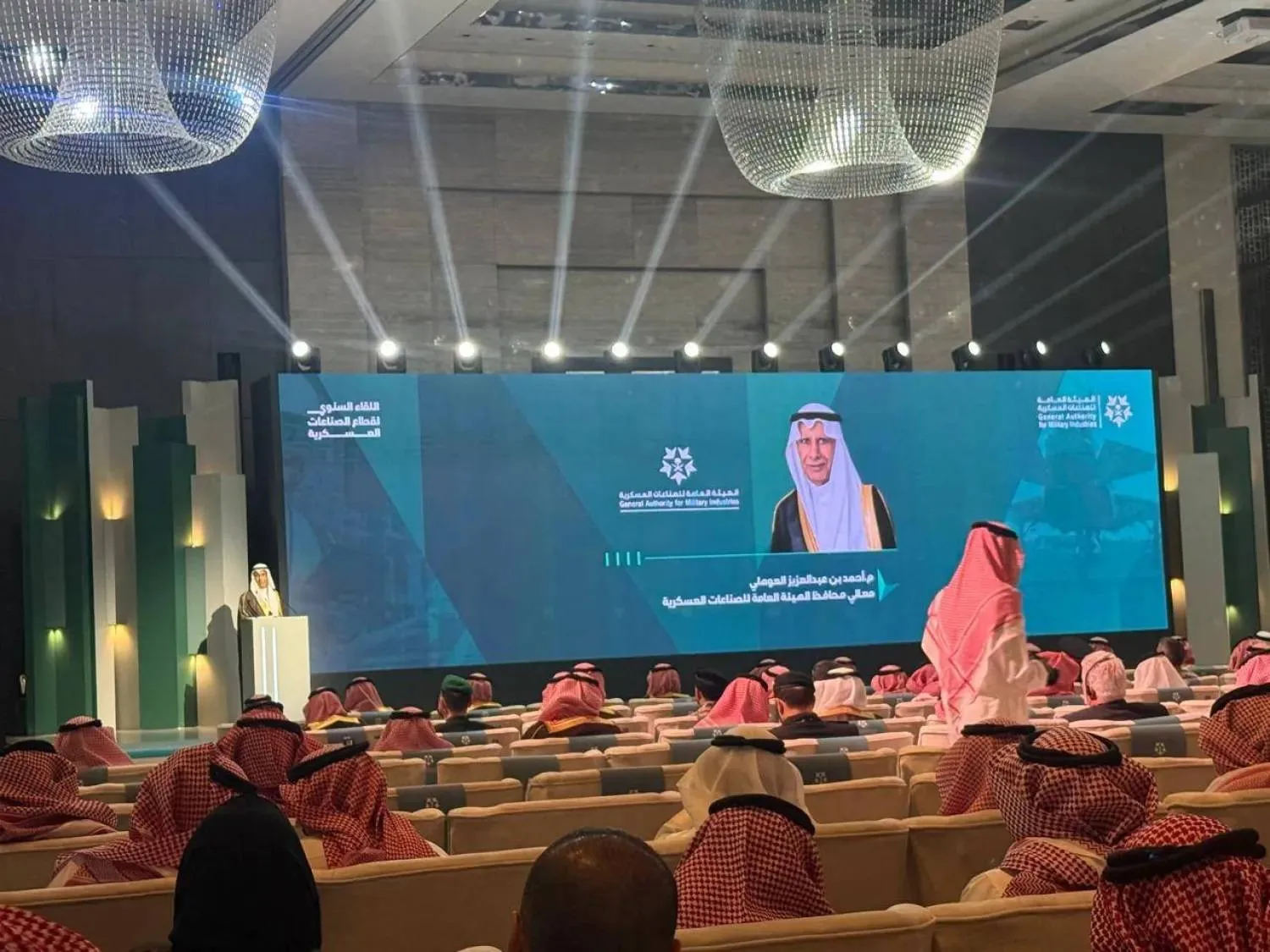
GAMI governor Ahmed bin Abdulaziz Al-Ohali during the annual meeting (Asharq Al-Awsat)
TT

Saudi Arabia Raises Military Spending Localization to 24.89%

GAMI governor Ahmed bin Abdulaziz Al-Ohali during the annual meeting (Asharq Al-Awsat)

The General Authority for Military Industries (GAMI) announced that Saudi Arabia has increased the localization of its military spending to 24.89% by the end of 2024, underscoring continued progress toward the Kingdom’s goal of exceeding 50 percent by 2030.

The announcement was made during the Annual Military Industries Sector Meeting in Riyadh, organized by GAMI under the patronage of its governor, Ahmad bin Abdulaziz Al-Ohali, with wide participation from government entities, private firms, and local and international defense companies.

Al-Ohali said in a speech that the achievement is a pivotal milestone in developing the Kingdom’s defense industries, made possible through the support of King Salman bin Abdulaziz Al Saud and Crown Prince Mohammed bin Salman, who also serves as prime minister and chairman of GAMI’s board.

He explained that the sectoral strategy prioritizes building a sustainable local sector with security, developmental, and economic impacts through unified governance, legislative enablers, investment incentives, empowerment of supply chains and small and medium enterprises, and development of national competencies.

He revealed the “National Platform for Military Industries” to provide easy access to sector programs and announced the launch of the “Localization Excellence Award” to encourage military and security entities and industrial companies to adopt best practices and increase local content.

The authority stated that activating the framework agreements for military procurement was introduced to enable beneficiary entities to purchase directly from industrial investors.

This mechanism aims to achieve spending efficiency, increase localization rates, improve product and service quality, unify prices, save time in procurement procedures, and issue direct purchase orders within a defined price range for periods of up to seven years.

According to information shared during the meeting, six framework agreements have been implemented with relevant entities, resulting in purchase orders worth 2.8 billion riyals ($746 million) over four years. These covered areas such as ammunition, systems, equipment, communications, and military devices.

To enhance transparency and accelerate procedural cycles, the authority has made available the “National Platform for Military Industries,” which provides programs, guides, and instructions for investors and suppliers.

It also announced the launch of the “Localization Excellence Award” to honor military entities and industrial organizations that make a significant contribution to local content and adopt best practices.



GCC Secretary-General Welcomes Omani Initiative on Strait of Hormuz, Condemns Iranian Threats

Secretary-General of the Gulf Cooperation Council (GCC) Jasem Albudaiwi. SPA
TT

GCC Secretary-General Welcomes Omani Initiative on Strait of Hormuz, Condemns Iranian Threats

Secretary-General of the Gulf Cooperation Council (GCC) Jasem Albudaiwi. SPA

Secretary-General of the Gulf Cooperation Council (GCC), Jasem Albudaiwi, welcomed Oman's announcement, made in coordination with the International Maritime Organization (IMO), to establish a temporary maritime corridor for vessels to facilitate the evacuation of more than 11,000 stranded seafarers in the Strait of Hormuz.

The initiative enhances freedom of navigation in the Strait in accordance with international law and the Law of the Sea.

The secretary-general praised this initiative, which embodies the wise approach pursued by the Sultanate of Oman in supporting regional security and stability, enhancing maritime safety and security, and consolidating the principles of international law, thereby contributing to ensuring the smooth flow of regional and international trade.

Albudaiwi expressed the GCC's rejection and condemnation of the claims issued by Iran and its threats to freedom of navigation in the Strait of Hormuz following the announcement.

He affirmed that the Omani step contributes to evacuating stranded seafarers and bolstering supply chains for both regional and global economies and reflects the GCC countries' support for all regional and international efforts aimed at enhancing maritime security, consolidating security and stability, and de-escalating tensions in the region.


Saudi Foreign Minister Discusses Regional Developments with Jordanian Counterpart

Saudi Minister of Foreign Affairs Prince Faisal bin Farhan bin Abdullah
TT

Saudi Foreign Minister Discusses Regional Developments with Jordanian Counterpart

Saudi Minister of Foreign Affairs Prince Faisal bin Farhan bin Abdullah

Saudi Minister of Foreign Affairs Prince Faisal bin Farhan bin Abdullah received a phone call on Friday from Deputy Prime Minister and Minister of Foreign Affairs and Expatriates of Jordan Ayman Safadi, the Saudi Press Agency reported.

During the call, the two officials discussed the latest regional developments and ongoing bilateral coordination and consultation on related matters.


Saudi Arabia Reaffirms Support for Sudan's Unity, Political Solution to End Crisis

The Kingdom of Saudi Arabia reaffirmed that supporting stability in Sudan, securing a ceasefire, and preserving the country's territorial integrity and state institutions remain its top priorities.(SPA)
TT

Saudi Arabia Reaffirms Support for Sudan's Unity, Political Solution to End Crisis

The Kingdom of Saudi Arabia reaffirmed that supporting stability in Sudan, securing a ceasefire, and preserving the country's territorial integrity and state institutions remain its top priorities.(SPA)

The Kingdom of Saudi Arabia reaffirmed that supporting stability in Sudan, securing a ceasefire, and preserving the country's territorial integrity and state institutions remain its top priorities. It emphasized that resolving the crisis ultimately requires a Sudanese-led political solution, the Saudi Press Agency said on Saturday.

The remarks were made by Saudi Arabia's Permanent Representative to the United Nations Ambassador Dr. Abdulaziz Alwasil, during a UN Security Council session on Sudan.

Alwasil said that the continued conflict, deteriorating security situation, and failure to implement the commitments made under the Jeddah Platform and the relevant UN Security Council resolutions have contributed to worsening the humanitarian crisis in Sudan.

He stressed Saudi Arabia's commitment to ending the conflict, bringing the Sudanese parties closer together, and resuming political dialogue based on the Jeddah Declaration.

The Saudi permanent representative to the United Nations also condemned the targeting of humanitarian aid convoys and the crimes committed in the city of El-Fasher, expressing the Kingdom's concern over the human and humanitarian losses resulting from the continued conflict.

He reiterated the Kingdom's rejection of any measures that undermine Sudan's unity or its institutions, welcomed regional and international efforts aimed at reaching a permanent ceasefire, and affirmed Saudi Arabia's continued humanitarian assistance to the Sudanese people.