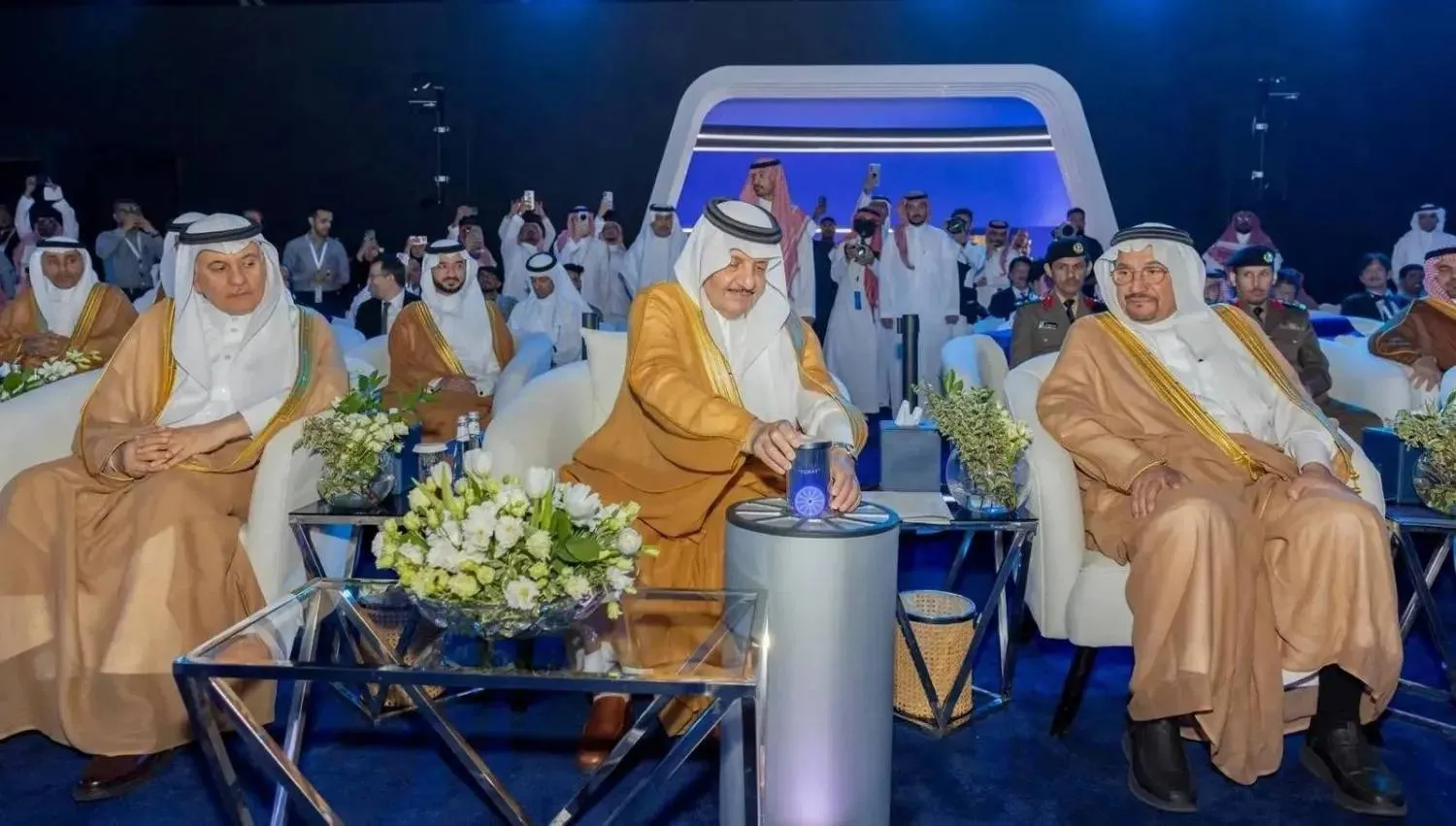

Eastern Province Governor Prince Saud bin Nayef bin Abdulaziz on Wednesday inaugurated the Toray Membrane Middle East Factory in Dammam’s Third Industrial City, the largest facility for water desalination membrane technologies in the Middle East.
The ceremony was attended by the Minister of Environment, Water and Agriculture Eng.Abdulrahman Alfadley , President of the Saudi Water Authority (SWA) Eng. Abdullah bin Ibrahim Al-Abdulkarim, CEO of the Local Content and Government Procurement Authority Abdulrahman bin Abdullah Al-Samari, and several senior officials from the public and private sectors.
Prince Saud said the launch of the new factory reflects the government’s strong commitment to localizing advanced industries and strengthening Saudi Arabia’s presence in high-tech sectors.
He added that the project marks a key step toward achieving industrial self-sufficiency and transferring advanced knowledge and technologies to national talent.
He noted that the water and industrial sectors continue to receive substantial attention from the government of the Custodian of the Two Holy Mosques King Salman bin Abdulaziz and Crown Prince and Prime Minister Mohammed bin Salman, through enabling high-value investments and fostering an environment conducive to innovation.
The governor said the Eastern Province, with its advanced infrastructure and strong industrial base, will remain a key driver in achieving Saudi Arabia’s economic and industrial development goals under Vision 2030.
The new factory is a joint venture between Abunayyan Holding and Japan’s Toray Industries, with an investment exceeding 1 billion riyals.
It is Toray’s second plant of its kind outside Japan and has a production capacity of 300,000 membranes annually. The facility will provide more than 175 jobs for Saudis, with a localization rate of 70 %, targeted to reach a minimum of 75 %.
The plant is expected to position the Kingdom as a regional hub for membrane and desalination technologies through six integrated production lines that meet local and Gulf market demand, enhance the competitiveness of national industries, and strengthen Saudi Arabia’s standing as a global source for advanced water technologies.
The project aims to localize the production of reverse osmosis membranes used in water desalination, transfer advanced technologies to support Saudi Arabia’s water and industrial security, and help achieve the objectives of Vision 2030.
It also seeks to boost local content and improve the efficiency of national supply chains by localizing 72 % of manufacturing inputs, cutting supply times by 53 %, and reducing energy consumption by 4 to 5 %. The project is expected to improve the trade balance by more than 135 million riyals annually and contribute around 1.14 billion riyals to the national economy over eight years.
SWA President Al-Abdulkarim said the project represents a leading example of integration between the water and industrial sectors in achieving economic and water sustainability goals.
He added that the factory is a cornerstone in localizing advanced desalination technologies and enhancing the Kingdom’s capacity to lead the global water sector through innovation and development of supporting industries.
For his part, Al-Samari said the factory’s inauguration follows an agreement to localize the reverse osmosis membrane industry signed between his authority, the Saudi Water Authority, and Toray Membrane Middle East.
He noted that the factory is one of the key projects contributing to raising local content in the water and industrial sectors, with a production capacity of 300,000 membranes annually covering all manufacturing stages.
Khaled Abunayyan, Chairman of Toray Membrane Middle East, affirmed the company’s commitment to knowledge transfer and developing local talent through a dedicated research and development unit in cooperation with the Research and Development Center for Advanced Technologies.
The unit aims to design the next generation of membranes that improve energy efficiency, enhance environmental resilience, and extend product lifespan.