



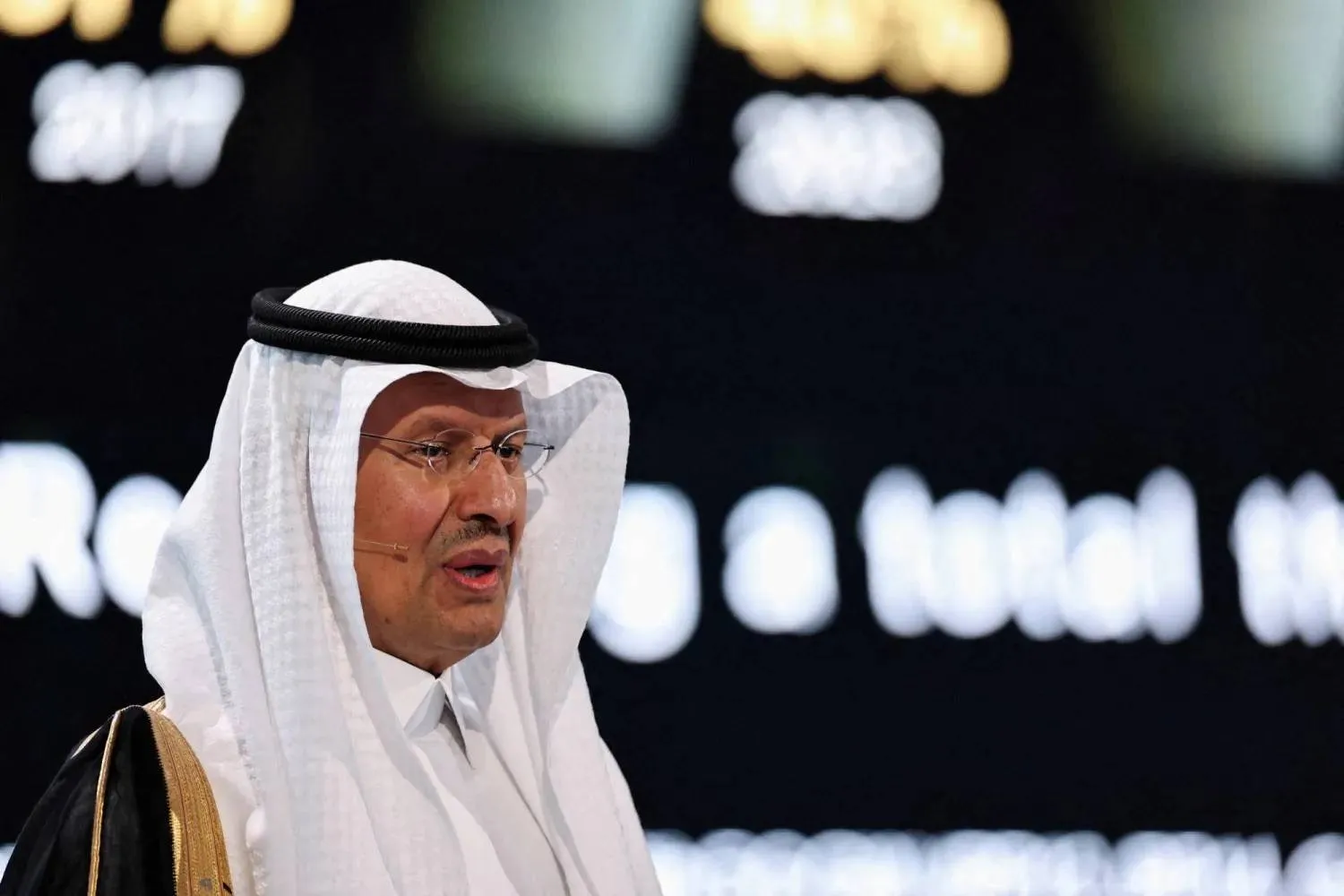

After four years of debate, the International Energy Agency (IEA) has issued a pivotal retreat from its hardline projections on “peak oil,” effectively validating the repeated warnings of Saudi Energy Minister Prince Abdulaziz bin Salman, who had famously dismissed the agency’s net-zero ambition as a “La La Land scenario.”
In its latest report, the IEA acknowledged that global demand for oil and gas could continue rising through 2050, and that the world is moving toward energy transition far more slowly than the agency previously asserted.
The shift marks a notable change in tone from the IEA, which last September conceded the need for billions of dollars in new oil and gas investments, after earlier claiming such spending was incompatible with climate goals, a stance that drew fierce criticism from US Republican lawmakers who called for cutting the agency’s funding.
Since 2021, Prince Abdulaziz has firmly rejected the IEA’s call to halt new oil and gas investments, arguing that its assumptions were detached from market realities. At an OPEC+ meeting in June 2021, he described the IEA’s scenario as “a sequel to the movie La La Land,” questioning why anyone should take it seriously.
Throughout the years, the minister has maintained that “hydrocarbons are here to stay,” emphasizing that Saudi Arabia would continue expanding its production capacity. He has repeatedly stressed that a reliable and effective coalition - namely OPEC+ - is the real guarantor of market stability, not speculative forecasts.
Prince Abdulaziz’s critique went beyond rhetoric. He consistently argued that the IEA’s call to end new upstream investments was rooted in idealistic thinking that would have destabilized global markets and jeopardized energy security. Such policies, he said, overlooked the practical fact that oil demand continues to rise in many sectors and regions.
He also accused the IEA of abandoning its role as an impartial, data-driven energy analyst and instead adopting a political advocacy posture. He argued that this shift explains the agency’s repeated failures in predicting “peak demand.” He urged it to return to credible, fundamental-based analysis.
Even amid intensifying global pressure to scale back fossil fuels, the minister insisted on pushing ahead with Saudi Arabia’s long-term production plans. In 2023, he reiterated that hydrocarbons “are here to stay,” affirming the Kingdom’s ambition to remain one of the world’s lowest-cost and most versatile energy suppliers, including oil, gas, renewables, and hydrogen.
He has consistently framed OPEC+ decisions as measured, data-driven responses to real market conditions, rejecting what he calls “unrealistic pathways” promoted by external actors.
Echoing this view, Amin Nasser, CEO of Saudi Aramco, repeatedly warned of a looming global supply crunch due to a decade of underinvestment in exploration and production. He argued that current spending levels are dangerously low at a time when demand continues to grow, raising the risk of severe supply shortages unless new investment resumes.
The Organization of the Petroleum Exporting Countries welcomed the IEA’s reversal, calling it a “reconciliation with reality” and an affirmation of OPEC’s long-held outlook. The group said “peak oil mania” had previously distorted analysis and hindered effective policymaking.
OPEC Secretary-General Haitham Al Ghais had long criticized the IEA for promoting what he described as “anti-oil rhetoric.” He noted that the new report is the first in many years in which the agency acknowledges that oil and gas will continue playing major roles in evolving energy systems, especially under the “current policies” scenario that shows demand growing through 2050.
Pressure From Washington
The IEA has also faced intense pressure from Washington. During former President Joe Biden administration, the agency forecast that global oil demand would peak this decade and insisted no further oil and gas investment was needed, a stance that infuriated US officials.
US Energy Secretary Chris Wright sharply criticized the IEA’s pre-2030 peak-demand forecast, calling it “nonsensical.” In July, Wright warned that the United States would have to either fix the way the IEA operates or withdraw, favoring reform. The threat carries weight: the US provides roughly 18% of the agency’s budget, and several Republican lawmakers backed calls to halt funding.
Wright also accused the IEA of adopting a morally flawed position that harms billions of people in developing nations by discouraging essential energy investment.
Former senior adviser to the Saudi energy minister, Dr. Mohammed Al-Sabban, told Asharq Al-Awsat that the IEA’s reversal came only after direct pressure from US president Donald Trump, who threatened to cut funding after the agency predicted a 2030 demand peak - claims that rattled markets, depressed investment, and raised fears of a global supply crisis.
Al-Sabban noted that Saudi Arabia was the first to warn of the dangers these forecasts posed to energy security. In 2022, OPEC stopped using IEA data for assessing members’ production compliance, replacing it with figures from Wood Mackenzie and Rystad Energy.
The New IEA Outlook
In its annual World Energy Outlook, published Wednesday, the IEA projected that under current policies, global oil demand will reach 113 million barrels per day by 2050, around 13% higher than in 2024. Global energy demand is expected to rise by 15% by 2035.
The agency also highlighted a surge in final investment decisions for new LNG projects in 2025. About 300 billion cubic meters of new annual LNG export capacity is slated to come online by 2030, a 50% increase.
The global LNG market is projected to grow from 560 bcm in 2024 to 880 bcm in 2035 and more than 1,000 bcm by 2050, driven in part by soaring demand from data centers and artificial intelligence infrastructure. Investment in data centers alone may reach $580 billion in 2025, surpassing annual global upstream oil spending.
The IEA’s pivot marks the end of what many in the industry view as an era of “peak oil hysteria.” The energy sector now hopes the agency will adopt a more grounded, market-based analytical framework, one aligned with global development needs rather than ideological aspirations.


