


AI Fuels a ‘Golden Age’ of Tech Partnership between Riyadh and Washington 

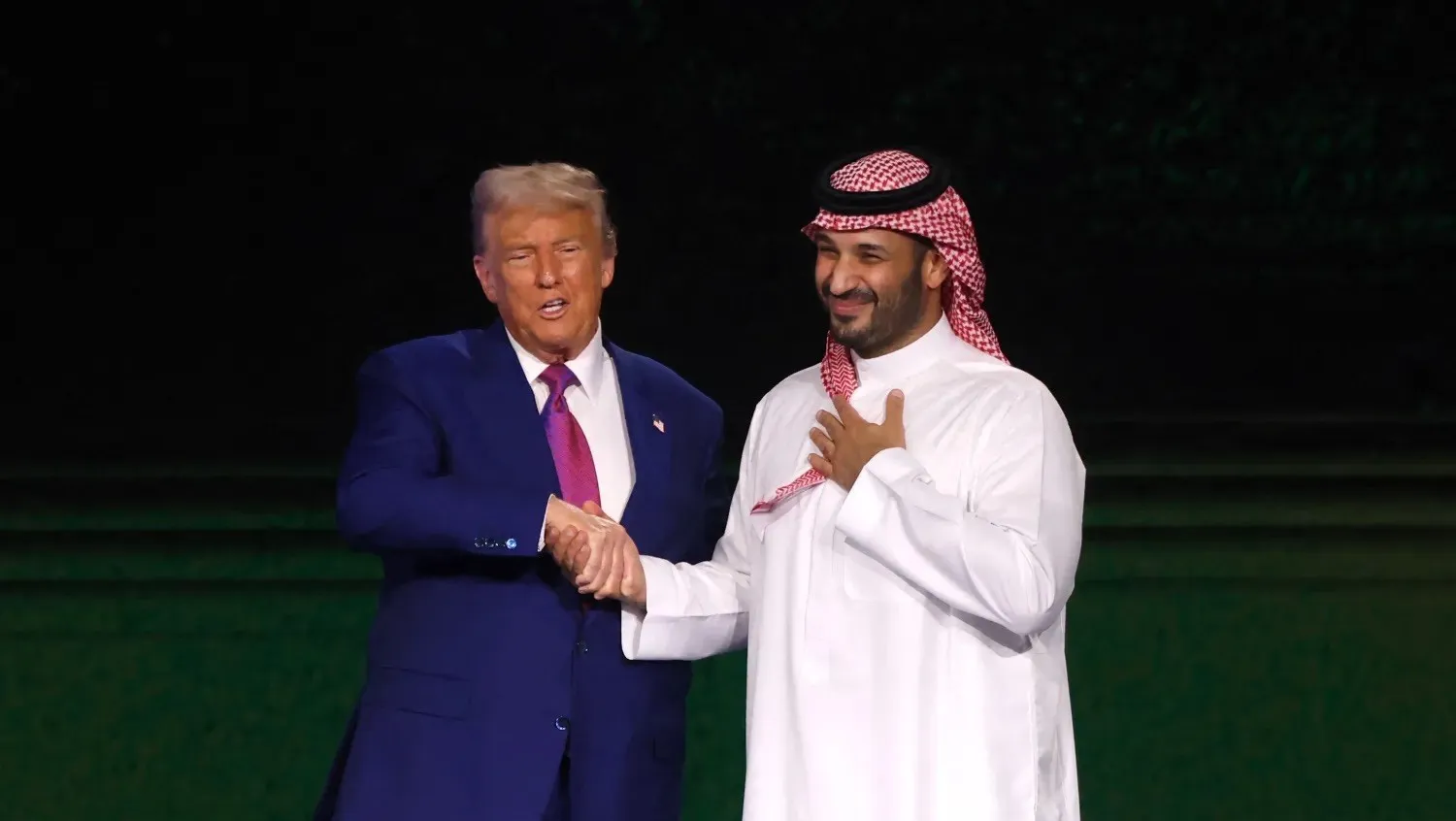
Prince Mohammed bin Salman, Saudi Crown Prince and Prime Minister, and US President Donald Trump at the Saudi-US Investment Forum in Riyadh. (Investment Forum) 
TT

AI Fuels a ‘Golden Age’ of Tech Partnership between Riyadh and Washington 

Prince Mohammed bin Salman, Saudi Crown Prince and Prime Minister, and US President Donald Trump at the Saudi-US Investment Forum in Riyadh. (Investment Forum) 

Saudi Arabia and the United States are entering a new phase of strategic cooperation driven by artificial intelligence and transformative technologies, at a moment when nations worldwide are racing to build innovation-based digital economies.

The momentum surrounding Crown Prince and Prime Minister Mohammed bin Salman’s visit to Washington - previously described by the White House as marking a “golden age” in bilateral ties - has underscored the growing strength of the two countries’ technology partnership.

During US President Donald Trump’s visit to Saudi Arabia in May, Saudi and American companies announced a package of major investments exceeding $100 billion. The agreements span advanced infrastructure projects, specialized data centers, and strategic partnerships in technology, energy, and innovation.

Executives at leading AI companies told Asharq Al-Awsat that Saudi Arabia has become one of the fastest-growing and most attractive markets for technology investment.

They noted the expansion of joint partnerships in artificial intelligence, advanced computing, and cybersecurity, supported by Vision 2030 and improvements to the Kingdom’s regulatory environment and digital infrastructure.

Cross-continental investments

The Kingdom’s expanding technology agenda is increasingly reflected on the global stage. Saudi firm DataVolt recently unveiled plans to invest $20 billion to establish AI-focused data centers and energy infrastructure in the United States.

The initiative underscores Saudi Arabia’s efforts to broaden its global tech footprint and deepen cooperation with leading American companies, in a model of mutual partnership.

Conversely, major US technology companies have reinforced their commitment to the Saudi market. Giants such as Google, Oracle, Salesforce, AMD, and Uber have pledged joint investments worth up to $80 billion to advance AI technologies and digital transformation in both countries, with the aim to stimulate innovation and support a knowledge-based economy.

These investments are expected to reshape the landscape of bilateral partnerships, particularly since US investment in Saudi Arabia’s AI sector previously stood at just $3.9 billion.

According to preliminary estimates from Google Cloud, its cooperation with Saudi Arabia's Public Investment Fund (PIF) could add roughly $70.6 billion to Saudi GDP in the coming years, based on analysis by the consultancy Access Partnership.

HUMAIN and Nvidia: Building a regional computing hub

A notable turning point emerged with the launch of the Saudi company HUMAIN, established to develop large-scale advanced-computing and AI infrastructure in collaboration with US firms.

HUMAIN also announced a strategic partnership with Nvidia to develop major data centers and multi-agent AI platforms, positioning the Kingdom as one of the region’s leading hubs for advanced computing.

Tareq Amin, CEO of HUMAIN, said during the recent Future Investment Initiative conference in Riyadh that one of the world’s major AI-chip suppliers is considering investment in the company.

HUMAIN currently sources chips from Nvidia, AMD, Qualcomm, and Groq to power its platforms and advanced data centers.

Deepening cooperation

Ayman AlRashed, Regional Vice President at IBM Saudi Arabia, said the technology partnership between the Kingdom and US is entering a new phase characterized by deepening cooperation and shared commitment.

IBM has strengthened its presence by establishing its regional headquarters in Riyadh and launching an advanced cybersecurity center, he told Asharq Al-Awsat.

The company has invested more than $200 million in a software development lab focused on talent development, advanced AI solutions, data and AI platforms, and export-ready technologies, he revealed.

AlRashed added that IBM’s collaboration with the Saudi Data and AI Authority (SDAIA) to host the Arabic large-language model “Allam” on the IBM WatsonX platform demonstrates the potential of such partnerships to produce advanced AI solutions tailored to local needs, enabling the Kingdom to lead regional technological progress.

He expects Saudi Arabia’s rapidly expanding market, bolstered by major investments and an ambitious national innovation agenda, to create significant opportunities for deeper US–Saudi cooperation.

Rising demand

Zaid Ghattas, General Manager for AMD in the Middle East, Türkiye, and Africa, said that Saudi-US technology cooperation is experiencing remarkable growth driven by surging demand for advanced computing and AI.

AMD supports the Kingdom’s strategic projects through high-performance computing technologies and the development of data centers, he said in remarks to Asharq Al-Awsat.

The next five years will bring further expansion in collaboration, particularly through programs such as “Made in Saudi Arabia,” which promote local technology manufacturing, he went on to say.

AMD is already partnering with Hewlett Packard Enterprise and Alfanar to manufacture servers powered by AMD processors in Riyadh.

According to Ghattas, Saudi Arabia’s significant investment in digital infrastructure and talent makes it one of the world’s most attractive markets, with AI expected to contribute more than $135 billion to GDP by 2030.

Regional headquarters

Mamdouh Aldoubayan, Managing Director for the Middle East and North Africa at Globant, said Saudi Arabia has become one of the region’s most important technology markets, supported by a projected 9 percent annual growth in IT services through 2027.

He told Asharq Al-Awsat that Vision 2030 has created a compelling business environment that has encouraged global companies to open regional headquarters in Riyadh, including Globant, which focuses on AI, cloud computing, and data solutions.

Aldoubayan added that demand for advanced digital solutions continues to rise in the Kingdom, supported by flexible regulations, government smart-city initiatives, and a strong pool of national talent, making Saudi Arabia an ideal destination for global tech firms.



Kuwaiti Foreign Minister Arrives in Riyadh on Official Visit

Photo by SPA
Photo by SPA
TT

Kuwaiti Foreign Minister Arrives in Riyadh on Official Visit

Photo by SPA
Photo by SPA

Kuwaiti Minister of Foreign Affairs Sheikh Jarrah Jaber Al-Ahmad Al-Sabah arrived Wednesday in Riyadh on an official visit to Saudi Arabia.

He was received by Saudi Vice Minister of Foreign Affairs Waleed Elkhereiji at King Khalid International Airport.


Qatar Says Iran Missile Struck Tanker in Its Waters

28 March 2026, Qatar, Doha: A view of the West Bay skyline in Doha with its lights switched off during Earth Hour. (dpa)
TT

Qatar Says Iran Missile Struck Tanker in Its Waters

28 March 2026, Qatar, Doha: A view of the West Bay skyline in Doha with its lights switched off during Earth Hour. (dpa)

Qatar said on Wednesday that a tanker leased to its state-owned energy company was struck by an Iranian missile in the Gulf country's territorial waters.

"Qatar was targeted... by three cruise missiles launched from Iran," the Defense Ministry said in a statement.

Qatar's military "intercepted two of the cruise missiles, while the third missile struck an oil tanker leased to QatarEnergy in Qatar's territorial waters," it said.

"Coordination was established with relevant authorities to evacuate the tanker, which had 21 crew members on board, without any human casualties," the ministry added.

Gulf countries have faced repeated drone and missile salvos from Iran over the past month in response to US and Israeli strikes that began at the end of February.

Iran has targeted hydrocarbon infrastructure in the oil-rich Gulf nations as well as shipping, effectively closing the strategic Strait of Hormuz, through which one-fifth of global oil usually passes.

QatarEnergy said in a statement the Aqua 1, a fuel oil tanker, had been "the subject of a missile attack in the northern territorial waters of the State of Qatar in the early morning hours of Wednesday".

It confirmed no crew members had been injured and there was "no impact on the environment as a result of this incident".


Gulf Countries Demand to Be Part of Any Regional Security Agreement

Damage to the Kuwait-flagged Al-Salmi crude oil tanker, following a reported strike, amid the US-Israeli conflict with Iran, March 31, 2026. (Kuwait Petroleum Corporation / Reuters)
TT

Gulf Countries Demand to Be Part of Any Regional Security Agreement

Damage to the Kuwait-flagged Al-Salmi crude oil tanker, following a reported strike, amid the US-Israeli conflict with Iran, March 31, 2026. (Kuwait Petroleum Corporation / Reuters)

Defenses across the Gulf continued on Wednesday to shoot down dozens of rockets and drones from Iran targeting civilian and private property in blatant violation of international law and the United Nations Charter.

Amid the tensions, Gulf countries stressed on Tuesday the need for them to be part of any future security agreement covering the region. They underlined that their regional security is integral to any future arrangements.

Qatar’s Foreign Ministry spokesman Majed al-Ansari said Gulf countries share a united stance that calls for ending the escalation.

They are in agreement on the need to be main party to any agreement struck in the region, he told a press briefing.

The countries are in constant contact with each other to serve everyone’s interests, he went on to say.

"Several red lines have been crossed in this war, especially with the targeting of infrastructure and nuclear sites. Gulf leaders are working on ending the war," he stated.

He added that Qatar supports the Pakistan-led mediation to end the conflict, hoping they would lead to peace and de-escalation.

Al-Ansari also warned of the danger against marine navigation in the Gulf, saying the closure of the Hormuz Strait impacts global energy security.

He called against attacks on energy infrastructure, revealing: "We are acting with international partners over Hormuz and we are committed to the security of energy and supply chains."

Prime Minister Sheikh Mohammed bin Abdulrahman Al Thani discussed Hormuz during a recent visit to Washington.

Moreover, Doha rejects attempts to drag it into the conflict, said al-Ansari, while also expressing concern over the possibility of an American ground operation in Iran.

On the ground, Saudi defenses intercepted and destroyed seven ballistic missiles fired at Riyadh and one fired at the Eastern Region.

Twelve drones were also destroyed on Tuesday, said Defense Ministry spokesman Turki al-Malki.

The civil defense, meanwhile, said shrapnel from a downed drone wounded two people and damaged three houses and several vehicles in the Al-Kharj region.

Meanwhile, the Ministry of Hajj and Umrah activated a special operations room to facilitate the arrival of pilgrims amid the war. Efforts will aim to resolve all challenges and offer services to pilgrims arriving from outside the Kingdom, with cooperation being carried out between the General Authority of Civil Aviation and concerned parties to ensure their safety.

Minister of Hajj and Umrah Dr. Tawfig Al-Rabiah made the announcement during an Umrah forum in Madinah. He underlined the readiness of the ministry and concerned parties to handle emergencies amid the developments in the region.

UAE President Sheikh Mohamed bin Zayed Al Nahyan and Emir of Qatar Sheikh Tamim bin Hamad Al Thani meet in Abu Dhabi. (WAM)

In Kuwait, a drone attack by Iran and its allies hit a fuel tank at Kuwait International Airport, sparking a fire, authorities said.

The state-run KUNA news agency said the attack early Wednesday sparked a "large fire" at the airport.

It said there were no immediate injuries from the attack and firefighters were working to control the blaze.

Kuwait International Airport has been attacked before by Iran during the war. The KUNA report suggested the attack may have been launched by Iranian-supported militias in Iraq with Tehran’s support.

The armed forces destroyed five hostile ballistic missiles and seven drones on Tuesday.

In another strike, Bahrain said early on Wednesday morning that it was working to extinguish a fire at a business facility that resulted from an Iranian attack.

A Bangladeshi national was killed by falling shrapnel after a drone interception in the United Arab Emirates, the official WAM news agency said on Wednesday.

"Shrapnel falling from the interception of a drone... resulted in the killing of a person of Bangladeshi nationality," WAM posted on X, adding that the incident happened in Fujairah.

On Tuesday, UAE President Sheikh Mohamed bin Zayed Al Nahyan and Emir of Qatar Sheikh Tamim bin Hamad Al Thani held talks on regional developments in Abu Dhabi.

They tackled the impact of the war on the region, world and the global economy.

They discussed the terrorist Iranian attacks against the Gulf and that are targeting civilians and civilian infrastructure.