


Saudi Arabia Becomes 21st Member of the World’s Most Advanced Fighter Jet Club 

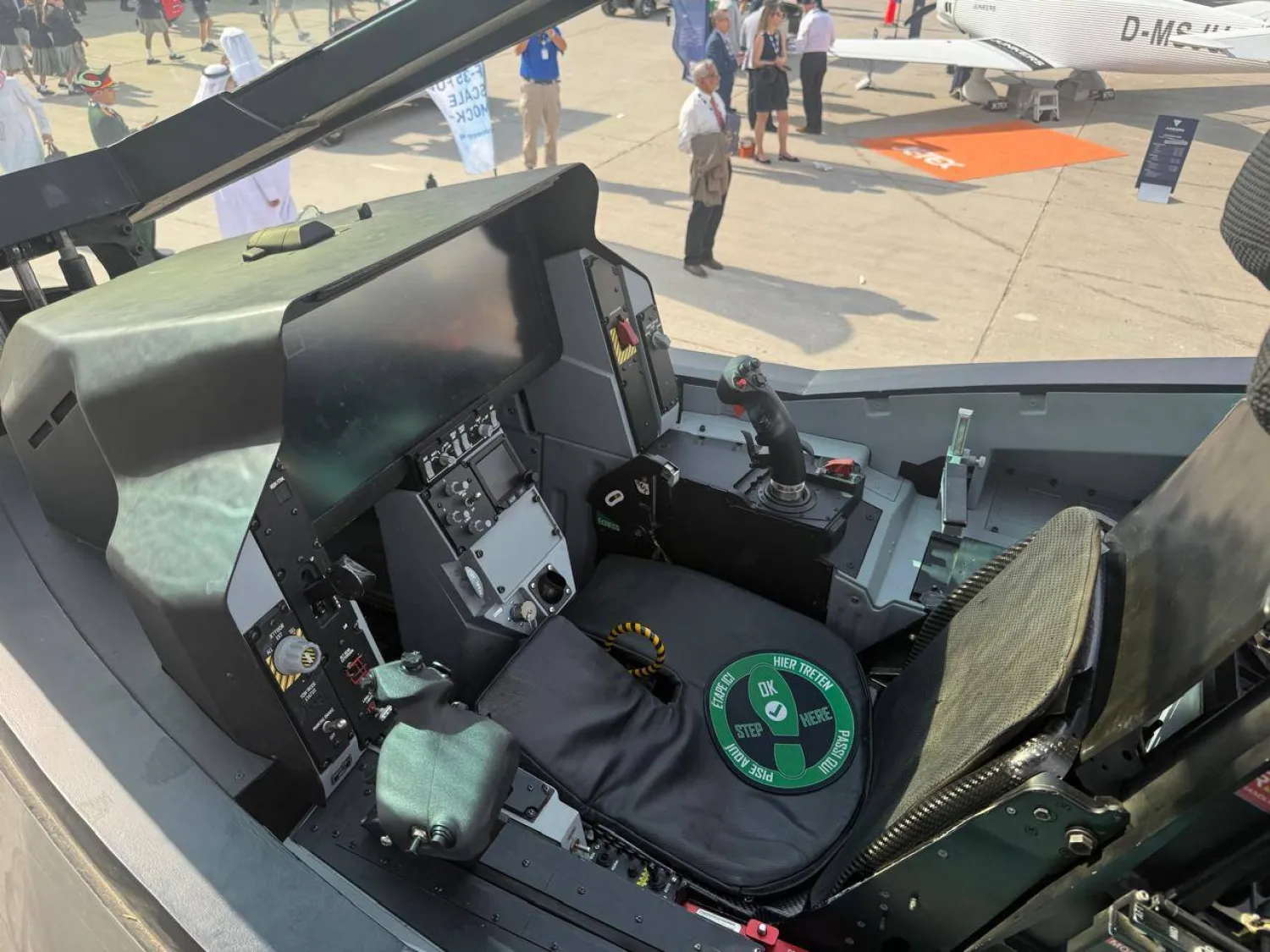
An F-35 fighter jet displayed by Lockheed Martin at the Dubai Airshow. (Asharq Al-Awsat)
TT

Saudi Arabia Becomes 21st Member of the World’s Most Advanced Fighter Jet Club 

An F-35 fighter jet displayed by Lockheed Martin at the Dubai Airshow. (Asharq Al-Awsat)

US President Donald Trump’s announcement approving the sale of F-35 fighter jets to Saudi Arabia has made the Kingdom the 21st nation to join the select group operating what is widely regarded as the world’s most advanced combat aircraft.

The American manufacturer Lockheed Martin describes its stealth F-35 as “the most advanced fighter jet in the world,” citing performance data and operational figures that highlight the aircraft’s expanding global presence and its central role in 21st Century air-defense architecture.

According to the latest figures as of November 2025, the F-35 program has widened to include 20 partner countries, with more than 1,255 aircraft delivered so far.

Data shows that the fighter - examined by Asharq Al-Awsat during an exclusive tour at the Dubai Airshow - has entered widespread operational service, with 50 air and naval bases activated to host and operate it. A total of 11 countries are now flying the jet from their own soil.

Lockheed Martin estimates that by 2035, Europe alone will operate more than 700 F-35s, while the Indo-Pacific will field more than 300, underscoring the aircraft’s pivotal role in the modernization strategies of US allies.

The company positions the F-35 as a highly versatile, multi-role fighter featuring an extremely low radar cross-section. Its stealth characteristics rely on precision shaping, reduced engine heat signature, and internal carriage of weapons and fuel to maintain low observability and minimize detection by conventional sensors.

Technically, the jet carries an advanced suite of sensors, including an AESA radar, the Distributed Aperture System (DAS), the Electro-Optical Targeting System (EOTS), and sophisticated electronic-warfare capabilities.

Through data-fusion technology, the pilot receives a unified, real-time operational picture of the battlespace, improving situational awareness, accelerating decision-making, and increasing the effectiveness of engagements.

Lockheed Martin stresses that the F-35 is built to function within a broad, integrated combat network. The aircraft serves as a secure communications and information-sharing platform, transmitting imagery and data simultaneously with air, land, and sea assets, reinforcing modern concepts of network-centric warfare.

The F-35 can carry a broad array of munitions, whether inside its two internal bays for maximum stealth or on external hardpoints in permissive environments, with a total payload capacity exceeding 18,000 pounds.

Program data shows that the aircraft has become a mainstay of 16 air forces and military services worldwide, completing more than 691,000 sorties since entering service and participating in numerous major international exercises.



Saudi, Syrian FMs Discuss Efforts to Support Syria's Security, Economy

Saudi Minister of Foreign Affairs Prince Faisal bin Farhan bin Abdullah and his Syrian counterpart Asaad Al-Shaibani meet in Riyadh on Monday. (SPA)
TT

Saudi, Syrian FMs Discuss Efforts to Support Syria's Security, Economy

Saudi Minister of Foreign Affairs Prince Faisal bin Farhan bin Abdullah and his Syrian counterpart Asaad Al-Shaibani meet in Riyadh on Monday. (SPA)

Saudi Minister of Foreign Affairs Prince Faisal bin Farhan bin Abdullah received in Riyadh on Monday his Syrian counterpart Asaad Al-Shaibani.

They reviewed fraternal relations between their two countries and discussed developments in Syria.

They also tackled ways to support Syria's security and economy in a manner that fulfills the aspirations of its people.


Saudi Arabia Reiterates Support for Sudan's Unity, Security

A general view of the Sudanese refugee camp in Goudrane, Wadi Fira, Chad, on January 31, 2026 near the city of Iriba. (AFP)
TT

Saudi Arabia Reiterates Support for Sudan's Unity, Security

A general view of the Sudanese refugee camp in Goudrane, Wadi Fira, Chad, on January 31, 2026 near the city of Iriba. (AFP)

Saudi Arabia reiterated on Monday its unwavering support for the unity, security, and stability of Sudan, stressing the need to preserve its legitimate state institutions.

The Kingdom demanded that the Rapid Support Forces (RSF) immediately cease their violations and adhere to their moral and humanitarian obligations. This includes ensuring the delivery of relief aid to those in need, in line with international humanitarian law and the Jeddah Declaration to Protect Civilians in Sudan, signed on May 11, 2023.

Saudi Arabia delivered its statement during the interactive dialogue on the High Commissioner for Human Rights' oral briefing regarding the situation in and around El-Fasher. The Kingdom's Permanent Mission to the United Nations and other international organizations in Geneva participated in the session.

Delivering the statement, Permanent Representative Ambassador Abdulmohsen bin Khothaila reiterated the Kingdom's "strong condemnation of the grave human rights violations committed during the RSF's attacks on El-Fasher."

He specifically highlighted "recent criminal attacks on health facilities, relief convoys, and civilian infrastructure, which have resulted in the deaths of dozens of displaced persons and unarmed civilians, including women and children."


Saudi Arabia's KSrelief Inaugurates Maternity Clinic at Al-Awda Hospital in Central Gaza

KSrelief inaugurates the women's and maternity clinic at Al-Awda Hospital in central Gaza on Monday. (SPA)
TT

Saudi Arabia's KSrelief Inaugurates Maternity Clinic at Al-Awda Hospital in Central Gaza

KSrelief inaugurates the women's and maternity clinic at Al-Awda Hospital in central Gaza on Monday. (SPA)

Saudi Arabia's King Salman Humanitarian Aid and Relief Center (KSrelief) inaugurated on Monday the women's and maternity clinic at Al-Awda Hospital in central Gaza.

Implemented in cooperation with the United Nations Population Fund (UNFPA), the project marks the completion of restoration and rehabilitation work following extensive damage sustained during the conflict with Israel, which had forced the facility to close.

The clinic's rehabilitation is part of a broader initiative to ensure access to essential services and promote maternal and newborn health among the affected population in Gaza.

The project targets the rehabilitation and support of women's and maternity departments in three major hospitals: Friends of the Patient Hospital, Al-Khair Hospital, and Al-Awda Hospital. It aims to improve the quality of reproductive health services and ensure pregnant and lactating women have access to safe healthcare.

The initiative is part of Saudi Arabia's ongoing efforts, through KSrelief, to ease the suffering of the Palestinian people and provide essential services amid the significant challenges facing the health sector in Gaza.