

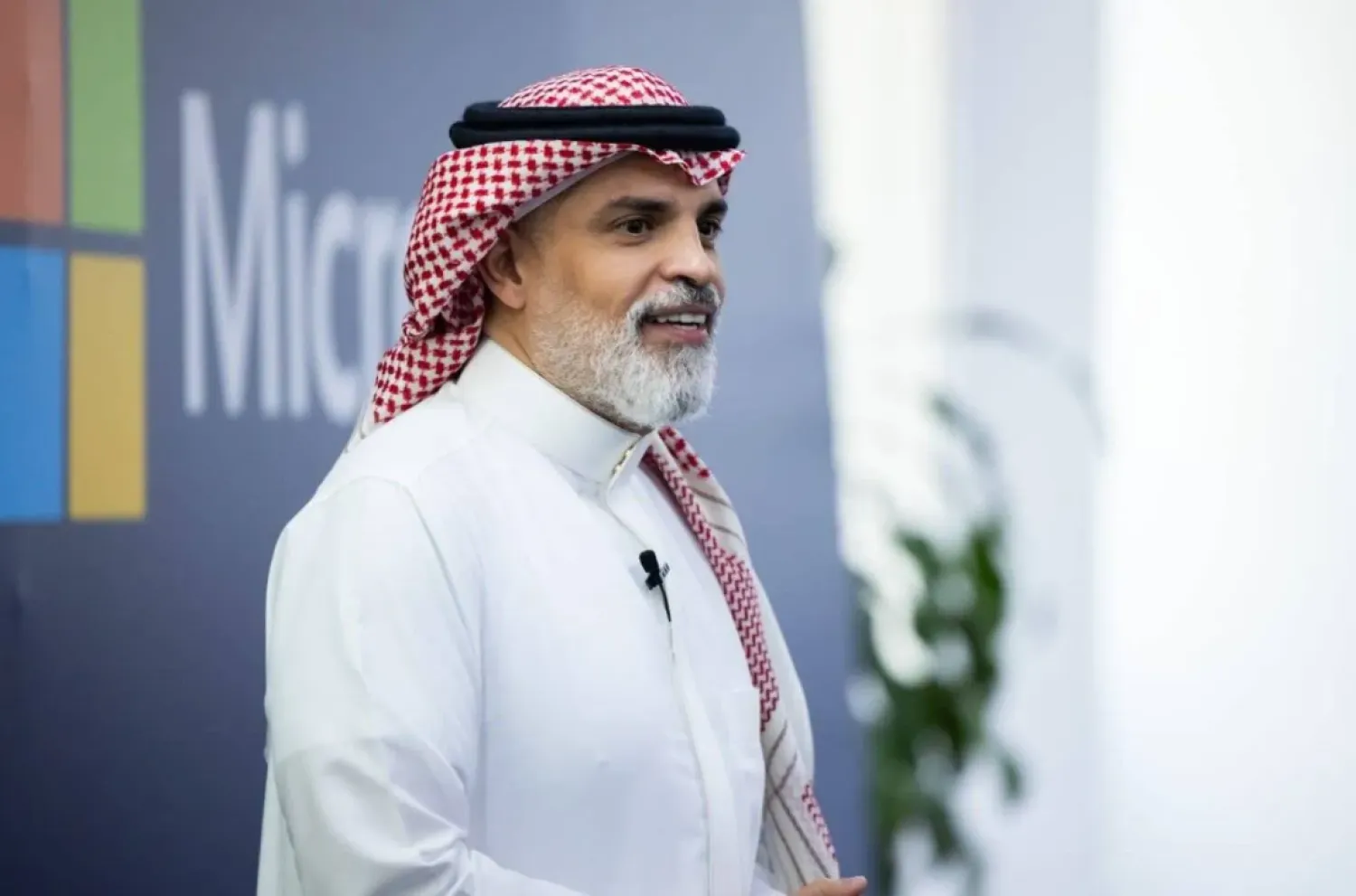

Microsoft Completes Three Azure Availability Zones in Saudi Arabia to Power Generative AI

Turki Badhris, head of Microsoft Arabia (Asharq Al-Awsat)
TT

Microsoft Completes Three Azure Availability Zones in Saudi Arabia to Power Generative AI

Turki Badhris, head of Microsoft Arabia (Asharq Al-Awsat)

Microsoft has confirmed the completion of three "availability zones" within its Azure data center region in Saudi Arabia. This development is critical to solidifying the Kingdom's regional leadership in artificial intelligence (AI).

This infrastructure provides "sovereign cloud" capabilities, enabling government entities and the private sector to adopt generative AI technologies locally while fully complying with national regulations.

This move strengthens the Kingdom's position as a secure, compliant, and AI-ready digital hub, aligning directly with Vision 2030 goals. The company's "AI Diffusion 2025 Report" ranked Saudi Arabia among the top three in the Middle East and Africa and among the top 25 countries globally in AI adoption, noting that approximately one-third of users in the Kingdom are now active adopters of AI-enhanced tools, SPA reported.

Regarding national capability development, Microsoft reported that joint training programs have reached more than one million beneficiaries over the past two years. Key initiatives include training over two-thirds of a million participants in the Saudi Data and Artificial Intelligence Authority's (SDAIA) "SAMAI" initiative, empowering over 5,000 women through specialized programs, and training thousands of students and over 100,000 teachers through partnerships like the AI Academy and the Microsoft Center of Excellence.

The academy’s training has extended to more than 40 universities, producing finalists in international competitions, with intensive camps enabling participants to obtain professional certifications and secure employment for some before graduation.

Microsoft highlighted several examples of the operational impact of its services: Maaden increased productivity and governance, saving more than 2,000 hours per month using Microsoft 365 Copilot and Azure OpenAI. Obeikan Investment Group connected over 1,200 machines, achieving a 30% increase in productivity on the O3ai platform.

Saudia Airlines developed a smart travel companion using GPT-4 on Azure OpenAI, and ACWA Power enhanced operational safety and water-quality readings using Azure AI capabilities.

Microsoft concluded by stressing that its role as a technology partner to the Kingdom is expanding in preparation for major events like Expo 2030 and the 2034 World Cup, and by supporting giga-projects—including NEOM, Qiddiya, and the Red Sea—and enabling digital transformation in key sectors like energy, finance, and logistics.


Trump Media to Merge with Nuclear Fusion Company that Wants to Power AI

FILE - The download screen for Truth Social app is seen on a laptop computer, March 20, 2024, in New York.  (AP Photo/John Minchillo, File)
FILE - The download screen for Truth Social app is seen on a laptop computer, March 20, 2024, in New York. (AP Photo/John Minchillo, File)
TT

Trump Media to Merge with Nuclear Fusion Company that Wants to Power AI

FILE - The download screen for Truth Social app is seen on a laptop computer, March 20, 2024, in New York.  (AP Photo/John Minchillo, File)
FILE - The download screen for Truth Social app is seen on a laptop computer, March 20, 2024, in New York. (AP Photo/John Minchillo, File)

Trump Media & Technology will merge with a fusion power company in an all-stock deal that the companies said Thursday is valued at more than $6 billion.

Devin Nunes, the Republican congressman who resigned in 2021 to become the CEO of Trump Media, will be co-CEO of the new company with TAE Technologies CEO Michl Binderbauer.

The combined company says it plans to find a site and begin construction next year on the “world’s first utility-scale fusion power plant,” with aims to provide the electricity needed for artificial intelligence.

Shares of Trump Media & Technology, the parent company of President Donald Trump's Truth Social media platform, have tumbled 70% this year but jumped 20% before the opening bell Thursday.

Backed by Google and other investors, TAE is a private company and the merger with Trump Media would create one of the first publicly traded nuclear fusion companies.

“We’re taking a big step forward toward a revolutionary technology that will cement America’s global energy dominance for generations," The Associated Press quoted Nunes as saying in a prepared statement.

TAE focuses on nuclear fusion, a technology that combines two light atomic nuclei to form a single heavier one. It releases enormous amount of energy, a process that occurs on the sun and other stars, according to the United Nations' International Atomic Energy Agency. It's been seen as a promising solution to climate change caused by burning fossil fuels, but one that is a long way off compared to today's clean technologies like wind and solar.

TAE and Trump Media shareholders will each own approximately 50% of the combined company.

Trump is by far the largest stakeholder in Trump Media, owning 41% of all outstanding shares.

In October, the US Department of Energy released what it called a “roadmap” for fusion technology, with the aim of fostering “a burgeoning fusion private sector industry in the US toward maturity on the most rapid timeline.”

A number of tech companies, including Google, Microsoft and OpenAI CEO Sam Altman, have shown interest in fusion technology as a way of powering the energy-hungry data centers needed to build and run their AI products.

TAE and Trump Media say the transaction values each TAE common stock at $53.89 per share.

At closing, Trump Media & Technology Group will be the holding company for Truth Social and TAE, along with its subsidiaries TAE Power Solutions and TAE Life Sciences.


Brazil to Get Satellite Internet from Chinese Rival to Starlink in 2026

Brazil's new Chief of Staff of the Presidency Rui Costa attends a ministerial meeting at the Planalto Palace in Brasilia, Brazil January 6, 2023. REUTERS/Adriano Machado
TT

Brazil to Get Satellite Internet from Chinese Rival to Starlink in 2026

Brazil's new Chief of Staff of the Presidency Rui Costa attends a ministerial meeting at the Planalto Palace in Brasilia, Brazil January 6, 2023. REUTERS/Adriano Machado

Chinese low Earth orbit satellite company SpaceSail will start providing internet access to remote areas in Brazil in the first half of 2026, President Luiz Inacio Lula da Silva's chief of staff, Rui Costa, said on Wednesday, Reuters reported.

SpaceSail and Brazil's state-owned telecom Telebras had signed a memorandum of understanding in late 2024 to offer satellite internet services for schools, hospitals and other essential services in the South American country.

SpaceSail competes directly with Elon Musk's Starlink in the satellite internet market.


Google Launches First Ever Co-branded Credit Card in India

FILE PHOTO: A Google logo is seen at a company research facility in Mountain View, California, US, May 13, 2025. REUTERS/Carlos Barria/File Photo
TT

Google Launches First Ever Co-branded Credit Card in India

FILE PHOTO: A Google logo is seen at a company research facility in Mountain View, California, US, May 13, 2025. REUTERS/Carlos Barria/File Photo

Alphabet Inc's Google Pay launched its first co-branded digital credit card in India on Wednesday in partnership with Axis Bank, intensifying efforts to monetize its massive user base in the country's crowded fintech sector.

WHY IT'S IMPORTANT

While Google Pay is a dominant player in India's popular domestic payments network, the Unified Payments Interface (UPI), its core service generates zero revenue from user-to-user payments due to government mandates. It, however, earns commissions for in-app services like bill payments and mobile recharges, Reuters reported.

The credit card launch opens a new avenue for Google to monetize its user base, mirroring strategies by domestic rivals Paytm and PhonePe to cross-sell lending products to payment users.

BY THE NUMBERS

India has just 50 million credit card holders, according to Google Pay, whereas its population exceeds 1.4 billion.

Google Pay meanwhile is the second top app in India by number of UPI transactions, having processed nearly 7.2 billion transactions in October alone.

HOW IT WORKS

Axis Bank manages the credit risk and issuance, while the digital-only card will be linked to the Google Pay app to make online and offline payments on the go.