
What Do We Know About the Palestinian Forces Training to Operate in Gaza?

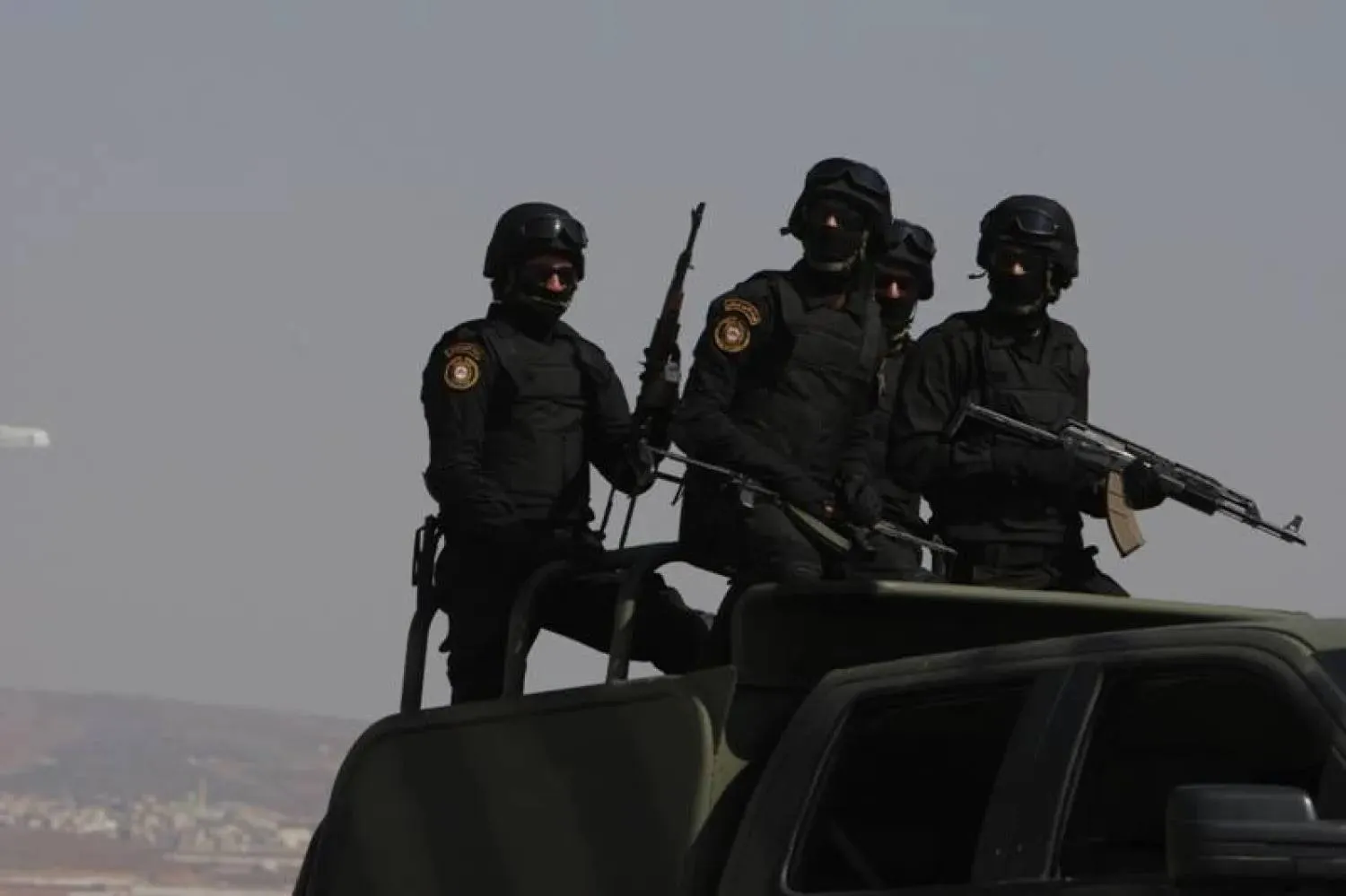
Special Operations Unit 101 of the Palestinian National Security Forces (National Security website) 
TT

What Do We Know About the Palestinian Forces Training to Operate in Gaza?

Special Operations Unit 101 of the Palestinian National Security Forces (National Security website) 

Palestinian security agencies have begun preparing for a possible return to Gaza, as officers undergo targeted training in Egypt and Jordan for what could become a post-war security mission in the territory.

Although these training programs have existed for years, officials say recent sessions are now designed with “the day after” scenario in mind.

The shift follows a UN Security Council resolution supporting a plan proposed by US President Donald Trump that secured a ceasefire last month after two years of fighting between Israel and Hamas.

The plan calls for an international stabilization force responsible for guarding borders with Israel and Egypt and removing weapons from “non-governmental armed groups” in Gaza.

Major General Anwar Rajab, spokesperson for the Palestinian Security Forces, told Asharq Al-Awsat that Palestinian forces are “ready to take control of Gaza immediately,” though political agreement is still pending.

He said only small groups have received mission-specific training so far, but “thousands more will undergo additional training in the coming weeks under the supervision of friendly Arab and European countries.” Still, he cautioned that “nothing is final yet,” and that uncertainty remains over the future of Gaza’s governance.

A European official told Agence France-Presse that the EU plans to train up to 3,000 police officers from Gaza, similar to its long-standing programs in the West Bank. The trainees will be chosen from officers not affiliated with Hamas.

Although around 7,000 police in Gaza remain on the Palestinian Authority payroll, many are retired or unfit for duty; roughly 3,000 could be retrained, with training expected to occur outside Gaza.

Rajab confirmed that while some officers have died, retired, or grown too old to serve, “our forces in Gaza remain operational and ready.” Gaza currently has about 13,000 security personnel, with another 36,000 serving in the West Bank.

The EU, the largest financial supporter of the Palestinian Authority, has funded police training in the West Bank since 2006. EU ministers will discuss the Gaza plan during a meeting in Brussels that coincides with an international donor conference attended by about 60 delegations, excluding Israel.

The UN resolution authorizes a temporary international force to work alongside Israel, Egypt and newly trained Palestinian units to secure border areas. Israeli media report the government is already preparing for the arrival of foreign troops.

Prime Minister Benjamin Netanyahu warned that Hamas would be disarmed “either the easy way, through international forces, or the hard way, by Israel.”

Palestinian officials reject that interpretation. A senior Palestinian Authority source told Asharq Al-Awsat that the international force should “secure borders and protect civilians, while assisting Palestinian forces, without deploying deep inside Gaza or interfering in internal affairs.”

He insisted that Gaza must remain under full Palestinian political and legal authority. He said: “Gaza is part of the Palestinian state, and our responsibility, not anyone else’s.”

He added that Hamas’ weapons should be handed over only to the Palestinian Authority. President Mahmoud Abbas has previously demanded Hamas surrender its arms, but the group has not agreed. Hamas says it might only consider disarmament within a comprehensive deal leading to full Palestinian statehood, complicating the mission for any foreign force.

Arab governments, according to diplomatic sources, do not want their troops drawn into fighting in Gaza or tasked with disarming Palestinian factions, especially a mission that Israel could not accomplish.

Rajab reaffirmed the Palestinian stance of “one state, one law, and one legitimate weapon,” and emphasized that any foreign presence must not replace Palestinian security forces. The only military unwelcome in Gaza, he said, is Israel: “We will not accept a single Israeli soldier there.”

Countries reportedly being considered for participation in the international force include Indonesia, Pakistan and Azerbaijan, though details remain unclear. Jordan has ruled out sending troops but, along with Egypt, has expressed readiness to train Palestinian forces to assume responsibility for internal security, with full Palestinian consent and without foreign control inside Gaza.



Iran’s Araqchi to Visit Beirut After Lebanese FM Declines Trip to Tehran

Iranian Foreign Minister Abbas Araqhchi looks on during a press conference in Istanbul, Türkiye, June 22, 2025. REUTERS/Umit Bektas/File Photo
TT

Iran’s Araqchi to Visit Beirut After Lebanese FM Declines Trip to Tehran

Iranian Foreign Minister Abbas Araqhchi looks on during a press conference in Istanbul, Türkiye, June 22, 2025. REUTERS/Umit Bektas/File Photo

Iran's foreign minister, Abbas Araqchi, said on Thursday he would travel to Beirut for talks after receiving a formal invitation from his Lebanese counterpart, who a day earlier had declined to visit Tehran for direct talks.

On Wednesday, Lebanese Foreign Minister Youssef Raji said "current conditions" prevented him from travelling to Tehran, but stressed that the move did not mean rejection of dialogue with Iran.

Raji told Reuters late on Wednesday that he had invited Araqchi "in a formal diplomatic letter to come to Beirut to hold talks."

Araqchi said on X that he would "gladly accept the invitation to come to Beirut," although he said he found Raji's position "bemusing." He said foreign ministers of countries with "full diplomatic relations" did not need a neutral venue to meet.

"Subjected to Israeli occupation and blatant 'ceasefire' violations, I fully understand why my esteemed Lebanese counterpart is not prepared to visit Tehran," Araqchi added.

Raji said on Wednesday that Lebanon was ready to open a new phase of relations with Iran based on mutual respect, sovereignty and non-interference.

He added that no strong state could be built unless the government held the exclusive right to bear arms, in an apparent reference to calls to disarm Hezbollah, the Iran-aligned Lebanese armed group.


Berri Rejects Threats to the Lebanese

Lebanon Speaker Berri Receives United States Ambassador Michel Issa (Parliament)
TT

Berri Rejects Threats to the Lebanese

Lebanon Speaker Berri Receives United States Ambassador Michel Issa (Parliament)

Lebanon’s Parliament Speaker Nabih Berri dismissed what he called efforts to intimidate the Lebanese and underscored the "fundamental principles” that he says anchor negotiations with Israel via the Mechanism Committee.

He insisted that the May parliamentary elections will go ahead as scheduled and described his personal relationship with Saudi Arabia as “very good”, adding that ties between Lebanon and the kingdom were “good”.

Berri made the remarks during a meeting with senior Lebanese journalists from the Press Syndicate headed by Aouni Al-Kaaki.

His comments coincided with his second meeting in 24 hours with the United States ambassador to Beirut, Michel Issa.

According to a statement from the Speaker’s office, the talks reviewed “developments in the general situation and the latest events, as well as bilateral relations”.

Barrack’s “mistake”

Responding to a question from the syndicate on “threats voiced by some diplomats, especially repeated remarks by United States envoy Tom Barrack about joining Lebanon to Syria”, Berri said: “No one threatens the Lebanese."

"It is inconceivable to address the Lebanese in such language, especially from diplomats, let alone from someone like Ambassador Tom Barrack. What he said about annexing Lebanon to Syria is a big mistake that is completely unacceptable,” he added.

Berri said the Lebanese have “no alternative and no escape” from facing risks, repercussions and threats from any side except through unity, adding, “With unity we can liberate the land.”

Turning to the ceasefire agreement and negotiations, Berri asked, “Is the Mechanism Committee not a negotiating framework?”

“There are principles we negotiate through this committee, namely Israeli withdrawal, deployment of the Lebanese Army, and limiting weapons in the area south of the Litani to the hands of the Lebanese Army,” he explained, adding that the committee operates under American, French and United Nations sponsorship.

He added, “I have said more than once that there is no objection to bringing in any civilian or technical figure if needed, provided the agreement is implemented.”

Berri said Lebanon has fulfilled all required steps since November 2024. He said the Lebanese Army has deployed more than 9,300 officers and soldiers with the support of UNIFIL, which confirmed in its latest reports Lebanon’s compliance with all its obligations.

He added that Israel has violated the agreement with about 11,000 breaches.

Berri said the Lebanese Army has implemented 90 percent of the ceasefire provisions south of the Litani and will fully complete the remaining steps by the end of the year.

He said this was confirmed by UNIFIL, the Mechanism Committee and Army Commander General Rodolf Haykal.

“It is unfortunate that no one is asking whether Israel has complied with even a single clause of the ceasefire agreement. Instead, it has expanded its occupation of Lebanese territory,” he said.

No cancellation of parliamentary elections

On calls by some parliamentary blocs to amend the electoral law regarding expatriate voting, Berri said the existing law is in force and the elections will be held according to it.

“There will be no cancellation and no postponement. Everyone wants elections,” he said.

He added that he remains open to any formula leading to consensus on outstanding issues that divide political forces, especially the question of expatriates.

“No one wants to exclude expatriates. Even so, I have said and will repeat that we should implement the Taif Agreement in its provisions related to the electoral law and the establishment of a Senate. But are they willing?” he asked.

Berri reiterated that Lebanese bank deposits are “sacred rights” and warned that these rights must not be compromised, surrendered or accepted as lost.


Talks Fail on Transfer Mechanism for Syrian Prisoners in Lebanon

Prisoners stroll through a yard inside Roumieh prison, northeast of Beirut, on April 7, 2006. AFP
TT

Talks Fail on Transfer Mechanism for Syrian Prisoners in Lebanon

Prisoners stroll through a yard inside Roumieh prison, northeast of Beirut, on April 7, 2006. AFP

A Lebanese judicial delegation has returned from Damascus empty-handed, failing to secure the breakthrough it sought on a new treaty governing the transfer of Syrian prisoners held in Lebanon.

The talks instead laid bare deep rifts between the two sides, with Syria rejecting most of the proposed text and arguing that it fell short of even the minimum required to ensure the return of its nationals.

No agreement on all points

Even so, the Lebanese delegation sought to play down the gaps. A source close to the team said the atmosphere was positive but that there was no agreement on all points.

The source told Asharq Al-Awsat that Lebanon was cooperating with Damascus on the Syrian detainee file and appreciated Syria’s desire to complete the trials of those held in Lebanon or allow convicts to serve their sentences on Syrian territory.

The source acknowledged that the draft treaty applied only to convicts and did not include those still on trial, since handing over detainees requires a law issued by the Lebanese parliament, which is not currently possible.

Lebanon’s efforts to show flexibility did not receive a similar response in Damascus. Sources familiar with the meeting held in the Syrian capital described the draft agreement as loaded with problematic provisions and said it was unacceptable.

They said the two sides remained locked in disputes over two articles that Damascus viewed as attempts by Lebanon to sidestep understandings reached during talks in Damascus last month.

One article states that the transferring state, Lebanon, may refuse to hand over any convict or detainee without providing justification, based on considerations specific to it.

The sources said this effectively gave Lebanon the right to refuse the transfer of any Syrian prisoner without being required to present legal grounds.

The second, more sensitive, provision for the Syrians concerned what they saw as interference in the powers of Syrian authorities.

The sources said Article 10 of the treaty, which Lebanon intended to model after its agreement with Pakistan, stipulated that Syria, as the receiving state, may not grant amnesty to any convict or detainee handed over by Lebanon.

The agreement with Pakistan does not prohibit Islamabad from granting amnesty to its nationals returned from Lebanon.

The sources said Syria had already discussed all aspects of the agreement during its delegation’s visit to Beirut and had expressed a desire for Lebanon to facilitate the transfer of convicts and detainees under a clear mechanism that respects Lebanese sovereignty and applicable laws.

This mechanism would ban any Syrian who had been detained or convicted in Lebanon from reentering the country, and would allow Lebanese authorities to arrest and prosecute anyone who violates the ban.

Syrian dissatisfaction

Sources who followed Wednesday’s meeting in Damascus said the Syrian side was deeply dissatisfied with what it saw as Lebanese intransigence and a lack of flexibility, particularly since some of the convicts covered by the treaty have spent more than 11 years in Lebanese prisons.

Others remained in pretrial detention for years before their sentences were issued.

Damascus also informed the Lebanese delegation that it would not request the return of anyone proven to have killed Lebanese soldiers or carried out bombings that caused civilian casualties.

Tensions around the file heightened after the Lebanese delegation left Damascus without setting a date for another round of negotiations.

The sources expressed concern that Syria’s rejection of the draft could halt the dialogue altogether and strain bilateral relations.

Damascus has repeatedly said that establishing stable and strong ties requires a final resolution to the Syrian prisoners’ file in Lebanon, especially since most Syrians detained or convicted on terrorism charges had been part of the Syrian uprising, and their arrest and prosecution in Lebanon stemmed from their political choices.