Libya Nears Final Stage of Oil Exploration Bid Round, NOC Says

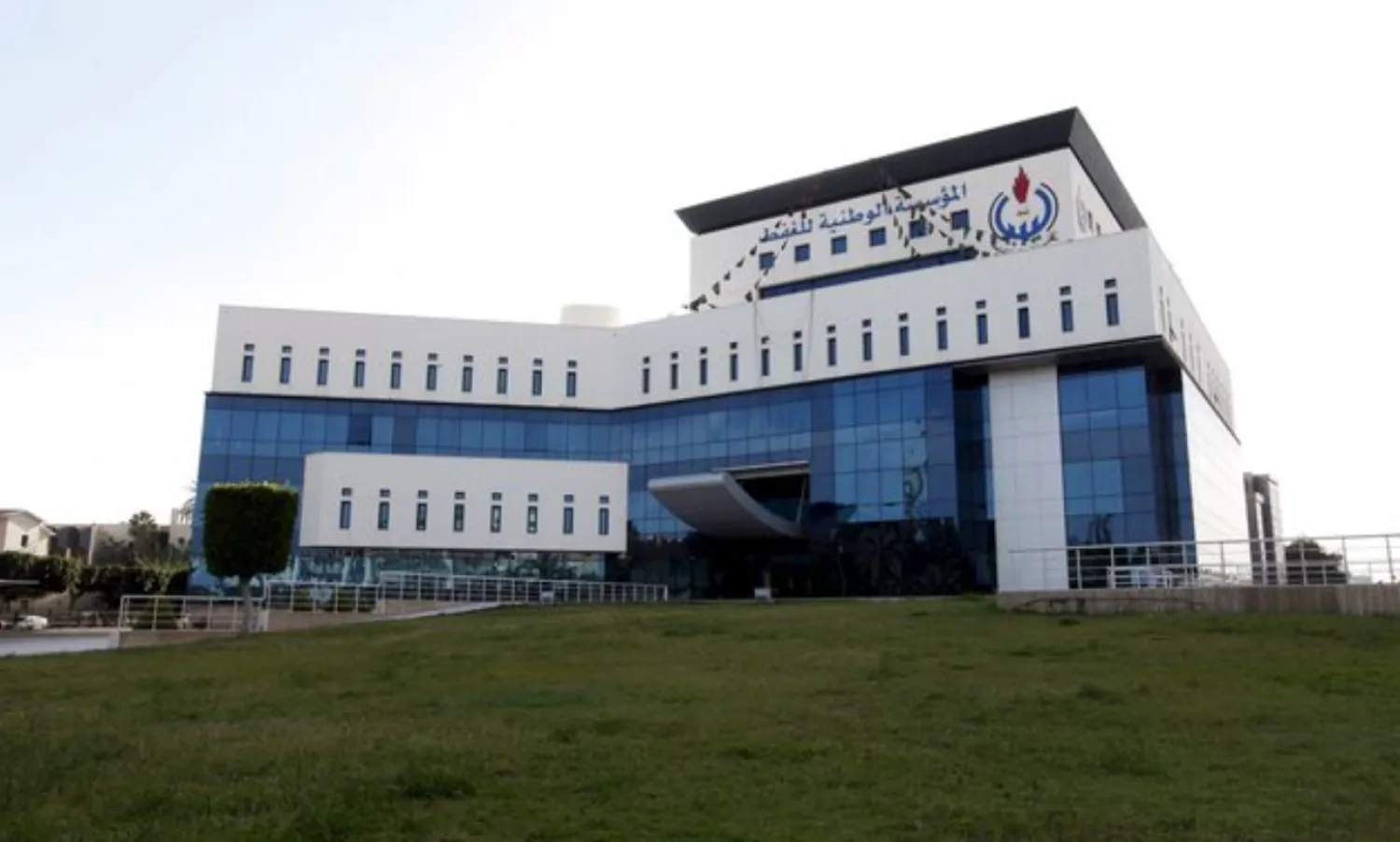
The building housing Libya's oil state energy firm, the National Oil Corporation (NOC), is seen in Tripoli, Libya February 22, 2016. REUTERS/Ismail Zitouny
TT

Libya Nears Final Stage of Oil Exploration Bid Round, NOC Says

The building housing Libya's oil state energy firm, the National Oil Corporation (NOC), is seen in Tripoli, Libya February 22, 2016. REUTERS/Ismail Zitouny

Libya's National Oil Corporation said it is approaching the final stage of a public exploration bid round, with companies expected to submit offers and open bids in February 2026, according to a statement on Thursday.

The bid round, the first in over 17 years, covers 22 areas for oil exploration and development, including 11 offshore and 11 onshore blocks, oil officials said, Reuters reported.

The bidding round, announced on March 3, comes as Africa's second-largest oil producer and member of the Organization of the Petroleum Exporting Countries (OPEC) seeks to raise its oil output.

"It will boost Libya's crude oil and gas reserves, supporting higher production and providing a measure of economic security for Libyans," NOC said.

Foreign investors have been wary of putting money in Libya, which has been in a state of chaos since the overthrow of Muammar Gaddafi in 2011. Disputes between armed rival factions over oil revenues have often led to oilfield shutdowns.


Saudi Tadawul to Open Fully to Direct Foreign Investment from Feb. 1

A view of the Saudi capital Riyadh. (Reuters)
TT

Saudi Tadawul to Open Fully to Direct Foreign Investment from Feb. 1

A view of the Saudi capital Riyadh. (Reuters)

Saudi Arabia’s Capital Market Authority (CMA) announced a landmark reform allowing all categories of foreign investors to invest directly in the Kingdom’s main stock market, Tadawul, starting February 1.

The move signals a strategic repositioning of the Saudi market as a highly competitive global investment destination.

The CMA has scrapped the “qualified foreign investor” requirement and abolished swap agreements, granting international investors full rights to direct share ownership.

The decision is underpinned by strong foreign investment momentum exceeding $157 billion and rising global confidence in the sustainability of Saudi economic growth.

The reform is also expected to increase Saudi Arabia’s weighting in major global indices, including MSCI and FTSE.

Under the new regulatory framework approved by the CMA’s board, the market shifts from “conditional openness” to “full openness.” Non-resident foreign investors will no longer be required to meet prior qualification criteria to access the main market.

The abolition of swap agreements - previously limiting investors to economic benefits without ownership - will allow foreign investors to hold shares directly and exercise full shareholder rights. This is expected to significantly boost liquidity and attract new institutional and individual investors.

According to the CMA, the amendments aim to expand and diversify the investor base, support capital inflows, and strengthen market liquidity.

By the end of the third quarter of 2025, international investors’ ownership in the Saudi market had surpassed SAR 590 billion ($157.3 billion), while foreign investment in the main market reached around SAR 519 billion, up from SAR 498 billion at the end of 2024. The Authority expects the new framework to draw additional international capital.

The steady rise in foreign investment, even before the reforms take effect, points to a potential surge in inflows in 2026 once the decision is implemented.

The announcement builds on earlier steps taken in July 2025, when the CMA eased procedures for opening and operating investment accounts for certain investor categories, including foreign individuals residing in Gulf Cooperation Council (GCC) states or with prior residency in Saudi Arabia or other GCC countries.

The latest changes align with the CMA’s phased approach to market liberalization and follow the publication, in October 2025, of a draft regulatory framework for public consultation.

The Authority said further steps will follow to deepen market openness and strengthen Tadawul’s position as a global financial hub.


China’s Top Diplomat Tours Africa with Focus on Strategic Trade Routes

China's Foreign Minister Wang Yi delivers a speech at the ministerial conference of the 2024 Summit of the Forum on China-Africa Cooperation (FOCAC) in Beijing, China September 3, 2024. (Reuters)
TT

China’s Top Diplomat Tours Africa with Focus on Strategic Trade Routes

China's Foreign Minister Wang Yi delivers a speech at the ministerial conference of the 2024 Summit of the Forum on China-Africa Cooperation (FOCAC) in Beijing, China September 3, 2024. (Reuters)

China’s top diplomat began his annual New Year tour of Africa on Wednesday, focusing on strategic trade access across eastern and southern Africa as Beijing seeks to secure key shipping ​routes and resource supply lines.

Foreign Minister Wang Yi will travel to Ethiopia, Africa's fastest-growing large economy; Somalia, a Horn of Africa state offering access to key global shipping lanes; Tanzania, a logistics hub linking minerals-rich central Africa to the Indian Ocean; and Lesotho, a small southern African economy squeezed by US trade measures, on this year’s trip, which runs until January 12.

Beijing aims to highlight countries it views as model partners of President Xi Jinping's flagship "Belt and Road" infrastructure program and to expand export markets, particularly in young, ‌increasingly affluent ‌economies such as Ethiopia, where the IMF forecasts growth of ‌7.2% ⁠this ​year.

China, ‌the world's largest bilateral lender, faces growing competition from the European Union to finance African infrastructure, as countries hit by pandemic-era debt strains now seek investment over loans.

"Foreign Minister Wang's visit aims to deepen political and mutual trust," a ministry spokesperson said, adding that the trip would "strengthen exchanges and mutual understanding between the two great civilizations of China and Africa."

Wang opened 2025 by visiting Namibia, the Republic of Congo, Chad and Nigeria.

FIRST DIPLOMATIC MISSION TO SOMALIA IN DECADES

His upcoming visit ⁠to Somalia will be the first by a Chinese foreign minister since the 1980s and is expected to provide Mogadishu ‌with a diplomatic boost after Israel became the first ‍country to formally recognize the breakaway ‍Republic of Somaliland, a northern region that declared itself independent in 1991.

Beijing, which reiterated its ‍support for Somalia after the Israeli announcement in December, is keen to reinforce its influence around the Gulf of Aden, the entrance to the Red Sea and a vital corridor for Chinese trade transiting the Suez Canal to Europe.

Further south, Tanzania is central to Beijing's plan to secure access to ​Africa's vast copper deposits. Chinese firms are refurbishing the Tazara Railway that runs through the country into Zambia. Li Qiang made a landmark trip ⁠to Zambia in November, the first visit by a Chinese premier in 28 years.

The railway is widely seen as a counterweight to the US and European Union-backed Lobito Corridor, which connects Zambia to Atlantic ports via Angola and the Democratic Republic of the Congo.

CHINA CHAMPIONS FREE TRADE IN LESOTHO

By visiting the southern African kingdom of Lesotho, Wang aims to highlight Beijing's push to position itself as a champion of free trade.

Last year, China offered tariff-free market access to its $19 trillion economy for the world's poorest nations, fulfilling a pledge by Chinese President Xi Jinping at the 2024 China-Africa Cooperation summit in Beijing.

Lesotho, one of the world's poorest nations with a gross domestic product of just over $2 billion, was among the countries hardest ‌hit by US President Donald Trump's sweeping tariffs last year, facing duties of up to 50% on its exports to the United States.


Morocco to Ban Frozen Sardine Exports from February

Passengers walk in front of Fes Railway Station, decorated with Africa Cup of Nations (AFCON) theme colors and flags, in the Moroccan city of Fes, January 5, 2026. (Reuters)
TT

Morocco to Ban Frozen Sardine Exports from February

Passengers walk in front of Fes Railway Station, decorated with Africa Cup of Nations (AFCON) theme colors and flags, in the Moroccan city of Fes, January 5, 2026. (Reuters)

Morocco will halt exports of frozen sardines from February ​1 to protect domestic supplies and contain prices, the cabinet member in charge of fisheries, Zakia Driouich, said.

Sardines are a staple for ‌Moroccan households, ‌and ‌the country ⁠is ​the ‌world's top exporter of the fish, thanks to its long Atlantic and Mediterranean coastlines.

The decision was triggered by a noticeable ⁠drop in supply, Driouich told ‌members of parliament ‍late on ‍Tuesday, without specifying how ‍long the ban would last.

Pelagic species such as sardines account for around 80% ​of Morocco's coastal fish resources, compared with 20% ⁠for white fish, she said.

The national canned-sardine industry (UNICOP) urged authorities in June to act against illegal fishing after reporting falling catches.

Morocco's sardine landings dropped 46% in 2024 to 525,000 metric tons, according ‌to official data.