
Israel has returned to its policy of escalation as mediators work to resolve the issue of the three remaining bodies in the first stage of the Gaza ceasefire swap deal, and as preparations begin for the second stage after the United Nations Security Council approved the deployment of international forces in the enclave.
The escalation, which has taken the form of assassinations and Israeli strikes tightening the noose around Hamas, comes as the formation of the Gaza Administration Committee remains stalled amid Palestinian Palestinian disputes.
Experts told Asharq Al-Awsat they expect mediators to move quickly to push for its formation to prevent Israel from escalating or using future pretexts to delay the transition to the second stage.
An Egyptian source told Asharq Al-Awsat that as of Friday there was no agreement on forming the Gaza Administration Committee despite its importance after the Security Council decision.
The source cited disagreements over whether to form an expanded committee of fifteen members or a proposed seven member committee, in addition to an overseeing minister from the government of Mohammad Mustafa.
A second Palestinian source confirmed on Friday that mediators are working to establish the long delayed technocratic committee, which requires full Palestinian consensus.
He said mediators may move to form the committee even without agreement so that it is in place alongside US President Donald Trump’s efforts to set up a Board of Peace to supervise it and prepare stabilization forces. Both steps require a functioning administrative body on the ground and could help prevent Israeli escalation.
The latest escalation followed an Israeli army statement on Thursday saying it had struck Hamas targets in Gaza and had killed Abdullah Abu Shamala, head of Hamas’s naval system in the enclave, and Fadi Abu Mustafa, tunnel commander in a Khan Younis battalion who took part in holding hostages.
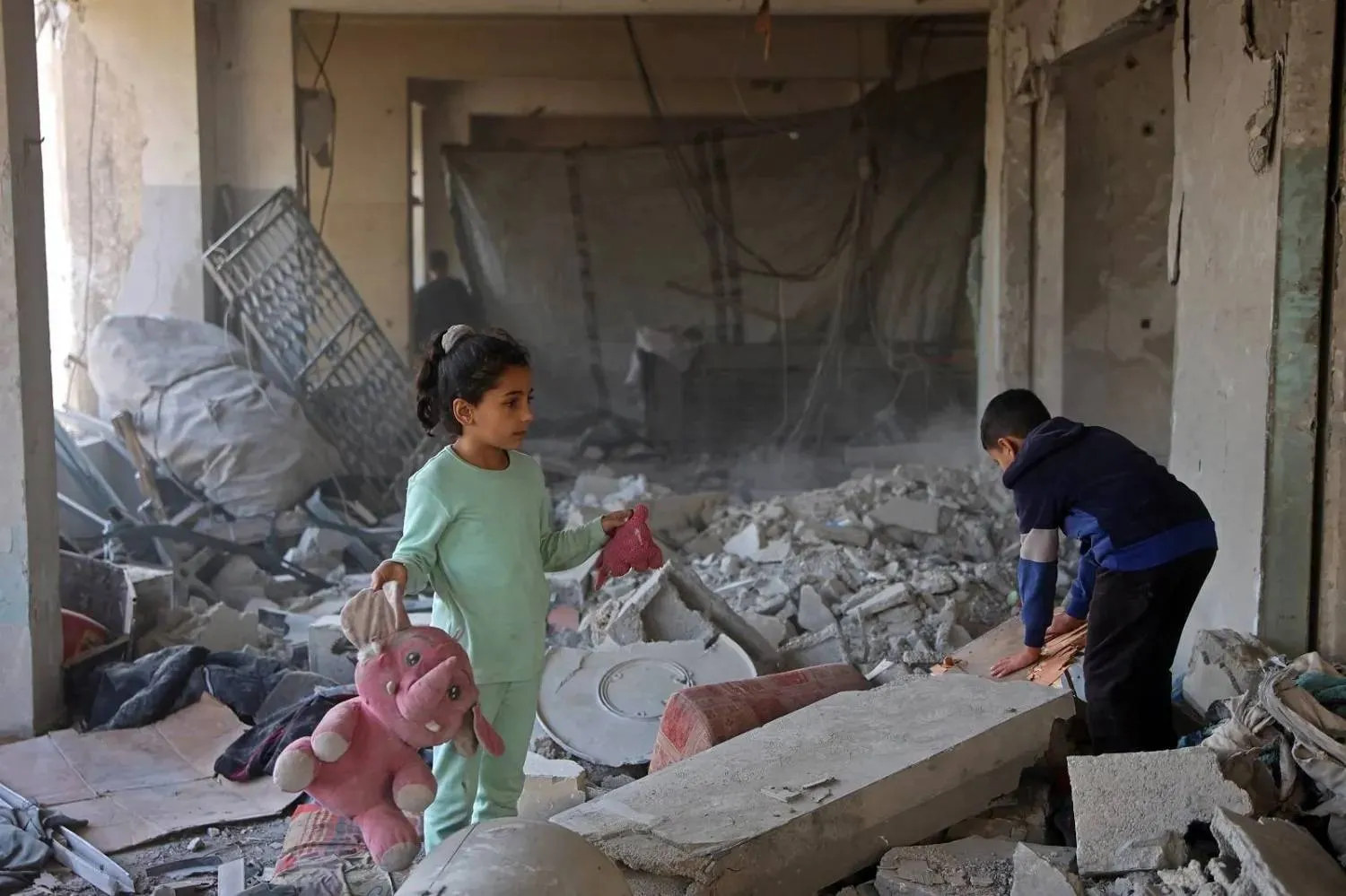
Gaza’s Civil Defense said five people, including a one year old girl, were killed in Israeli airstrikes on the southern Gaza Strip at dawn on Thursday.
The fatalities raised the death toll from Israeli strikes to thirty two since Wednesday, as Israel and Hamas traded accusations of violating the ceasefire agreement.
Hamas’s media office in Gaza said on Thursday that the Israeli army had crossed the “yellow line,” established following the ceasefire agreement, by pushing into eastern Gaza City and shifting the positions of the yellow markers, extending the zone under Israeli control by about 300 meters along the streets of Al-Shaaf, Al-Nazaz and Baghdad. It described the move as a new violation and an assault on the agreement.
Israel’s renewed military violations come two years into the war and only days after the Security Council adopted, on November 18, a US sponsored resolution authorizing the creation of a “temporary international stabilization force in the Gaza Strip.”
The escalation prompted Qatar’s Foreign Ministry to issue a statement on Thursday condemning what it described as the Israeli occupation’s brutal attacks in the Gaza Strip that are killing civilians and wounded, warning that the serious escalation undermines the ceasefire agreement.
Egypt’s Foreign Ministry said in a statement that Cairo stressed the importance of effective implementation of Security Council Resolution 2803 in a way that consolidates the ceasefire, supports reconstruction efforts and opens a political horizon for a just and comprehensive resolution of the Palestinian issue.
Tarek Fahmy, a political science professor specializing in Palestinian and Israeli affairs, said Israel’s expansion of the yellow line and incursions into Hamas areas, along with its resumption of assassinations, signal a deliberate move to widen confrontation. He added that Hamas may respond only with symbolic operations at most or turn to mediators to press Washington for de-escalation.
Fahmy said he sees no near term possibility of moving beyond the first stage, noting that international forces may take two months to form and that there is still no breakthrough in Palestinian Palestinian talks on forming the Gaza Administration Committee.
Palestinian analyst Dr. Ayman al-Raqab said that with Israeli escalation continuing, mediators may intensify coordination with Washington to speed up the formation of the Gaza administration body and close the gap in Palestinian Palestinian differences.
Amid intensifying strikes and diplomatic efforts, progress in the first phase of the Gaza agreement remains blocked by the issue of three remaining Israeli bodies still under discussion among the factions.
Israel’s Yedioth Ahronoth quoted a senior Israeli official on Friday as saying there was “real effort and real difficulty in recovering the bodies.” Israel insists it must receive the bodies before moving to the next stage.
Despite this, Israeli Prime Minister Benjamin Netanyahu has appointed a six member ministerial team to manage the second phase of the Gaza ceasefire agreement, according to Israel’s Kan broadcaster on Friday.
The ministers are Defense Minister Israel Katz, Foreign Minister Gideon Sa’ar, Finance Minister Bezalel Smotrich, National Security Minister Itamar Ben Gvir and Justice Minister Yariv Levin.
Fahmy believes Netanyahu is determined to delay the transition to the second phase and is maneuvering by expanding military operations. “All scenarios remain open, including extending the first stage until the end of the year,” he said.
“That scenario benefits Israel in executing its plans, and benefits Hamas by remaining in power and keeping its military, service and security presence intact.”
Al-Raqab said Netanyahu’s moves aim to calm tensions with his coalition partners while obstructing progress to the second phase. “But the ball remains in Washington’s court,” he said, “as the United States is the only actor capable of exerting pressure on all parties to stop the escalation, push the second phase forward and accelerate the formation of the Gaza Administration Committee.”