


EU, Africa Leaders to Talk Trade and Minerals, as Ukraine Looms Large

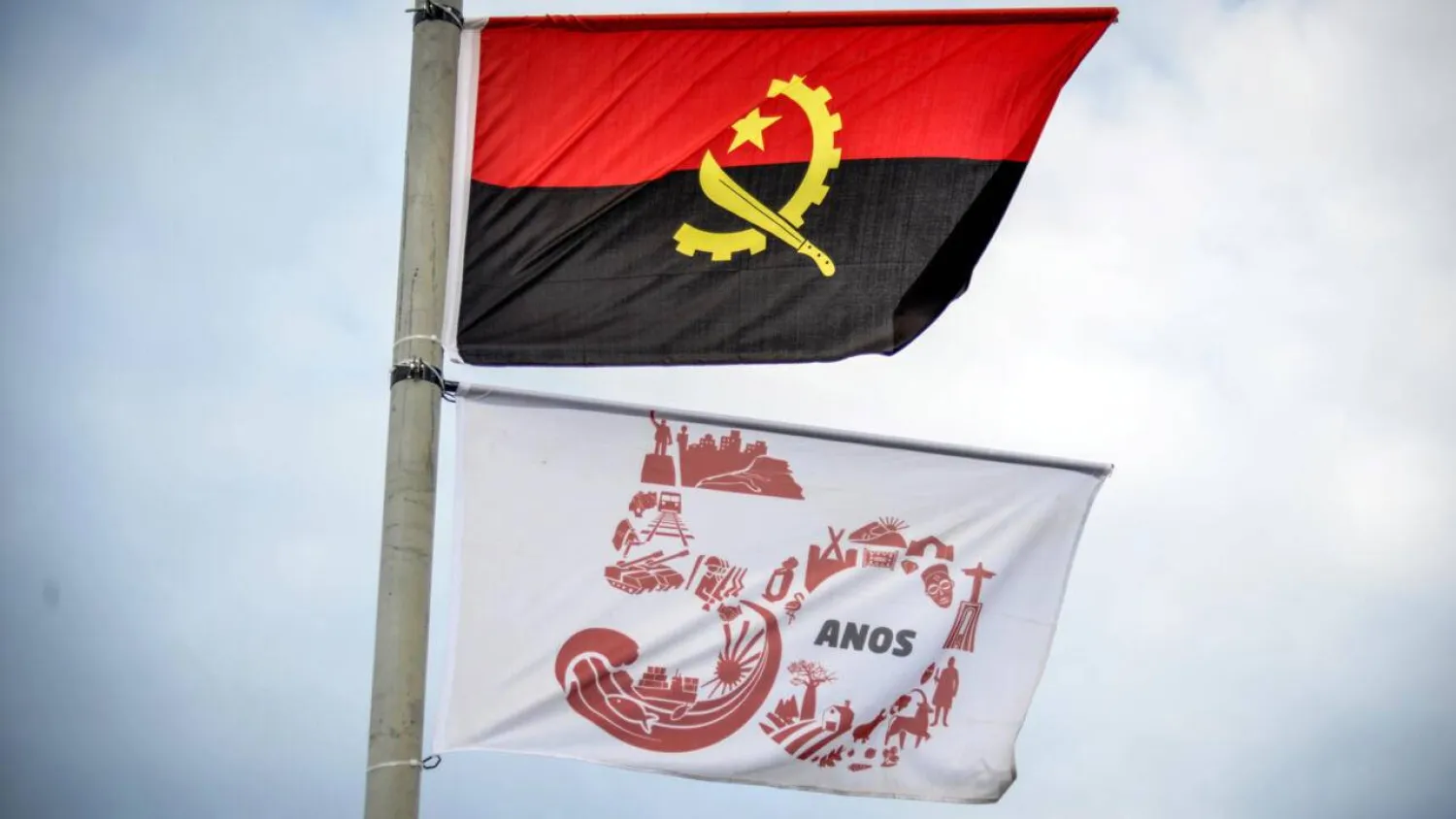
Angola this year celebrated 50 years since its independence from Portugal. Julio PACHECO NTELA / AFP
TT

EU, Africa Leaders to Talk Trade and Minerals, as Ukraine Looms Large

Angola this year celebrated 50 years since its independence from Portugal. Julio PACHECO NTELA / AFP

European and African leaders gather in Angola Monday for a summit aimed at deepening economic and security ties that will serve as a backdrop to emergency talks on Ukraine.

France's Emmanuel Macron, Germany's Friedrich Merz and Kenya's William Ruto are among dozens of European Union and African leaders expected in Luanda amid a US-European rift over a Washington plan to end the Ukraine conflict.

Talks with African nations will center on trade, migration and critical raw materials.

But EU minds will in part be focused on efforts to push back at a draft plan by US President Donald Trump to stop Russia's war in Ukraine, proposals initially seen as heavily tilted in favor of Moscow.

After top US and Ukrainian representatives met in Geneva on Sunday for talks on a new version of the proposal, EU leaders were to hold a "special meeting" on the sidelines of the Luanda gathering on Monday.

There is "still a lot of work to be done on the 28-point plan", Finnish President Alexander Stubb told AFP in Johannesburg on Sunday.

The seventh gathering of its kind, the two-day Angola summit comes on the heels of a G20 meeting in South Africa where a US boycott underscored geopolitical fractures.

It marks 25 years of EU-African Union relations -- ties that analysts say need revamping if Europe wants to hold on to its role as the continent's top partner.

Africa has emerged as a renewed diplomatic battleground, with China, the United States and Russia competing for its minerals, energy potential and political support.

The EU is the leading supplier of foreign direct investment to the continent and its leading commercial counterpart. Trade in goods and services hit 467 billion euros ($538 billion) in 2023, according to Brussels.

Yet it has suffered setbacks, at times fueled by resentment at the West's colonial past, with China securing strategic resources in some countries and Russia taking over as preferred security partner in others.

"We don't have that situation anymore where Europe was the only partner," Geert Laporte of ECDPM, a European think tank said. EU capitals now need to come up with an "offer that is attractive enough to beat" the competition, he added.

That would require investments in infrastructure, energy and industrial projects that generate employment and economic growth in Africa -- and a move away from lofty statements of support, observers say.

"Africa is looking not for new declarations but for credible, implementable commitments," said AU spokesman Nuur Mohamud Sheekh.

Tackling illegal migration to Europe and security cooperation are on the agenda, as is a diplomatic push to grant Africa a stronger voice in global governance bodies.

But boosting trade will likely be the top priority, as US tariffs buffet both continents.

The EU is expected to offer its expertise to help build up intra-African trade, which currently accounts for a paltry 15 percent of the total, diplomats said.

It will also seek to secure critical minerals needed for its green transition and ease its dependency on China for rare earths, essential for tech and electronic goods.

The 27-nation bloc will likely showcase new investments under the Global Gateway -- a massive infrastructure plan that Brussels hopes can counter China's growing influence.

Summit-host Angola is home to one of the EU initiative's signature undertakings: the Lobito corridor, a railway project funded in partnership with the United States to connect mineral-rich areas of the Democratic Republic of Congo and Zambia to the Atlantic coast.

EU diplomats have been at pains to present such projects as win-wins but critics retort that the scheme repeats some extractive colonial practices and has yet to deliver significant improvements for local communities.

"Investment must move from PowerPoint to the factory floor," said Ikemesit Effiong, of the Nigeria-based consultancy SBM Intelligence.

"Europe's credibility now depends on whether it can support the delivery of projects that create value in Africa, not just visibility for Brussels."



Tesla Loses Title as World's Biggest Electric Vehicle

(FILES) BYD's display booth is seen during the 32nd Gaikindo Indonesia International Auto Show (GIIAS) at the Indonesia Convention Exhibition (ICE) in Tangerang, Greater Jakarta, on July 23, 2025. (Photo by Yasuyoshi CHIBA / AFP)
TT

Tesla Loses Title as World's Biggest Electric Vehicle

(FILES) BYD's display booth is seen during the 32nd Gaikindo Indonesia International Auto Show (GIIAS) at the Indonesia Convention Exhibition (ICE) in Tangerang, Greater Jakarta, on July 23, 2025. (Photo by Yasuyoshi CHIBA / AFP)

Tesla lost its crown as the world’s bestselling electric vehicle maker on Friday as a customer revolt over Elon Musk’s right-wing politics and stiff overseas competition pushed sales down for a second year in a row.

Tesla said that it delivered 1.64 million vehicles in 2025, down 9% from a year earlier.

Chinese rival BYD, which sold 2.26 vehicles last year, is now the biggest EV maker, The Associated Press reported.

For the fourth quarter, sales totaled 418,227, falling short of the 440,000 that analysts polled by FactSet expected. The sales total may likely have been impacted by the expiration of a $7,500 tax credit that was phased out by the Trump administration at the end of September.

Even with multiple issues buffeting the company, the stock finished 2025 with a gain of approximately 11%, as investors hope Tesla CEO Musk can deliver on his ambitions to make Tesla a leader in robotaxi service and get consumers to embrace humanoid robots that can perform basic tasks in homes and offices.

Shares of Tesla rose almost 2% before the opening bell Friday.


Precious Metals Start 2026 Strong on Rate-cut Optimism, Global Risks

(FILES) A worker polishes gold bullion bars at the ABC Refinery in Sydney on August 5, 2020. (Photo by DAVID GRAY / AFP)
TT

Precious Metals Start 2026 Strong on Rate-cut Optimism, Global Risks

(FILES) A worker polishes gold bullion bars at the ABC Refinery in Sydney on August 5, 2020. (Photo by DAVID GRAY / AFP)

Precious metals kicked off the New Year on a strong note on Friday, rebounding from year-end declines as tensions between major powers and US rate cut hopes boosted investor appetite for bullion.

Spot gold climbed 1.7% to $4,387.58 per ounce, as of 1322 GMT, after hitting a record high of $4,549.71 on December 26. It had dropped to a two-week low on Wednesday, Reuters reported.

US gold futures for February delivery gained 1.3% to $4,399.20/oz.

"Precious metals have kicked off 2026 on ⁠a firmly positive note ... after a bout of profit taking in the last days of 2025, bulls seem to be drawing strength from geopolitical risk and hopes of lower US rates this year," said Lukman Otunuga, senior research analyst at FXTM.

On the physical demand side, gold traded at a premium in top hubs India and China for the first time in about ⁠two months, as a recent correction from all-time highs helped lift retail demand.

Bullion surged 64% in 2025, its biggest annual gain since 1979, driven by Fed rate cuts, geopolitical tensions, strong central bank buying, and rising ETF holdings.

"Gold prices are expected to move higher in 2026 - we target a move to USD 5,000/oz - driven by lower real yields, ongoing global economic concerns, and uncertainty surrounding US domestic policy," said UBS analyst Giovanni Staunovo.

"Both central banks and investors are likely to continue favoring real assets like gold for its freedom from counterparty risk."

Investors currently expect at least two ⁠quarter-point Fed rate cuts this year.

Non-yielding assets tend to do well in low-interest-rate environments.

Spot silver advanced 3.4% to $73.71 per ounce, after hitting an all-time high of $83.62 on Monday, while platinum jumped 3.3% at $2,121.38 per ounce, after rising to an all-time high of $2,478.50 on Monday.

Both metals recorded their best year ever, with silver leading by posting 147% annual gains, driven by its designation as a critical US mineral, supply shortages and low inventories amid rising industrial and investment demand.

Palladium rose 1.9% to $1,636.19 per ounce, after closing the previous year up 76%, its best in 15 years.

All metals retreated sharply earlier in the week as traders booked profits after CME raised margins on precious metal futures.


Oil Steadies after Biggest Annual Loss Since 2020

FILE PHOTO: A worker stands in front of storage tanks at the Rosneft oil refinery in Tuapse at the Russian Black Sea coast September 6, 2006. REUTERS/Sergei Karpukhin/File Photo
TT

Oil Steadies after Biggest Annual Loss Since 2020

FILE PHOTO: A worker stands in front of storage tanks at the Rosneft oil refinery in Tuapse at the Russian Black Sea coast September 6, 2006. REUTERS/Sergei Karpukhin/File Photo

Oil prices steadied on the first day of trade in 2026 after registering their biggest annual loss since 2020 as investors weighed oversupply concerns against geopolitical risks including the war in Ukraine and Venezuela exports.

Brent crude futures dropped 4 cents on Friday to $60.81 a barrel by 1029 GMT while US West Texas Intermediate crude was down 3 cents at $57.39, said Reuters.

Russia and Ukraine traded allegations of attacks on civilians on ‌New Year's Day ‌despite talks overseen by US President Donald ‌Trump ⁠that are ‌aimed at bringing an end to the nearly four-year-old war.

Kyiv has been intensifying strikes against Russian energy infrastructure in recent months, aiming to cut off Moscow's sources of financing for its military campaign in Ukraine.

Elsewhere, the Trump administration's efforts to increase pressure on Venezuelan President Nicolas Maduro continued with Wednesday's imposition of sanctions on four companies and associated oil ⁠tankers that it said were operating in Venezuela’s oil sector.

Traders widely expect OPEC+ to continue its pause on output increases in the first quarter, said Sparta Commodities analyst June Goh.

"2026 will be an important year on assessing OPEC+ decisions for balancing supply," ⁠she said, adding that China would continue to build crude stockpiles in the first half, providing a floor for oil prices.

2025 LOSSES

The Brent and WTI benchmarks recorded annual losses of nearly 20% in 2025, the steepest since 2020, as concerns about oversupply and tariffs outweighed geopolitical risks. It was the third straight year of losses for Brent, the longest such streak on record.

"As of now, we are expecting a fairly boring year for (Brent) oil prices, range-bound around $60-65 a barrel," said DBS energy analyst Suvro Sarkar.

Phillip Nova analyst Priyanka Sachdeva said ‌the muted price movement reflected a struggle between short-term geopolitical risks and longer-term market fundamentals that point towards oversupply.