



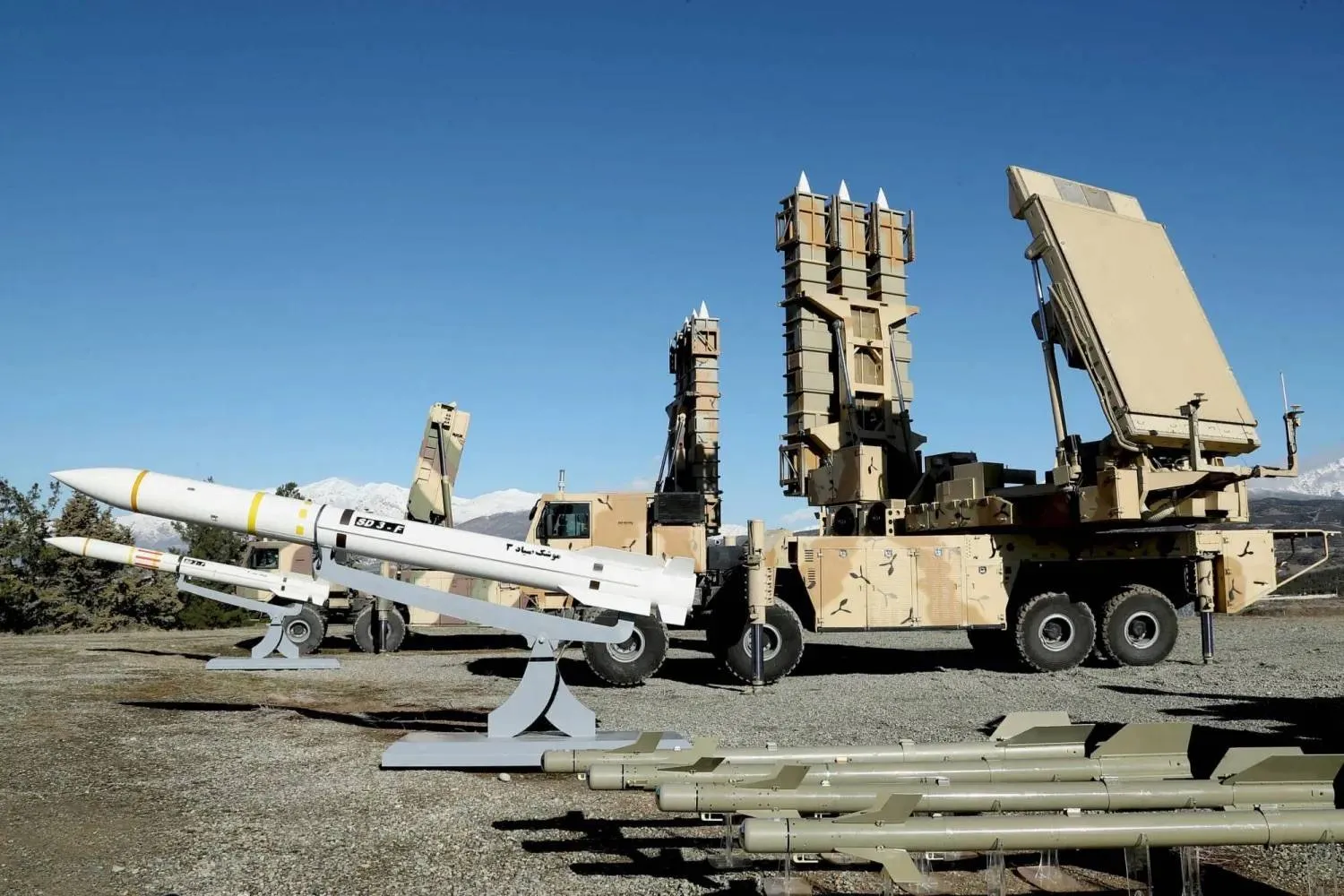

Conflicting messages are coming out of Iran regarding the restoration of its defensive capacity along the country’s western frontier, where military infrastructure suffered extensive damage during the 12-day war with Israel.
While Tehran has announced large-scale defensive and ground maneuvers in the northwest and conducted live tests of air-defense systems in the south, it has simultaneously denied any offensive missile activity near the border with Iraq’s Kurdistan Region.
In the coastal district of Mahshahr in the southwest, the Iranian Revolutionary Guard Corps’ (IRGC) 3rd Naval Zone confirmed the start of air-defense tests running through Dec. 12, noting that any explosions heard by residents would be related to the drills.
Authorities urged locals to ignore rumors and refrain from sharing images or videos, a message intended to prevent panic in an area previously targeted by Israeli strikes during the recent conflict.
The IRGC statement emphasized that “the forces of the 3rd Naval Zone are ready to sacrifice their lives,” reflecting an effort to restore public confidence after domestic criticism of Iran’s air-defenses during the war.
Missile activity denied
At the same time, Iranian officials denied reports that ballistic missiles had been launched from Ilam or Kermanshah toward the Iraqi Kurdistan Region.
Local media and social media accounts had circulated claims that the IRGC had carried out a missile strike on Kurdish groups. Those reports followed a drone attack on the Khor Mor gas field - an essential energy facility - that caused power outages across Kurdistan.
Observers say the swift denial demonstrates Tehran’s desire to avoid opening a new front as it works to rebuild its defenses amid rising regional tensions with Israel, even as it sends signals that it is restoring its defense capabilities.
Sahand 2025 exercises
Separately, Iran announced that East Azerbaijan Province in the northwest will host Sahand 2025, counterterrorism exercises involving 18 delegations from member states of the Shanghai Cooperation Organization (SCO).
Iranian officials describe the drills as part of a push to shape a “new regional security architecture,” though they have yet to reveal which countries confirmed participation.
In a parliamentary address, Speaker Mohammad Bagher Ghalibaf said Iran’s defense cooperation with other states “continues to progress,” adding that the Sahand exercises send “an important message to domineering powers” that independent nations possess “the serious will to defend themselves.”
The statements are seen as an attempt to portray Iran as a state capable of forging eastern defense partnerships in the face of what Tehran calls “Western pressure” since the war.
It remains unclear whether Iran has genuinely restored its defensive capacity, particularly along the western border, which saw repeated Israeli attacks. Many analysts view Tehran’s activities as part of a broader psychological confrontation with Israel.
On the Israeli side, officials have issued increasingly stark assessments. Director General of the Israeli Defense Ministry Amir Baram said Iran is rapidly expanding its defensive and missile capabilities, warning that “all fronts remain open.”
He linked the rapid deployment of the Iron Beam laser system in October 2024 to a Hezbollah drone attack that killed several Golani Brigade soldiers.
Baram positioned Israel as a “defense-technology nation,” citing advances in the Arrow-4 and Arrow-5 systems, 21 government-to-government defense agreements signed in 2024 alone, and more than one billion shekels invested in defense startups during the war.
Israeli media assessments suggest both countries may be heading toward a wider confrontation than the 12-day conflict. Reports, citing Israeli officials, say the government may seek a strategic objective of “forcing the Iranian regime to respond or collapse” before the end of US President Donald Trump’s term.
Other Israeli reports warn that Iran could soon be capable of producing more than 2,000 missiles for simultaneous launch, a scenario Israel views as a potential threat to its defensive capacity.


