


New Exhibition in Saudi Arabia's AlUla Highlights Ancient City of Dadan

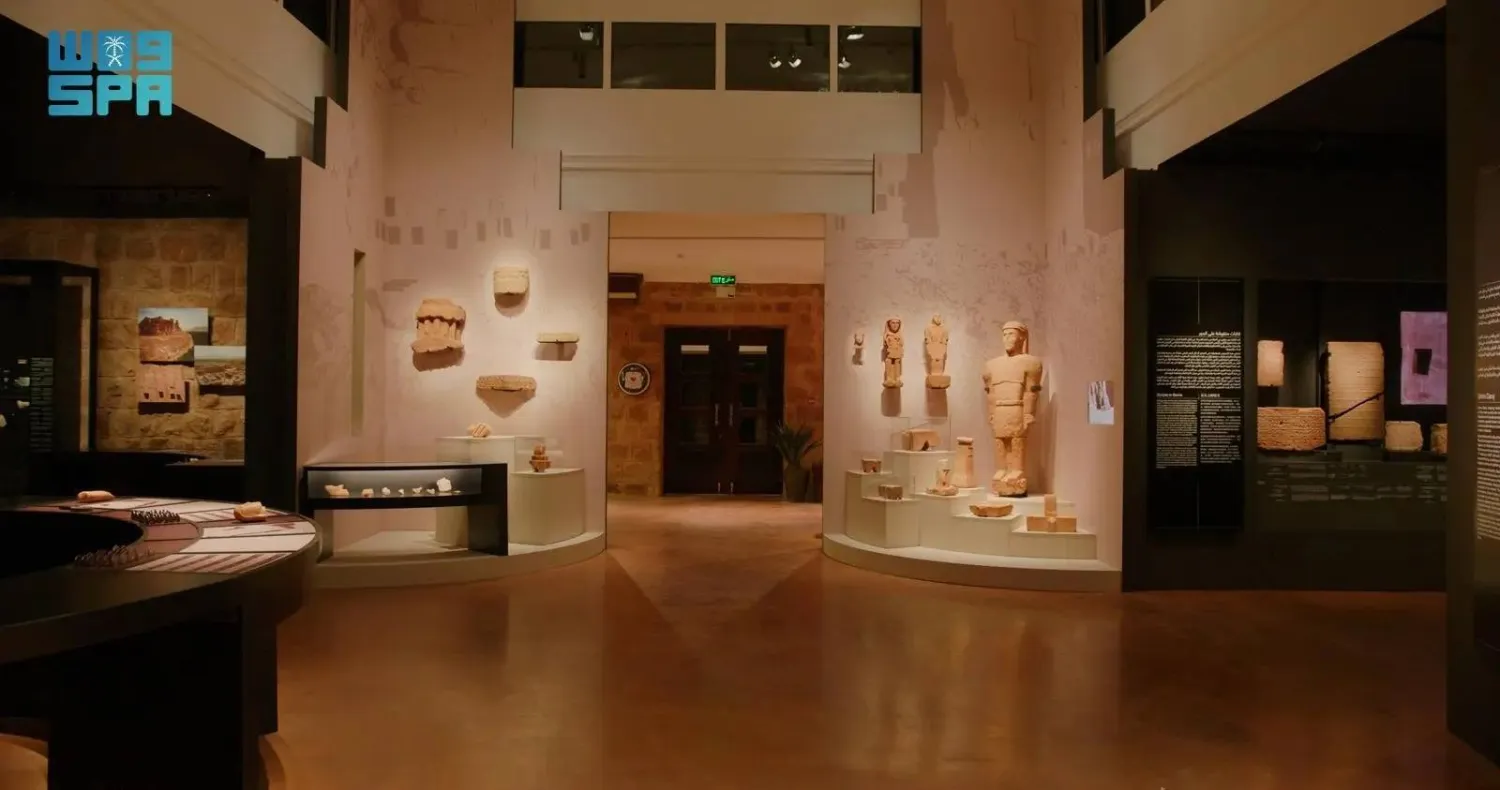
The new permanent exhibition, held at the Dadan archaeological site in AlUla, presents a wide collection of traditional crafts and customs, along with material evidence of cultural exchange between ancient civilizations. (SPA)
TT

New Exhibition in Saudi Arabia's AlUla Highlights Ancient City of Dadan

The new permanent exhibition, held at the Dadan archaeological site in AlUla, presents a wide collection of traditional crafts and customs, along with material evidence of cultural exchange between ancient civilizations. (SPA)

Saudi Arabia’s AlUla is preparing to open new chapters in the history of the ancient city of Dadan, the former capital of the Kingdoms of Dadan and Lihyan, through a new permanent exhibition titled “Illuminating Discoveries – Uncovering the Layers of Dadan’s History”, reported the Saudi Press Agency on Wednesday.

The exhibition offers an in-depth experience of the city’s archaeological heritage and its flourishing civilization across centuries. It guides visitors through the features of the past and demonstrates the importance of this historical site on regional and global heritage maps.

The new permanent exhibition, held at the Dadan archaeological site in AlUla, presents a wide collection of traditional crafts and customs, along with material evidence of cultural exchange between ancient civilizations. It highlights the historical role of Dadan as a political and commercial center on the Incense Road during the first millennium BCE and earlier.

The exhibition introduces a significant new chapter in the study of the Arabian Peninsula’s ancient history. It features more than one hundred artifacts carefully uncovered by international teams working at the Dadan site in AlUla and at the nearby mountain sanctuary of Umm Daraj over the past five years. These findings reveal the scale of ancient trade routes and confirm that AlUla once stood at the heart of a connected and sophisticated network.

Among the objects on display are small figurines linked to the Greek world, a bone hairpin from the Roman or Byzantine era, and rock inscriptions written in an ancient South Arabian script.

Dadan belongs to a line of advanced civilizations whose roots reach deep into the ancient world. Farming in the city is believed to date back to around the third millennium BCE, and archaeologists have found evidence of handcrafts from the second millennium BCE, long before the rise of the Roman Empire.

Material remains show that craftsmanship formed a central part of daily life and reflect the skill and ingenuity of the population. New discoveries include examples of complex metalwork and early evidence of textile production using weaving and spinning techniques. These traditional crafts, once essential to life in the city, are being revived today under the Royal Commission for AlUla’s cultural regeneration programs.

The exhibition also includes rare artifacts never before shown to the public. The material is organized into five main sections: Crafts and Daily Life in Ancient Dadan; Exchange and Trade; Ancient Beliefs and Rituals; Scripts in Stone; and Umm Daraj.

Among the findings is a copper-alloy spearhead dating to between 400 and 50 BCE. Field surveys along Dadan’s cliffs uncovered hundreds of inscriptions and striking rock art, including a battle scene showing four mounted warriors carrying long spears. Rock art in the nearby desert valley of Wadi Al-Naam depicts a rider using a spear to hunt an ostrich.

Another notable object is a terracotta head found in an urban neighborhood of Dadan and dating to the late fourth to first century BCE. Imported from the ancient Greek world, it is believed to have belonged to a Tanagra figurine, a type of small, finely crafted statue produced in central Greece and traded widely across the Mediterranean and as far as Babylon. The head reflects how Mediterranean artistic styles entered the region and circulated across northwest Arabia during the Lihyanite period.

Archaeologists also uncovered a striking statue from an ancient shrine at the foot of Dadan’s cliffs, dating to between 400 and 50 BCE, with one of its eye inlays still preserved. The statue reflects the high craftsmanship of symbolic objects produced during the Lihyanite period. Another figurine, marked by long hair and a belted garment, was found at the same site, with only one arm surviving. Its eyes were once inlaid with bone.

A unique part of the collection is a fragment of carved sandstone dating to the first millennium BCE. It preserves part of an inscription in the ancient South Arabian Minaic script. The relief carving likely came from a temple or public building. The preserved symbols probably refer to Wadd, the chief deity worshipped by the Minaean community at Dadan. Merchants from the Kingdom of Ma‘in established a trading presence in Dadan and left inscriptions documenting their cultural practices.

This inscription has a connection to the nearby “open-air library” at Jabal Ikmah. Inscribed on UNESCO’s Memory of the World Register, Jabal Ikmah contains nearly three hundred inscriptions, most dating to the Dadanite and Lihyanite periods.

The exhibition was organized through cooperation between the Royal Commission for AlUla, the French National Center for Scientific Research, and the French Agency for AlUla Development, which have jointly led recent Saudi-French archaeological missions in Dadan.

The launch of the 2025-2026 archaeological season in AlUla marks one of the region’s broadest heritage research efforts to date. More than one hundred archaeologists and specialists from leading Saudi and international institutions are participating across six major projects, ranging from new excavations at Hegra and Dadan to large-scale inscription surveys and environmental studies.

This program is the most ambitious undertaken in AlUla and contributes to advancing knowledge, developing national expertise, and strengthening the Kingdom’s position as a leader in cultural heritage research.



Cultural Camp at King Abdulaziz Camel Festival Showcases Saudi Heritage

The camp celebrates authentic Saudi heritage and reinforces culture as a cornerstone of national identity - SPA
TT

Cultural Camp at King Abdulaziz Camel Festival Showcases Saudi Heritage

The camp celebrates authentic Saudi heritage and reinforces culture as a cornerstone of national identity - SPA

The cultural camp is a key feature of the 10th King Abdulaziz Camel Festival, held in Al-Sayahid desert. The camp celebrates authentic Saudi heritage and reinforces culture as a cornerstone of national identity, according to SPA.

It offers a range of programs, including live performances and interactive events, that highlight camels' historical significance in Arab culture and illustrate the values of patience, strength, and belonging.

The camp has attracted over 2,000 guests from 71 nationalities, emphasizing its global appeal as a cultural platform for diversity and tradition.

Visitors engage with cultural content through innovative methods that merge authenticity with modern technology, enhancing awareness of the camel's cultural legacy. This initiative aligns with Saudi Vision 2030 by preserving heritage and connecting younger generations with their roots.


Tuwaiq Sculpture 2026 Announces 25 Participating Artists for Seventh Edition

The 2026 edition features a month-long live sculpting phase alongside a community engagement program - SPA
TT

Tuwaiq Sculpture 2026 Announces 25 Participating Artists for Seventh Edition

The 2026 edition features a month-long live sculpting phase alongside a community engagement program - SPA

Under the Royal Commission for Riyadh City and Riyadh Art, Tuwaiq Sculpture has announced the selection of 25 artists for the seventh edition of the annual sculpture symposium and exhibition, taking place from January 10 to February 22, 2026.

This year’s edition unfolds under the curatorial theme “Traces of What Will Be,” inviting artists to reflect on how sculptural form can express the physical, cultural and conceptual traces that shape the future of cities and communities, SPA reported.

A total of 25 artists from 18 countries, including Saudi artists, have been selected for the seventh edition. Their proposals reflect a diverse range of artistic approaches, responding to the theme through explorations of transformation, place, and materiality.

Director of the Tuwaiq Sculpture Symposium Sarah Alruwayti said: "The seventh edition of Tuwaiq Sculpture received more than 590 applications, reflecting the cultural diversity and global interest in the symposium. The selection of the 25 participating artists was carried out by a jury of industry experts and specialists. Their proposals show meaningful engagement with the theme and reflect the strength and diversity of contemporary sculptural practice. We look forward to welcoming them to Riyadh for the creation of new works that will become lasting additions to the city.”

Building on the evolving material practice of the symposium, Tuwaiq Sculpture 2026 introduces two sculpting categories: granite with optional stainless-steel integration and reclaimed metal. Twenty artists will work in granite, while five will create new works in reclaimed metal. Over four weeks, they will produce large-scale sculptures that will later be added to Riyadh Art’s permanent public art collection.

The 2026 edition features a month-long live sculpting phase alongside a community engagement program, inviting visitors to witness the creation of artworks and take part in panel discussions and workshops. The symposium will conclude with a public exhibition showcasing the completed sculptures from its seventh edition.


ALECSO Celebrates Opening of Arabic Calligraphy Center in Saudi Arabia

Arabic calligraphy adorns wrcades, Walls of the Grand Mosque of Makkah - SPA
TT

ALECSO Celebrates Opening of Arabic Calligraphy Center in Saudi Arabia

Arabic calligraphy adorns wrcades, Walls of the Grand Mosque of Makkah - SPA

The Arab League of Educational, Cultural and Scientific Organization (ALECSO) congratulated Saudi Arabia on the opening of the Prince Mohammed bin Salman Global Center for Arabic Calligraphy in Madinah on December 22, 2025.

In a statement, ALECSO called the center a significant addition to the Arab and Islamic cultural landscape, noting its role in preserving Arabic calligraphy and enhancing its global presence, SPA reported.

This achievement reflects the Kingdom's commitment to culture and heritage, aligning with Saudi Vision 2030’s objectives of fostering cultural creativity and reinforcing Arabic identity.

ALECSO emphasized that such institutions serve as global bridges for cultural exchange and ensure the relevance of traditional arts through dedicated research and training facilities.