


Iran Accused of ‘Digital Apartheid’

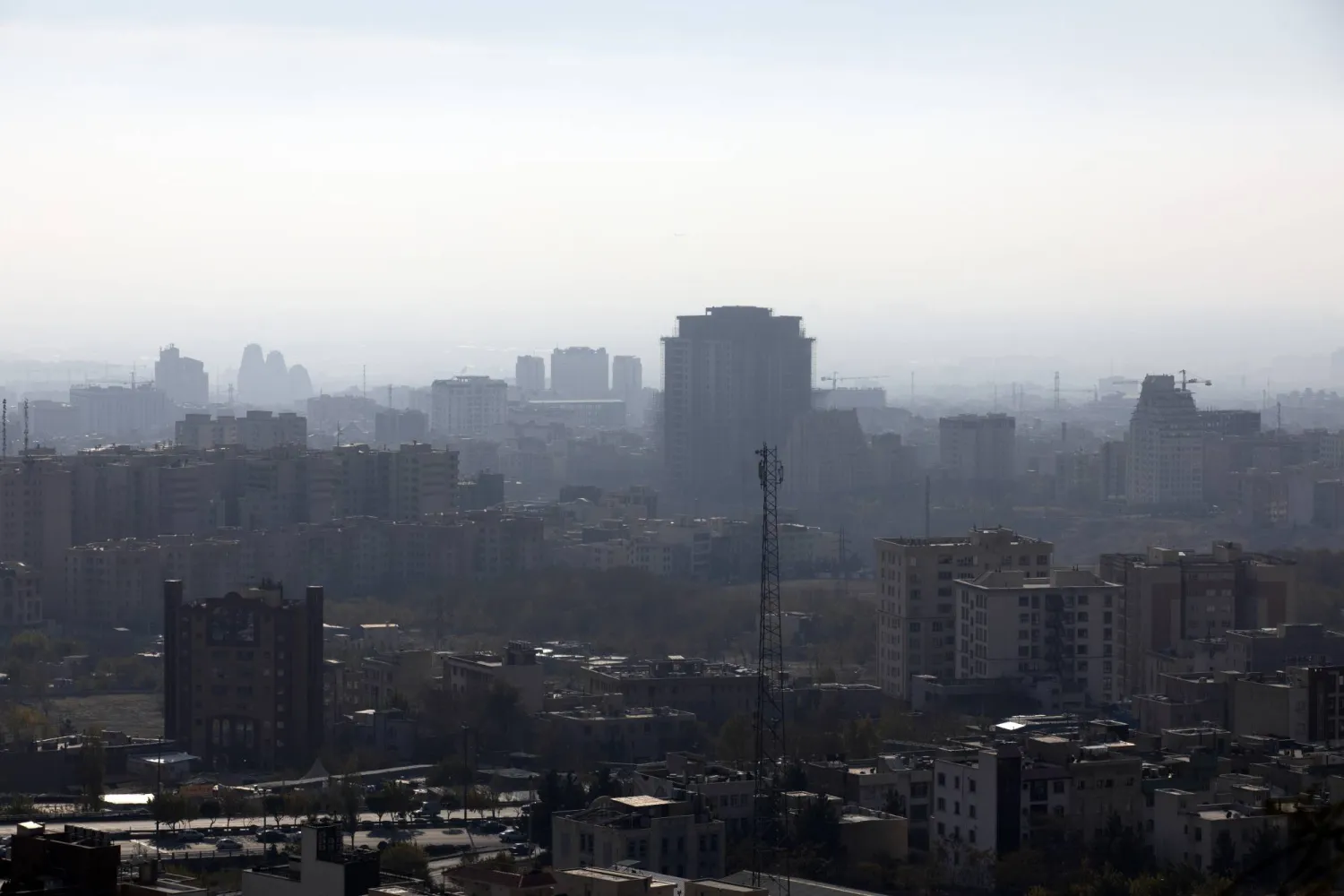
03 December 2025, Iran, Teheran: View of the smog-ridden metropolis of Tehran. Photo: Aref Taherkenareh/dpa
TT

Iran Accused of ‘Digital Apartheid’

03 December 2025, Iran, Teheran: View of the smog-ridden metropolis of Tehran. Photo: Aref Taherkenareh/dpa

Ordinary Iranians face up to 10 years in prison or even execution if they use X to write anything the government deems critical.

But little did they know that government officials and regime supporters have been using the social media site, which is banned inside Iran, Britain’s The Telegraph reported.

This practice has been revealed after Elon Musk’s X rolled out an update that displays each user’s location.

It has exposed government ministers, state media figures, political officials and pro-regime accounts as having accessed the banned platform from within Iran using special white SIM cards.

The new X location feature was designed to spot fake accounts but instead has lifted the curtain on the divide in Iran, one of the world’s most censored countries, according to the newspaper.

Critics of the regime have termed the online divide a form of “digital apartheid”, with only certain groups able to access the internet freely.

Ordinary Iranians are forced to use VPNs, which conceal their true location, to get around the ban. If they are caught posting on X they are reprimanded by Iranian authorities, and if those posts are anti-Iran or pro-Israel, they face execution or prison sentences.

Meanwhile, state and pro-regime accounts use the white SIM cards in their phones to receive unrestricted access to the internet and bypass their own restrictions.

Ahmad Bakhshayesh Ardestani, an Iranian politician who serves on the national security commission, criticized their use.

Ardestani said: “Many people want filtering to exist because they want to sell VPNs and do business.”

He added that the VPN market, used by ordinary Iranians, has high financial turnover and is controlled by “a mafia”.

If users access X through VPNs, the location shows the country where their server is located rather than their actual location.

Other banned platforms in Iran include Facebook, YouTube and Telegram.

“This is obvious discrimination in public rights and against the explicit text of the constitution,” one Iranian citizen told The Telegraph, referring to Iran’s constitutional guarantee of equality among citizens.

“When you yourself use white SIM cards, how can we expect you to understand the pain of filtering? How can we expect you to fight to remove it?” another Iranian said.

Among those whose locations were displayed were communications minister Sattar Hashemi, former foreign minister Javad Zarif, government spokesman Fatemeh Mohajerani and dozens of journalists working for state-aligned media outlets.

Also exposed were political figures, eulogists who praise the Iranian regime at official events, and accounts that had claimed online to be opposition voices, including some monarchist and separatist pages operating from inside Iran with apparent government approval.

Analysts say it is meant to keep parts of the opposition narrative under the control of the clerical establishment.

The exposure proved particularly embarrassing for officials who had publicly opposed privileged internet access.

Mohajerani had claimed she used VPN software like ordinary citizens, saying: “Class-based internet has neither legal basis nor will it ever be on the government’s agenda.”

Mahdi Tabatabaei, communications deputy, said: “Making society white and black is playing on the enemy’s field.”

He added that from President Masoud Pezeshkian’s view, “all 90 million Iranians are white”.

Journalist Yashar Soltani compared the situation to George Orwell’s Animal Farm. He said: “When freedom is rationed it’s no longer freedom – it’s structural discrimination.”



Top Trump Iran Negotiator Says Visits US Aircraft Carrier in Middle East

US Special Envoy Steve Witkoff delivers a press conference upon the signing of the declaration on deploying post-ceasefire force in Ukraine, during the so-called "Coalition of the Willing" summit, at the Elysee Palace in Paris, France, January 6, 2026. (Reuters)
TT

Top Trump Iran Negotiator Says Visits US Aircraft Carrier in Middle East

US Special Envoy Steve Witkoff delivers a press conference upon the signing of the declaration on deploying post-ceasefire force in Ukraine, during the so-called "Coalition of the Willing" summit, at the Elysee Palace in Paris, France, January 6, 2026. (Reuters)

US President Donald Trump's lead Iran negotiator Steve Witkoff on Saturday said he visited the USS Abraham Lincoln aircraft carrier currently in the Arabian Sea, with Washington and Tehran due to hold further talks soon.

"Today, Adm. Brad Cooper, Commander of US Naval Forces Central Command, Jared Kushner, and I met with the brave sailors and Marines aboard the USS Abraham Lincoln, her strike group, and Carrier Air Wing 9 who are keeping us safe and upholding President Trump's message of peace through strength," said Witkoff in a social media post.

Iranian Foreign Minister Abbas Araghchi said on Saturday he hoped talks with the United States would resume soon, while reiterating Tehran's red lines and warning against any American attack.


Israel’s Netanyahu Expected to Meet Trump in US on Wednesday and Discuss Iran

Israeli Prime Minister Benjamin Netanyahu delivers a speech during a special session to mark the 77th anniversary of the Knesset's establishment and the 60th anniversary of the dedication of the current building at the Knesset, the Israeli parliament, in Jerusalem, 02 February 2026. (EPA)
TT

Israel’s Netanyahu Expected to Meet Trump in US on Wednesday and Discuss Iran

Israeli Prime Minister Benjamin Netanyahu delivers a speech during a special session to mark the 77th anniversary of the Knesset's establishment and the 60th anniversary of the dedication of the current building at the Knesset, the Israeli parliament, in Jerusalem, 02 February 2026. (EPA)

Israeli Prime Minister Benjamin Netanyahu is expected to meet US President Donald Trump on Wednesday in Washington, where they will discuss negotiations with Iran, Netanyahu's office said on Saturday.

Iranian and US officials held indirect nuclear ‌talks in the ‌Omani capital ‌Muscat ⁠on Friday. ‌Both sides said more talks were expected to be held again soon.

A regional diplomat briefed by Tehran on the talks told Reuters Iran insisted ⁠on its "right to enrich uranium" ‌during the negotiations with ‍the US, ‍and that Tehran's missile capabilities ‍were not raised in the discussions.

Iranian officials have ruled out putting Iran's missiles - one of the largest such arsenals in the region - up ⁠for discussion, and have said Tehran wants recognition of its right to enrich uranium.

"The Prime Minister believes that any negotiations must include limiting ballistic missiles and halting support for the Iranian axis," Netanyahu's office said in a ‌statement.


Italy FM Rules Out Joining Trump’s ‘Board of Peace’

Italy's Minister for Foreign Affairs Antonio Tajani speaks to the press during the EPP Leaders’ meeting, in Zagreb, Croatia, 30 January 2026. (EPA)
TT

Italy FM Rules Out Joining Trump’s ‘Board of Peace’

Italy's Minister for Foreign Affairs Antonio Tajani speaks to the press during the EPP Leaders’ meeting, in Zagreb, Croatia, 30 January 2026. (EPA)

Italy will not take part in US President Donald Trump's "Board of Peace", Italian Foreign Minister Antonio Tajani said Saturday, citing "insurmountable" constitutional issues.

Trump launched his "Board of Peace" at the World Economic Forum in Davos in January and some 19 countries have signed its founding charter.

But Italy's constitution bars the country from joining an organization led by a single foreign leader.

Prime Minister Giorgia Meloni, a Trump ally, last month noted "constitutional problems" with joining, but suggested Trump could perhaps reopen the framework "to meet the needs not only of Italy, but also of other European countries".

Tajani appeared Saturday to rule that out.

"We cannot participate in the Board of Peace because there is a constitutional limit," he told the ANSA news agency.

"This is insurmountable from a legal standpoint," he said, the day after meeting US Secretary of State Marco Rubio and US Vice President JD Vance at the Olympics in Milan.

Although originally meant to oversee Gaza's rebuilding, the board's charter does not limit its role to the Palestinian territory and appears to want to rival the United Nations.