


Hezbollah Unhappy with Political Negotiations with Israel but Unlikely to Confront the State

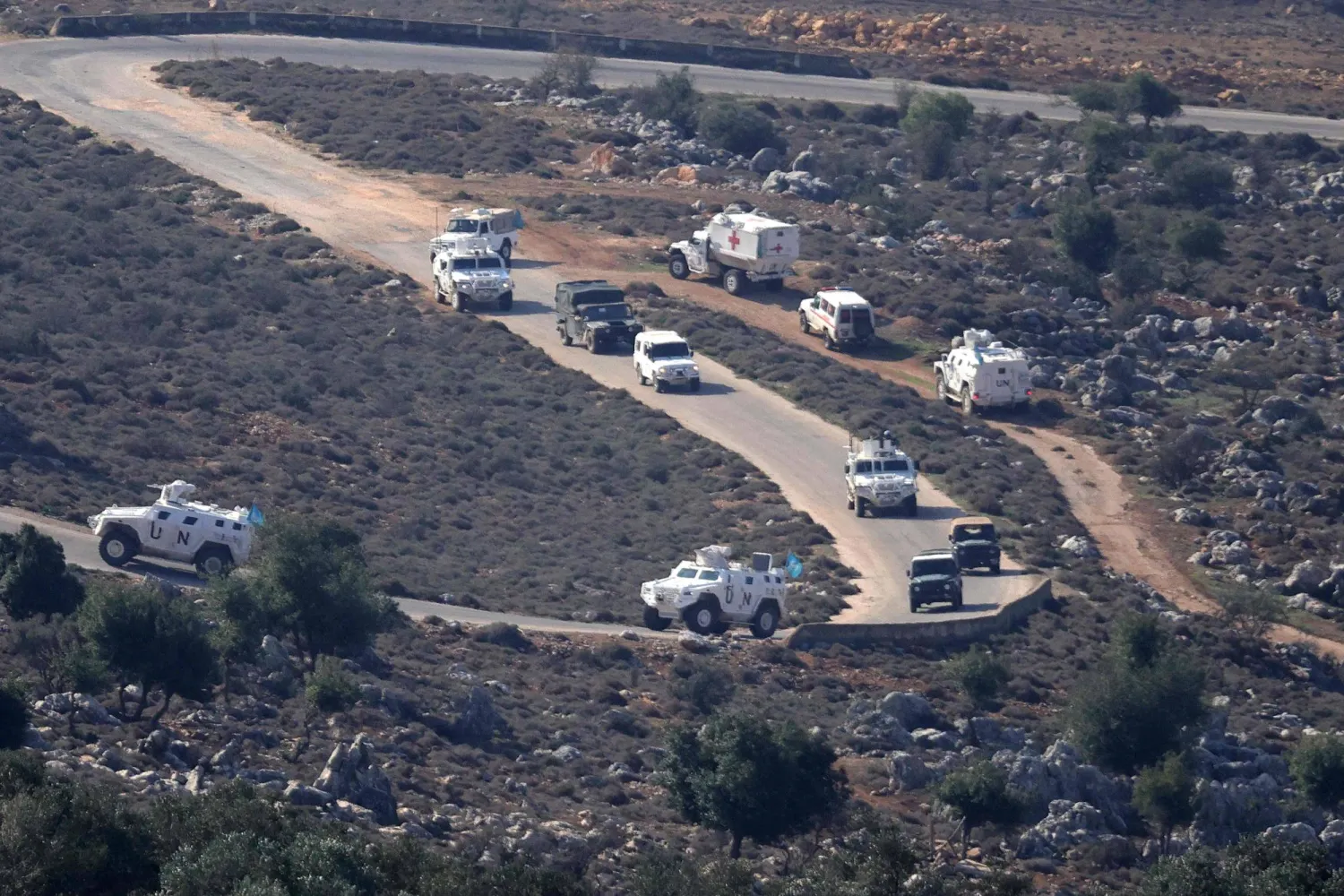
A joint patrol of UNIFIL forces and the Lebanese Army in the Marjayoun area near the border with Israel (AFP)
TT

Hezbollah Unhappy with Political Negotiations with Israel but Unlikely to Confront the State

A joint patrol of UNIFIL forces and the Lebanese Army in the Marjayoun area near the border with Israel (AFP)

Hezbollah officials have avoided commenting on the Lebanese government’s decision to appoint former ambassador Simon Karam as head of the Lebanese delegation to the “mechanism committee” overseeing the ceasefire with Israel, which effectively shifted the committee’s work from military-technical talks to political negotiations.

A formal party position is expected Friday, to be delivered by Hezbollah Secretary-General Sheikh Naim Qassem in a previously scheduled appearance.

Yet media outlets aligned with Hezbollah, along with its supporters on social platforms, quickly denounced the presidential decision. They described it as “another act of surrender by Lebanon, taken despite the absence of any Israeli willingness to meet Lebanese demands, chief among them ending attacks and violations, withdrawing from occupied territory, and releasing detainees.”

Sources familiar with Hezbollah’s internal discussions told Asharq Al-Awsat that Qassem will reiterate the party’s refusal to enter “a new round of negotiations as long as Israel fails to meet its obligations.”

He is also expected to reference the open letter he sent on November 6 to Lebanon’s President, Parliament Speaker, Premier and the public, stressing rejection of any new talks and reaffirming “the right of resistance.”

The sources added that both Hezbollah and Speaker Nabih Berri are dissatisfied with Karam’s appointment because of his known political stance against “the resistance.”

Still, neither intends to provoke internal conflict. Instead, they will continue working with the state “within the framework of insisting that Lebanon assume responsibility for halting Israeli aggression, recovering land, securing prisoner releases, initiating reconstruction, and above all, preventing another Israeli war.”

On Wednesday evening, Hezbollah’s Al-Manar TV criticized the inclusion of a civilian in the mechanism committee, declaring that “the Lebanese state has taken its decisions and must bear their consequences.”

It added that the government “has stepped into the unknown without guaranteed returns,” insisting that “the people of the land will not concede rights or surrender.”

Political analyst Kassem Kassir, who closely follows Hezbollah, stressed that the priority for the party and its supporters remains achieving concrete outcomes: stopping Israeli assaults, withdrawing from occupied land, freeing prisoners, and rebuilding devastated areas.

Ali Al-Amin, editor of the Janoubia news site, recalled that Hezbollah had already informed Lebanon’s leaders of its rejection of negotiations with Israel.

Still, Karam’s appointment was “a Lebanese decision driven by internal considerations,” and the party cannot block it at a time when Israel has threatened a devastating war.

While Hezbollah signaled displeasure - prompting small street protests - it has not issued an outright rejection.

Asked about the party’s red lines, Al-Amin said Hezbollah will not relinquish its weapons, particularly north of the Litani River.

Should the government attempt to enforce disarmament, he warned, confrontation with the army could follow, an outcome still viewed by Hezbollah as less costly than a new Israeli war with unpredictable consequences.


Over 4,500 ISIS Detainees Brought to Iraq from Syria, Says Official

Vehicles transporting ISIS detainees by the US military, according to a security source from the Syrian Democratic Forces, head from Syria towards Iraq, in Qamishli, Syria, February 8, 2026. (Reuters)
TT

Over 4,500 ISIS Detainees Brought to Iraq from Syria, Says Official

Vehicles transporting ISIS detainees by the US military, according to a security source from the Syrian Democratic Forces, head from Syria towards Iraq, in Qamishli, Syria, February 8, 2026. (Reuters)

More than 4,500 suspected extremists have been transferred from Syria to Iraq as part of a US operation to relocate ISIS group detainees, an Iraqi official told AFP on Tuesday.

The detainees are among around 7,000 suspects the US military began transferring last month after Syrian government forces captured Kurdish-held territory where they had been held by Kurdish fighters.

They include Syrians, Iraqis and Europeans, among other nationalities.

Saad Maan, a spokesperson for the Iraqi government's security information unit, told AFP that 4,583 detainees had been brought to Iraq so far.

ISIS swept across swathes of Syria and Iraq in 2014 where it committed massacres. Backed by US-led forces, Iraq proclaimed the defeat of ISIS in 2017, while in neighboring Syria the Kurdish-led Syrian Democratic Forces ultimately beat back the group two years later.

The SDF went on to jail thousands of suspected extremists and detain tens of thousands of their relatives in camps.

In Iraq, where many prisons are packed with ISIS suspects, courts have handed down hundreds of death sentences and life terms to those convicted of terrorism offences, including many foreign fighters.

This month Iraq's judiciary said it had begun investigations into detainees transferred from Syria.


UN Force to Withdraw Most Troops from Lebanon by Mid-2027

An Italian UN peacekeeper soldier stands guard at a road that links to a United Nations Interim Force In Lebanon (UNIFIL) base, in Naqoura town, Lebanon, on May 4, 2021. (AP)
TT

UN Force to Withdraw Most Troops from Lebanon by Mid-2027

An Italian UN peacekeeper soldier stands guard at a road that links to a United Nations Interim Force In Lebanon (UNIFIL) base, in Naqoura town, Lebanon, on May 4, 2021. (AP)

The United Nations Interim Force in Lebanon plans to withdraw most of its troops by mid 2027, its spokesperson told AFP on Tuesday, after the peacekeepers' mandate expires this year.

UNIFIL has acted as a buffer between Israel and Lebanon for decades and has been assisting the Lebanese army as it dismantles Hezbollah infrastructure near the Israeli border after a recent war between Israel and the Iran-backed group.

Under pressure from the United States and Israel, the UN Security Council voted last year to end the force's mandate on December 31, 2026, with an "orderly and safe drawdown and withdrawal" within one year.

Spokesperson Kandice Ardiel, said that "UNIFIL is planning to draw down and withdraw all, or substantially all, uniformed personnel by mid-year 2027", completing the pullout by year end.

After UNIFIL operations cease on December 31 this year, she said that "we begin the process of sending UNIFIL personnel and equipment home and transferring our UN positions to the Lebanese authorities".

During the withdrawal, the force will only be authorized to perform limited tasks such as protecting UN personnel and bases and overseeing a safe departure.

Despite a November 2024 ceasefire that sought to end more than a year of hostilities with Hezbollah, Israel has kept up regular strikes on Lebanon, mainly saying it is targeting Hezbollah, and has maintained troops in five border areas.

UNIFIL patrols near the border and monitors violations of a UN resolution that ended a 2006 war between Israel and Hezbollah and which forms the basis of the current ceasefire.

It has repeatedly reported Israeli fire at or near its personnel since the truce.

Ardiel said UNIFIL had reduced the number of peacekeepers in south Lebanon by almost 2,000 in recent months, "with a couple hundred more set to leave by May".

The force now counts some 7,500 peacekeepers from 48 countries.

She said the reduction was "a direct result" of a UN-wide financial crisis "and the cost-saving measures all missions have been forced to implement", and unrelated to the end of the force's mandate.

Lebanese authorities want a continued international troop presence in the south after UNIFIL's exit, even if its numbers are limited, and have been urging European countries to stay.

French Foreign Minister Jean-Noel Barrot said in Beirut this month that Lebanon's army should replace the force when the peacekeepers withdraw.

Italy has said it intends to keep a military presence in Lebanon after UNIFIL leaves.


Israeli Strikes Kill 3 People in Gaza, Hospital Says

Makeshift tents of displaced Palestinian families next to the beach in Gaza City, Gaza Strip, 09 February 2026. (EPA)
TT

Israeli Strikes Kill 3 People in Gaza, Hospital Says

Makeshift tents of displaced Palestinian families next to the beach in Gaza City, Gaza Strip, 09 February 2026. (EPA)

Israeli military strikes on Monday killed three people west of Gaza City, according to the hospital where the casualties arrived.

Shifa Hospital reported the deaths amid the months-old ceasefire that has seen continued fighting. The Israeli army said Monday it is striking targets in response to Israeli troops coming under fire in the southern city of Rafah, which it says was a violation of the ceasefire. The army said it is striking targets “in a precise manner."

The four-month-old US-backed ceasefire followed stalled negotiations and included Israel and Hamas accepting a 20-point plan proposed by US President Donald Trump aimed at ending the war unleashed by Hamas’ Oct. 7, 2023, attack into Israel. At the time, Trump said it would lead to a “strong, durable, and everlasting peace.”

Hamas freed all the living hostages it still held at the outset of the deal in exchange for thousands of Palestinian prisoners held by Israel and the remains of others.

But the larger issues the agreement sought to address, including the future governance of the strip, were met with reservations, and the US offered no firm timeline.

Rafah crossing improving, official says

The Palestinian official set to oversee day-to-day affairs in Gaza said on Monday that passage through the Rafah crossing with Egypt is starting to improve after a chaotic first week of reopening marked by confusion, delays and a limited number of crossings.

Ali Shaath, head of the National Committee for the Administration of Gaza, told Egypt’s Al-Qahera News that operations at the crossing were improving on Sunday.

He said 88 Palestinians were scheduled to travel through Rafah on Monday, more than have crossed in the initial days since reopening. Israel did not immediately confirm the figures.

The European Union border mission at the crossing said in a statement Sunday that 284 Palestinians had crossed since reopening. Travelers included people returning after having fled the war and medical evacuees and their escorts. In total, 53 medical evacuees departed during the first five days of operations.

That remains well below the agreed target of 50 medical evacuees exiting and 50 returnees entering daily, negotiated by Israeli, Egyptian, Palestinian and international officials.

Shaath and other members of the committee remain in Egypt, without Israeli authorization to enter the war-battered enclave.

The Rafah crossing opened last week for the first time since mid-2024, one of the main requirements for the ceasefire between Israel and Hamas. It was closed Friday and Saturday because of confusion around operations.

Palestinian officials say nearly 20,000 people are seeking to leave Gaza for medical care unavailable in its largely destroyed health system.

Palestinians who returned to Gaza in the first days after the crossing reopened described hourslong delays and invasive searches by Israeli authorities and an Israeli-backed Palestinian armed group, Abu Shabab. Israel denied mistreatment.

Gaza's Health Ministry said on Monday that five people were killed over the previous 24 hours, bringing the death toll to 581 since the October ceasefire. The truce led to the return of the remaining hostages — both living captives and bodies — from the 251 abducted during the Oct. 7, 2023, attack that triggered the war.

Hamas-led fighters killed around 1,200 people, mostly civilians, in the attack. Israel’s military offensive has since killed over 72,000 Palestinians, according to the ministry, which operates under the Hamas-run government and is staffed by medical professionals. The UN and independent experts consider it the most reliable source on war casualties.
