


Qatar’s PM Says Gaza Ceasefire at Critical Moment

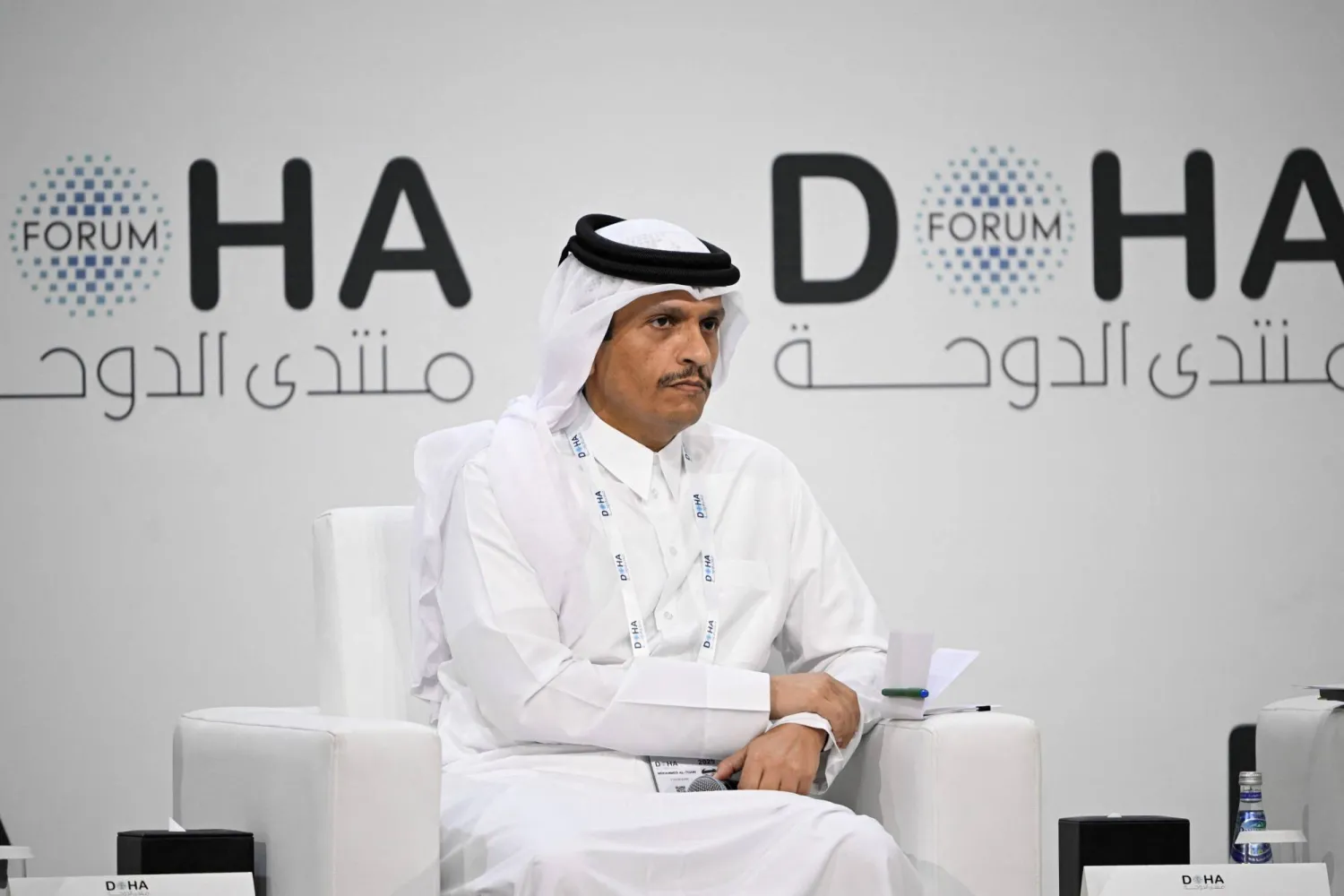
Qatar's Prime Minister and Minister for Foreign Affairs Sheikh Mohammed bin Abdulrahman bin Jassim Al-Thani, attends a session on the opening day of the Doha Forum, an annual diplomatic conference, in Doha on December 6, 2025. (Photo by MAHMUD HAMS / AFP)
TT

Qatar’s PM Says Gaza Ceasefire at Critical Moment

Qatar's Prime Minister and Minister for Foreign Affairs Sheikh Mohammed bin Abdulrahman bin Jassim Al-Thani, attends a session on the opening day of the Doha Forum, an annual diplomatic conference, in Doha on December 6, 2025. (Photo by MAHMUD HAMS / AFP)

Qatar’s Prime Minister on Saturday said the Gaza ceasefire has reached a “critical moment” as its first phase winds down, with the remains of just one Israeli hostage still held in Gaza.

Sheikh Mohammed bin Abdulrahman Al Thani told an international conference in the Qatari capital that international mediators, led by the US, are working “to force the way forward” to the second phase to cement the deal.

“What we have just done is a pause,” he told the Doha Forum. “We cannot consider it yet a ceasefire.”

“A ceasefire cannot be completed unless there is a full withdrawal of Israeli forces, there is stability back in Gaza, people can go in and out, which is not the case today,” he said.

While the ceasefire halted the heavy fighting of the two-year war, Gaza health officials say that over 360 Palestinians have been killed by Israeli fire since the truce took effect in October.

The first phase of US President Donald Trump’s 20-point peace plan took effect Oct. 10. The fighting stopped and dozens of hostages held in Gaza were exchanged for hundreds of Palestinians held in Israeli prison. Israel sent a delegation last week to Egypt for talks on returning the remains of the last hostage.

The next phase, which includes the deployment of an international security force in Gaza, formation of a new technocratic government for the territory, disarmament of Hamas and an eventual withdrawal of Israeli forces from Gaza, has not yet begun.

Sheikh Mohammed said that even the upcoming phase should be “temporary” and that peace in the region could only take place with the eventual establishment of a Palestinian state.

“If we are just resolving what happened in Gaza, the catastrophe that happened in the last two years, it’s not enough,” he said. “There is a root for this conflict. And this conflict is not only about Gaza."

He added: “It’s about Gaza. It’s about the West Bank. It’s about the rights of the Palestinians for their state. We are hoping that we can work together with the US administration to achieve this vision at the end of the day.”



Saudi Defenses Destroy 7 Ballistic Missiles, 22 Drones

Official spokesman of the Saudi Defense Ministry Turki al-Malki. (SPA)
TT

Saudi Defenses Destroy 7 Ballistic Missiles, 22 Drones

Official spokesman of the Saudi Defense Ministry Turki al-Malki. (SPA)

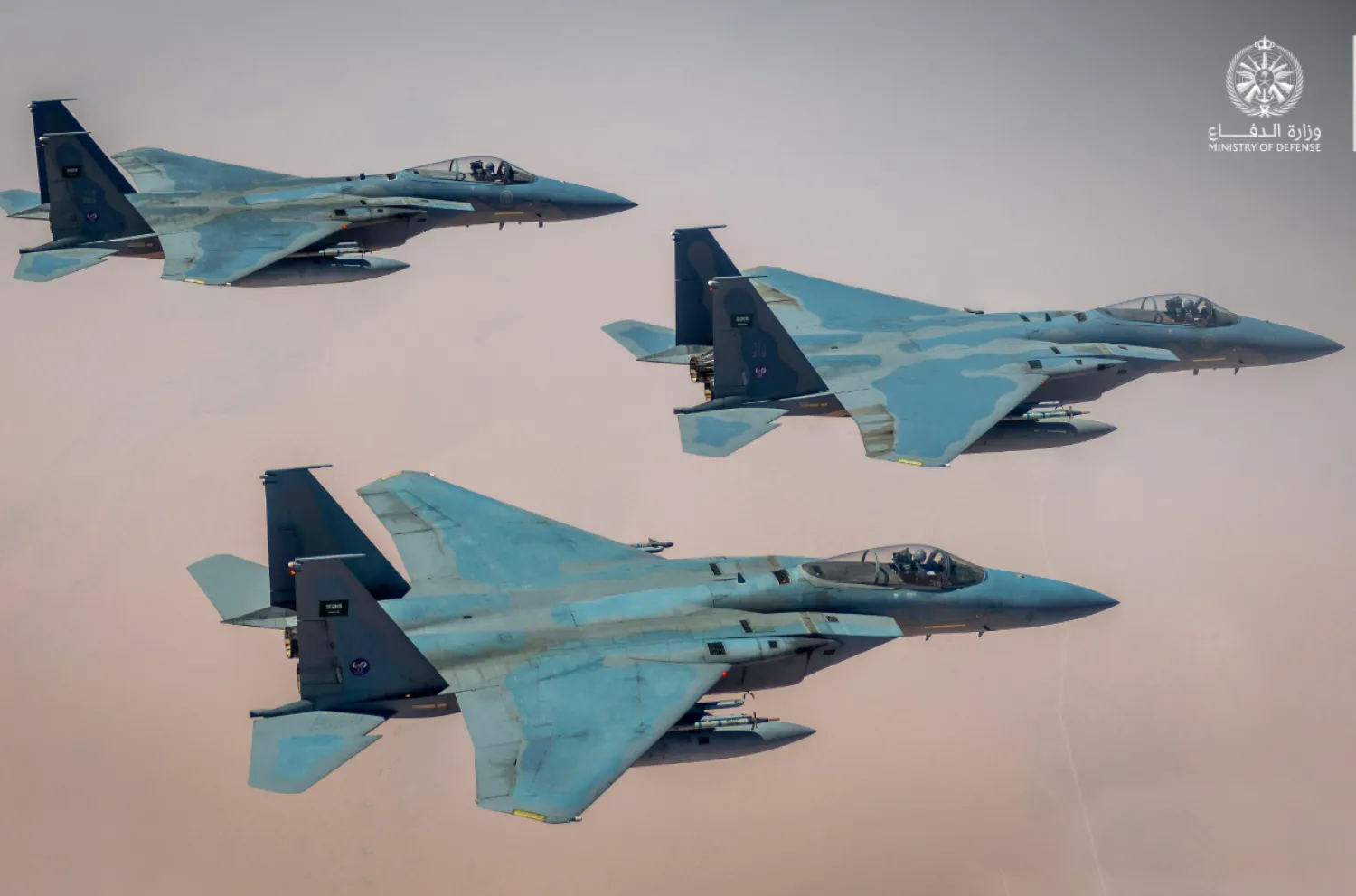
Official spokesman of the Saudi Defense Ministry Turki al-Malki announced on Wednesday that the Kingdom intercepted and destroyed six ballistic missiles that were fired at the Prince Sultan Air Base in the al-Kharj region, 80 kms southeast of Riyadh.

They downed another missile that was fired at the Eastern Region.

Al-Malki added that eight drones were destroyed in the Eastern Region, seven in the Empty Quarter that were fired at the Shaybah oil field, five east of al-Kharj and two in the Hafar al-Batin region in the Kingdom’s northeast.

The Saudi government had on Tuesday underscored the Kingdom’s full right to take measures that ensure its security, sovereignty and safety of its territories, as well as its right to repel attacks.

It hailed the air defense for intercepting and destroying hostile rockets and drones that were fired at the Kingdom.


Saudi FM Discusses Iranian Attacks with Rubio, Wadephul

Saudi Minister of Foreign Affairs Prince Faisal bin Farhan bin Abdullah and his German counterpart Johann Wadephul meet in Riyadh on Tuesday. (SPA)
TT

Saudi FM Discusses Iranian Attacks with Rubio, Wadephul

Saudi Minister of Foreign Affairs Prince Faisal bin Farhan bin Abdullah and his German counterpart Johann Wadephul meet in Riyadh on Tuesday. (SPA)

Saudi Minister of Foreign Affairs Prince Faisal bin Farhan bin Abdullah held a phone call with US Secretary of State Marco Rubio on Wednesday to discuss the continued Iranian attacks against the Kingdom and regional countries.

They discussed ways to address these developments in a manner that safeguards the Kingdom’s security and ensures the safety of its citizens and residents.

Prince Faisal added that the Kingdom welcomes the United States’ designation of the Muslim Brotherhood branch in Sudan as a terrorist organization, underlining its support for all efforts aimed at promoting stability and prosperity in the region.

On Tuesday, Prince Faisal received in Riyadh his German counterpart Johann Wadephul.

They reviewed bilateral relations between their two countries and ways to support and boost them. They tackled the latest developments in the region and their security implications.

Wadephul expressed his country’s condemnation of Iran's attacks, stressing Germany’s full solidarity with Saudi Arabia and urging the need for coordinated regional and international efforts to steer the region toward stability and peace.


Saudi Arabia Grants Stranded Syrians, Egyptians Transit Visas

The King Fahd Causeway linking Saudi Arabia and Bahrain. (SPA)
TT

Saudi Arabia Grants Stranded Syrians, Egyptians Transit Visas

The King Fahd Causeway linking Saudi Arabia and Bahrain. (SPA)

Several ambassadors accredited to Saudi Arabia said their countries are coordinating closely with Saudi authorities to facilitate the entry and transit of their citizens through the Kingdom’s land crossings, amid the instability in the region.

Mohsen Mahbash, chargé d’affaires at the Syrian Embassy in Riyadh, said the embassy receives daily lists — coordinated with Syrian embassies across Gulf countries — that are sent to the Saudi Foreign Ministry to help stranded Syrian citizens obtain visas needed to transit overland through Saudi territory to Syria or other destinations.

Speaking to Asharq Al-Awsat, Mahbash said the embassy formed a committee from its diplomatic staff after flights were suspended to follow the issue. It also launched a WhatsApp hotline to receive inquiries from stranded citizens about procedures for obtaining visas that allow them to pass through the Kingdom to Syria by land or to third countries.

He said that from the first moments of the regional escalation and the suspension of flights due to military operations, the embassy began receiving inquiries and requests for assistance from Syrian citizens stranded at Saudi airports after their flights were canceled.

The embassy immediately contacted the Saudi Foreign Ministry to inquire about procedures that could help those cases obtain the visas needed to leave the Kingdom or transit through it to other destinations, he said.

Mahbash added that the Saudi Foreign Ministry circulated procedures for granting visas through official diplomatic channels to streamline the process and remove obstacles for citizens needing assistance.

Regarding pilgrims and visitors, Mahbash said the embassy continues coordinating with Syria’s ministries of religious endowments and tourism to monitor the movement of pilgrims and ensure their return to Syria.

He praised the Saudi Ministry of Hajj and Umrah for its immediate and daily coordination, noting that Umrah pilgrims’ trips and returns to Syria have so far proceeded without significant obstacles.

He reiterated his country’s position, issued by the Ministry of Foreign Affairs and Expatriates, condemning what it described as Iran’s unjustified escalation and attacks against countries in the region.

He also praised the Saudi Foreign Ministry, the Ministry of Hajj and Umrah, and the Interior Ministry for their direct and supportive response in assisting Syrian citizens affected by the current situation.

Egypt’s ambassador to Saudi Arabia Ehab Abu Srei told Asharq Al-Awsat that Saudi Arabia has shown a strong understanding of the difficult situation facing Egyptian visitors stranded in Gulf countries.

He said communication has taken place with the consular department at the Saudi Foreign Ministry regarding residents and visitors in the Kingdom and across Gulf countries, particularly Bahrain, adding that residents in all Gulf states face no restrictions on entering Saudi Arabia.

The Egyptian Embassy in Riyadh has urged Egyptian citizens stranded in neighboring Gulf countries that share land borders with Saudi Arabia to contact Egyptian embassies in those countries to take the necessary measures.

The embassy said this falls within the framework of the Saudi Foreign Ministry's generous initiative to allow emergency entry visas at land crossings, so that Saudi territory can be used for returning to Egypt.

Abu Srei also praised the political coordination between the two countries under the current circumstances, describing it as “high-level coordination.”

He reiterated Egypt’s position, condemning violations of the sovereignty of any Gulf Cooperation Council state, including Saudi Arabia, stressing that dialogue — not military operations — is the path to resolving disputes.

Meanwhile, Iraq’s Foreign Ministry welcomed Saudi Arabia’s approval of a request submitted by the Iraqi Embassy in Riyadh to grant transit visas to Iraqi citizens wishing to return home via Saudi territory through the Arar border crossing.

The ministry said the move followed ongoing diplomatic coordination among the Iraqi Embassy in Riyadh, the Saudi Foreign Ministry, and the relevant authorities.

It added that the necessary official approvals were obtained to grant entry visas for overland transit, in line with the Kingdom’s laws and regulations, ensuring smooth movement through air and land border crossings.