
Israel Says Killed Top Hamas Weapons Figure in Gaza

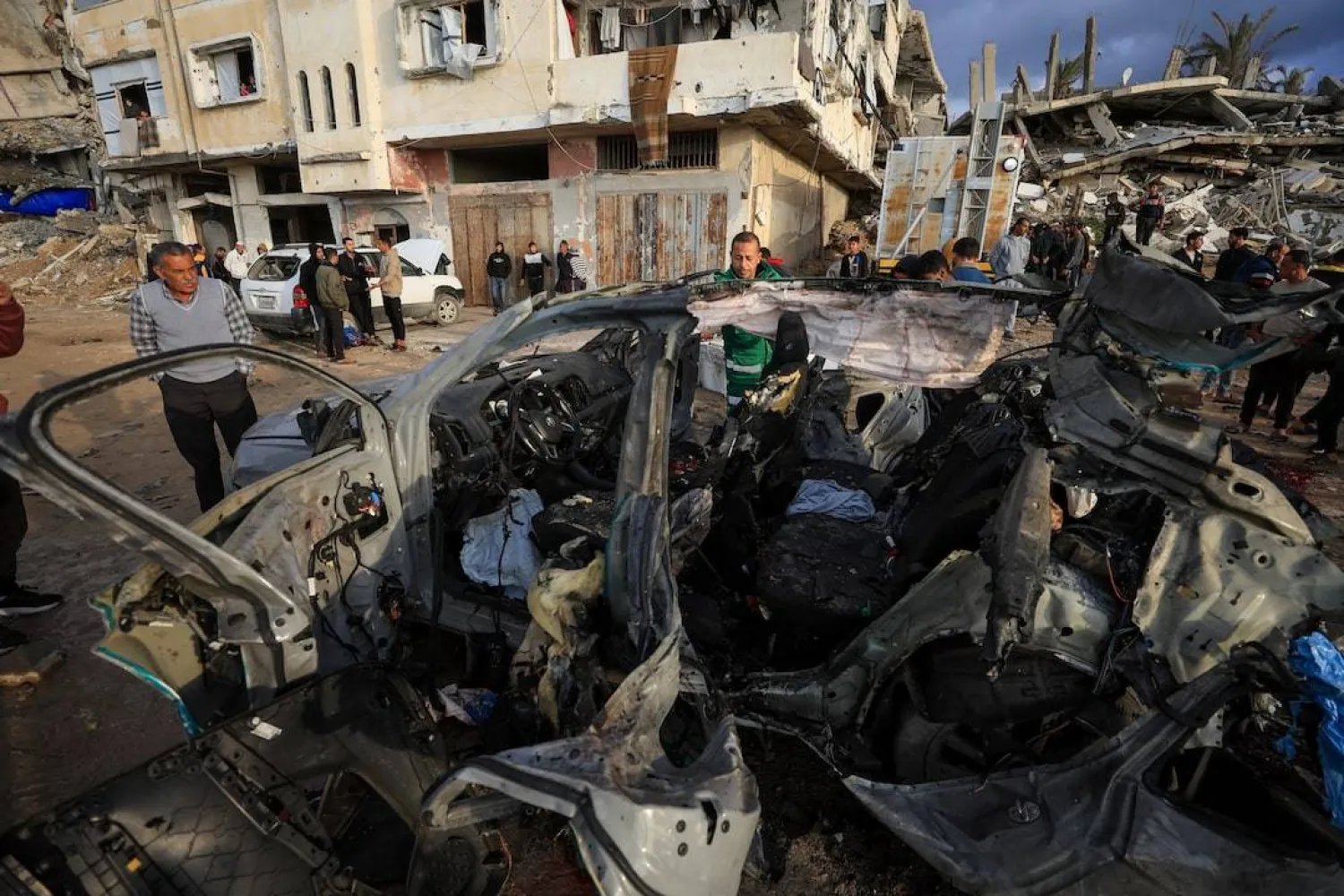
Palestinians inspect the site of an Israeli strike on a car in Gaza City, December 13, 2025. (Reuters)
TT

Israel Says Killed Top Hamas Weapons Figure in Gaza

Palestinians inspect the site of an Israeli strike on a car in Gaza City, December 13, 2025. (Reuters)

Israel said it killed the head of weapons production in Hamas's military wing in a strike in the Gaza Strip on Saturday. 

The civil defense agency and medical sources in the Hamas-run Palestinian territory told AFP an Israeli strike killed five people in the Tel al-Hawa district, southwest of Gaza City. 

When contacted by AFP earlier on Saturday, the army did not say whether the strike reported in Tel al-Hawa was the same as the one mentioned in an army statement before the announcement that it had killed Hamas's Raed Saad. 

Israeli Prime Minister Benjamin Netanyahu and Defense Minister Israel Katz said in a joint statement that "in response to the detonation of a Hamas explosive device that wounded our forces today in the Yellow Area of the Gaza Strip... (they) instructed the elimination of the terrorist Raed Saad". 

Under the US-brokered ceasefire between Israel and Hamas in Gaza, Israeli troops have withdrawn to positions behind the so-called Yellow Line, though they are still in control of more than half the territory. 

Netanyahu and Katz described Saad as "one of the architects" of the October 7, 2023 attack on Israel that sparked the war in Gaza. 

The Israeli army said Saad was the head of the weapons production headquarters of Hamas's military wing who led the group's "force build-up". 

Family sources confirmed his death to AFP and said the funeral would be held on Sunday. 

Israel's military earlier on Saturday said two reserve soldiers were lightly injured "as a result of an explosive device that detonated during an operation to clear the area of terrorist infrastructure in southern Gaza". 

The ceasefire that came into effect on October 10 has halted the fighting between Israel and Hamas, but it remains fragile with each side accusing the other of violating its terms. 

- Burnt-out car - 

Mahmud Bassal, a spokesman for Gaza civil defense which operates as a rescue force under Hamas authority, said five people were killed after "a civilian jeep-type vehicle was targeted near the Nabulsi roundabout in Tel al-Hawa". 

Bassal said the "charred" bodies were taken to Al-Shifa hospital after "Israeli warplanes targeted the civilian vehicle with three missiles, causing it to burn and its destruction". 

The hospital's emergency department confirmed to AFP the arrival of the five bodies and said more than 25 people were injured in the strike. 

AFP footage showed a mangled car with vehicle parts scattered around next to other debris. 

"Warplanes fired several missiles at the vehicle, setting it ablaze. Residents rushed to extinguish the fire, and charred body parts were scattered on the ground," a witness, who did not wish to give his name for security reasons, said in the Tel al-Hawa area. 

Another witness, a 34-year-old man living in a tent in the Tel al-Hawa area, said he "saw several Hamas members arrive at the site of the attack", without providing further details. 

Civil defense agency spokesman Bassal also said a 17-year-old boy and an 18-year-old boy were killed by Israeli fire in two separate incidents in Gaza. 


Arab League Urges Action to Force Israel to Repeal Prisoner Execution Law

Meeting at Palestine’s request, the Arab League Council, at the level of permanent representatives, convened an extraordinary session in Cairo on Thursday. (Arab League)
TT

Arab League Urges Action to Force Israel to Repeal Prisoner Execution Law

Meeting at Palestine’s request, the Arab League Council, at the level of permanent representatives, convened an extraordinary session in Cairo on Thursday. (Arab League)

The Arab League strongly condemned on Thursday the Israeli Knesset’s approval of a law allowing the execution of Palestinian prisoners.

It urged the international community, particularly the United Nations Security Council and the United Nations Human Rights Council, to act urgently to compel Israel to repeal it.

Meeting at Palestine’s request, the Arab League Council, at the level of permanent representatives, convened an extraordinary session in Cairo, chaired by Bahrain, to address what it described as a “racist and invalid” law, and to discuss Arab and international steps to confront systematic Israeli violations in Jerusalem.

A 21-point resolution adopted at the meeting said limiting the death penalty to Palestinian prisoners amounted to “entrenching an apartheid system imposed by Israel,” holding “Israel, the illegal occupying power, fully responsible for the legal and humanitarian consequences.”

The Arab League called for listing Israel’s National Security Minister Itamar Ben-Gvir and members of his party, along with Finance Minister Bezalel Smotrich and their party members, on “international, regional, and national terrorism lists,” and welcomed condemnations of the law by several countries and the European Union.

It urged states party to the Fourth Geneva Convention to annul the law, and called on the International Criminal Court to open an urgent investigation and prosecute Israeli officials responsible for its approval, describing it as a “war crime.”

The Arab League also called for activating a legal monitoring unit to document any implementation of the law for use before international courts, and urged Arab parliamentary bodies to work toward suspending the Knesset’s membership in the Inter-Parliamentary Union.

Foreign ministers from Saudi Arabia, Türkiye, Egypt, Indonesia, Jordan, Pakistan, Qatar, and the United Arab Emirates also condemned the law, warning it entrenches an apartheid system and promotes rhetoric denying the Palestinian people’s inalienable rights and presence in occupied territory.

Regarding Jerusalem, the Arab League condemned what it described as unprecedented Israeli measures to close Al-Aqsa Mosque, calling it a “flagrant violation of international law” and an unprecedented provocation to Muslims worldwide, as well as an assault on freedom of worship. It also condemned measures targeting the Christian presence in the city.

The Arab League denounced Israeli efforts to dismantle the United Nations Relief and Works Agency for Palestine Refugees in the Near East and shut its offices and schools in Jerusalem, calling it an attempt to erase the refugee issue from final status talks.

It called for coordinated Arab, Islamic, and international action, political, diplomatic, economic, and legal, to protect Jerusalem and its holy sites, urging the international community, including the UN Security Council, to take a firm stance obliging Israel to halt its violations.

The Arab League reiterated its rejection of any move to alter Jerusalem’s legal status, including relocating diplomatic missions, and warned Argentina against moving its embassy to the city, saying such a move would damage Arab-Argentine relations.

Arab League Assistant Secretary-General for Palestine Affairs Faed Mustafa told the Cairo meeting that developments in Jerusalem and measures targeting Palestinian prisoners are “two facets of one policy,” urging a shift from condemnation to concrete action and impact.

Former Egyptian assistant foreign minister Mohamed Hegazy told Asharq Al-Awsat the meeting was a necessary step toward unifying the Arab stance and moving beyond political condemnation.

He called for a serious international debate on sanctions against Israel if violations continue.


Israel Says Hezbollah Chief to Pay ‘Heavy Price’ for Jewish Holiday Attacks

First responders clear the rubble from the site of an Israeli airstrike that targeted a building in the southern Lebanese village of Hanouiyeh, east of Tyre, on March 30, 2026. (AFP)
TT

Israel Says Hezbollah Chief to Pay ‘Heavy Price’ for Jewish Holiday Attacks

First responders clear the rubble from the site of an Israeli airstrike that targeted a building in the southern Lebanese village of Hanouiyeh, east of Tyre, on March 30, 2026. (AFP)

Israeli Defense Minister Israel Katz on Thursday warned that Hezbollah chief Sheikh Naim Qassem would pay an "extraordinarily heavy price" for escalating attacks during the ongoing Jewish holidays.

"I have a clear message for Naim Qassem... you and your associates will pay an extraordinarily heavy price for the intensified rocket fire directed at Israeli citizens as they gathered to celebrate Passover Seder," Katz said in a video statement.

"You will be consigned to the depths of hell alongside Nasrallah, Khamenei, Sinwar and the other fallen figures of the axis of evil," he said, referring to the former leaders of Hezbollah, Iran, and the Palestinian Hamas movement, who have been assassinated by Israel over the past two and half years.

"The Hezbollah terrorist organization you now lead, and its supporters in Lebanon, will bear the full and severe consequences," Katz added.

His warning followed claims by Hezbollah that it had carried out a series of rocket attacks on northern Israel late Wednesday and early Thursday, as Israeli Jews began marking the Passover holidays.

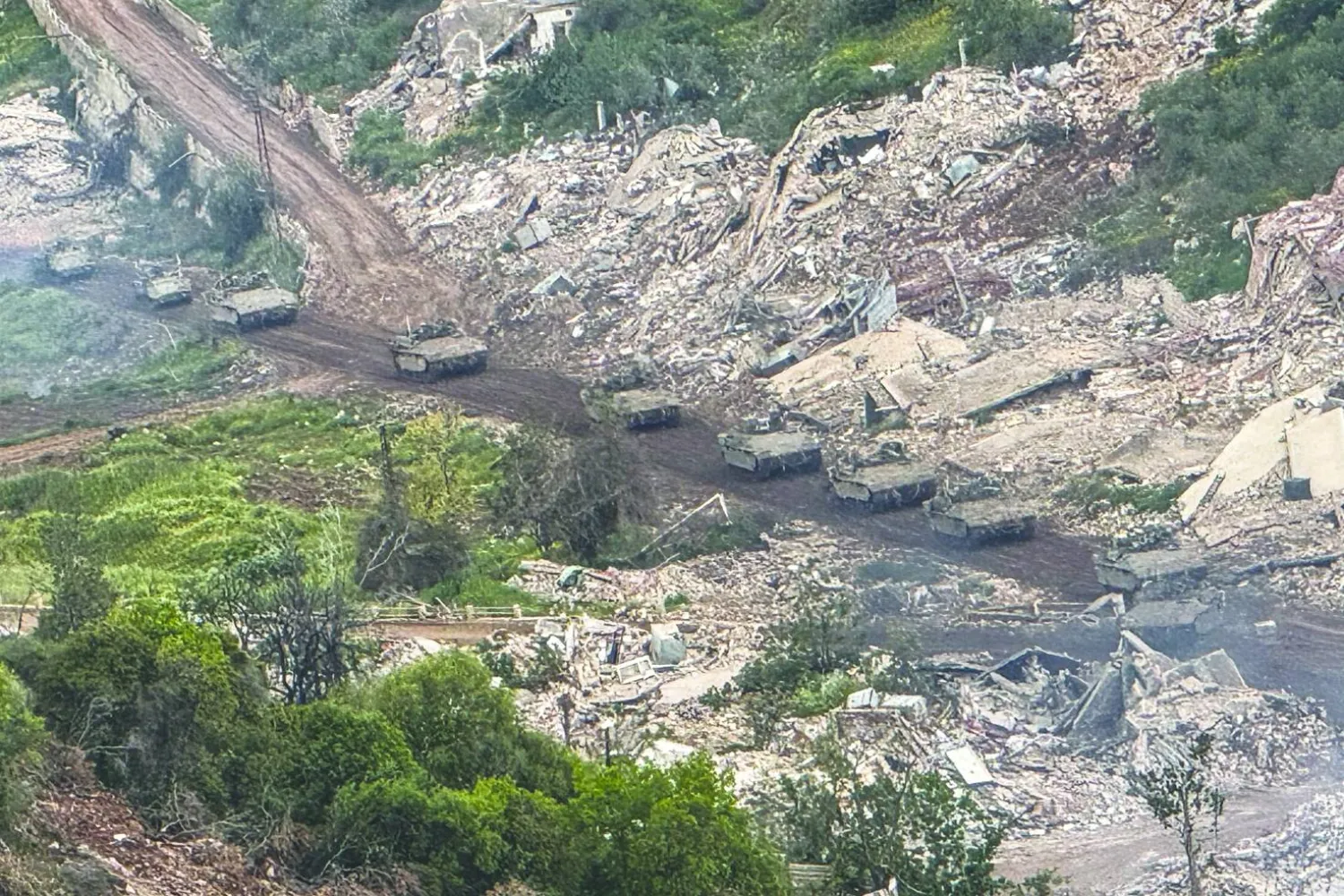
Katz also reiterated that Israeli forces "will clear Hezbollah and its supporters from southern Lebanon, maintain Israeli security control throughout the Litani area, and dismantle Hezbollah's military capabilities across Lebanon."

Lebanon was drawn into the Middle East war in early March when Tehran-backed Hezbollah launched rockets towards Israel to avenge the attack that killed Iran's supreme leader Ali Khamenei.

Israel has responded with massive strikes across Lebanon and a ground offensive.


UN Experts Call for Investigation into Israel's Killing of Lebanese Journalists

A woman sits in a cemetery before the funeral of Lebanese journalists, Al Manar reporter Ali Shoeib, Al Mayadeen reporter Fatima Ftouni and cameraman Mohammed Ftouni, who were killed by a targeted Israeli strike, amid escalating hostilities between Israel and Hezbollah, as the US-Israeli conflict with Iran continues, in Choueifat, Lebanon, March 29, 2026. (Reuters)
TT

UN Experts Call for Investigation into Israel's Killing of Lebanese Journalists

A woman sits in a cemetery before the funeral of Lebanese journalists, Al Manar reporter Ali Shoeib, Al Mayadeen reporter Fatima Ftouni and cameraman Mohammed Ftouni, who were killed by a targeted Israeli strike, amid escalating hostilities between Israel and Hezbollah, as the US-Israeli conflict with Iran continues, in Choueifat, Lebanon, March 29, 2026. (Reuters)

UN experts on Thursday called for an international investigation into the death of three Lebanese journalists in an Israeli strike, saying Israel had not provided "credible evidence" of their alleged links to armed groups.

The three journalists, including Ali Shoeib, a star correspondent for Al Manar channel of Hezbollah, which is at war with Israel, were killed on March 28 in an Israeli strike in southern Lebanon.

"We denounce strongly what has now become a standard, dangerous practice of Israel to target and kill journalists and then claim, without providing any credible evidence, that they were involved with armed groups," the experts said in a statement.

The Israeli army had described Shoeib as a member of the Radwan force, an elite Hezbollah unit, operating "under the guise of a journalist".

According to the experts, Israel's only so-called "evidence" for its claims was a photoshopped image of the journalist.

Israel also confirmed it killed journalist Fatima Ftouni of Al Mayadeen, seen as close to Hezbollah, and her brother cameraman Mohammed Ftouni, describing him as "an additional terrorist in Hezbollah's military wing".

The experts argued that working as a journalist for a media outlet linked to an armed group does not constitute direct participation in hostilities under international humanitarian law.

"Israeli officials know this, yet they choose to ignore it -- emboldened by impunity for their previous killings of journalists in Lebanon, Gaza and the West Bank."

At least 231 journalists and media workers have been killed by Israel since 2023, including 210 in Gaza and 11 in Lebanon, according to the Committee to Protect Journalists (CPJ).

Although appointed by the United Nations Human Rights Council, special rapporteurs are independent experts and do not speak on behalf of the UN.