32% of Yemenis in Houthi-controlled Areas Live in Moderate to Severe Hunger

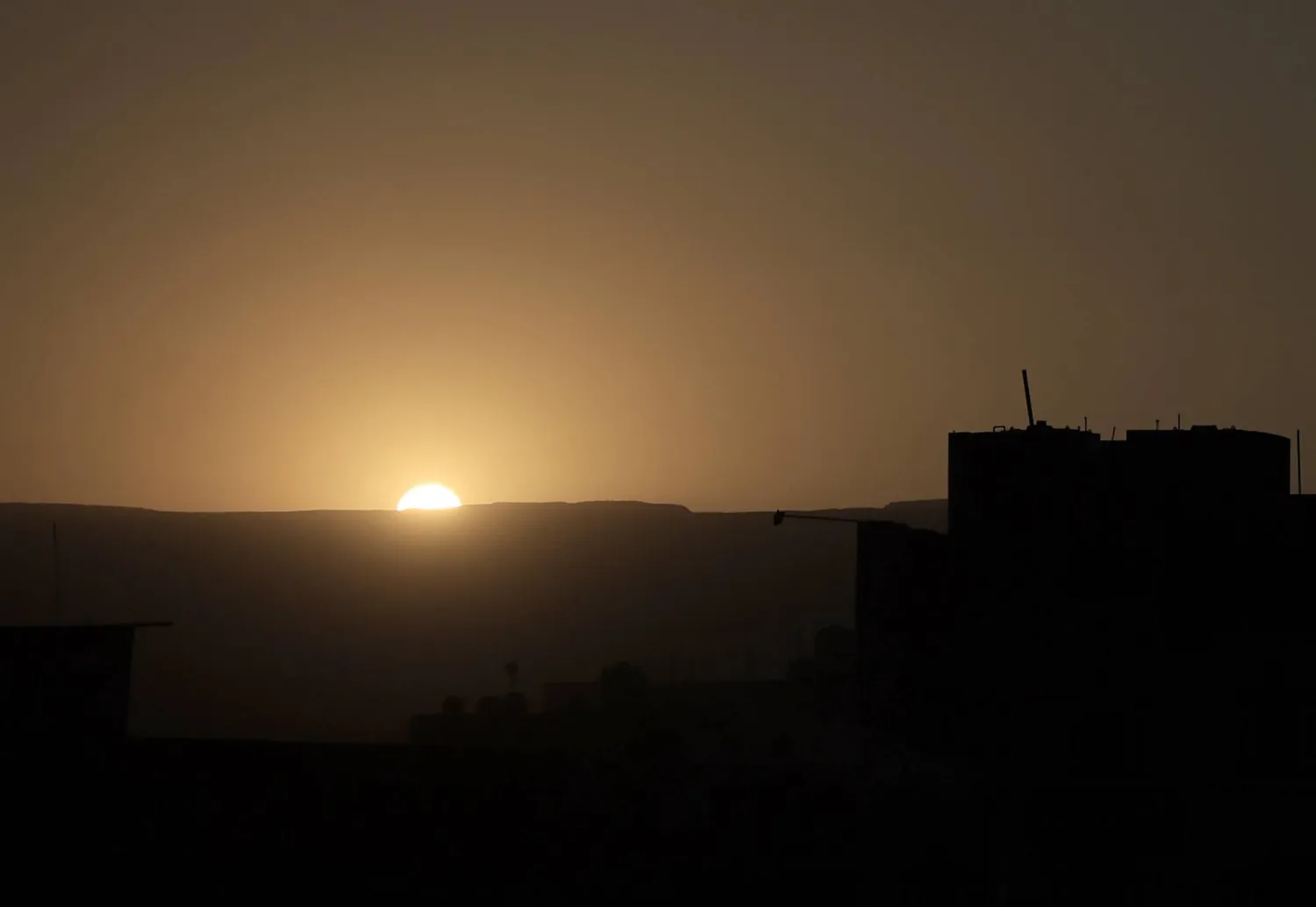
The sun sets over a residential neighborhood of Sanaa, Yemen, 20 December 2025. EPA/YAHYA ARHAB
TT

32% of Yemenis in Houthi-controlled Areas Live in Moderate to Severe Hunger

The sun sets over a residential neighborhood of Sanaa, Yemen, 20 December 2025. EPA/YAHYA ARHAB

Recent UN data has revealed a rising hunger crisis in areas under the control of the Houthi militias, who have increased their repressive measures in targeting hundreds of local employees working for the United Nations and humanitarian organizations.

Local sources announced that the UN has suspended its activities in Houthi-controlled areas following the arrest of 69 of its staff members. This step reflects the scale of violations affecting humanitarian work and casts a heavy shadow over millions of aid beneficiaries in a country suffering from one of the world’s worst humanitarian crises.

The World Food Program’s Yemen Food Security Update said that 32 percent of households in Houthi-controlled areas reported moderate to severe hunger (Phase 3+) in November 2025 compared to 25 percent in areas controlled by the internationally recognized government.

The use of crisis or emergency livelihood coping strategies was more widespread in Houthi-controlled areas (66 percent) than in government areas (58 percent), it said.

A greater proportion of households in Houthi areas (49 percent) reported restricting adults’ food consumption in favor of children, compared to 44 percent in government areas.

These patterns highlight deeper vulnerability in areas run by the Houthis, amid “prolonged assistance suspension and limited livelihood options,” the Food Security Update added.

As the food crisis worsens, sources working in the relief sector told Asharq Al-Awsat that the Houthis have prevented hundreds of Yemeni employees working for the UN and international and local relief organizations - as well as those who had previously worked with foreign diplomatic missions - from leaving areas under their control.

According to the sources, these individuals are subjected to house-arrest conditions and have become vulnerable to arrest at any time.

The sources also reported that the group used employee data that had previously been submitted through organizations and passed it to its intelligence arm.

Lists including the names of all staff working for organizations, in addition to those who had worked with diplomatic missions, were circulated to security checkpoints spread from the outskirts of Sanaa to the front lines with government-controlled areas.

This week, the total number of UN staffers detained by the Houthis rose to 69.


Israeli Strikes Kill Two People in Gaza, Including a 10-Year-Old, Medics Say

A Palestinian inspects a destroyed area following an Israeli airstrike in southern Gaza City, 12 July 2026. (EPA)
TT

Israeli Strikes Kill Two People in Gaza, Including a 10-Year-Old, Medics Say

A Palestinian inspects a destroyed area following an Israeli airstrike in southern Gaza City, 12 July 2026. (EPA)

An Israeli strike ‌and gunfire killed at least two Palestinians, including a 10-year-old boy, in the Gaza Strip on Tuesday, Gazan health officials said.

The deaths add to a toll of more than 1,100 Palestinians killed by Israeli attacks since an October ceasefire between Israel and Hamas took effect, according to health officials in the enclave.

The truce halted major fighting but has failed to stop sporadic violence. Four Israeli ‌soldiers have been ‌killed by fighters in Gaza over ‌the ⁠same period.

Medics said ⁠Muataz Abu Shaar, 10, was shot earlier on Tuesday by Israeli gunfire in Rafah, south Gaza. He was pronounced dead at the hospital.

Nearby in Khan Younis, an Israeli airstrike killed a 36-year-old man and left three people wounded, medics ⁠added.

The Israeli military did not immediately ‌comment on either incident.

The latest ‌violence comes as Hamas leaders visited Cairo for further ‌talks on implementing the second phase of ‌US President Donald Trump's Gaza peace plan.

The discussions include Hamas disarmament and Israeli army withdrawals, according to sources close to the talks, who added that there had not ‌yet been a breakthrough.

Hamas says Israel's violations of the ceasefire are ⁠a key obstacle ⁠to implementing the second phase of Trump's plan.

Nearly all of Gaza's 2 million people, most of whom have been displaced several times, now live on a tiny strip of land along the coast, mainly in makeshift tents or damaged buildings, under Hamas control.

Hamas-led fighters killed 1,200 people during their cross-border attack into Israel on October 7, 2023, according to Israeli tallies. The Gazan health ministry said more than 73,000 Palestinians have been killed in the territory since then.


Lebanon, Israel Hold US-Brokered Talks in Rome to Implement Framework Deal

 A motorcade arrives at the United States' Embassy in Rome, Italy, where ambassadors-level talks between Israel and Lebanon are expected to take place, Tuesday, July 14, 2026. (AP)
A motorcade arrives at the United States' Embassy in Rome, Italy, where ambassadors-level talks between Israel and Lebanon are expected to take place, Tuesday, July 14, 2026. (AP)
TT

Lebanon, Israel Hold US-Brokered Talks in Rome to Implement Framework Deal

 A motorcade arrives at the United States' Embassy in Rome, Italy, where ambassadors-level talks between Israel and Lebanon are expected to take place, Tuesday, July 14, 2026. (AP)
A motorcade arrives at the United States' Embassy in Rome, Italy, where ambassadors-level talks between Israel and Lebanon are expected to take place, Tuesday, July 14, 2026. (AP)

Lebanon and Israel resumed talks on Tuesday in the Italian capital, with Beirut hoping for progress towards securing an Israeli withdrawal from south Lebanon under a US-brokered deal, although expectations for swift progress were low.

US-led diplomacy has emerged since Hezbollah and Israel returned to war on March 2 amid the wider regional conflict, moving forward despite strong objections from the Iran-backed group, which believes only Iranian pressure on Washington can secure an end to the war and Israeli withdrawal.

Iran demanded an end to the war in Lebanon as part of its interim deal with Washington signed last month, but the agreement has been shaken over the last week by renewed US-Iranian hostilities in the Gulf.

Israel's military is occupying what it describes as a "buffer zone" about 10 km (6 miles) into Lebanon along the entire length of the ‌Israeli border. Israeli ‌officials say the zone is necessary to protect northern Israeli communities from attacks launched ‌by ⁠Hezbollah.

A meeting in ⁠Washington on June 26 produced an agreement that called for an end to the Lebanon conflict, the disarmament of armed groups - an apparent reference to Hezbollah - as well as the deployment of Lebanese troops to the south and the progressive withdrawal of Israeli forces.

But deadly Israeli strikes have continued and Hezbollah has rejected the agreement as well as efforts to disarm it. Israel, meanwhile, has said its troops would remain in southern Lebanon as long as Hezbollah remained armed.

Lebanese and Israeli officials will meet at the US embassy in Rome on Tuesday and Wednesday to set out how to implement the framework deal, Lebanese officials ⁠told Reuters.

One of the officials said moving the talks to Rome would make ‌it easier for both countries' delegations to consult their governments for guidance as ‌they negotiated.

Italian Foreign Minister Antonio Tajani said on Monday that Italy had offered to host the talks to continue work towards ‌a genuine ceasefire in Lebanon.

"We are also very pleased that Rome can serve as the venue for these meetings. In ‌this way, our capital becomes a capital of peace," Tajani said ahead of a European Union meeting in Brussels on Monday.

PILOT ZONES ON THE TABLE

In comments published by his office on Monday, Lebanese President Joseph Aoun said he hoped the Rome meeting would yield "tangible and practical steps on the ground" to implement the agreement and that it would see Israel begin its troop pull-out so ‌that the Lebanese army could deploy to the south.

One of the Lebanese officials said the country's delegation to Tuesday's talks would seek the gradual and sequential withdrawal of ⁠Israeli troops "one zone after another," ⁠referring to the "pilot zone" project under which Hezbollah would disarm, Israeli forces would withdraw and Lebanese troops would deploy area by area in southern Lebanon.

The June 26 agreement said two zones had been identified as a starting point. A US official said last week that the US military's Central Command (CENTCOM) was coordinating with both Lebanon and Israel to launch the pilot zones.

A US military delegation was in Lebanon at the weekend to discuss the plan in detail with Lebanon's army, sources told Reuters.

Israel's military has forced the local Lebanese population from their homes and carried out controlled explosions of entire villages. It says it is destroying infrastructure, including underground tunnels, used by Hezbollah.

More than 4,000 Lebanese have been killed and more than a million displaced by Israel's campaign in Lebanon since March, according to Lebanon's health ministry. The toll does not say how many combatants may be among the dead and Hezbollah has not disclosed figures on its war dead. Reuters reported on May 3 that several thousand Hezbollah fighters had been killed.

At least 32 Israeli soldiers and four Israeli civilians have been killed by Hezbollah, most of them in southern Lebanon since the latest fighting erupted.


Trump Rolls Out the White House Welcome Mat for New Iraqi PM

Iraqi Prime Minister Ali al-Zaidi departs on his visit to the US. (INA)
TT

Trump Rolls Out the White House Welcome Mat for New Iraqi PM

Iraqi Prime Minister Ali al-Zaidi departs on his visit to the US. (INA)

President Donald Trump is welcoming Iraq's new prime minister to the White House on Tuesday after strongly backing the political neophyte in his bid for office.

Ali al-Zaidi, a businessman with no political background, emerged as a consensus candidate in Iraq after months of deadlock over the premiership following last year’s parliamentary elections.

When al-Zaidi was formally installed as prime minister-designate in April, Trump said in a social media post that it was the “beginning of a tremendous new chapter between our Nations — Prosperity, Stability, and Success like never seen before.”

But Trump’s interest and involvement in the next leadership in Iraq began long before that statement.

Iraq’s dominant parliamentary bloc, the Coordination Framework — a coalition of Shiite parties allied with Iran — initially said it would back former Prime Minister Nouri al-Maliki, whom the Trump administration views as too close to Tehran.

The US president publicly announced his opposition to al-Maliki and threatened to cut off aid to Iraq if he was appointed, adding that “if we are there to help, Iraq has ZERO chance of Success, Prosperity, or Freedom.”

The issue of Iran is likely to loom large in the discussions Tuesday.

Iraq has been under pressure to disarm a network of Iran-backed armed factions operating in the country, some of which launched attacks on US bases and diplomatic facilities after the US and Israel launched their war against Iran in February.

Officially, the Iraqi government has given non-state armed groups until the end of September to disarm, but some of the most powerful factions have said they have no intention of doing so.

A Trump administration official said ahead of the Oval Office meeting that the US will make “informed” decisions based on Iraq’s efforts to disarm Iranian-backed factions inside its borders. The official was granted anonymity to discuss the administration’s strategy ahead of al-Zaidi’s visit.

Renad Mansour, director of the Iraq Initiative at the Chatham House think tank, said he expects that “the US will put significant pressure on al-Zaidi” to move ahead with disarmament during his Washington visit “and al-Zaidi will respond by saying, ‘But I need support — intelligence support, technical support, armed support.’”

“There is a scenario in which, if the Iraqi government starts going after these groups, they will also go after the government,” Mansour said. “And this is a scenario that I think that the Iraqi government is apprehensive about.”

Al-Zaidi received Trump’s blessing, despite the fact that he was chairman of a bank — Al-Janoob Islamic Bank — that was among the financial institutions banned by Iraq’s central bank in 2024 from dealing in dollars amid pressure from the US to crack down on money laundering and funneling of funds to Iran.

Since taking office, al-Zaidi has made a public show of cracking down on corruption. His government has conducted raids and arrested dozens of current and former lawmakers and government officials accused of corruption, including a number affiliated with former Prime Minister Mohammed Shia al-Sudani.

The Iraqi premier’s delegation to Washington includes a number of Iraqi businessmen as well as government officials, and al-Zaidi’s office said in a statement that the aim of the visit is to “strengthen economic and development partnerships, attract investment, and expand the role of US companies in implementing infrastructure projects” and to further develop the oil-rich country’s energy sector.