



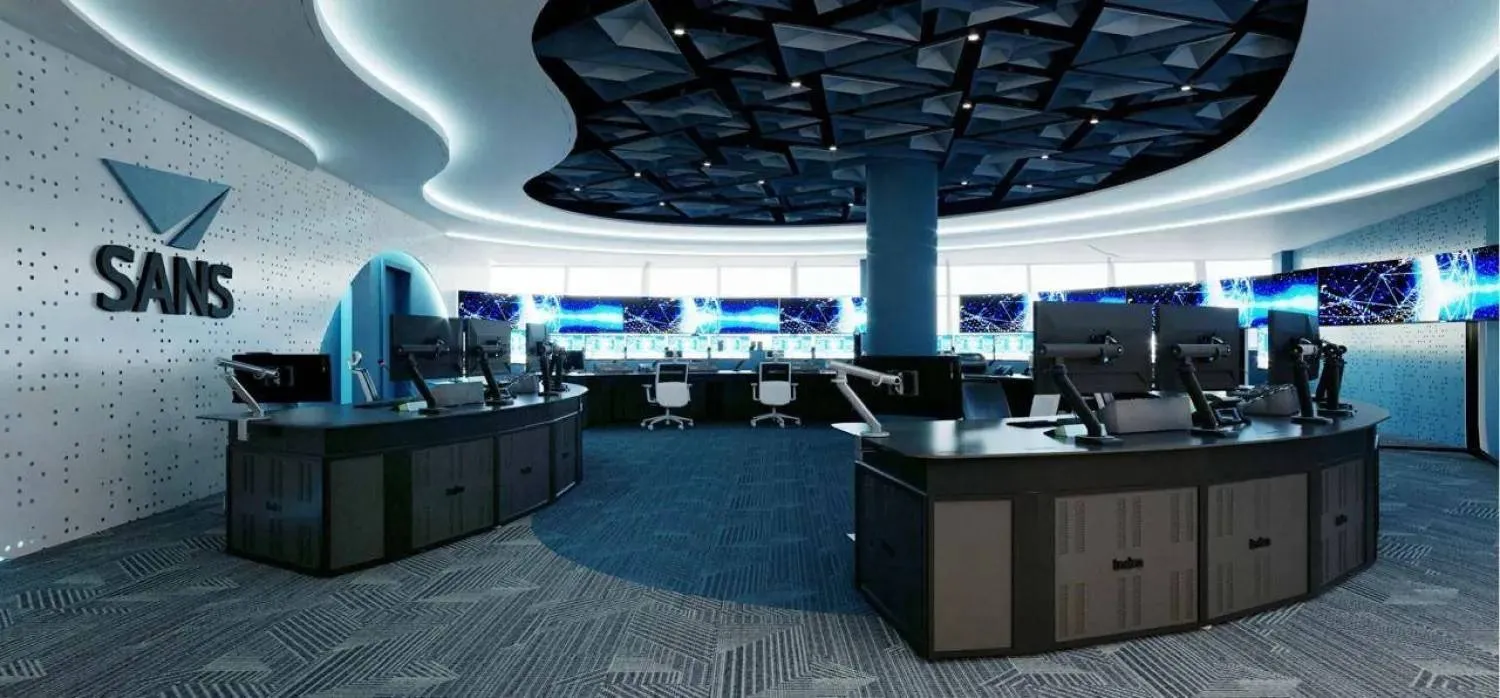

Saudi Arabia is accelerating digital transformation in aviation as virtual air traffic control towers enter live operations, marking a first for the Middle East. Saudi Air Navigation Services Company said the technology is among its flagship digital initiatives to enhance air traffic efficiency and prepare Saudi airspace for rapid growth.
The company has also successfully enabled Saudi women to work in air traffic control and navigation systems maintenance after completing specialized training programs.
Eng. Ahmed Al-Zahrani, Chief Strategy and Sustainability Officer, told Asharq Al-Awsat that virtual towers are a cutting-edge global technology adopted as part of the company’s broader transformation drive.
Al-Zahrani explained that a virtual tower replaces the traditional structure with a digital system built on high-definition cameras and advanced target-tracking technologies at the airport. Controllers can perform their duties without direct line-of-sight, using zoom and data overlays unavailable in conventional towers, such as flight number, passenger count, origin, and destination.
The initiative has moved beyond theory: the company has already launched the region’s first virtual tower at AlUla International Airport, operated remotely from King Abdulaziz Airport in Jeddah. The project has also won the Ministry of Transport and Logistics Services’ Innovation Award.
Al-Zahrani said that virtual towers raise controller efficiency by enabling oversight of multiple airports from a single center, while improving safety and operational performance through clearer imagery and richer data.
Beyond technology, readiness depends on continuity. The company operates two primary air traffic control centers in Riyadh and Jeddah; if one is disrupted, the other can seamlessly manage Saudi airspace without service interruption.
Since its launch in June 2016, the company has aimed to rank among regional leaders in air traffic management. Today, it is one of the region’s foremost providers and is pursuing global leadership.
Air traffic continues to expand. By the end of November, flights totaled 921,095, up 5.7% year on year. A daily record was set on June 19, 2025, with 3,673 flights, averaging 153 per hour.
On workforce development, Al-Zahrani said women have begun work as controllers and maintenance specialists, demonstrating strong performance. The company employs about 2,000 staff, over 97% Saudi nationals, and 100% Saudis in air traffic control roles.
Sustainability underpins operations across environmental efficiency, social impact through national talent empowerment, and governance via integrity and compliance. On cybersecurity, the company adheres to top international standards and recently earned the global SOC-CMM certification, measuring operations readiness across people, processes, technology, services, and business integration.


